Ministerial High-Level Event on the Launch of the Second Global Stocktake at COP31
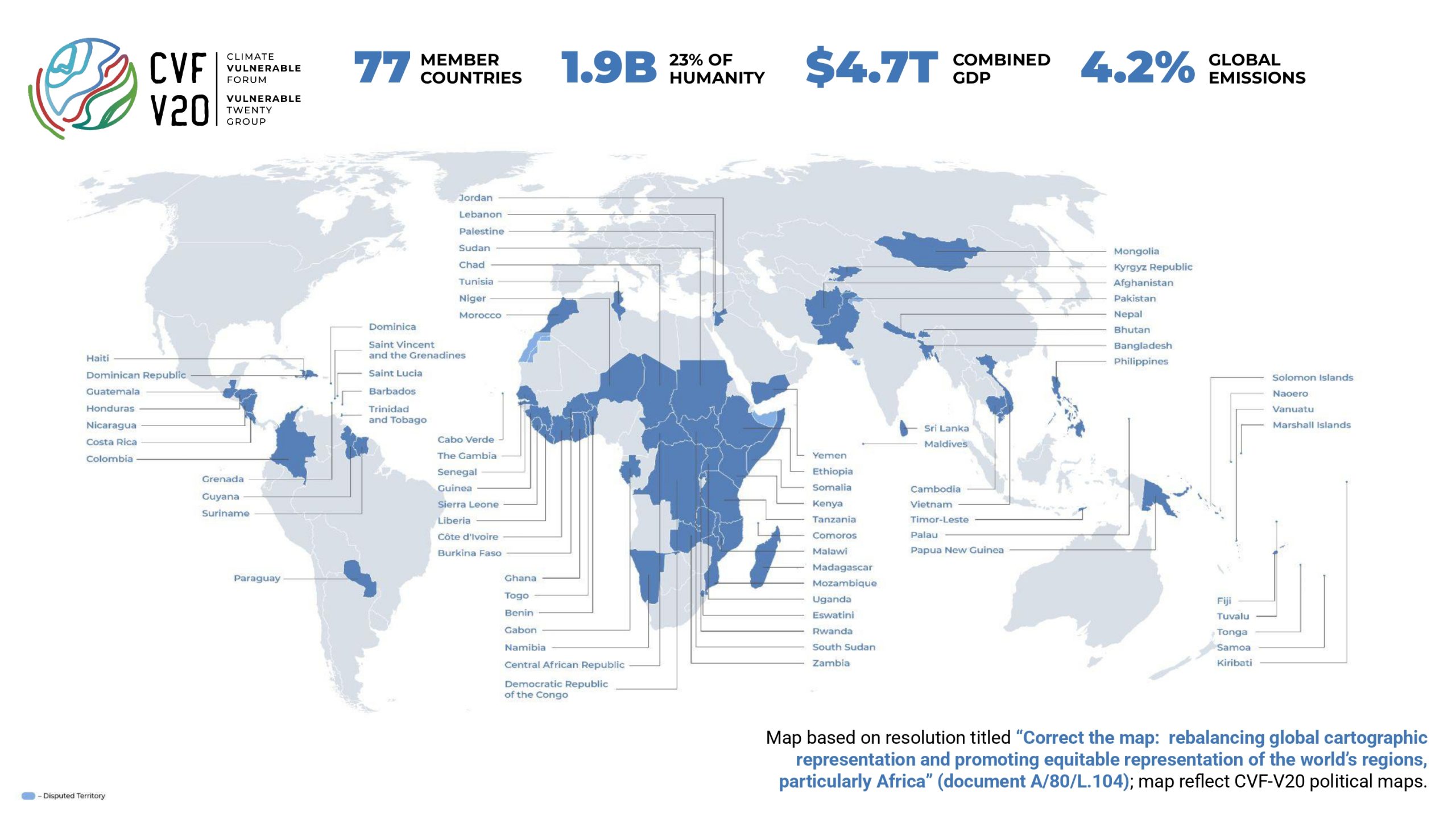
The CVF-V20 represents 77 member states and 1.9 billion people. We are grateful for the opportunity to lend perspective.
We are now in an overshoot world, where our long and dearly held demand ‘1.5°C to stay alive’ is no longer realistic. The second global stocktake (GST-2) must help us understand what comes next and how dangerous the overshoot period will be.
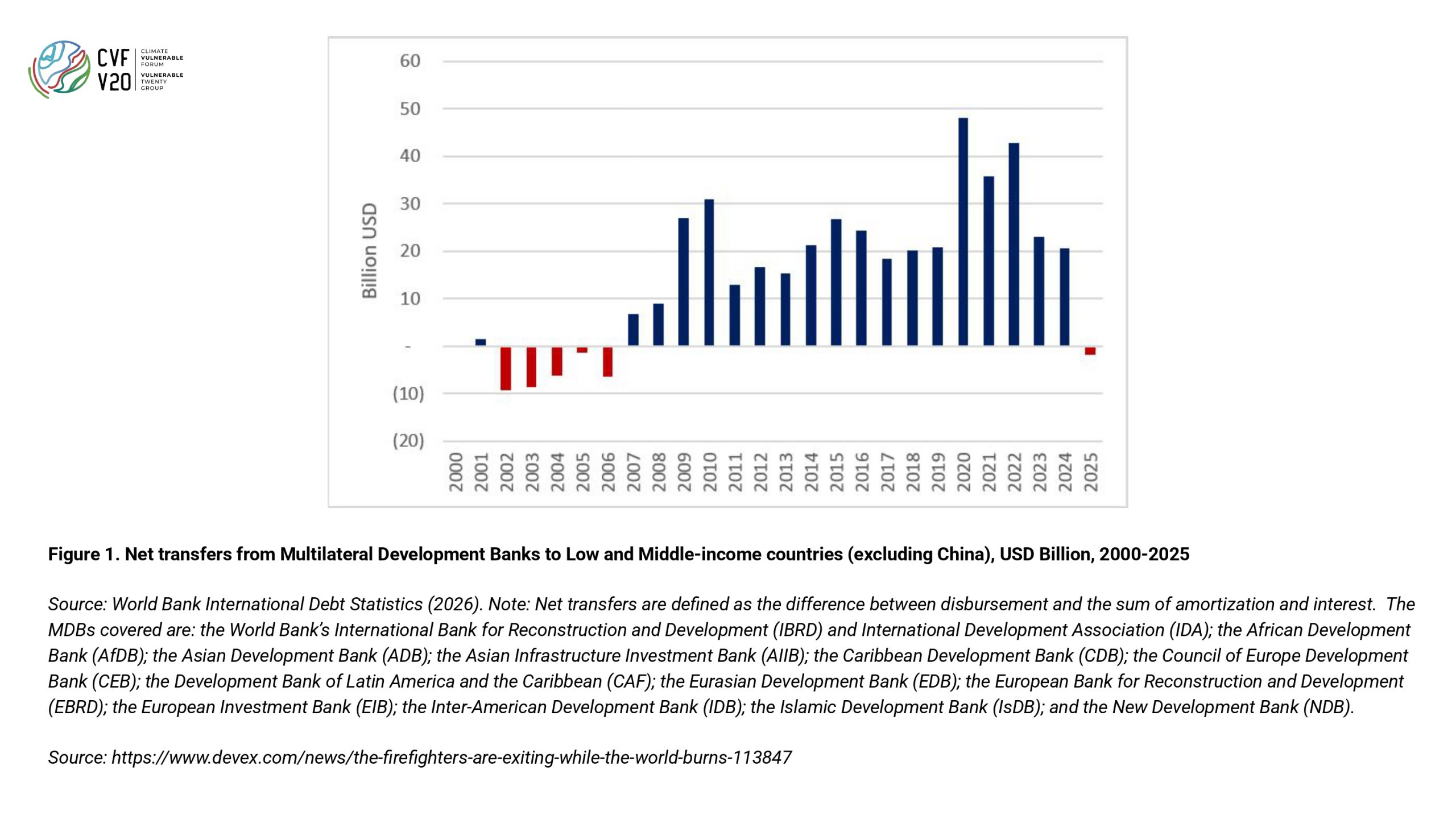
We know that for the first time since 2006, developing countries paid more back to multilateral development banks (MDBs) than they received. Net transfers from MDBs turned negative in 2025. The International Development Association (IDA) and International Bank for Reconstruction and Development (IBRD) disbursements together fell by over US$ 11 billion.
This is happening while the MDBs tell us they have unlocked US$ 792 billion of new lending headroom. Headroom that is not disbursed is not finance. The World Bank’s own climate finance fell by nearly US$ 3 billion last year, just as the Baku to Belém Roadmap asks the MDBs to scale up towards US$ 1.3 trillion.
The World Bank now lends at an average of 4.6 percent. Our members borrow on markets at close to 7 percent, against economic growth of far less than 4 percent. When interest grows faster than the economy, every climate project is financed out of fiscal space we do not have. GST-2 has to count the cost of money, not only the volume.


Next, measure net flows and the cost of capital, not gross pledges. The stocktake should show who received net-positive finance and at what price.
Article 2.1c of the Paris Agreement, the commitment to make all finance flows consistent with low-emission and climate-resilient development, is the right mirror for the whole system, including MDB balance sheets, the International Monetary Fund (IMF), and private capital. We know this is sensitive. GST-2 is our opportunity to assess whether the system as a whole is living up to the ambition of Article 2.1c.
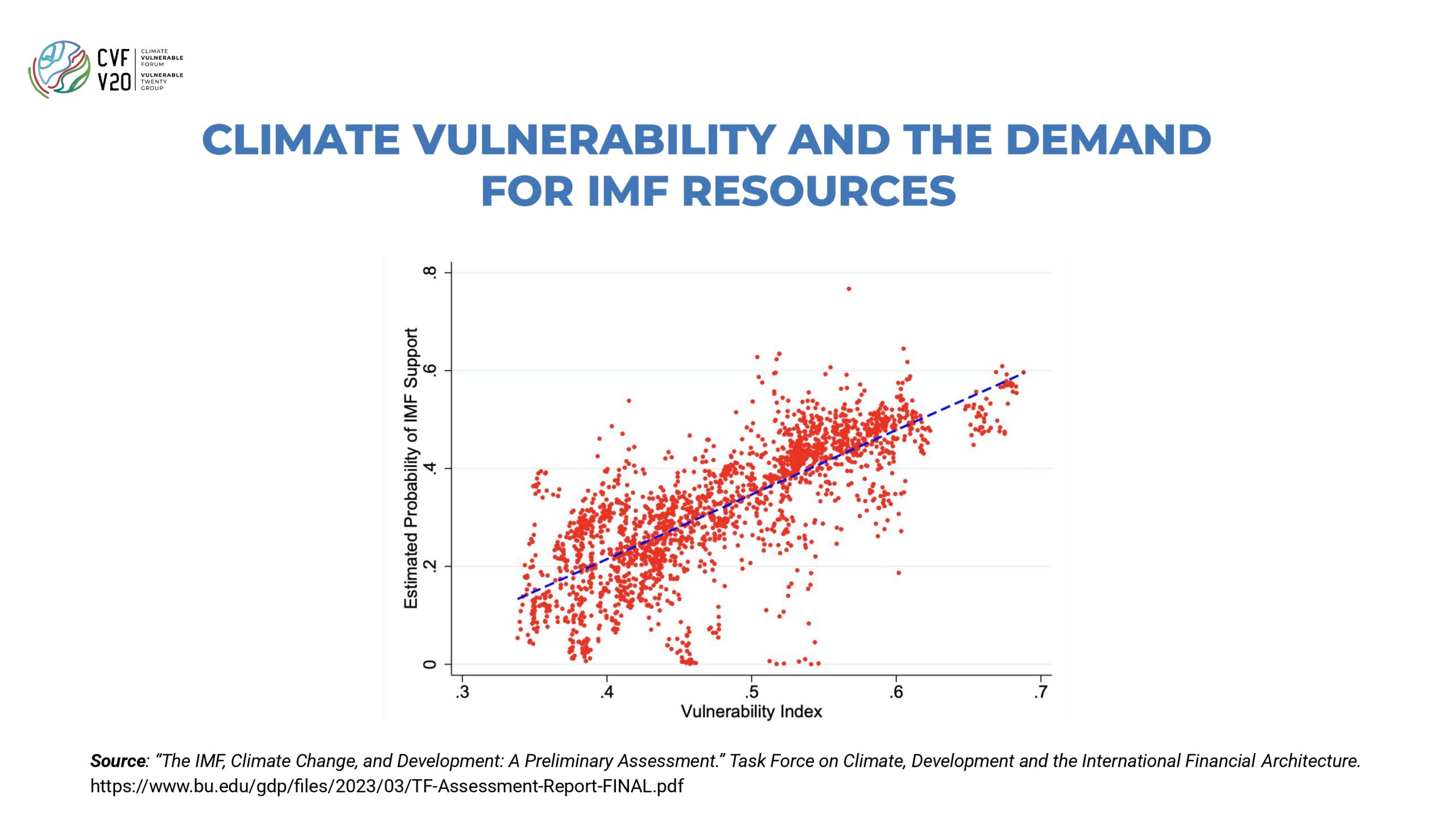
Next, shock absorbers. Intensifying climate shocks is our shared reality. As we move along the path of low emissions climate resilient development, shock absorbers are needed to ensure that we can actually stay on the path when climate impacts try to throw us off track. This means a Global Financial Safety Net that takes climate change seriously. It means the IMF delivering net-positive transfers to countries on concessional terms—calculations show flows from the IMF’s concessional lending facility are likely to turn negative by the end of the decade. This means integrating debt pause clauses to reflect the full range of climate risks comprehensive across all creditor classes. It also means efforts to foster short-term financial stability do not undermine the very basis for long-run growth.
Finally, GST-1 was clear about the importance of fiscal space for climate action.* GST-2 needs to take stock of how fiscal strain has dampened implementation and put a ceiling on ambition. It also needs to offer a clear-eyed assessment on the extent to which the sovereign debt architecture has backed climate ambition.
The first stocktake measured the gap. The second must measure the delivery.
If the firefighters are leaving while the world burns, GST-2 is where we say so, with the numbers so that we can course correct.
CVF-V20 stands ready to contribute to this process.
The CVF-V20 represents 74 member-countries from small island developing states (SIDS), least developed countries (LDCs), low-to-middle income countries (LMICs), landlocked developing countries (LLDCs), and fragile and conflict-affected states (FCS). Working together, the CVF-V20 aims to achieve climate justice through the realization of Climate Prosperity Plans, which contain ambitious economic and financial resilience strategies designed to attract investment and resources that advance the attainment of the Sustainable Development Goals (SDGs), 30×30 Global Biodiversity, and help keep the average global temperatures to the Paris Agreement’s 1.5°C safety threshold.
For media enquiries, please contact [email protected].
For the latest updates, please follow us on:
Africa: Benin, Burkina Faso, Cabo Verde, Chad, Comoros, Côte d’Ivoire, Democratic Republic of the Congo, Eswatini, Ethiopia, Gabon, The Gambia, Ghana (Troika), Guinea, Kenya, Liberia, Madagascar, Malawi, Morocco, Mozambique, Namibia, Niger, Rwanda, Senegal, Sierra Leone, Somalia, South Sudan, Sudan, Tanzania, Togo, Tunisia, Uganda
Asia: Afghanistan, Bangladesh (Troika), Bhutan, Cambodia, Jordan, Kyrgyzstan, Lebanon, Maldives, Mongolia, Nepal, Pakistan, Palestine, Philippines, Sri Lanka, Timor-Leste, Vietnam, Yemen
Caribbean: Barbados (Chair/Troika), Dominica, Dominican Republic, Grenada, Guyana, Haiti, Saint Lucia, Suriname, Trinidad and Tobago
Latin America: Colombia, Costa Rica, Guatemala, Honduras, Nicaragua, Paraguay
Pacific: Fiji, Kiribati, Marshall Islands, Nauru, Palau, Papua New Guinea, Samoa, Solomon Islands, Tonga, Tuvalu, Vanuatu