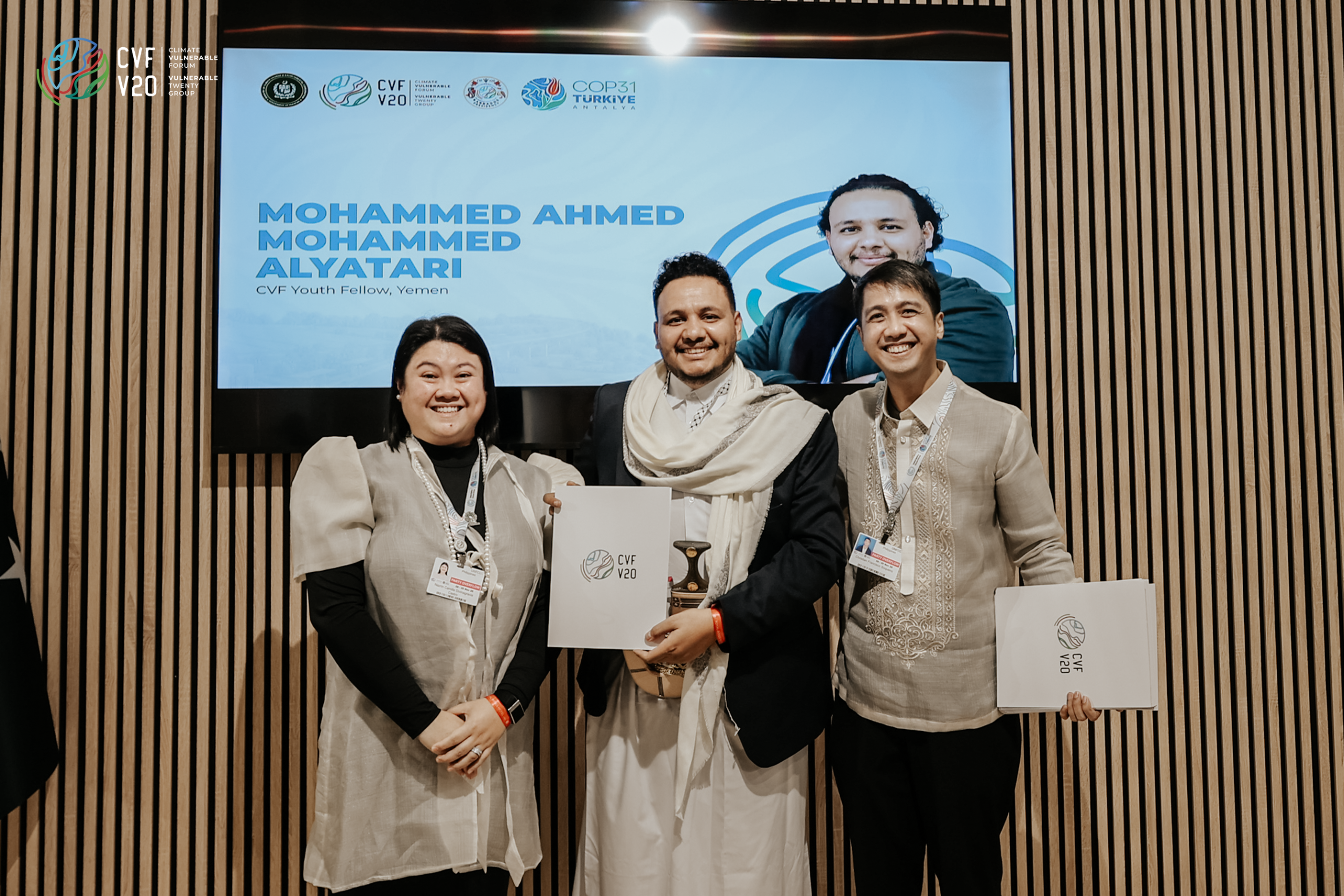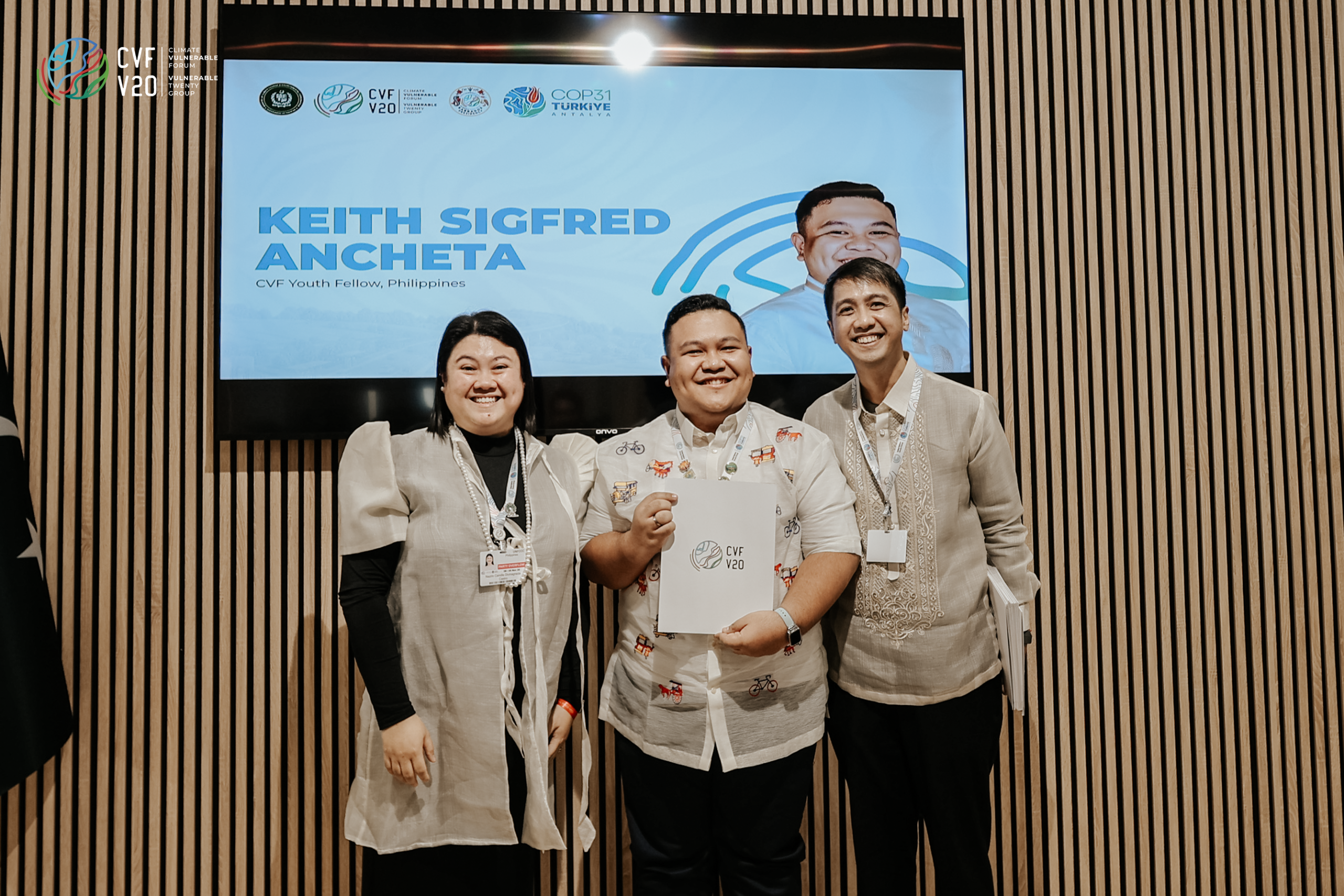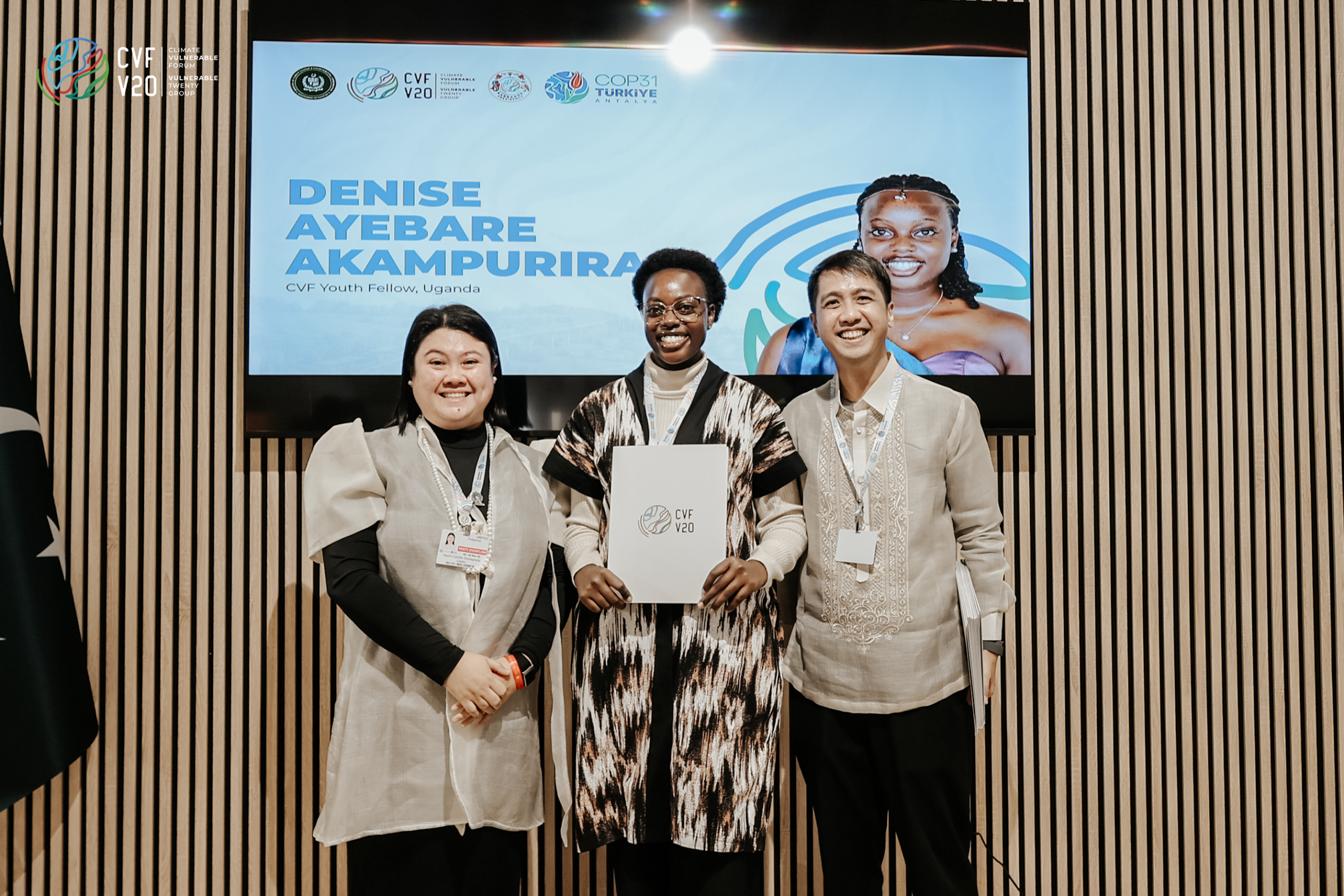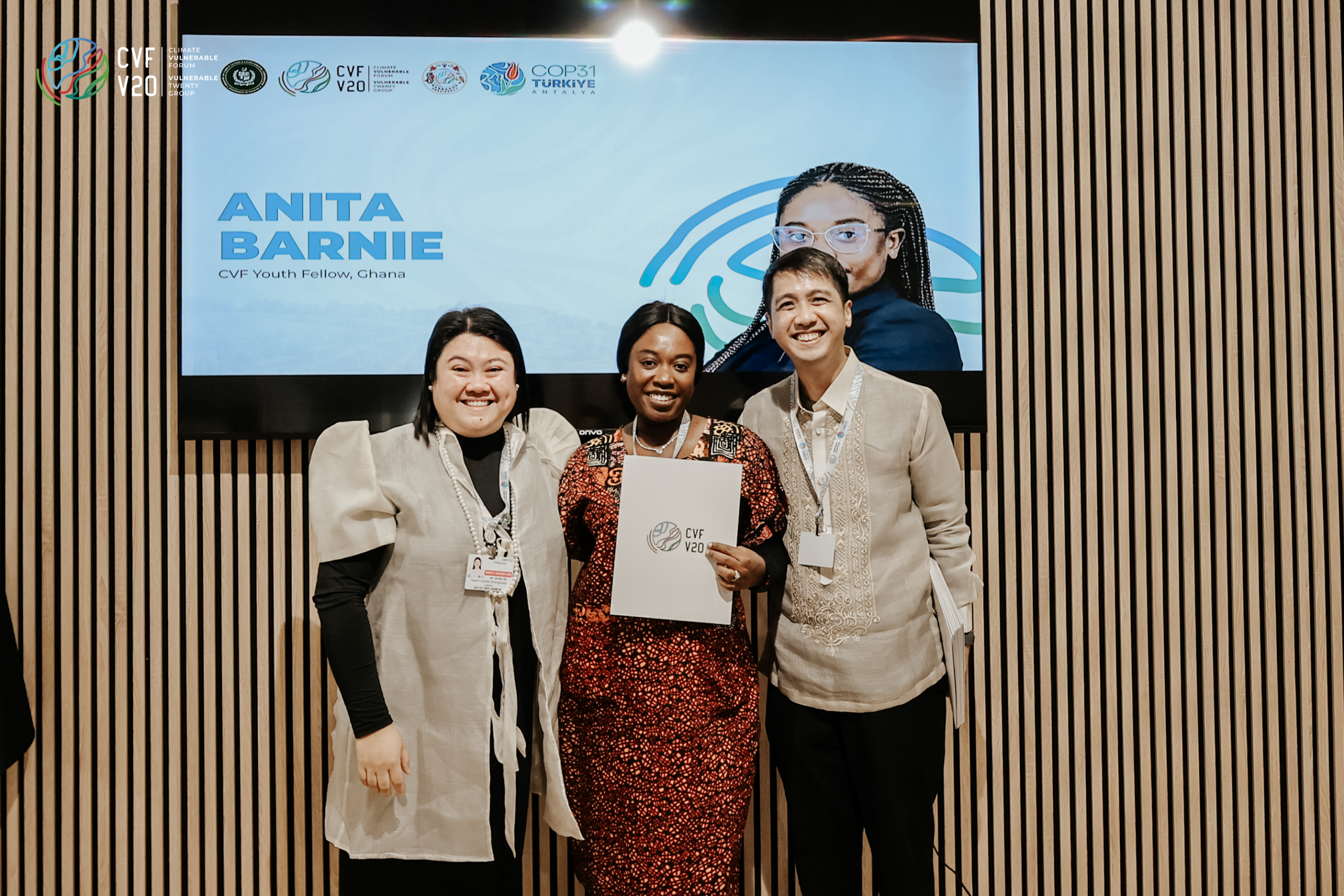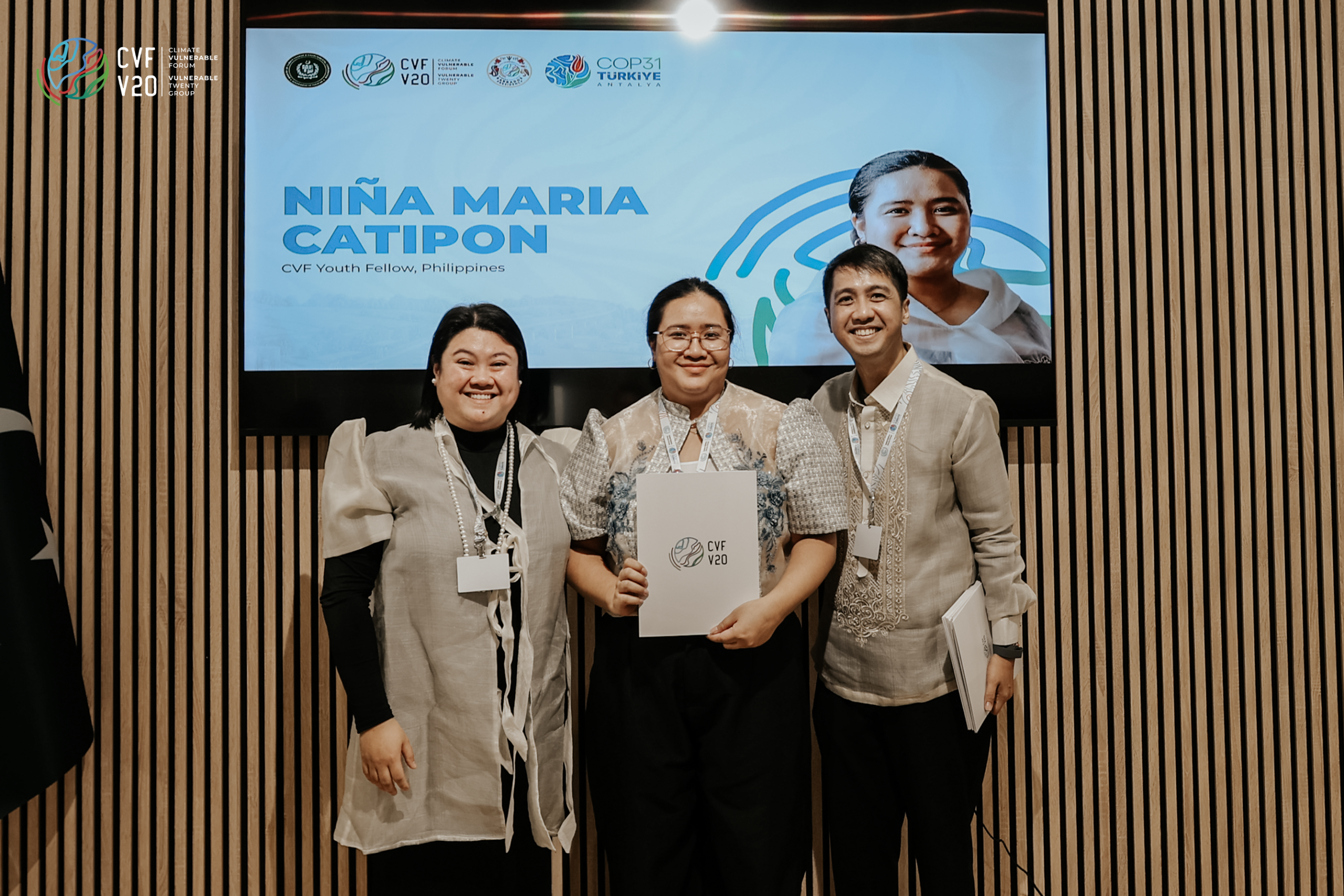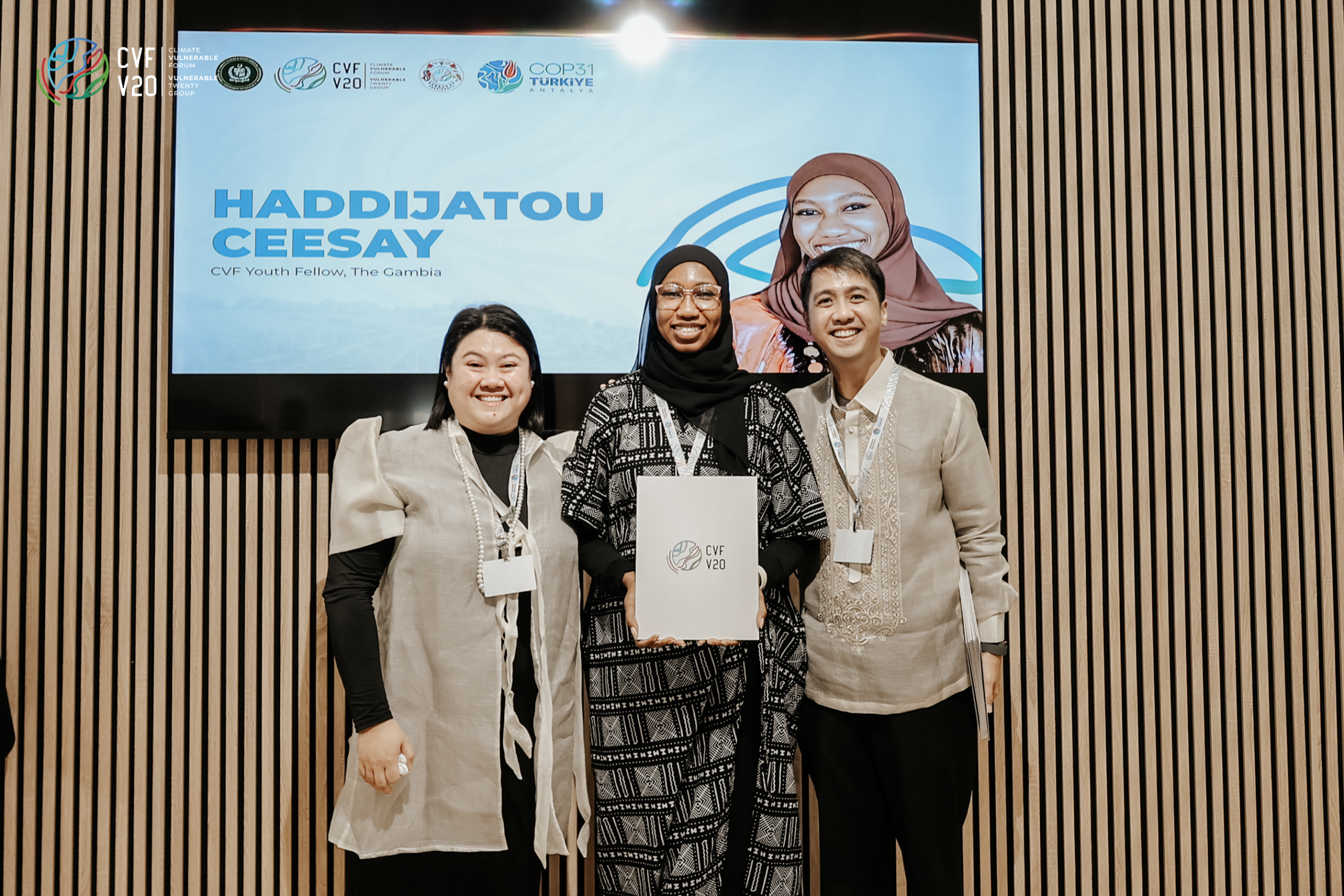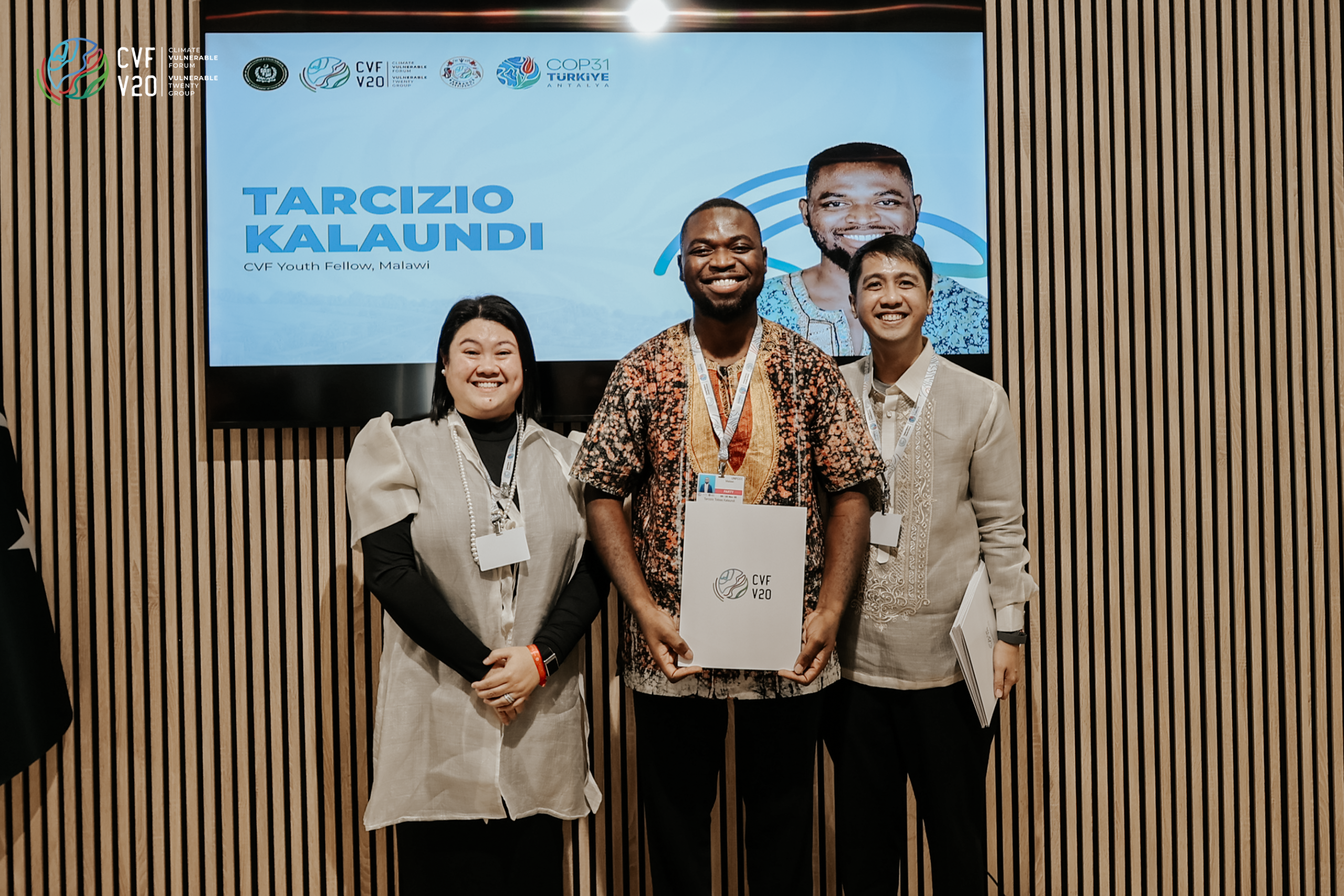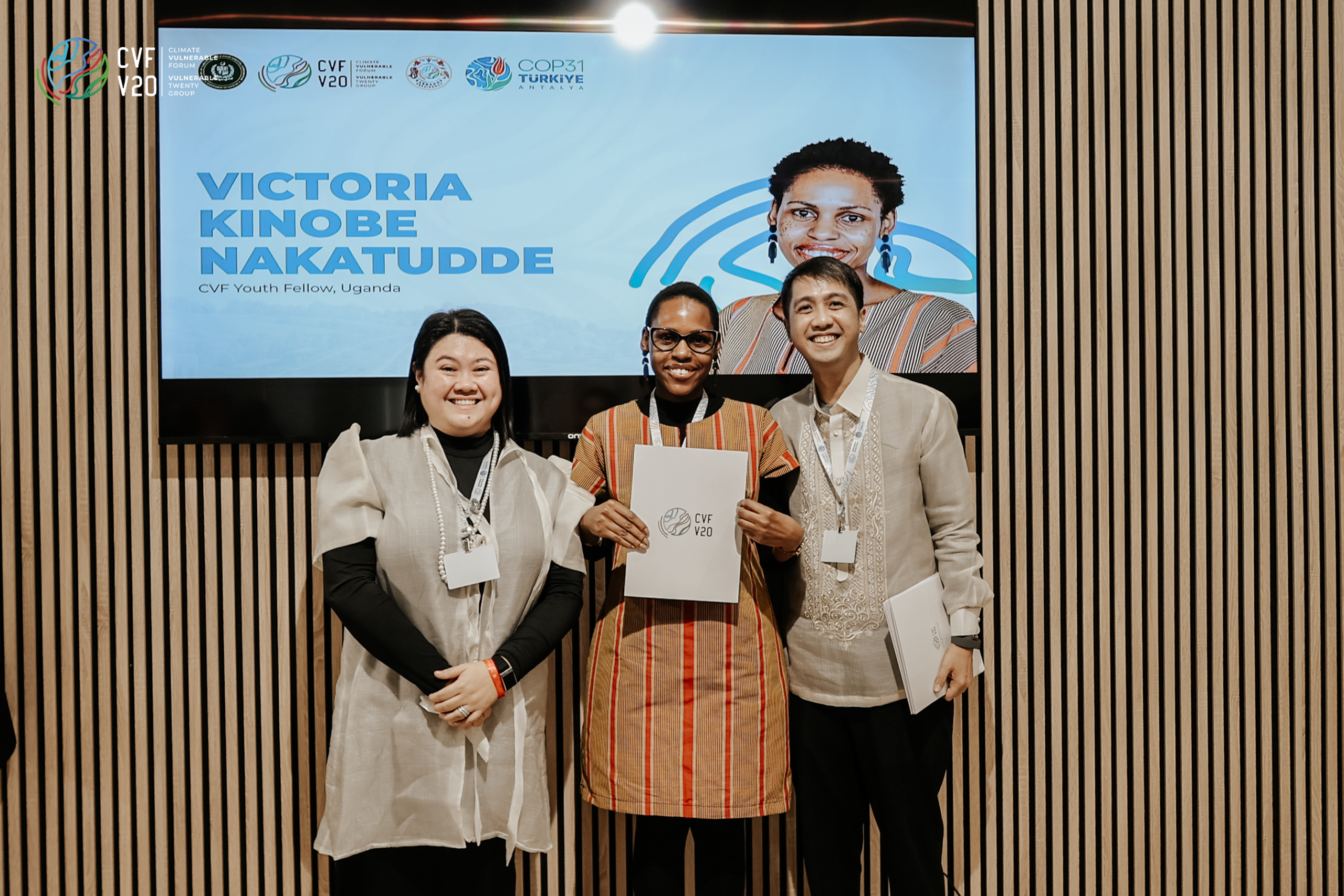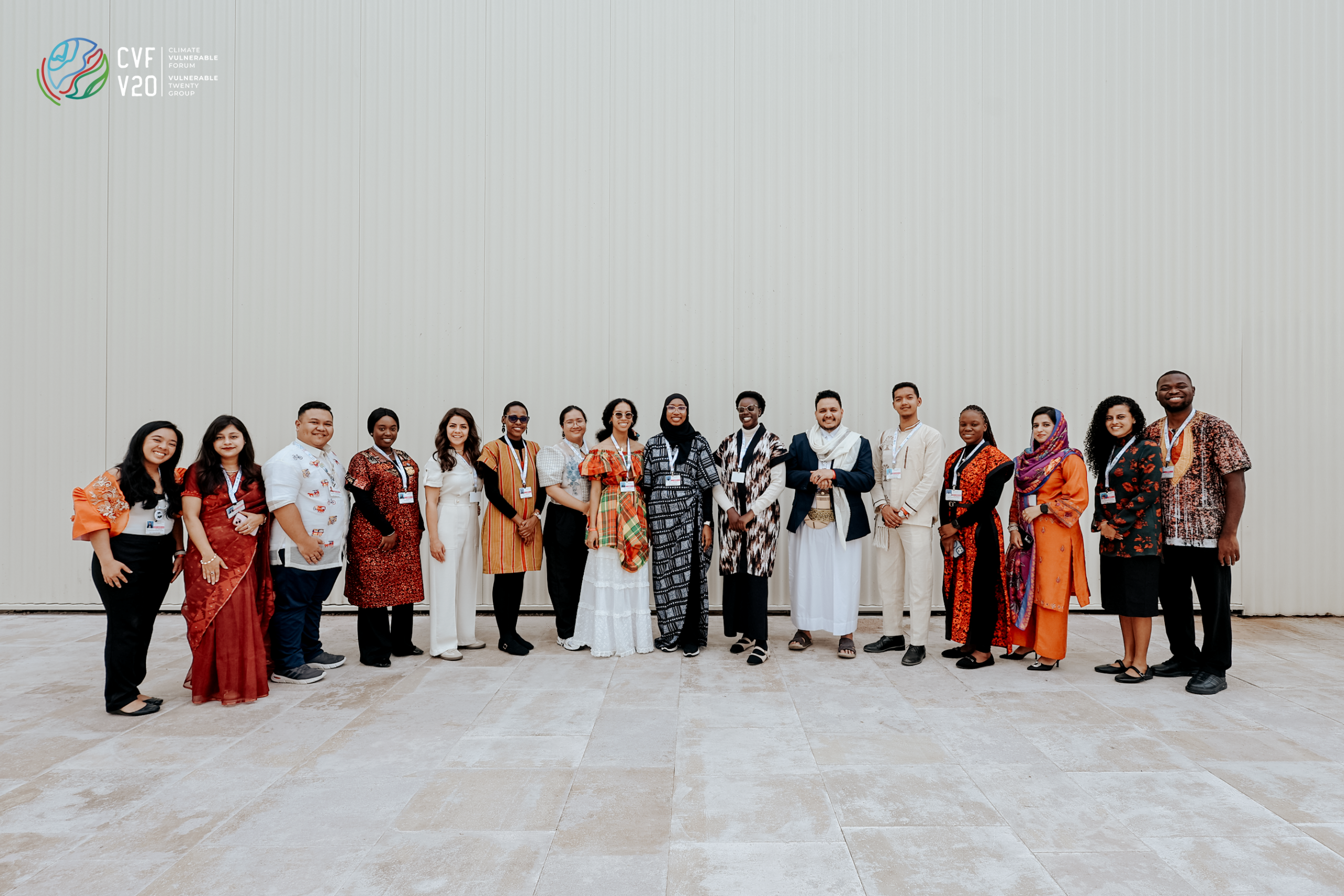

After three years and three UN climate conferences, young negotiators from 16 climate-vulnerable countries graduated at COP31 in Antalya with hard-won experience, a cross-border network and a mandate to shape what comes next.
They arrived in 2024, chosen from hundreds of applicants. They leave as trusted members of their national delegations and part of an emerging network of climate leaders.
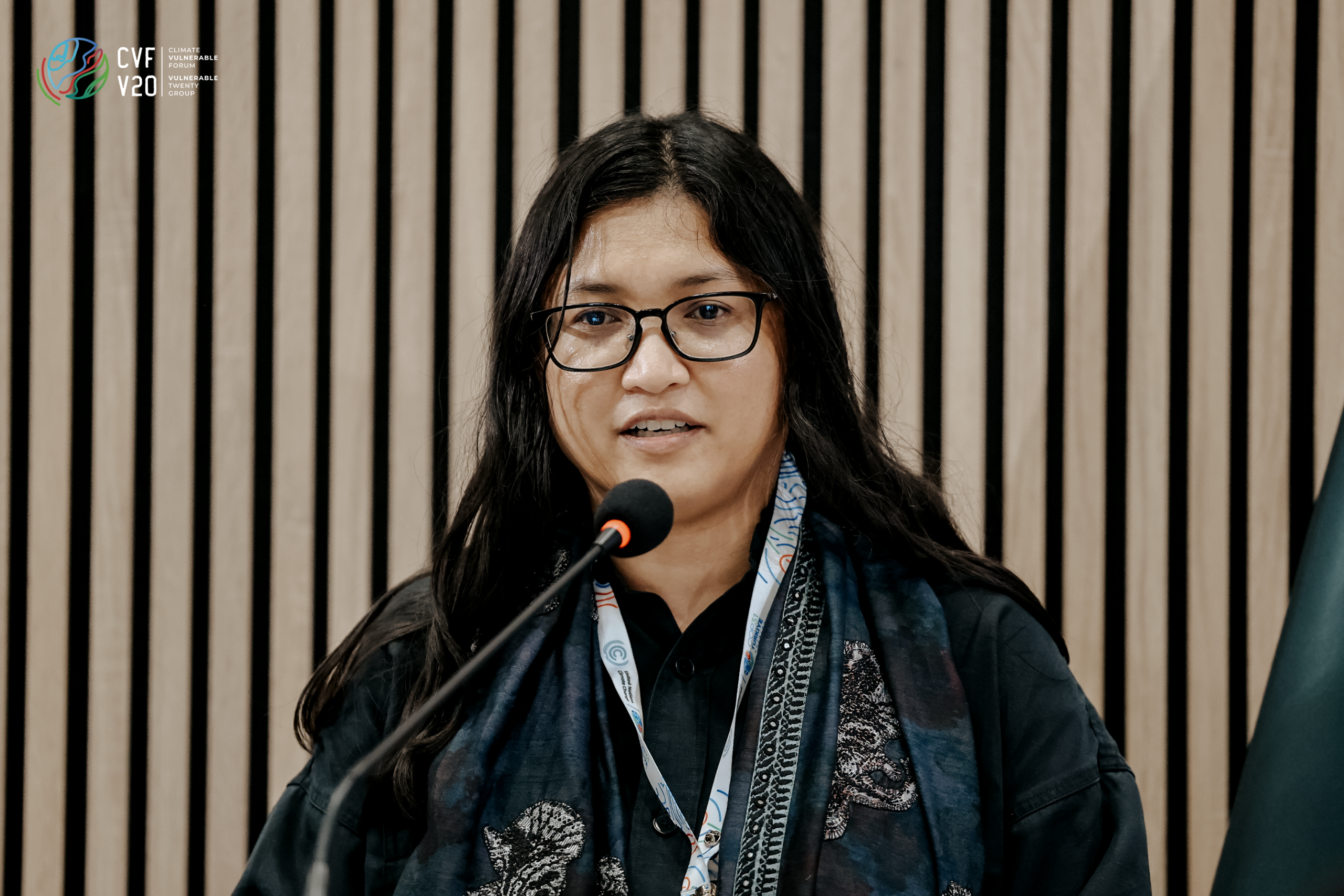
For Sara Jane Ahmed, Managing Director and Finance Advisor of the CVF-V20 Secretariat, their journey represents a bet on a new generation. “The fellowship was never only a program; it was actually a bet,” she said at the graduation ceremony. The bet was that solutions to the climate crisis would come from young people willing to challenge the status quo. Looking at the graduates, she added, “It certainly has paid off.”
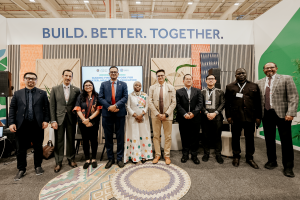
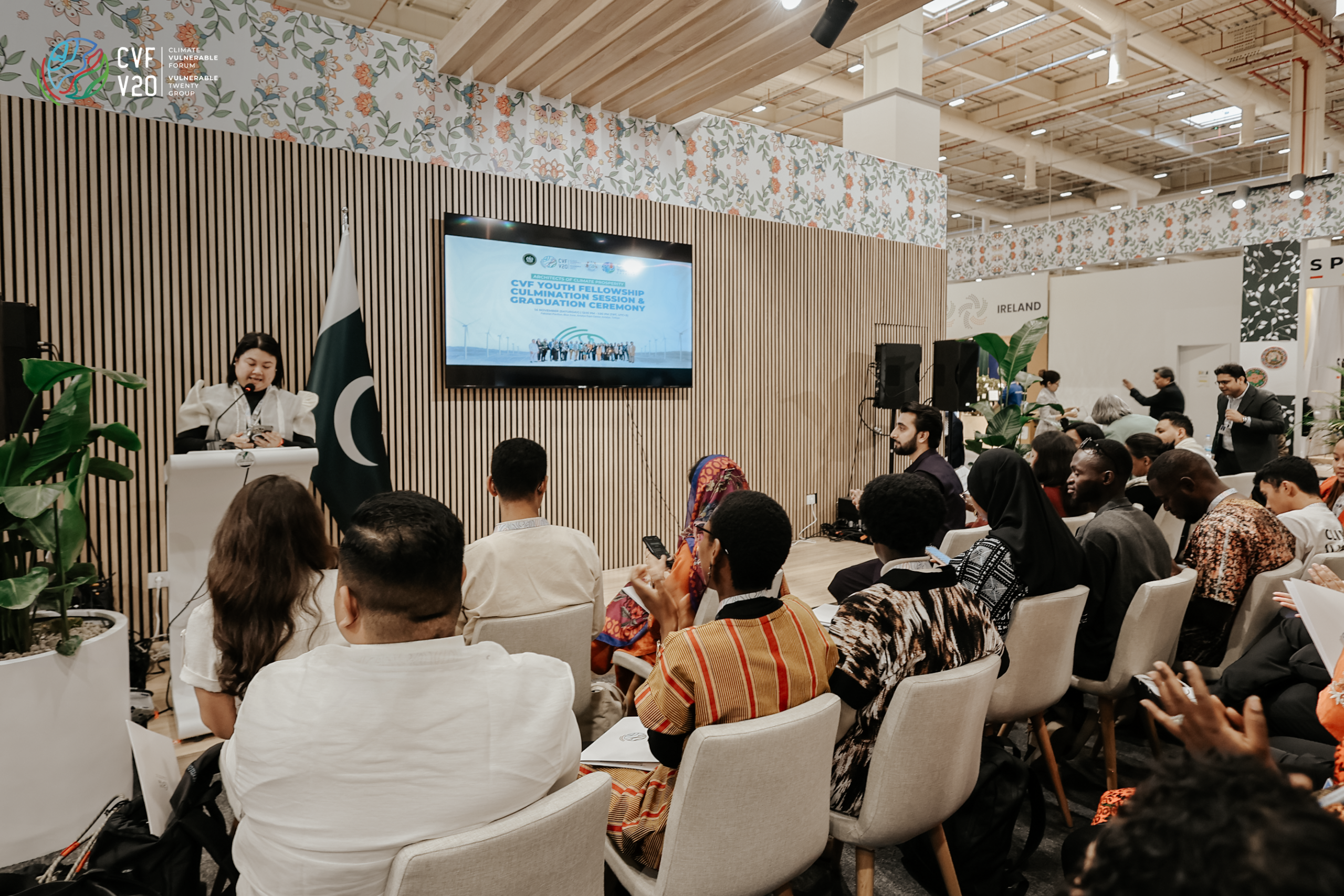
Held on November 14, the ceremony marked the culmination of a journey spanning COP29 in Baku, COP30 in Belém and COP31 in Antalya. But graduation was not an endpoint. It was a call to turn experience into action.
“We will continue to be champions of CVF by making sure the Climate Prosperity Plans and investment platforms are deeply rooted in the programming and design of economic activities in our respective countries,” said Tarcizio Kalaundi, CVF Youth Fellow from Malawi.
For Kalaundi, what the fellowship gave them was “audacity,” essential in a process that can wear people down. That audacity, he explained, comes from knowing two things: the problems CVF-V20 countries face, and that the world has enough resources to address them. What is missing is the link. He sees the CPPs as that “gateway,” a way to move from frustration to unlocking resources.
He was not alone. Across the fellowship, the graduates are already measuring their work against what happens in the negotiating rooms, and what still has to change.
That was clear in a panel moderated by Christian Soqueño, the Secretariat’s Deputy Director for Fellowships.
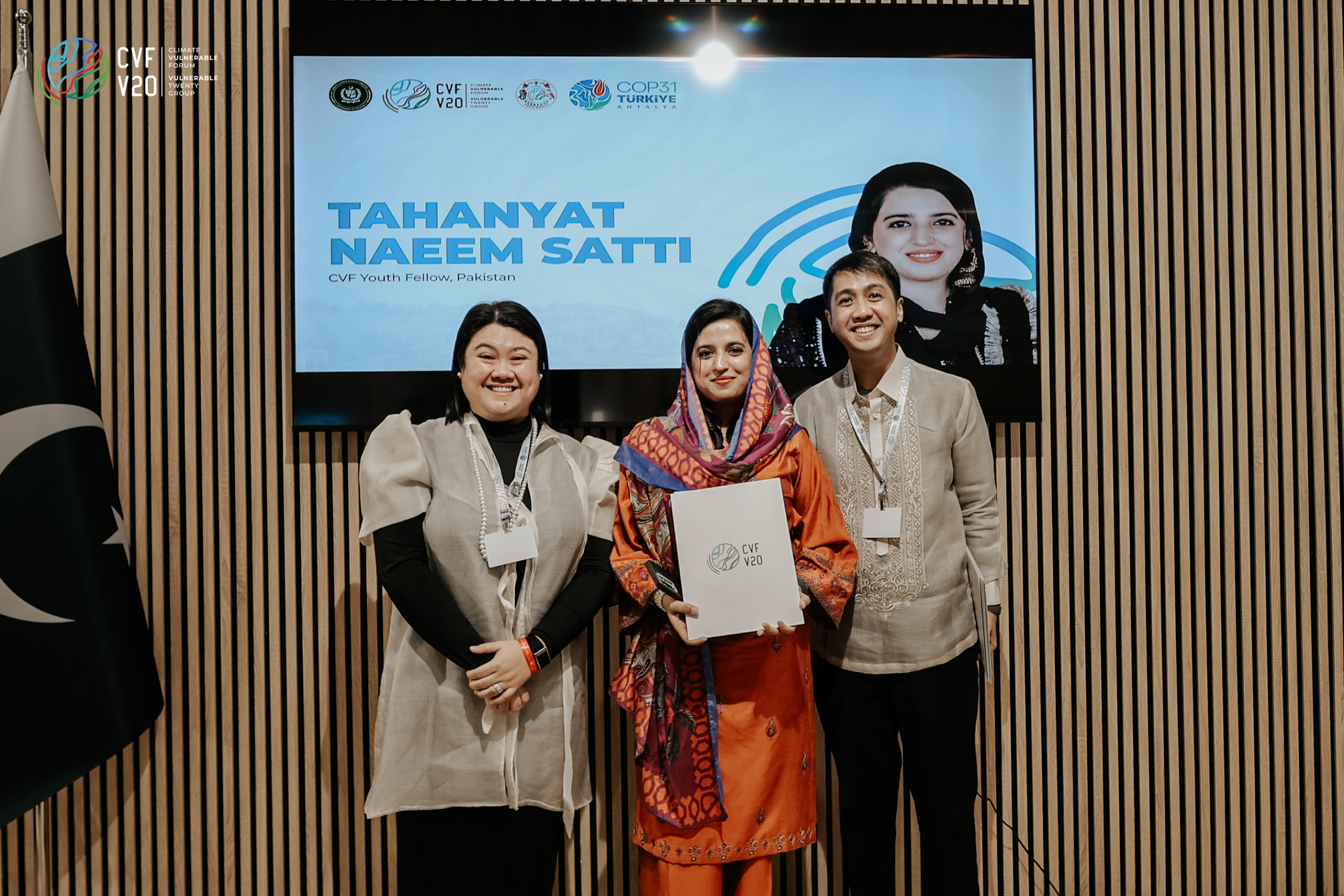
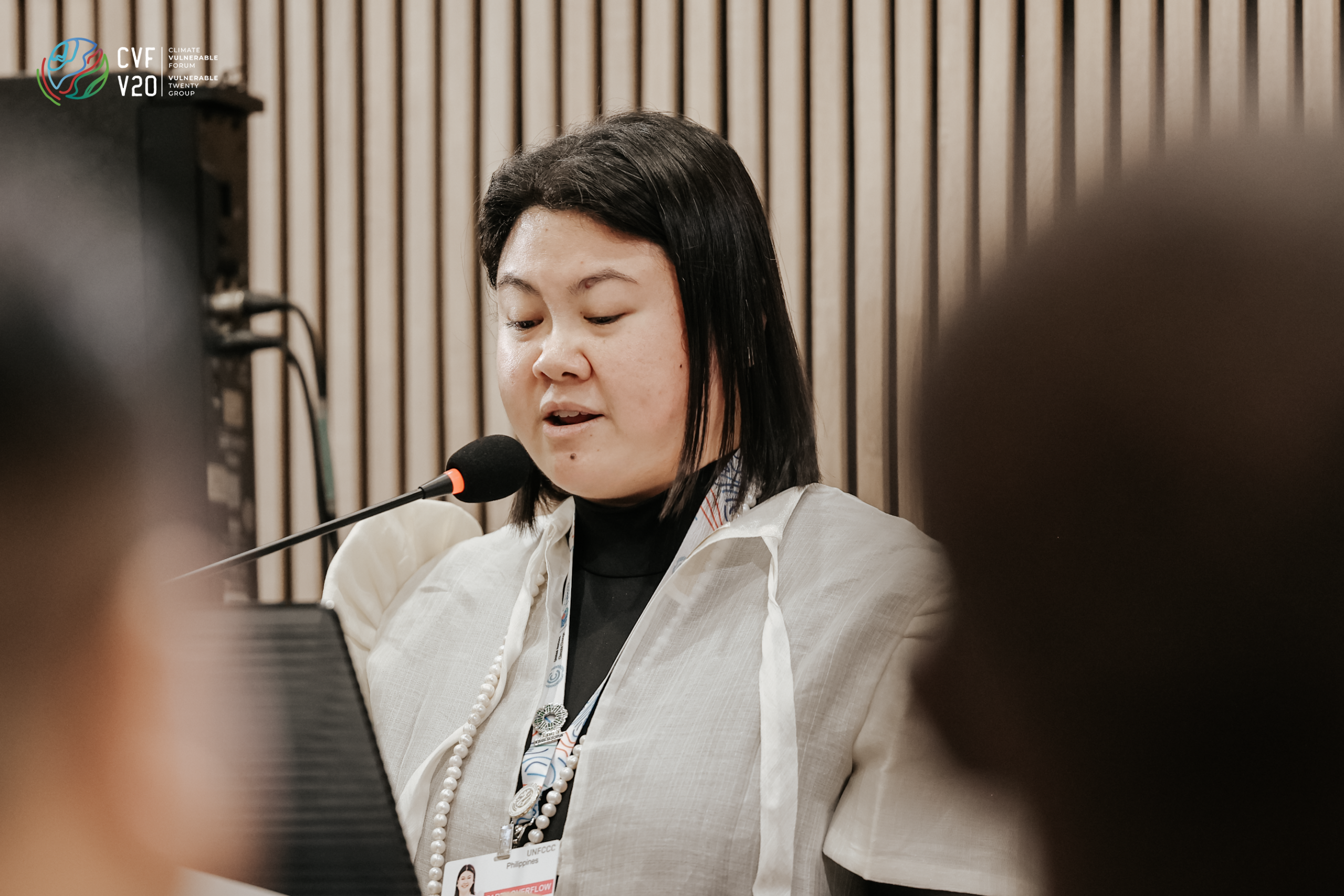
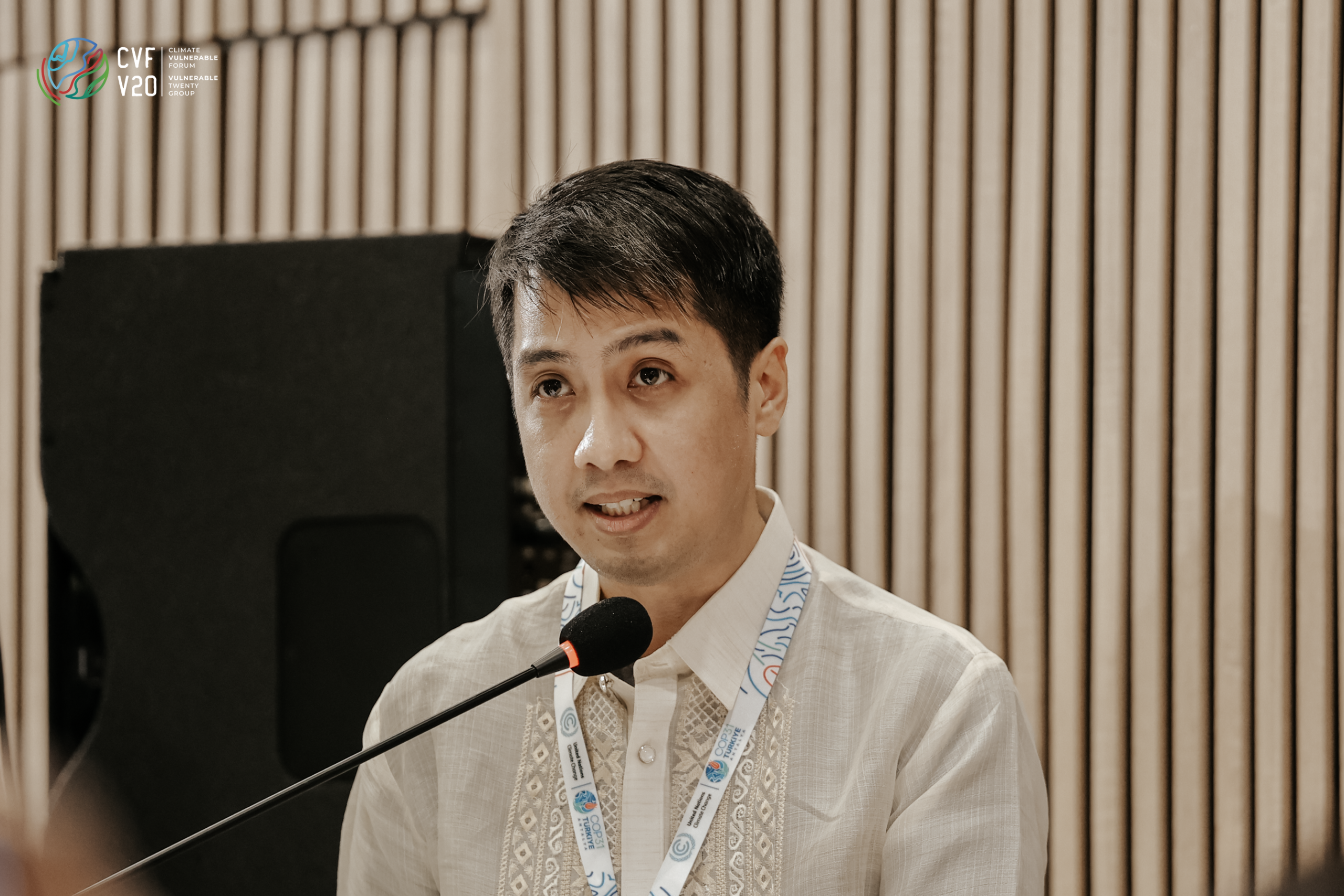
The first group spoke with the fluency of people who have followed these talks for three years. Keith Sigfred Ancheta of the Philippines, who follows finance, said about half of COP31’s decisions would carry finance elements. However, positions in the finance rooms, he said, were “getting farther and farther” apart. Tahanyat Naeem Satti of Pakistan, who follows adaptation, warned that youth “do not want to spend the next three COPs repeating the same demands.”
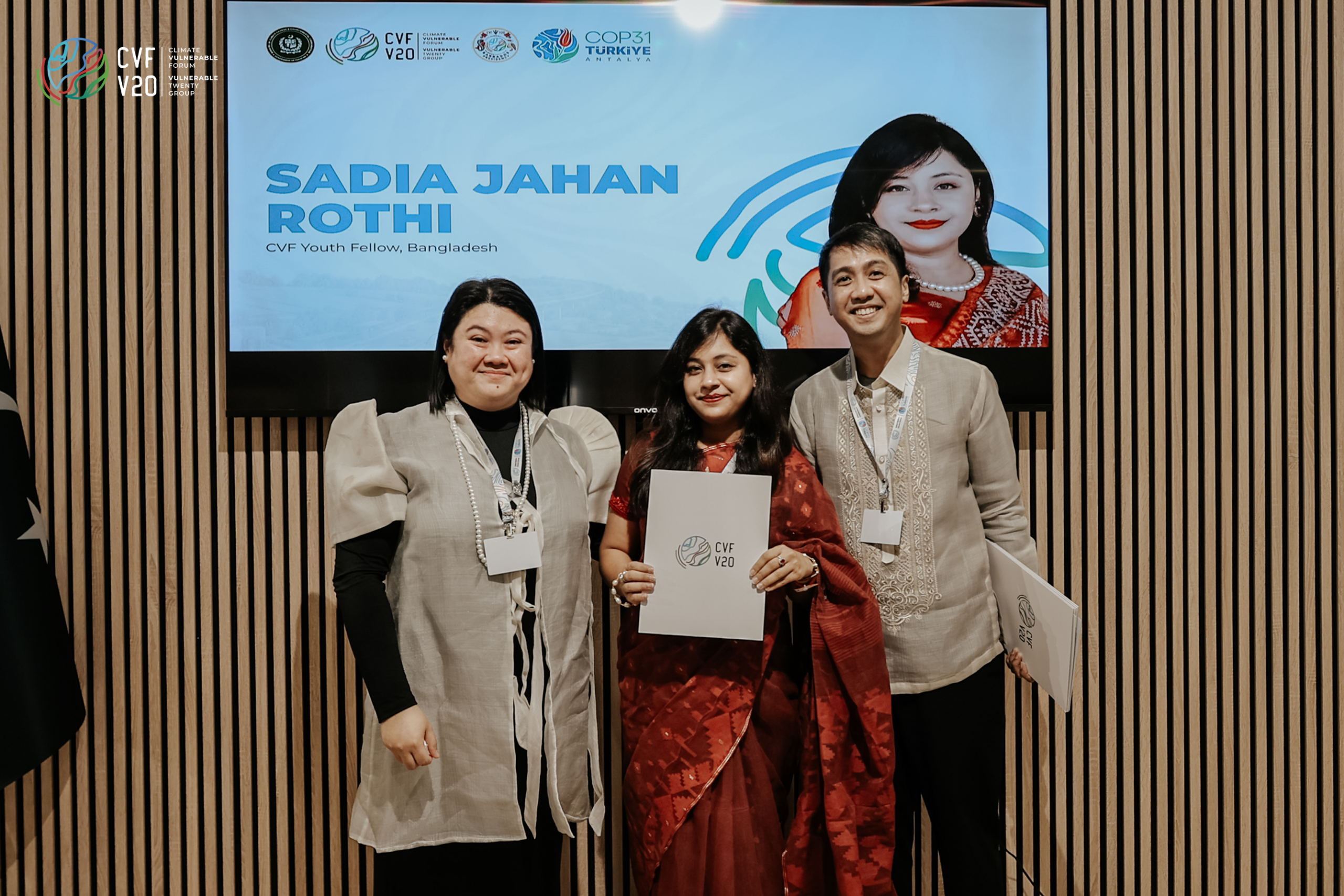
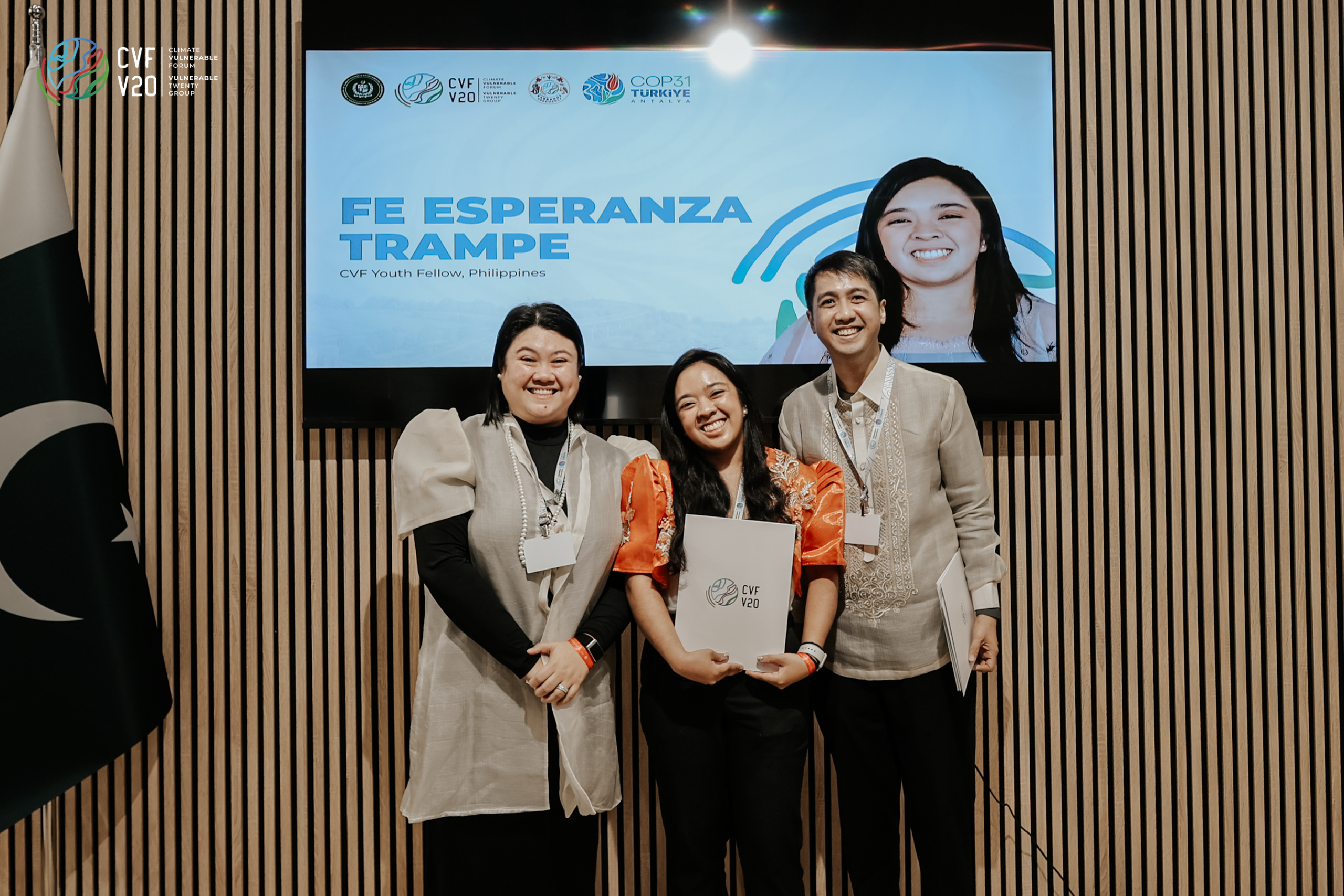
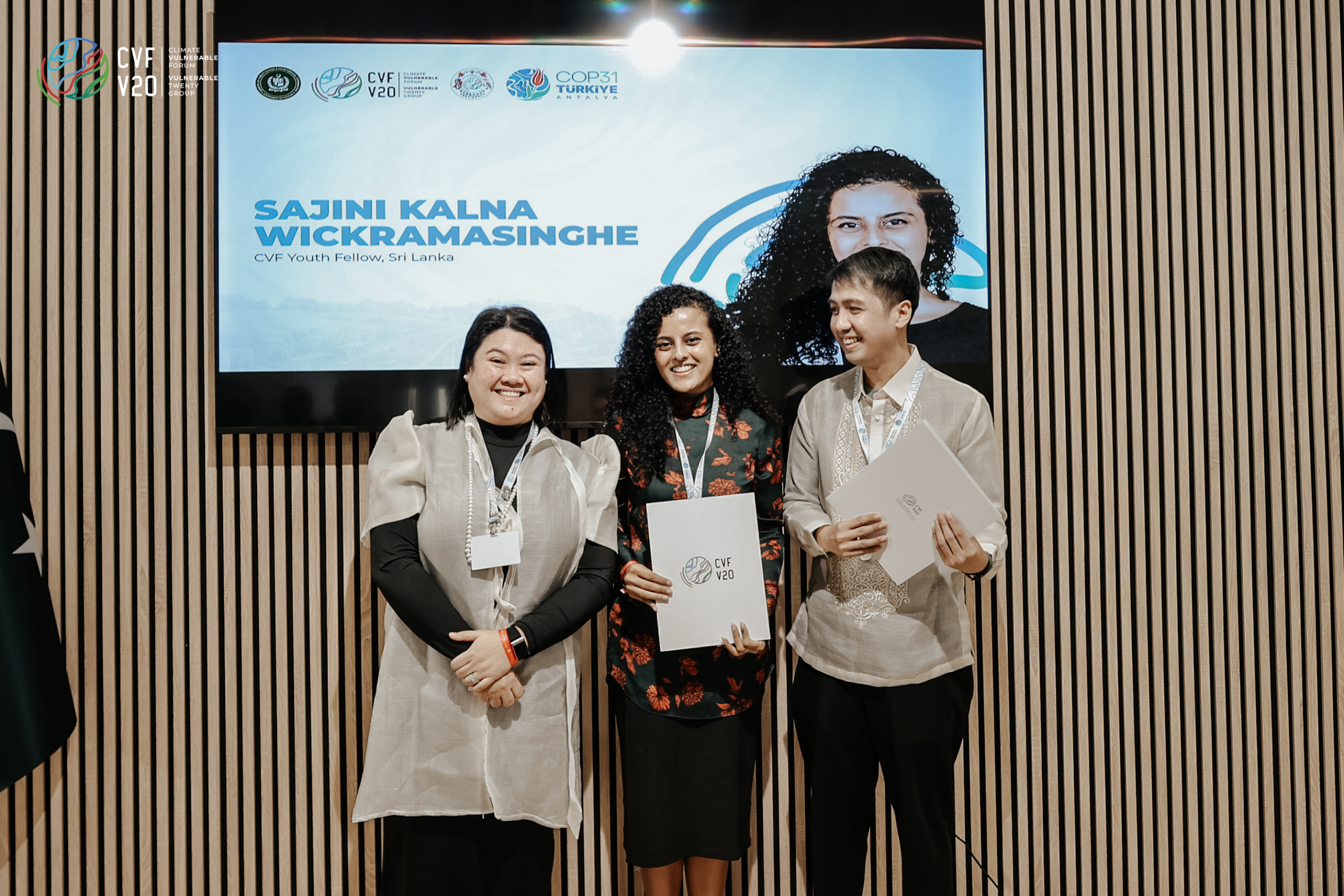
Fellows following other workstreams returned to a common thread: finance that reaches vulnerable countries, and decisions carried out, not just adopted. Sadia Jahan Rothi of Bangladesh called for grant-based finance for the loss and damage fund. Fe Esperanza Trampe of the Philippines, tracking the just transition, urged a genuine shift away from fossil fuels that leaves nobody behind. Mia Niña Maria Catipon of the Philippines, following gender, pressed for implementation. Sajini Kalna Wickramasinghe of Sri Lanka, following Article 6, and Mohammed Ahmed Mohammed Alyatari of Yemen, following technology, highlighted unresolved funding questions.
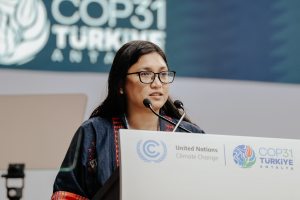
The second group faced a harder question: has meaningful youth engagement at COPs actually improved? Their answer was yes, with conditions. Victoria Kinobe Nakatudde of Uganda said the change “is not what the photos show.” Many young people fill the halls, she noted, but few reach the rooms where decisions are made, partly because few governments give them party badges. “There is a difference between us attending and us being heard,” she said.
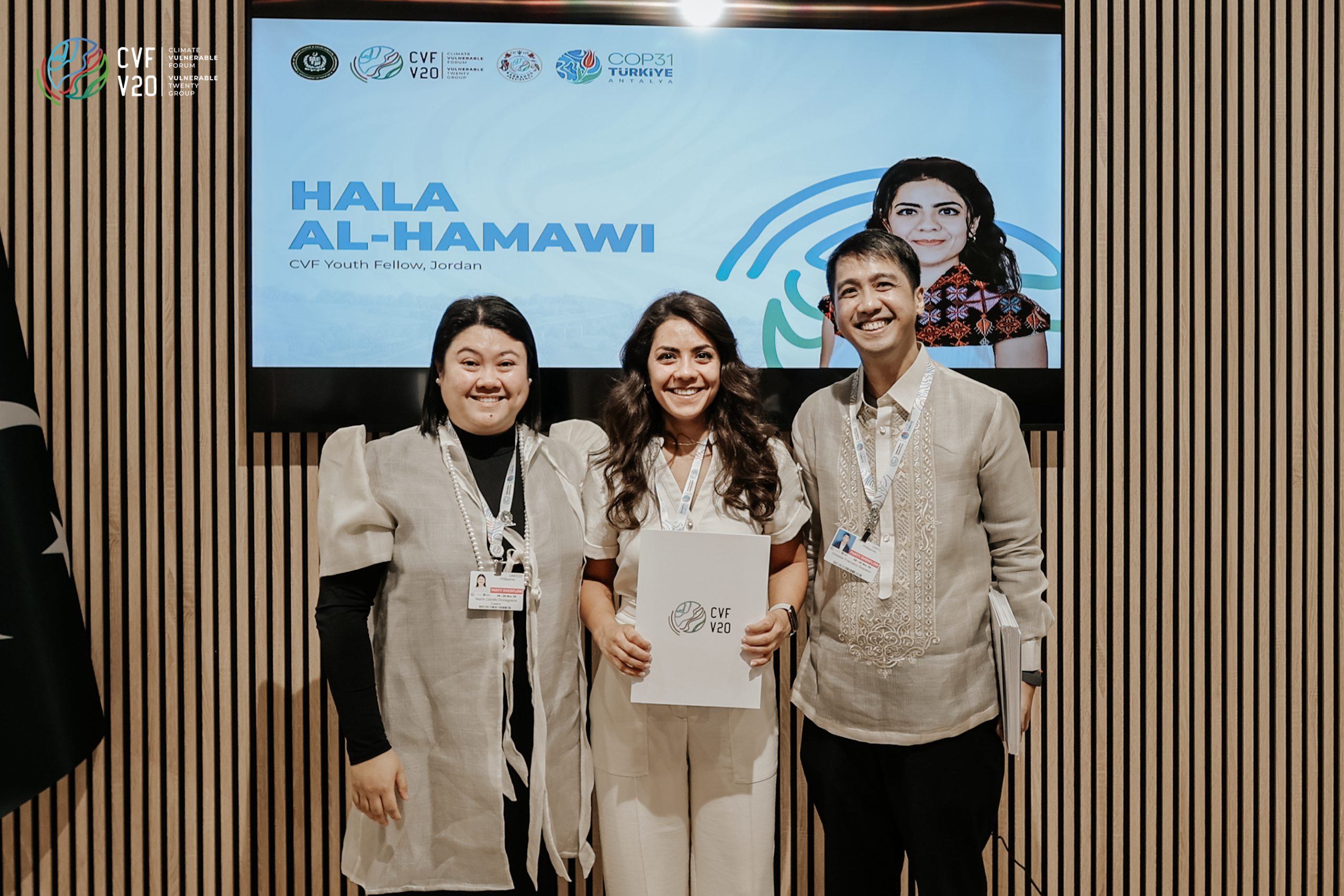
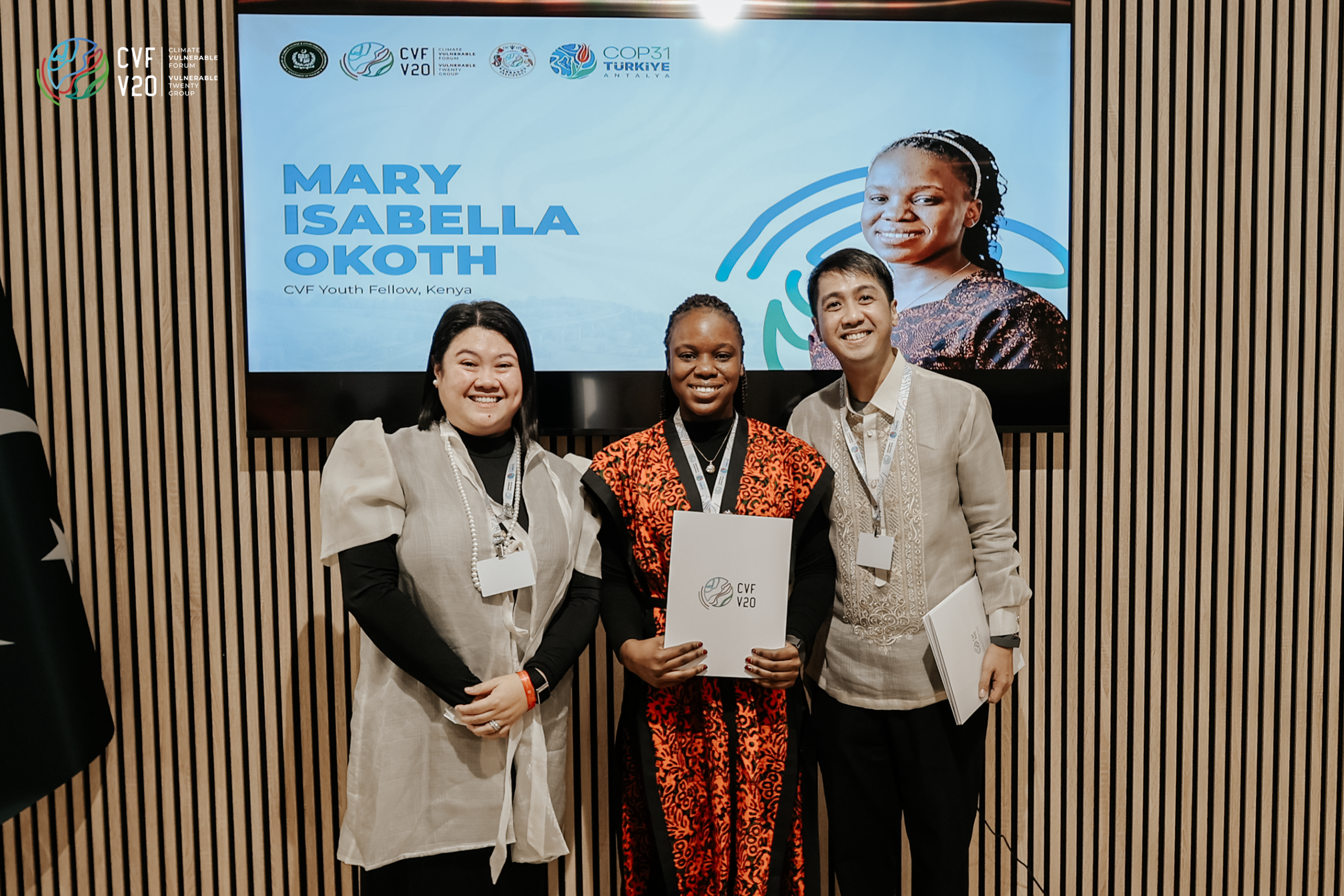
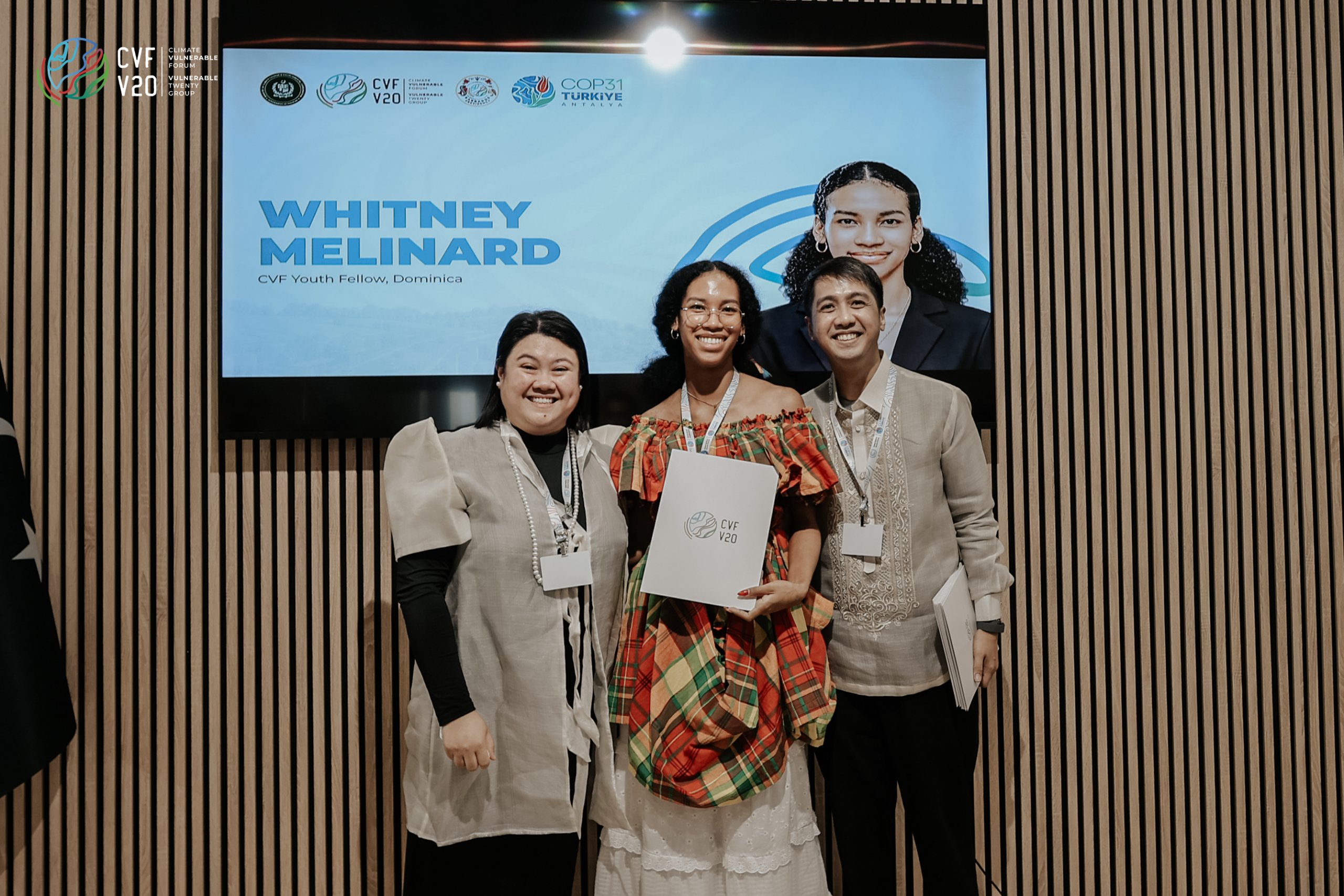
Others pointed to what the fellowship had made possible. Whitney Melinard of Dominica said more than half of her country’s small delegation this year is under 30. Hala Al-Hamawi of Jordan and Anita Barnie of Ghana raised a shared concern. Negotiation skills build up over years, they said, so mentoring must continue after any single fellowship ends. Denise Ayebare of Uganda said fellowships like the CVF’s turn young people from passionate advocates into technical experts. Mary Isabella Aoko Okoth of Kenya said engagement must go further, so that youth voices shape final decisions.
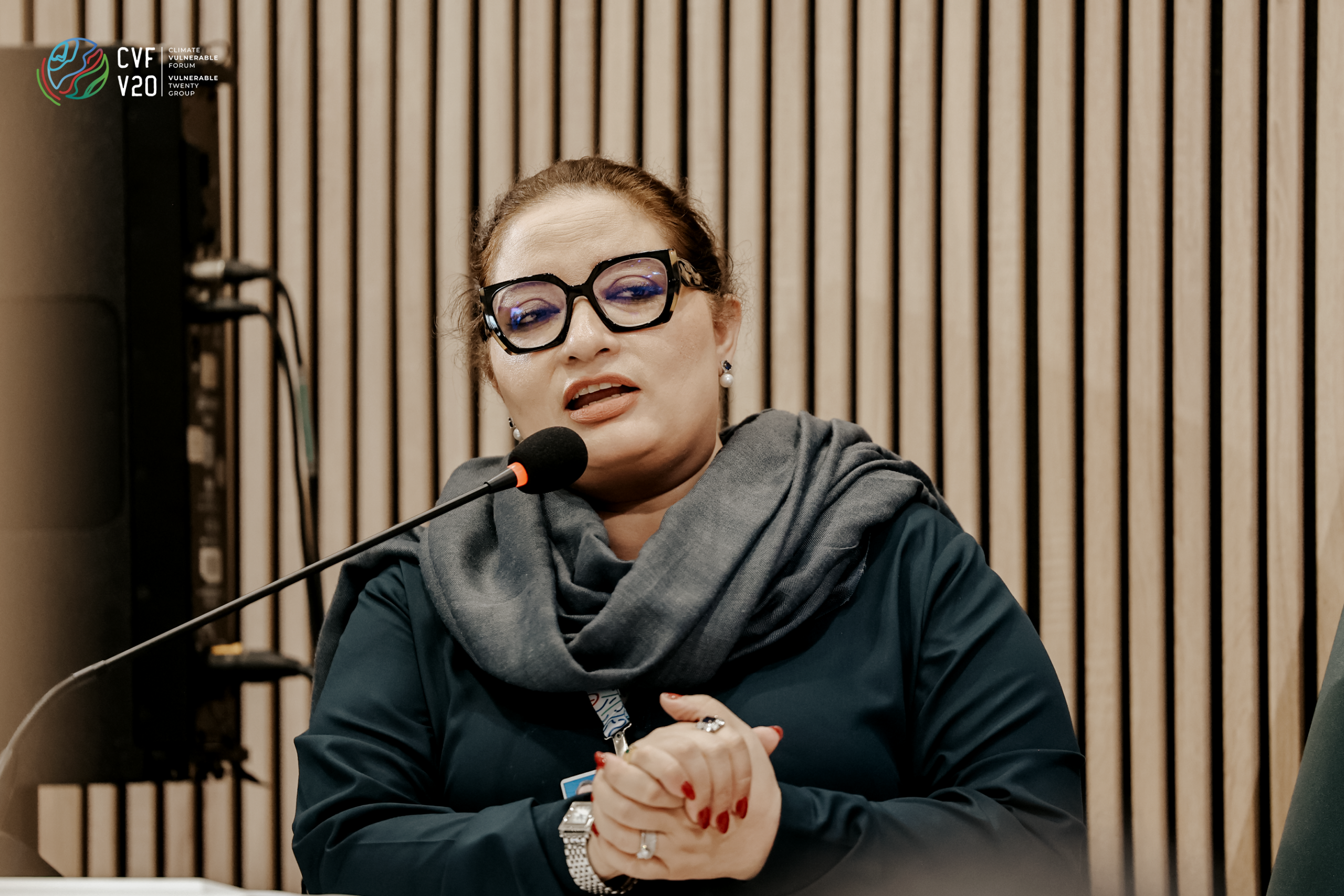
For these graduates, the climate crisis is not abstract. Hon. Romina Khurshid Alam, Coordinator to the Prime Minister of Pakistan on Climate Change and Environmental Coordination, made that point plainly. “Our young people did not study the climate crisis from a distance,” she said. “They lived it.”
She asked the graduates to take three things out of the pavilion: the credibility they had earned, the 16-country network they now belonged to, and the responsibility that came with both. She also told them what to remember when negotiations frustrate them. “We are not here to get sympathy,” she said. “We are asking for climate justice.”
Ahmed echoed that call. She recalled leaders of vulnerable nations who refused to stay silent, among them former Maldives President Mohamed Nasheed and Barbados Prime Minister Mia Mottley. “None of them waited for permission, and neither should you,” she told the graduates.
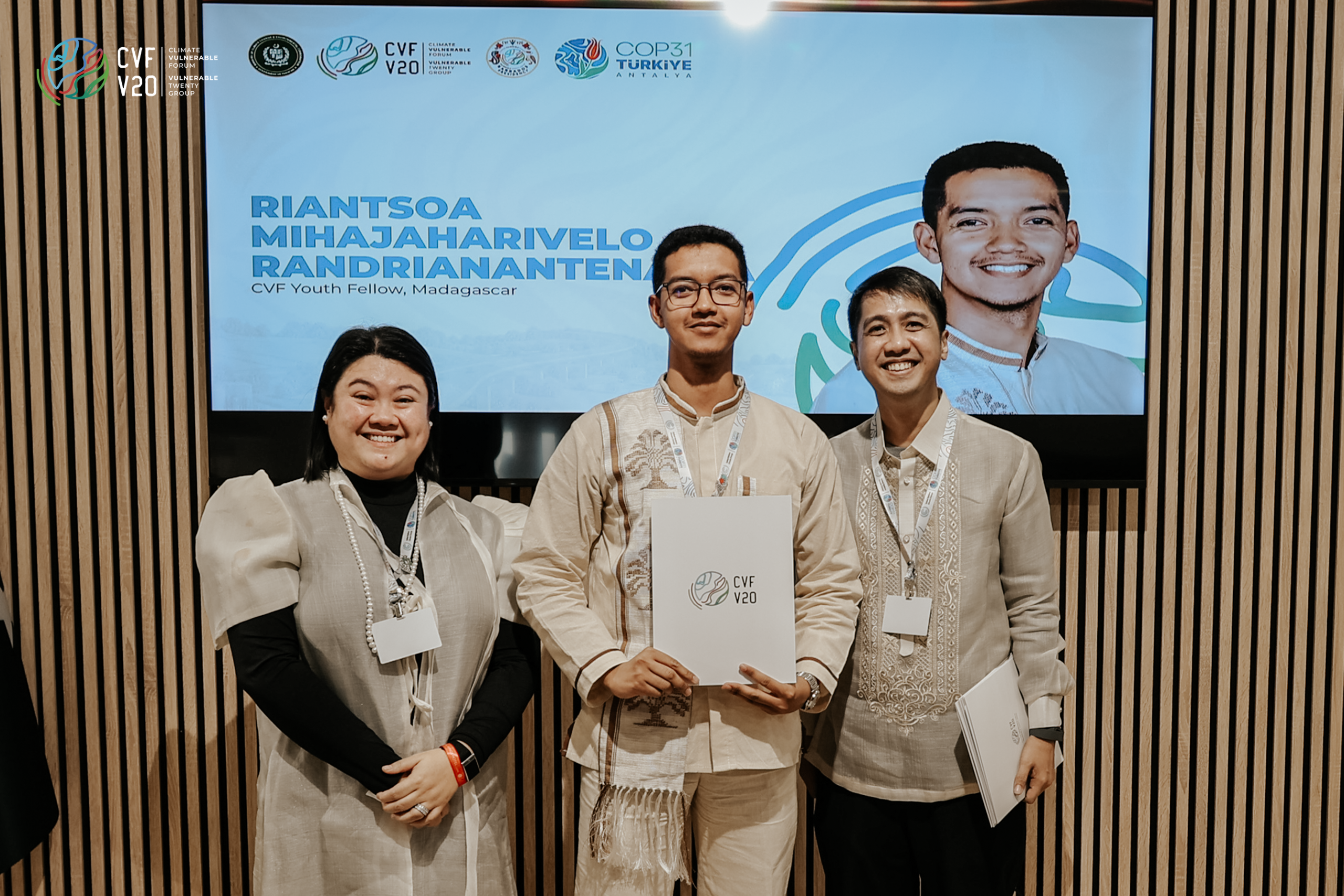
What the fellows valued most was each other. Haddijatou Ceesay of The Gambia said they had been “witnesses to one another’s becoming.” Riantsoa Randrianantenaina of Madagascar described a bond built on Friday online trainings and daily messages, and on showing up for one another through birthdays, weddings, and floods and cyclones back home.
Soqueño, who has led the program since its launch, summed up the experience in four words: deepening, network, memories and competency. The network, he said, is the fellowship’s real strength. It is why fellows following different workstreams could brief one another in their “huddles” at every COP. Rather than say what comes next, he handed the question back to the graduates: “What’s next? You tell us.”
For Randrianantenaina, the answer is to keep the network alive. Three years of closely following negotiations is an asset, he said, and “we cannot let it just flow away.” His motto for the cohort: “One day with CVF, forever with CVF.”
Satti put it most simply. “We may be graduating from this fellowship, but we are certainly not graduating from climate action,” she said. “We arrive here as fellows, we leave as friends and family, and we move forward as architects of climate prosperity.”
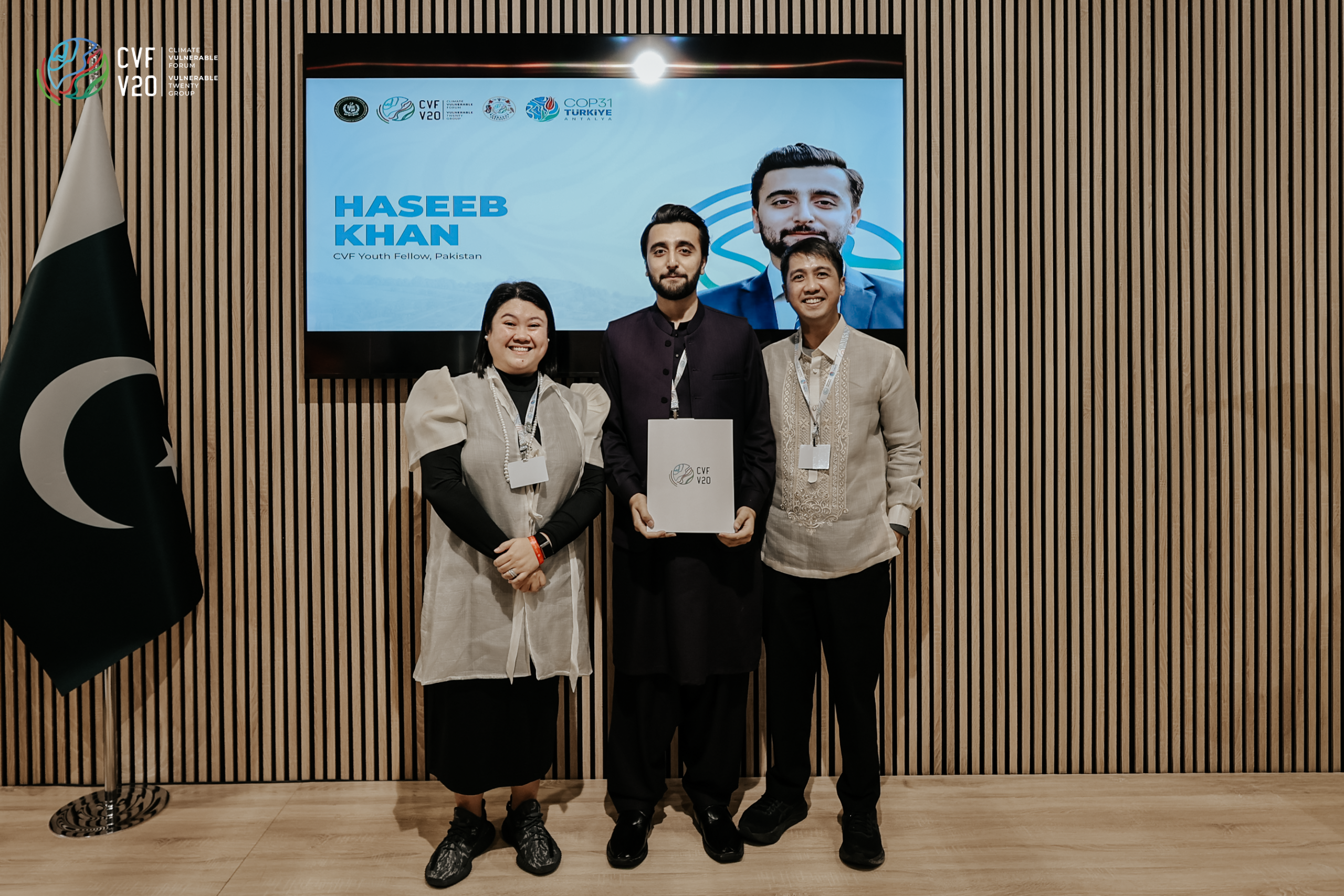
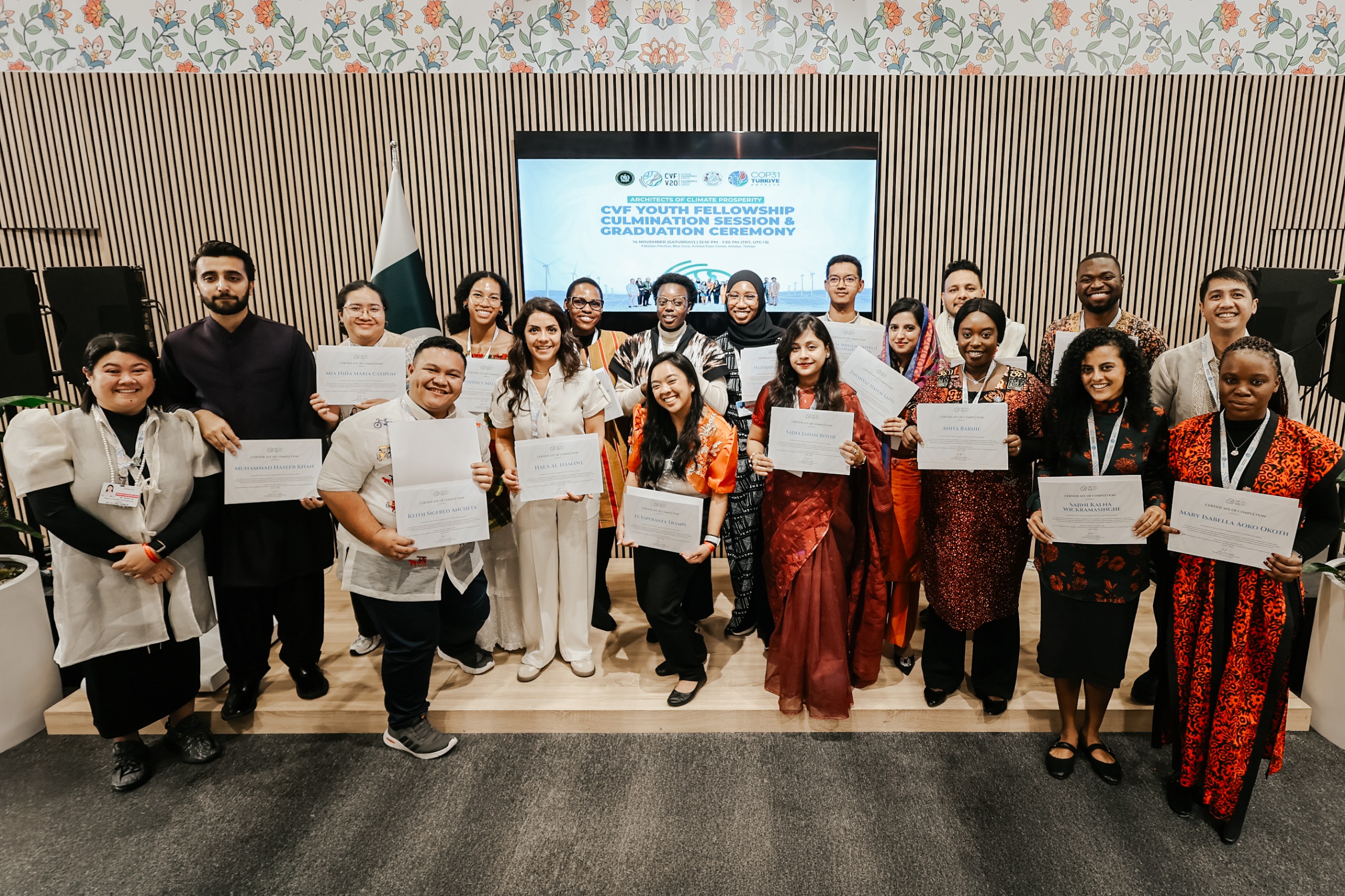
Seventeen fellows received their certificates in person, including Haseeb Khan of Pakistan, a former fellow who now works at the CVF-V20 Secretariat. Six others who could not attend COP31 were recognized: Yakubu Adam of Ghana, Sara Badran of Lebanon, Yordanos Getachew of Ethiopia, Ramsha Malik and Noor Ul Huda of Pakistan, and Adelin Pierre of Haiti.
***