
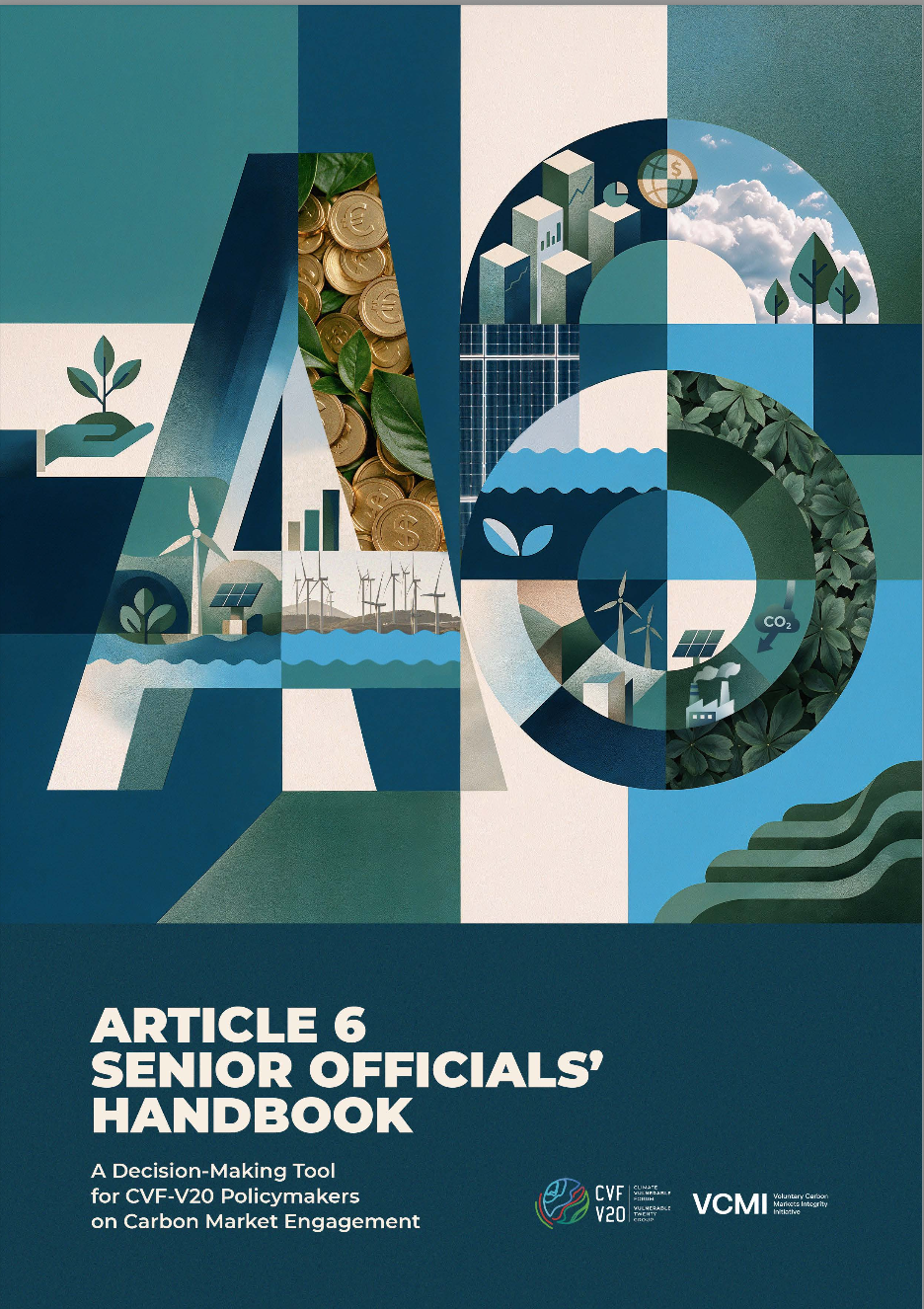
Article 6 Senior Officials’ Handbook
Carbon markets, including those implemented under the Article 6 route, present an opportunity to unlock an estimated additional US$20 billion a year for CVF-V20 countries by 2030. This handbook, developed in partnership with the Voluntary Carbon Markets Integrity Initiative (VCMI), has been prepared to support senior government officials engaging with decisions concerning carbon market participation to navigate the complexities of Article 6 of the Paris Agreement.
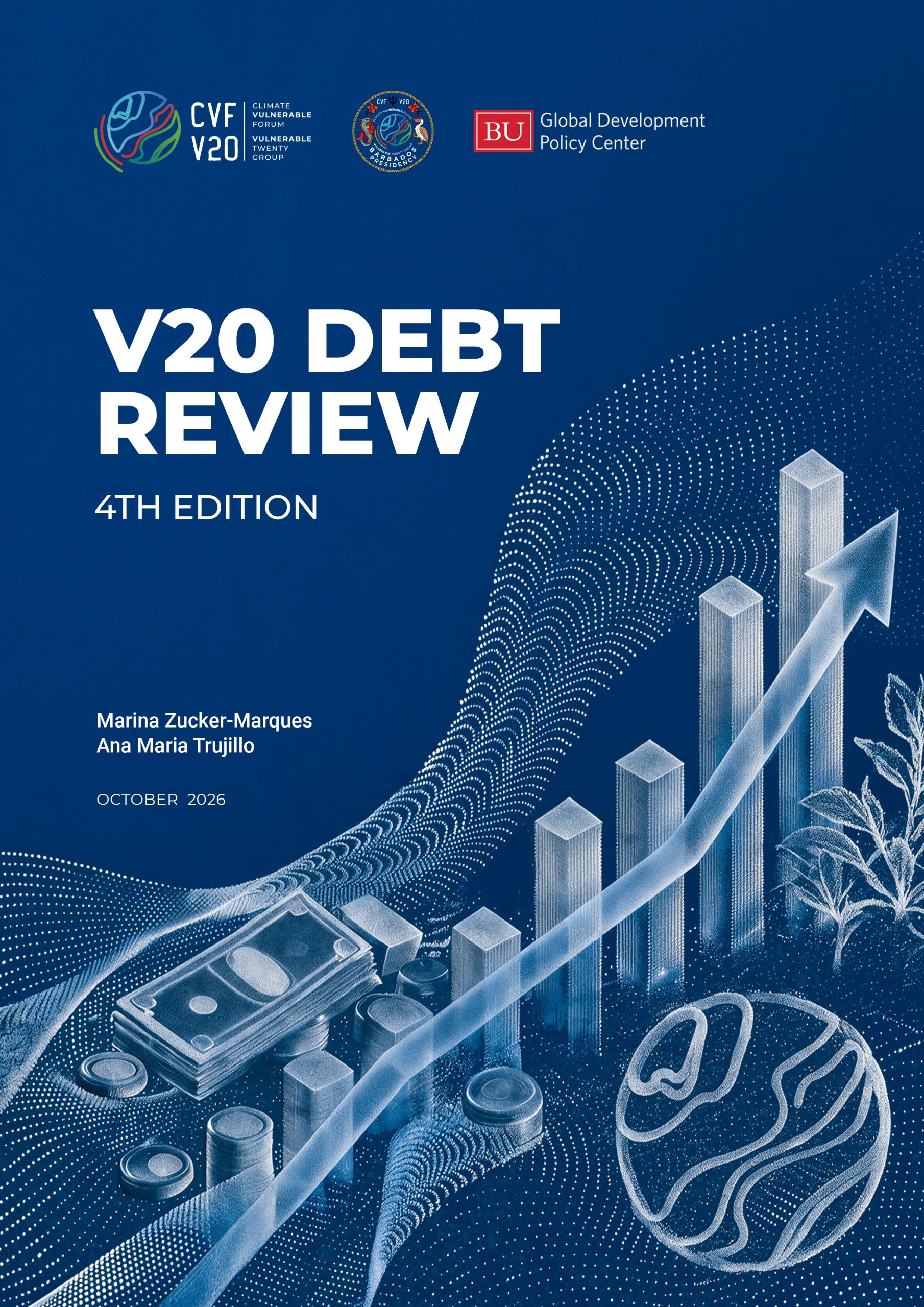
V20 Debt Review (4th Edition)
The Fourth Edition of the V20 Debt Review found that although the V20’s aggregate external debt stock declined modestly in 2024 after peaking in 2023, the underlying financing constraint has not materially improved. Debt service remains elevated, a growing share of countries devote 10% or more of government revenue to external debt payments, and domestic interest costs are placing additional pressure on public budgets.
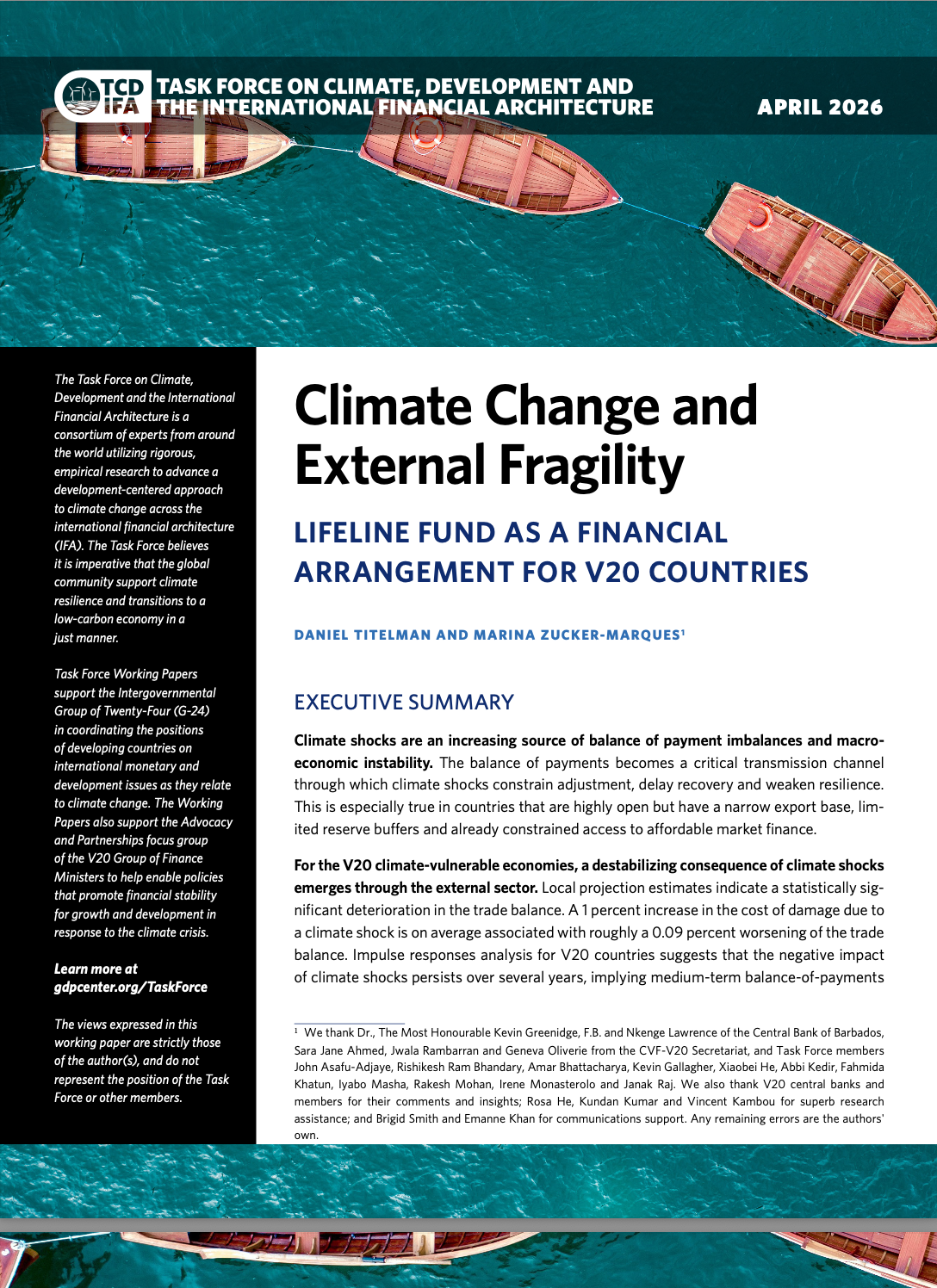
Climate Change and External Fragility: Lifeline As A Financial Arrangement For V20 Countries
The analysis of this report indicates that climate shocks create significant negative, but uneven, balance-of-payments pressures across V20 countries. Heterogeneity in economic size, trade openness, reserve buffers and access to external finance means that shocks are largely idiosyncratic, with limited cross-country synchronization. By pooling risks across countries and providing rapid, targeted liquidity support, the Lifeline Fund can strengthen the Global Financial Safety Net for the most vulnerable economies.
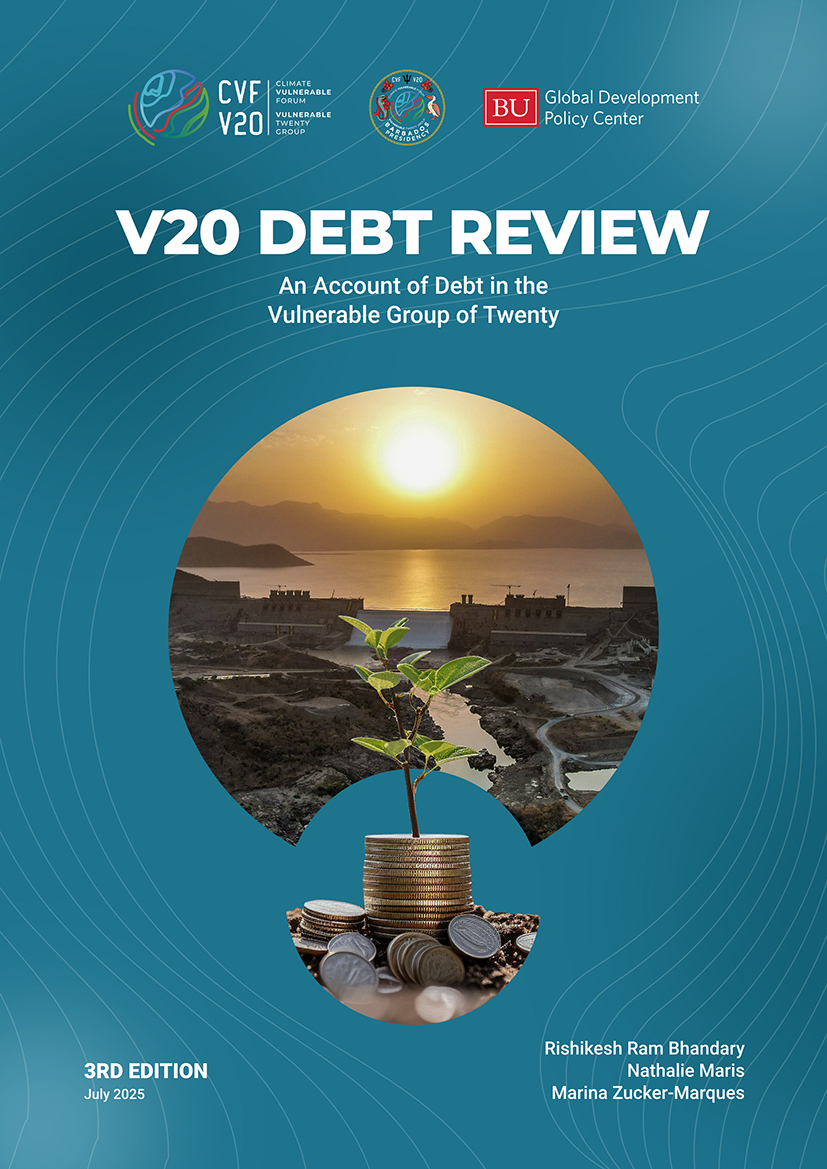
V20 Debt Review (Third Edition): An account of debt in the Vulnerable Twenty (V20) Group
The Third Edition of the V20 Debt Review offers a clear snapshot of the sovereign debt landscape for V20 economies over the past 25 years and underscores the urgent need for systemic debt solutions that can unlock climate action and sustainable development.
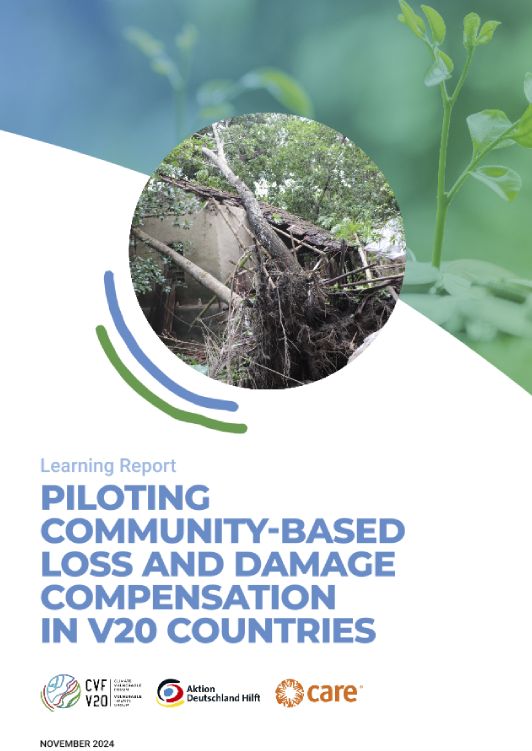
Piloting Community-Based Loss and Damage Compensation in V20 Countries
The V20/Climate Vulnerable Forum (CVF) countries, in partnership with CARE Deutschland e.V., launched the project “V20 Pioneering Community Funding for Addressing Climate Change Loss & Damage”. The project’s activities were classified under the thematic area “Livelihood” and the output taxonomies “Livelihood Assets” and “Adaptation Component”. The project also offered training on climate-adaptive livelihood practices, low-cost disaster-resilient house construction, and water point maintenance.

The Resilience Effect: 10 Super Levers to Catalyse Finance in Climate-Vulnerable Countries
This report identifies ten interconnected “super levers” within the global financial system that could collectively unlock an additional $210 billion of affordable climate finance annually to V20 countries and help avoid economic losses of up to $100 billion. These levers not only mobilise resources but create a self-reinforcing cycle to build momentum for the next five years and trigger systemic multiplier effects that amplify their collective impact, addressing immediate and long-term finance needs across four interconnected categories
Article 6 Senior Officials’ Handbook
Carbon markets, including those implemented under the Article 6 route, present an opportunity to unlock an estimated additional US$20 billion a year for CVF-V20 countries by 2030. This handbook, developed in partnership with the Voluntary Carbon Markets Integrity Initiative (VCMI), has been prepared to support senior government officials engaging with decisions concerning carbon market participation to navigate the complexities of Article 6 of the Paris Agreement.
V20 Debt Review (4th Edition)
The Fourth Edition of the V20 Debt Review found that although the V20’s aggregate external debt stock declined modestly in 2024 after peaking in 2023, the underlying financing constraint has not materially improved. Debt service remains elevated, a growing share of countries devote 10% or more of government revenue to external debt payments, and domestic interest costs are placing additional pressure on public budgets.
Climate Change and External Fragility: Lifeline As A Financial Arrangement For V20 Countries
The analysis of this report indicates that climate shocks create significant negative, but uneven, balance-of-payments pressures across V20 countries. Heterogeneity in economic size, trade openness, reserve buffers and access to external finance means that shocks are largely idiosyncratic, with limited cross-country synchronization. By pooling risks across countries and providing rapid, targeted liquidity support, the Lifeline Fund can strengthen the Global Financial Safety Net for the most vulnerable economies.
V20 Debt Review (Third Edition): An account of debt in the Vulnerable Twenty (V20) Group
The Third Edition of the V20 Debt Review offers a clear snapshot of the sovereign debt landscape for V20 economies over the past 25 years and underscores the urgent need for systemic debt solutions that can unlock climate action and sustainable development.
Piloting Community-Based Loss and Damage Compensation in V20 Countries
The V20/Climate Vulnerable Forum (CVF) countries, in partnership with CARE Deutschland e.V., launched the project “V20 Pioneering Community Funding for Addressing Climate Change Loss & Damage”. The project’s activities were classified under the thematic area “Livelihood” and the output taxonomies “Livelihood Assets” and “Adaptation Component”. The project also offered training on climate-adaptive livelihood practices, low-cost disaster-resilient house construction, and water point maintenance.
The Resilience Effect: 10 Super Levers to Catalyse Finance in Climate-Vulnerable Countries
This report identifies ten interconnected “super levers” within the global financial system that could collectively unlock an additional $210 billion of affordable climate finance annually to V20 countries and help avoid economic losses of up to $100 billion. These levers not only mobilise resources but create a self-reinforcing cycle to build momentum for the next five years and trigger systemic multiplier effects that amplify their collective impact, addressing immediate and long-term finance needs across four interconnected categories