
Bangkok, Thailand—Some US$3 trillion of sovereign capital is now managed under a development mandate. As aid budgets shrink and cross-border sovereign investment concentrates in fewer markets, developing countries are multiplying the arrangements through which they put this capital to work.
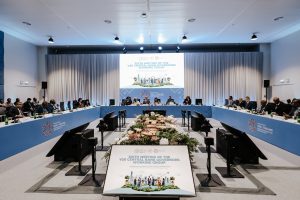
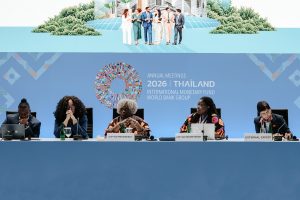
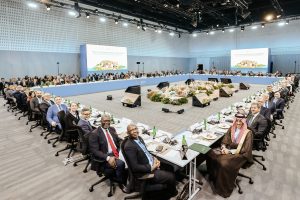
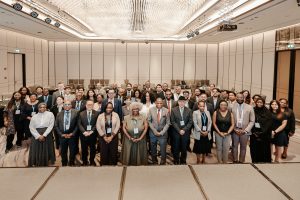
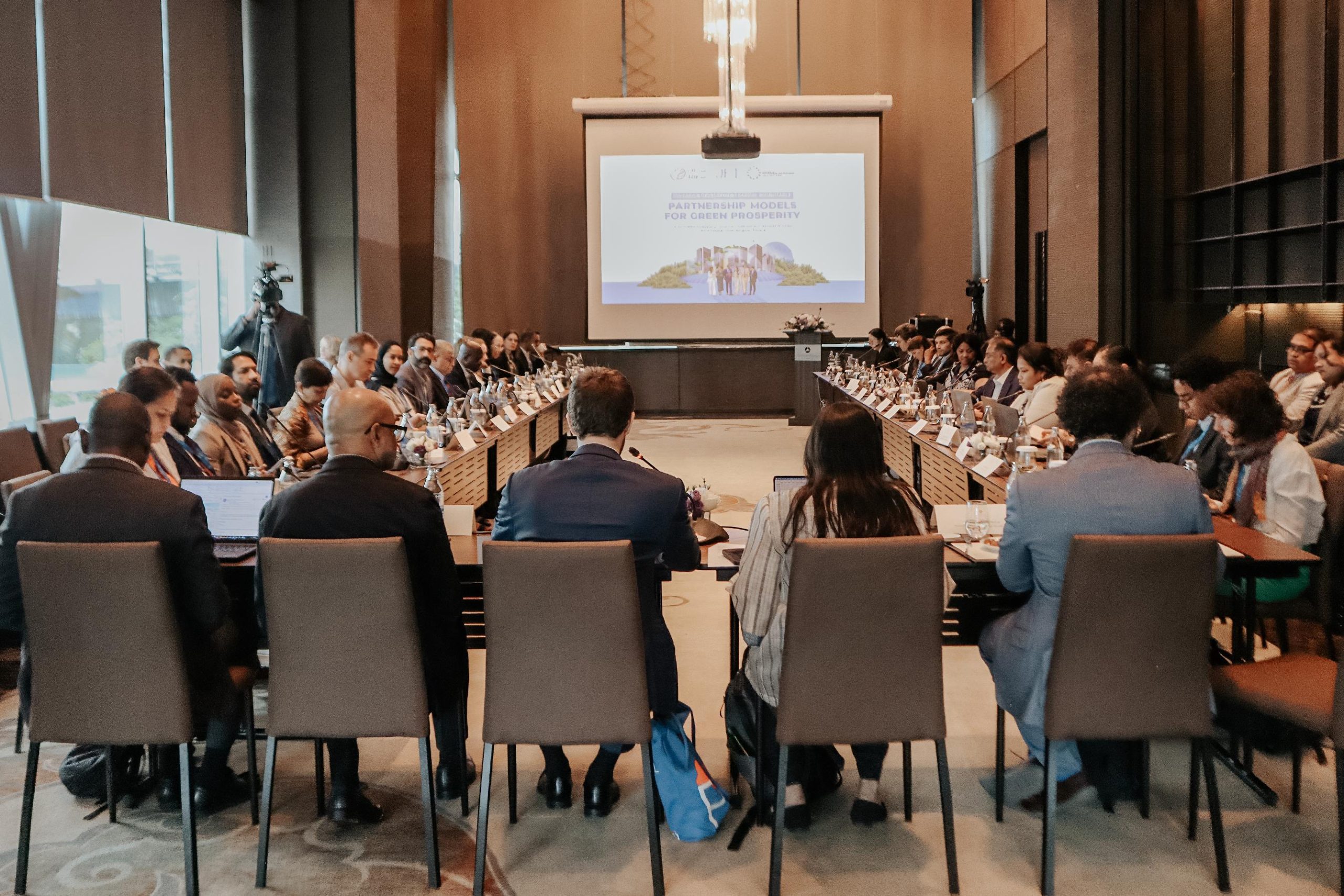
How can this capital drive green industrial development? The question shaped Sovereign Development Capital: Partnership Models for Green Prosperity, a roundtable convened by the Climate Vulnerable Forum and V20 Finance Ministers (CVF-V20) and JFI Social Wealth on October 13, alongside the IMF and World Bank Annual Meetings in Bangkok. Held with the Forum of Brazilian Sovereign Wealth Funds and supported by the Open Society Foundations, it brought together more than 50 participants from 36 organizations, including officials from nine countries, development banks, investors, insurers, labor, philanthropy, and research institutes.
For climate-vulnerable economies, the focus is not just protection but production: joining green value chains as producers, processors, and manufacturers, not only as suppliers of raw materials.
A forthcoming JFI Social Wealth working paper maps 114 sovereign funds holding US$16.2 trillion. More than a third of them carry a development mandate and hold about US$3.1 trillion. These funds also make up nearly half of the sampled funds created since 2008 and are more likely to invest in green sectors. Since 2021, over three-quarters of development-mandated and hybrid funds have made green investments, compared with less than a third of savings funds, using the paper’s broad definition of green investment.
Collaboration remains limited too. Nearly two-thirds of arrangements involving three or more funds are forums or networks, rather than shared investment vehicles. The study found no dedicated forum for development-mandated funds and almost no multi-sovereign pools of green capital.
Partnerships could connect complementary strengths: development funds tend to seed and sponsor new vehicles, while savings-oriented funds anchor them, bringing scale and expertise. The paper also sees room for more South-South coordination, joint project preparation, and sovereign-backed guarantee platforms.
Capital is not the only constraint; keeping it working is another. Many funds established in the 1970s later needed public-budget support, not for lack of capital, but because their governance couldn’t stop resources from being redirected. A fund’s real test is whether its governance allows someone to say no when the government wants its capital for other purposes.
Shocks pose a second threat. Patient capital and emergency liquidity require distinct institutions: shock-responsive financing, such as the V20’s Lifeline Fund, can protect long-term investment when climate shocks hit.
Cost is the third. Where credit ratings track income levels, the poorest countries borrow short to finance long-term development, and many small and mid-sized economies now pay a “sovereignty premium” for capital they control. Few countries have systematically valued their public assets, so rating agencies judge them almost entirely on repayment records. Mapping the whole public balance sheet could change that, by showing that past borrowing produced revenue-generating assets and that a country can put new capital to productive use.
Participants argued that climate finance should measure more than emissions reductions. It should assess whether investment transforms economies, builds manufacturing capacity, creates jobs, and develops expertise.
Many countries export critical minerals without processing them, while some countries invest domestic pension and insurance savings offshore. Sovereign funds can supply equity, the scarcest input, and their stakes can anchor the debt that follows.
If most arrangements among sovereign funds are still forums, the next step is investing together. Pooling pays off when it tackles what holds investment back: weak project pipelines, limited local intermediaries, and currency risk.
The proposed Pan-African Wealth Fund, which emerged from South Africa’s 2025 G20 presidency, would bring together a coalition of the willing to build cross-border value chains. It is past the concept stage but still needs political support.
At the national level, Country Platforms have yet to fully engage sovereign funds as investors. One participant said platforms should be “live and permeable” spaces built around national priorities.
Whether through regional vehicles or national platforms, the task is the same. The US$3 trillion is already there. What is missing are partnerships, and the governance and reach to put it to work, so climate-vulnerable economies can become producers in green value chains, not just suppliers of raw inputs.
***
The CVF-V20 now represents 77 member countries from small island developing states (SIDS), least developed countries (LDCs), low to middle-income countries (LMICs), landlocked developing countries (LLDCs), and fragile and conflict-affected states (FCS). Working together, the CVF-V20 aims to achieve climate justice through the realization of Climate Prosperity Plans, which contain ambitious economic and financial resilience strategies designed to attract investment and resources that advance the attainment of the Sustainable Development Goals (SDGs), 30×30 Global Biodiversity, and help keep the average global temperature within the Paris Agreement’s 1.5°C safety threshold.
Africa: Benin, Burkina Faso, Cabo Verde, Central African Republic, Chad, Comoros, Côte d’Ivoire, Democratic Republic of the Congo, Eswatini, Ethiopia, Gabon, The Gambia, Ghana (Troika), Guinea, Kenya, Liberia, Madagascar, Malawi, Morocco, Mozambique, Namibia, Niger, Rwanda, Senegal, Sierra Leone, Somalia, South Sudan, Sudan, Tanzania, Togo, Tunisia, Uganda, Zambia
Asia: Afghanistan, Bangladesh (Troika), Bhutan, Cambodia, Jordan, Kyrgyzstan, Lebanon, Maldives, Mongolia, Nepal, Pakistan, Palestine, Philippines, Sri Lanka, Timor-Leste, Vietnam, Yemen
Caribbean: Barbados (Chair/Troika), Dominica, Dominican Republic, Grenada, Guyana, Haiti, Saint Lucia, Saint Vincent and the Grenadines, Suriname, Trinidad and Tobago
Latin America: Colombia, Costa Rica, Guatemala, Honduras, Nicaragua, Paraguay
Pacific: Fiji, Kiribati, Marshall Islands, Nauru, Palau, Papua New Guinea, Samoa, Solomon Islands, Tonga, Tuvalu, Vanuatu
For media enquiries, please contact [email protected].
For the latest updates, please follow us on: