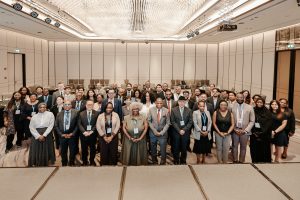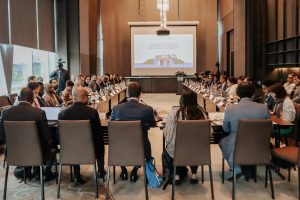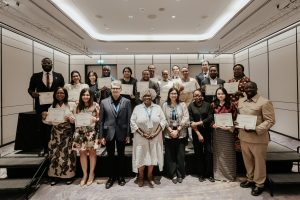

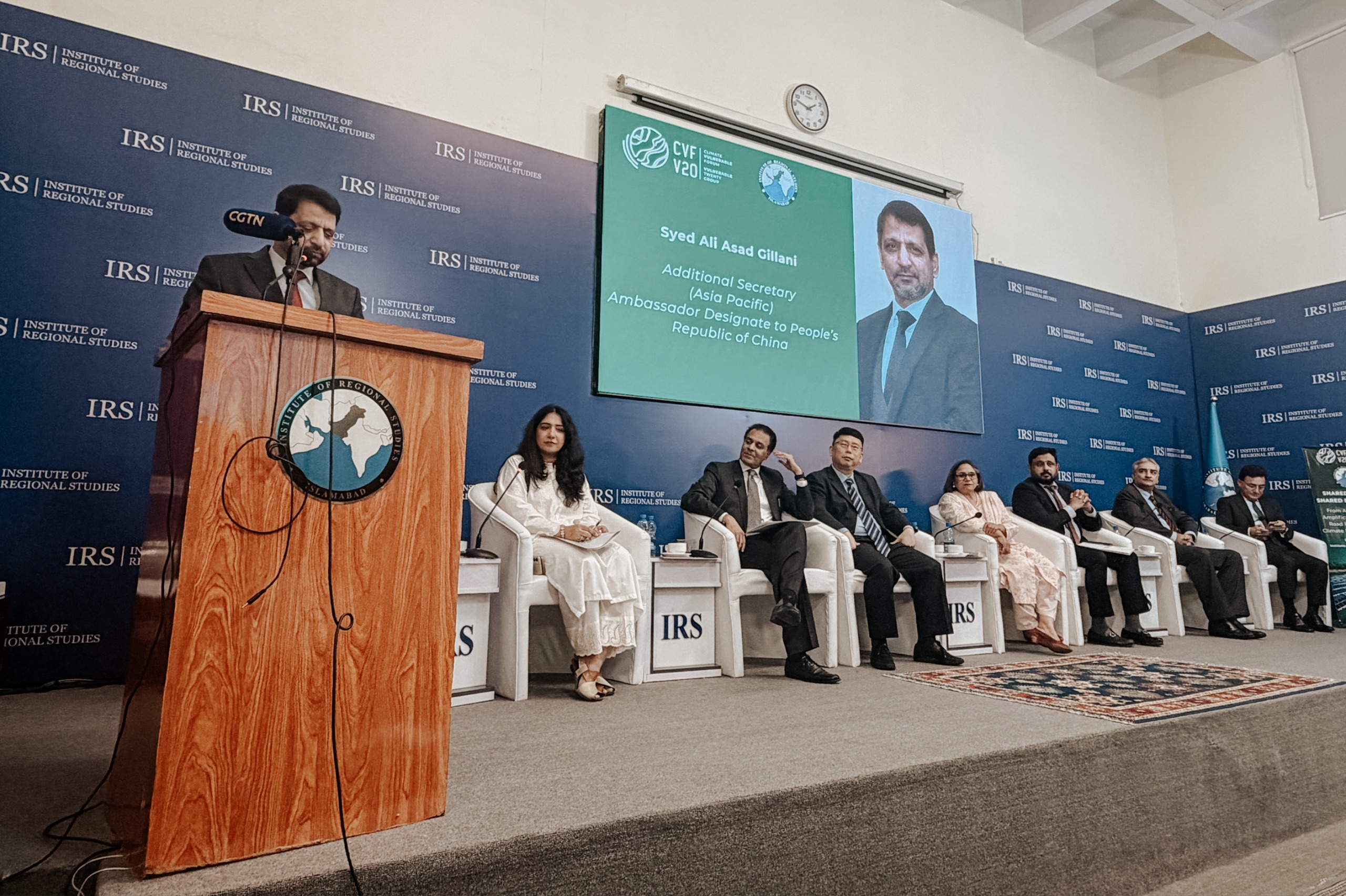
Islamabad, Pakistan – The Climate Vulnerable Forum and V20 Finance Ministers (CVF-V20) Secretariat and the Institute of Regional Studies (IRS), Islamabad, convened a high-level dialogue today to explore how Belt and Road Initiative (BRI) financing, Chinese technology, and business partnerships can support climate-resilient development in climate-vulnerable countries. Pakistan presented an investable pipeline of 69 projects worth USD 4.85 billion to Chinese officials and business leaders.
The dialogue, titled “Shared Future, Shared Prosperity: From Alignment to Amplification – Belt and Road Initiative (BRI) and Climate Prosperity Plans (CPPs),” brought together senior government officials, diplomats, business representatives, and climate-finance experts. It was held ahead of the CVF-V20 mission to the China International Fair for Trade in Services (CIFTIS) 2026 in Beijing and during the 75th anniversary year of Pakistan-China diplomatic relations.
Pakistan’s Climate Prosperity Plan (CPP), launched by the Ministry of Finance in April, anchored the discussion. Its Investor Book identifies 69 selected projects across eight priority sectors and was presented as a platform for aligning the BRI and Green Investment and Finance Partnership (GIFP) with country-owned climate investment priorities.
Ambassador Jauhar Saleem, President of the IRS, welcomed the participants and emphasized the need to translate strategic alignment into implementation. “The real objective is to identify how climate priorities can become investable opportunities and how cooperation can translate plans into transactions, projects, and measurable development outcomes,” he said.
Chargé d’affaires Shi Yuanqiang of the Embassy of the People’s Republic of China, Guest of Honor, highlighted the expanding potential for China-Pakistan cooperation in green development. “Pakistan’s Climate Prosperity Plan provides a clear pathway and broad market space for enterprises from various countries, including Chinese companies, to make green investments in Pakistan,” he said. “On the path of responding to climate change and achieving green development, China has always stood firmly with Pakistan.”
Romina Khurshid Alam, MNA, Coordinator to the Prime Minister on Climate Change and Environmental Coordination, said the CPP had helped move Pakistan from climate ambition toward implementation. “Through the Climate Prosperity Plan, we now have a country-owned pipeline that connects our national priorities with investment. China is a natural partner, with the technology, manufacturing capacity, and finance to help turn these projects into jobs, resilience, and green growth,” she said.
Sara Jane Ahmed, Managing Director and V20 Finance Advisor of the CVF-V20 Secretariat, said the opportunity extends across the wider V20 membership. “Pakistan and other V20 countries are building a growing supply of country-owned, investable project opportunities. Those projects create real demand for technology, engineering, manufacturing, and long-term partners. China brings a deep supply of exactly those capabilities. Our job is to make that two-sided market work,” she said.
Hamza Haroon, Regional Director for West and South Asia at the CVF-V20 Secretariat, noted that the principal challenge for vulnerable economies is access to affordable finance, dependable technology, and reliable partners. He said CPPs across V20 countries now provide country-owned pipelines that can be aligned with Chinese initiatives including the BRI and GIFP.
Referring to the announcement at COP30 by the Belt and Road Initiative Green Development Institute (BRIGC) and the Brazilian Development Bank to align GIFP with Brazil’s Country Platform, he said the model was already moving into practice. “That is how we move from planning to delivery, mobilizing the finance our projects need, on terms that are mutually beneficial,” he said.
The panel discussion, moderated by Anam Rathor, Program Lead at the CVF-V20 Secretariat, examined the conditions required to move projects from initial interest to due diligence and implementation. Discussions covered project readiness, financing structures, CPEC 2.0 pathways, business-to-business partnerships, joint ventures, local manufacturing, and climate and carbon finance.
Panelists included Nadeem Ahsan, Joint Secretary External Finance at the Ministry of Finance; Ambassador Naghmana Hashmi, former Ambassador of Pakistan to China; Wu Dawei, Secretary-General of the China Chamber of Commerce in Pakistan; Dr. Muzammil Zia, Project Director of the China-Pakistan Economic Corridor; Bilal Janjua, Vice President of the Pakistan China Commerce Alliance International; and Zulfiqar Younus, Senior Advisor, Climate Finance, CVF-V20 Secretariat.
Closing the dialogue, Dr. Syed Ali Asad Gillani, Pakistan’s Ambassador Designate to the People’s Republic of China, underscored the importance of sustained follow-up. “I intend to make our embassy a working door for the partnerships that begin here,” he said. “A shared future is not something we wait to inherit. It is something we build, and I believe we have, today, agreed on how to begin.”
The dialogue marks the start of a broader effort to take Pakistan’s climate investment pipeline and similar V20 opportunities to Chinese partners. The CVF-V20 will host a pavilion at CIFTIS 2026 in Beijing from September 9 to 13, where participating countries will present project pipelines and partnership models to Chinese institutions, enterprises, and investors.
The immediate objective will be to advance a focused set of priority opportunities with identified counterparties, defined financing requirements, and credible implementation pathways.
***