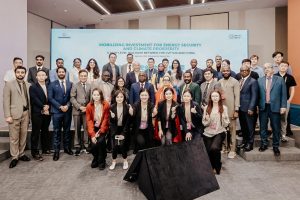
The Hashemite Kingdom of Jordan is reshaping how it governs its most critical natural resources, moving away from fragmented sector-by-sector management toward a unified Water-Energy-Food-Environment (WEFE) nexus framework. Led by the Ministry of Planning and International Cooperation, the shift marks one of the most significant structural changes in the kingdom’s domestic policy in recent years, one driven by the compounding pressures of climate change, resource scarcity, and regional instability.
The urgency is not difficult to understand. Water scarcity has been one of the institutional challenges of Jordan since time immemorial, even ranking as amongst the world’s water-poor countries. With nearly 40 percent of its water resources shared with neighboring states, Jordan continues to face significant constraints in securing a stable and sustainable water supply. Rising demand and mounting climate pressures have pushed Jordan’s renewable freshwater availability far below the absolute water scarcity threshold of 500 cubic meters, reaching less than 65 cubic meters per capita.
Energy dependence compounds the vulnerability. Jordan imports roughly 74 percent of its energy needs, exposing the national economy to price shocks and supply disruptions beyond its control. Although the country has pursued renewable energy initiatives, its energy sector remains highly carbon-intensive.
Food security tells a similar story. Jordan relies on imports for more than 85 percent of its staple food needs, leaving it highly vulnerable to market volatility. The worsening climate conditions intensify the challenge. Rising temperatures pose significant threats to agricultural productivity, reducing yields of winter cereals, the country’s most important field crops.
Climate change and environmental instability have exacerbated these conditions far more than national and local initiatives could immediately address. Years of governance and implementation have only revealed that efforts remain fragmented, failing to recognize the interconnectedness of issues across water, energy, food, and the environment.
The WEFE nexus model is designed to change that. A new inter-ministerial Technical Coordination Committee, composed of representatives from the Ministries of Water and Irrigation, Agriculture, Energy and Mineral Resources, and Environment, will operationalize policy under the framework. The Ministry of Planning and International Cooperation holds political oversight and institutional accountability over the body, which also aims to expand stakeholder consultation to operationalize policies and programs under the nexus model.
The new WEFE approach is also prompting a broader realignment of Jordan’s existing national strategies. The government has begun harmonizing the priorities and initiatives stipulated in the Jordan National Water Strategy 2023-2040, the updated Nationally Determined Contributions, and sectoral action plans.
Whether the coordination architecture translates into measurable policy change remains to be seen. But for a country where water, energy, and food insecurity converge with unusual force, the institutional logic of treating them as a single system—rather than three separate crises—is increasingly hard to argue against.