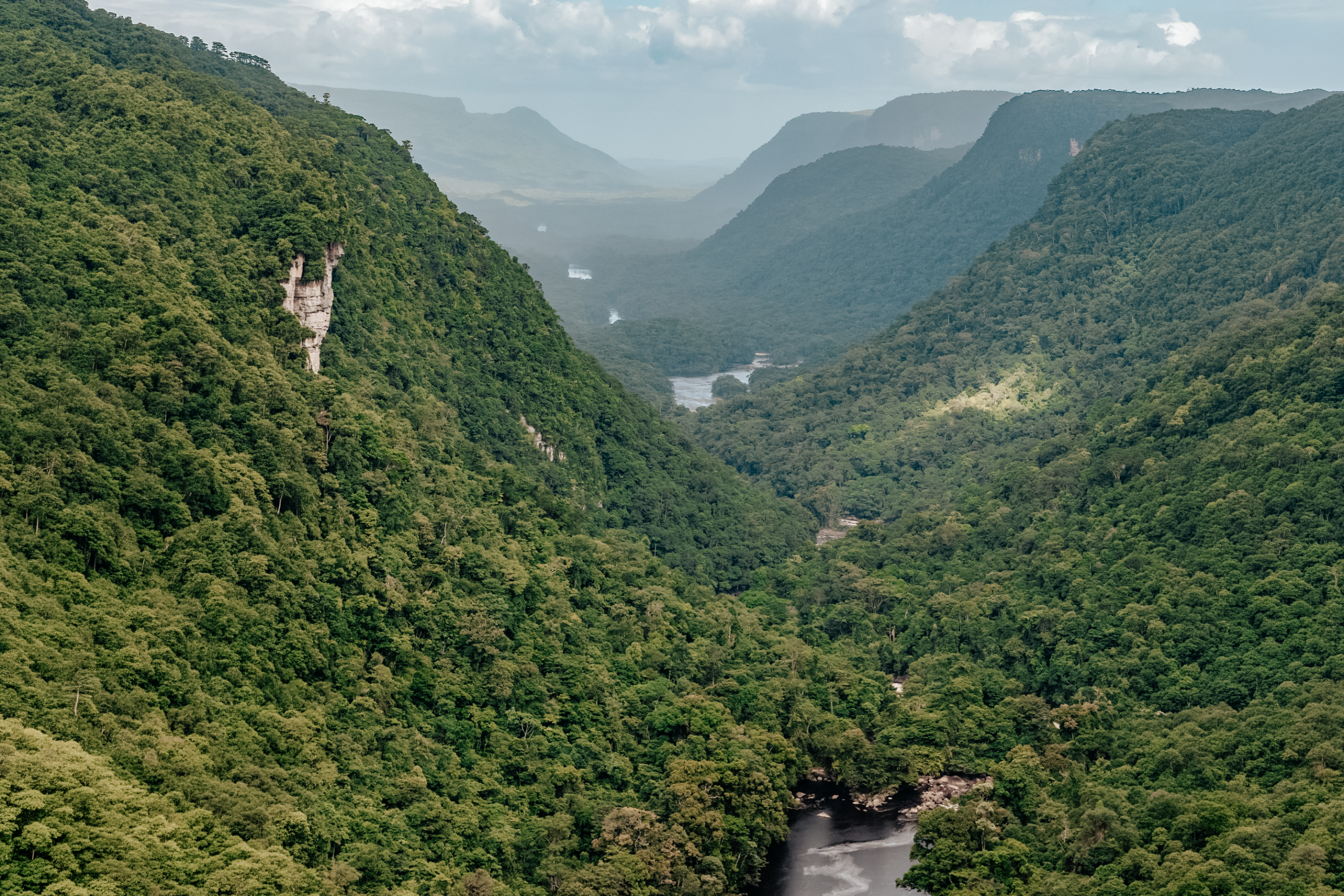
On the northern coast of South America, along the borders of the Atlantic Ocean, Guyana is pursuing a development model that few countries have attempted: generating economic growth while preserving one of the world’s most intact tropical forests.
Long before carbon markets became a mainstream policy tool, Guyana positioned itself at the forefront of climate-compatible development. In 2009, the country became the first developing nation to launch a national Low Carbon Development Strategy (LCDS), an ambitious framework designed to demonstrate that environmental stewardship and economic progress could advance together. More than a decade later, that vision was expanded through the launch of LCDS 2030 in 2022, providing an updated roadmap for sustainable development in an era increasingly shaped by climate change, biodiversity loss, and the global transition to low-carbon economies.
The strategy seeks to transform Guyana’s vast natural capital into a source of long-term prosperity by assigning economic value to ecosystem services, investing in clean energy infrastructure, strengthening climate resilience, and aligning national development with global climate and biodiversity objectives.
At the heart of the LCDS is a phased approach to climate finance and sustainable growth. The first phase began with the landmark Guyana-Norway partnership in 2009, one of the world’s earliest large-scale results-based forest conservation agreements. Under the arrangement, Norway agreed to compensate Guyana for maintaining its forests and keeping deforestation rates among the lowest in the world. Between 2009 and 2015, Guyana received approximately US$212.6 million in results-based payments from Norway under the Guyana–Norway forest partnership. Including investment income earned through the Guyana REDD+ Investment Fund (GRIF), total resources reached US$220.8 million.
The country entered the second phase of its low-carbon strategy by engaging with emerging international carbon markets. As global negotiations under the Paris Agreement advanced, Guyana positioned itself to participate in mechanisms that reward countries for reducing emissions and conserving forests.
A key development came through the country’s participation in the Architecture for REDD+ Transactions (ART) and its TREES standard, one of the world’s most rigorous frameworks for forest carbon credits. In 2022, Guyana became the first country to receive ART-TREES credits after independent verification of its forest conservation performance, earning 33.47 million tons of carbon credits. The milestone demonstrated how High Forest, Low Deforestation (HFLD) countries can generate climate finance from standing forests while maintaining stringent environmental and social safeguards, creating new opportunities to fund investments under LCDS 2030.
Beyond forest conservation, LCDS 2030 also aims to reshape Guyana’s domestic economy. Investments in renewable energy generation, energy efficiency, and climate-resilient infrastructure are intended to reduce dependence on imported fossil fuels while supporting broader economic diversification.
The strategy’s third phase also envisions deeper integration with international carbon markets and future mechanisms established under the United Nations Framework Convention on Climate Change (UNFCCC) REDD+ architecture. By aligning national conservation efforts with evolving global climate finance systems, Guyana aims to ensure the long-term credibility, sustainability, and financial viability of its forest carbon market and ecosystem services.
The country’s environmental credentials remain central to this ambition. Guyana retains over 99 percent of its forest cover across approximately 18 million hectares, making it one of the most heavily forested countries in the world. These forests store an estimated 19.5 billion tonnes of carbon dioxide equivalent and support globally significant biodiversity. International assessments have also recognized Guyana as one of the few countries to maintain an HFLD status, a distinction that underscores the country’s contribution to global climate mitigation efforts.
The country demonstrates that translating climate vulnerabilities into bankable opportunities is viable with sound legislative architecture and framework, citing precedence for fellow CVF-V20 member countries seeking to achieve prosperity and resilience.