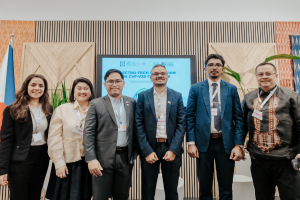
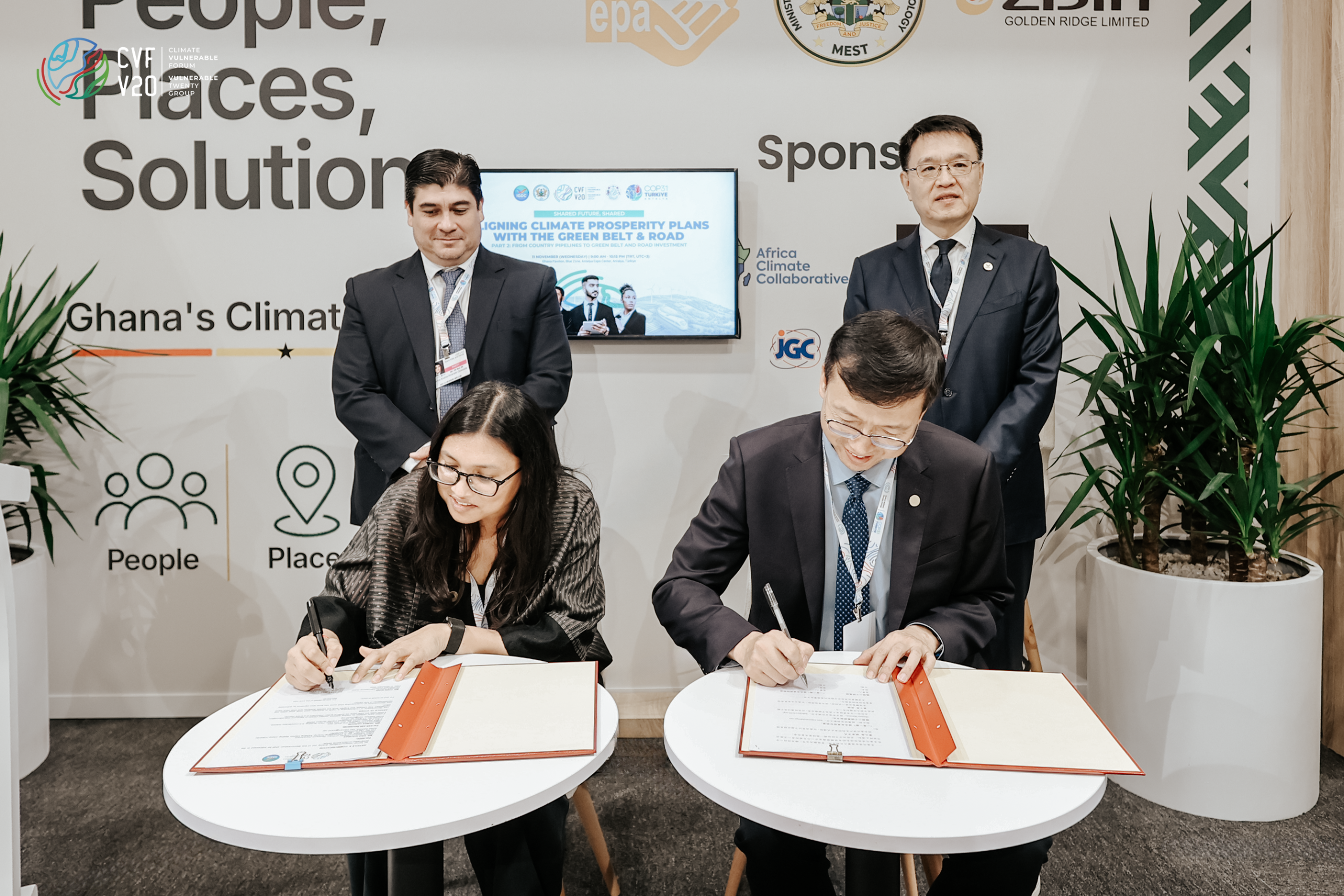
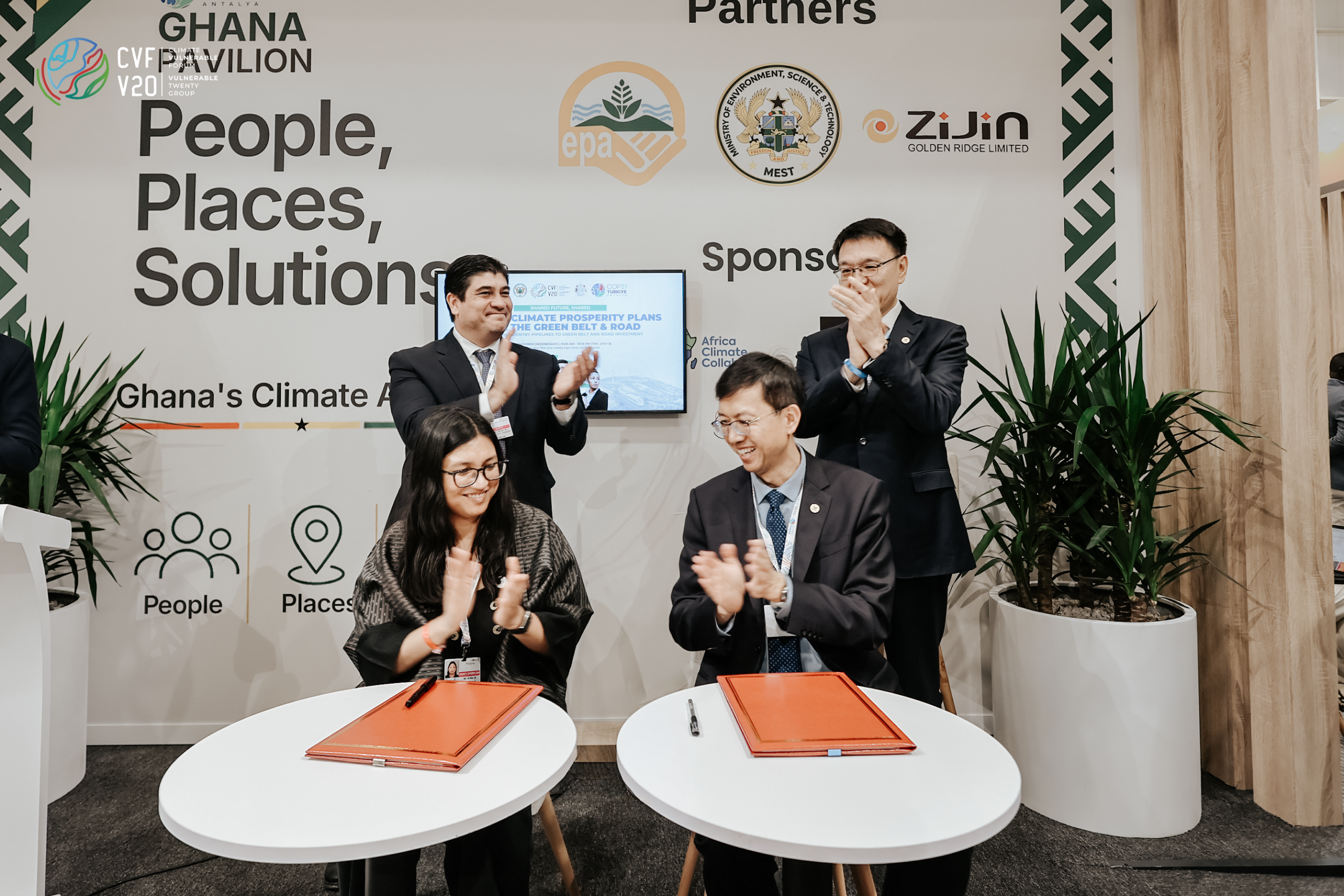
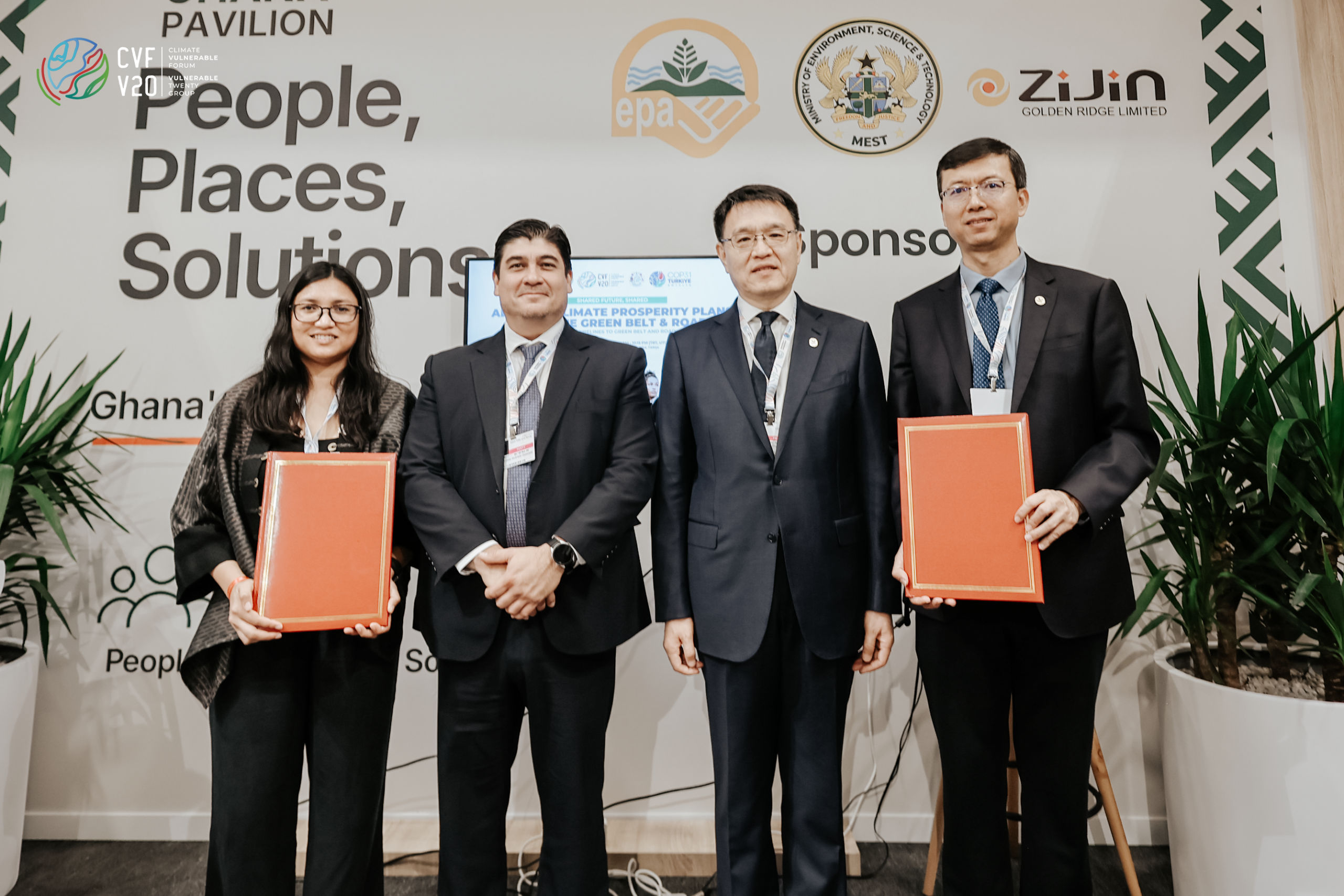
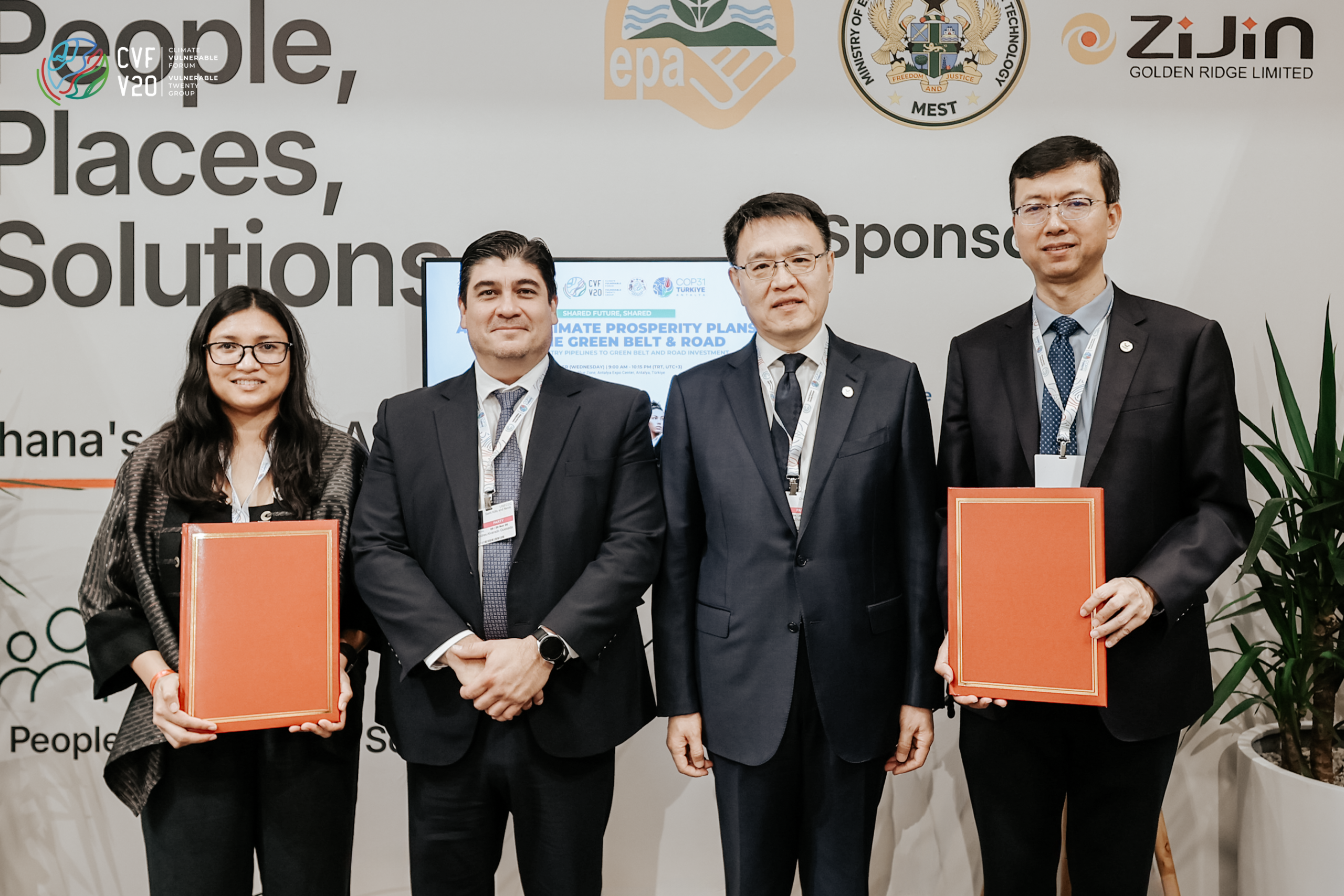
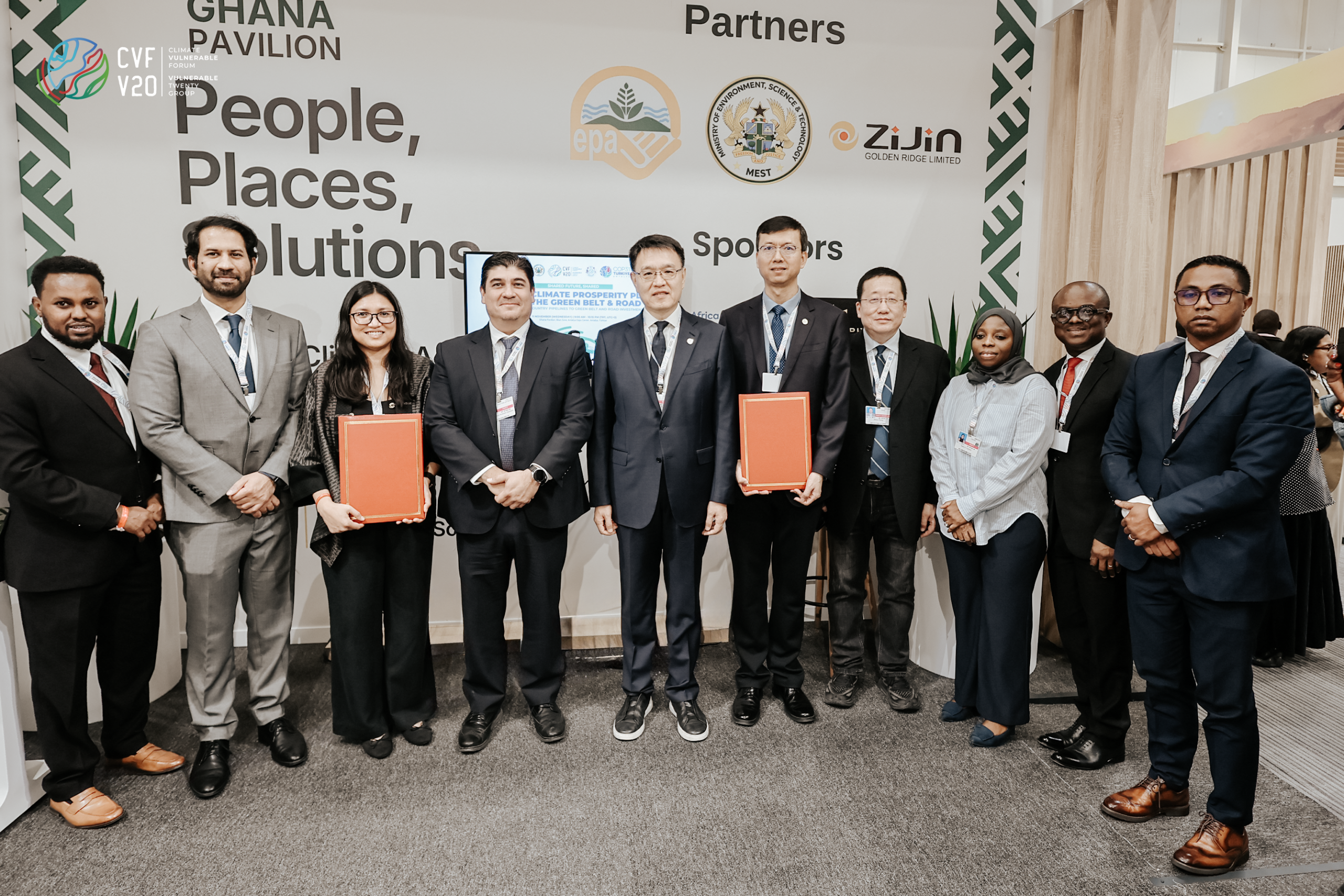
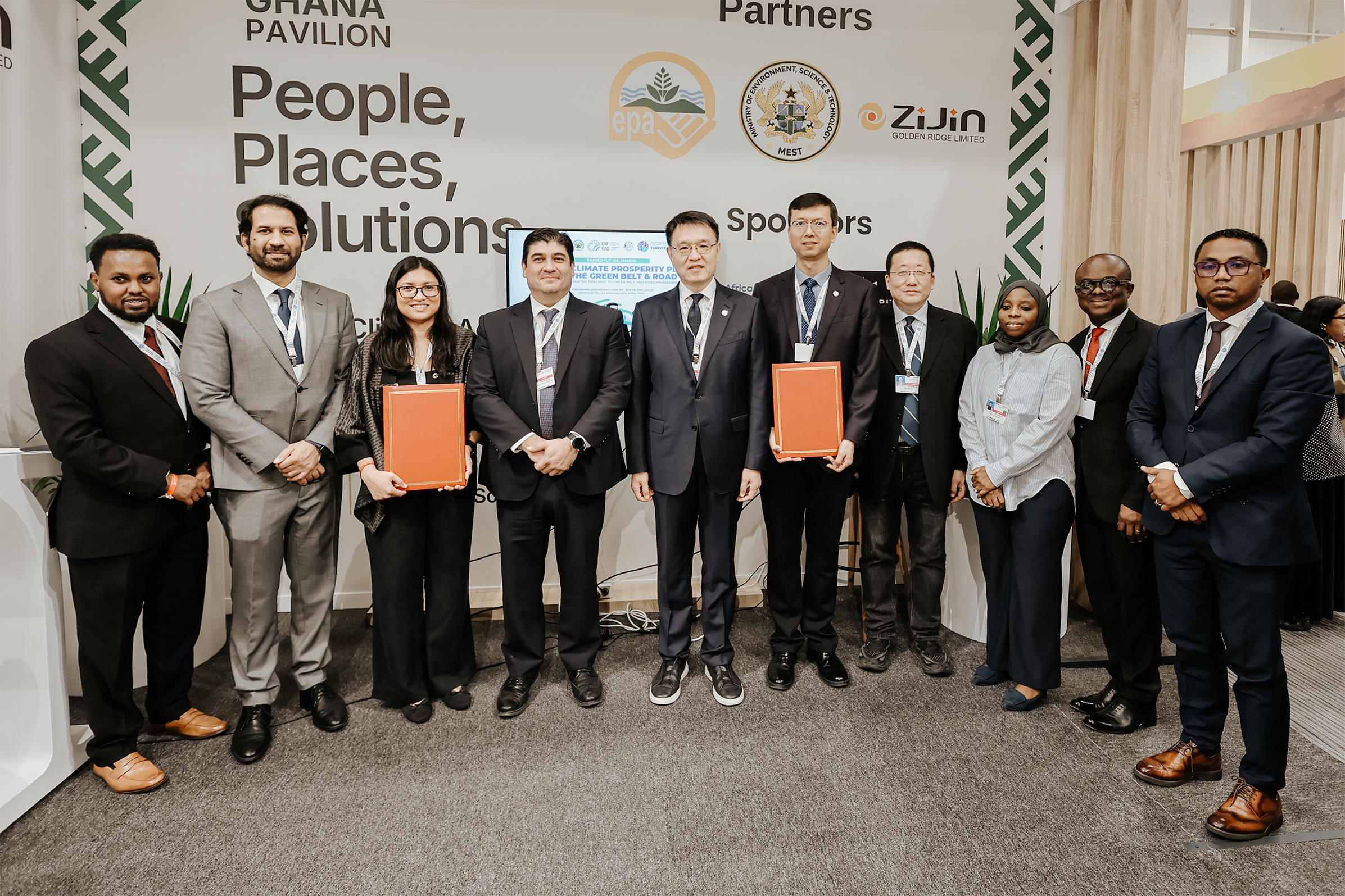
ANTALYA—The Climate Vulnerable Forum and V20 Finance Ministers (CVF-V20) Secretariat and the International Green Development Coalition for the Belt and Road Regions (IGDC) today signed a five-year Memorandum of Understanding (MoU) at COP31 to connect investment priorities of climate-vulnerable countries with international green finance, technology, and implementation partners.
The partnership will work towards linking IGDC’s Green Development Investment and Financing Partnership (GIFP) with CVF-V20 Country Platforms, which are anchored in the Climate Prosperity Plans. The aim is to translate and align country-led climate and development priorities into bankable projects and to mobilize investment to deliver them.
The agreement brings together the CVF-V20’s 77 climate-vulnerable countries, home to 1.9 billion people, and IGDC’s network of more than 190 partners in some 50 countries. The two organizations will match CVF-V20 investment pipelines with GIFP financing and partners to advance bankable green projects in renewable energy, storage and green industry; they will also collaborate on technology transfer, local manufacturing, sustainable trade, joint research and capacity-building.
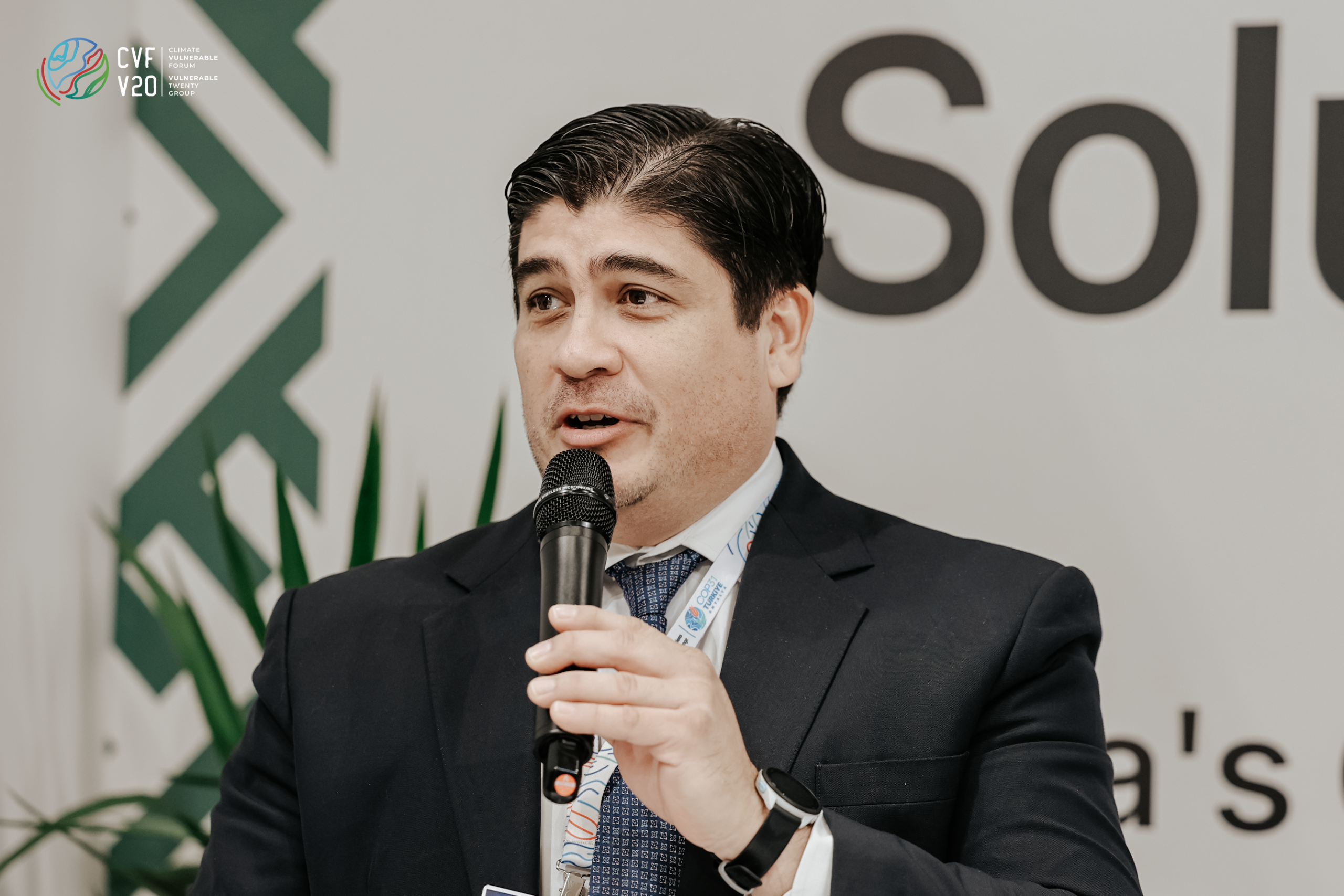
H.E. Carlos Alvarado Quesada, incoming Secretary-General of the CVF-V20, said the MoU is a promise that must now be kept. “When you sign, you commit,” he said. “But the real value of the promise is when you start to do things, and you start to see the projects, and people see change.”
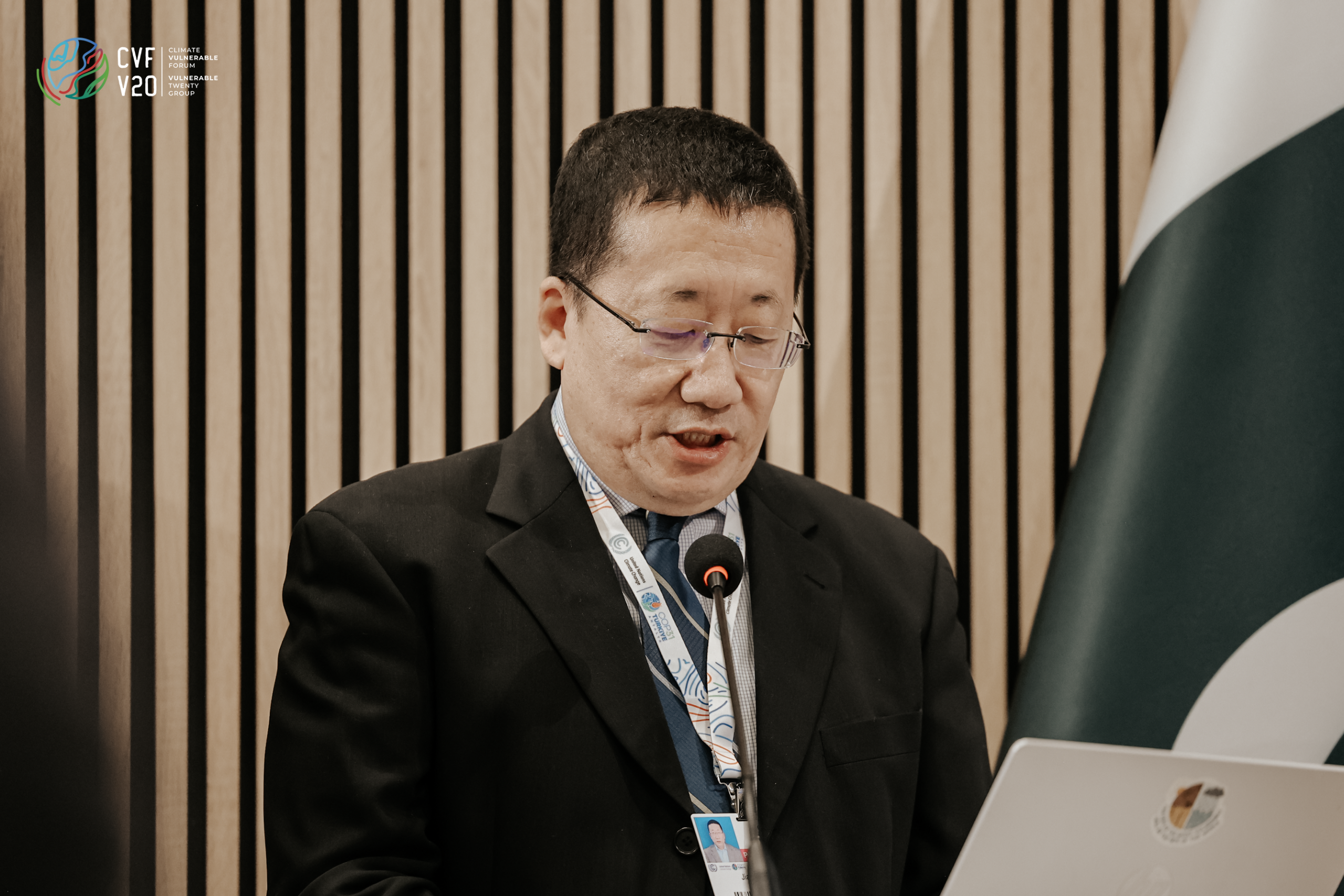
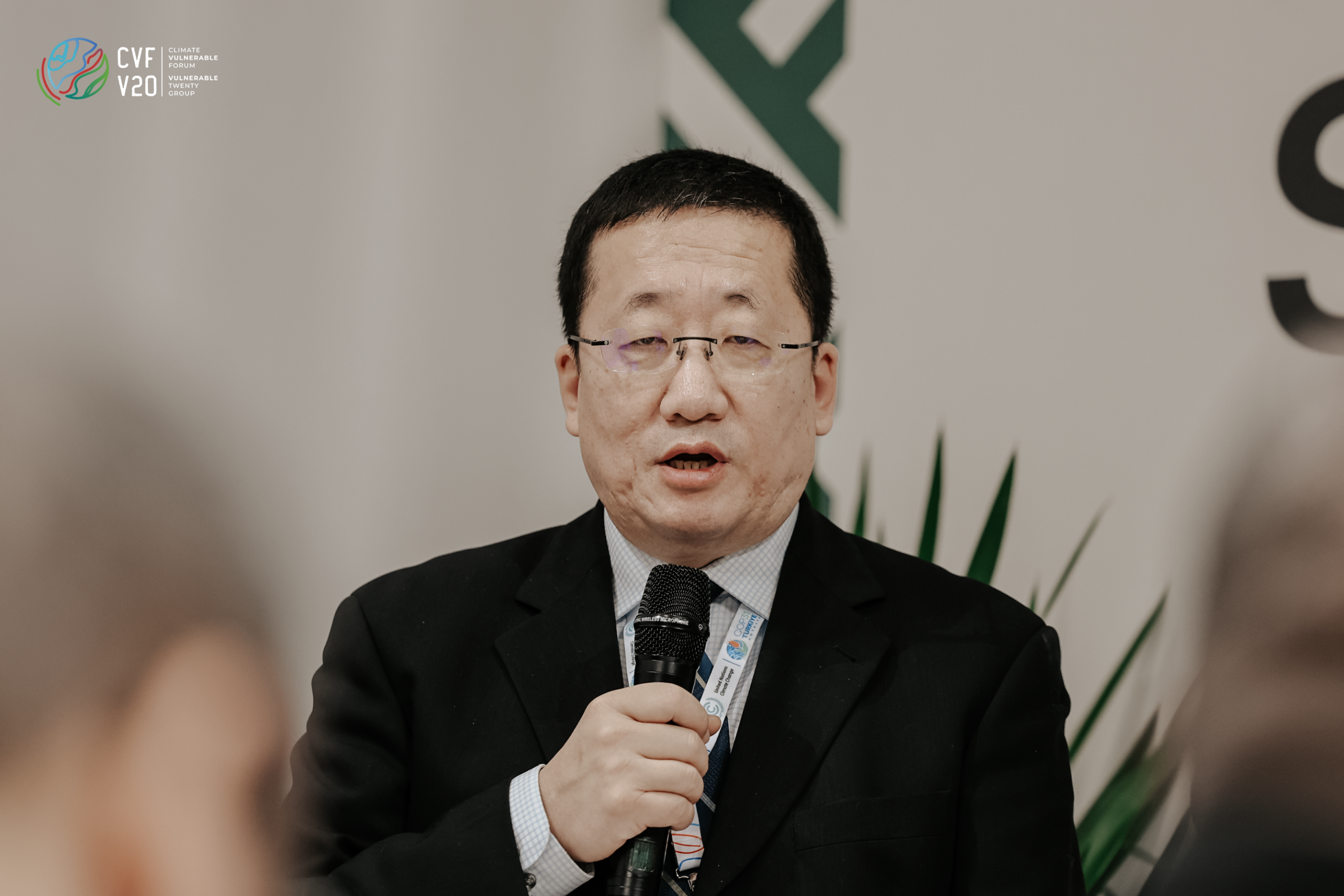
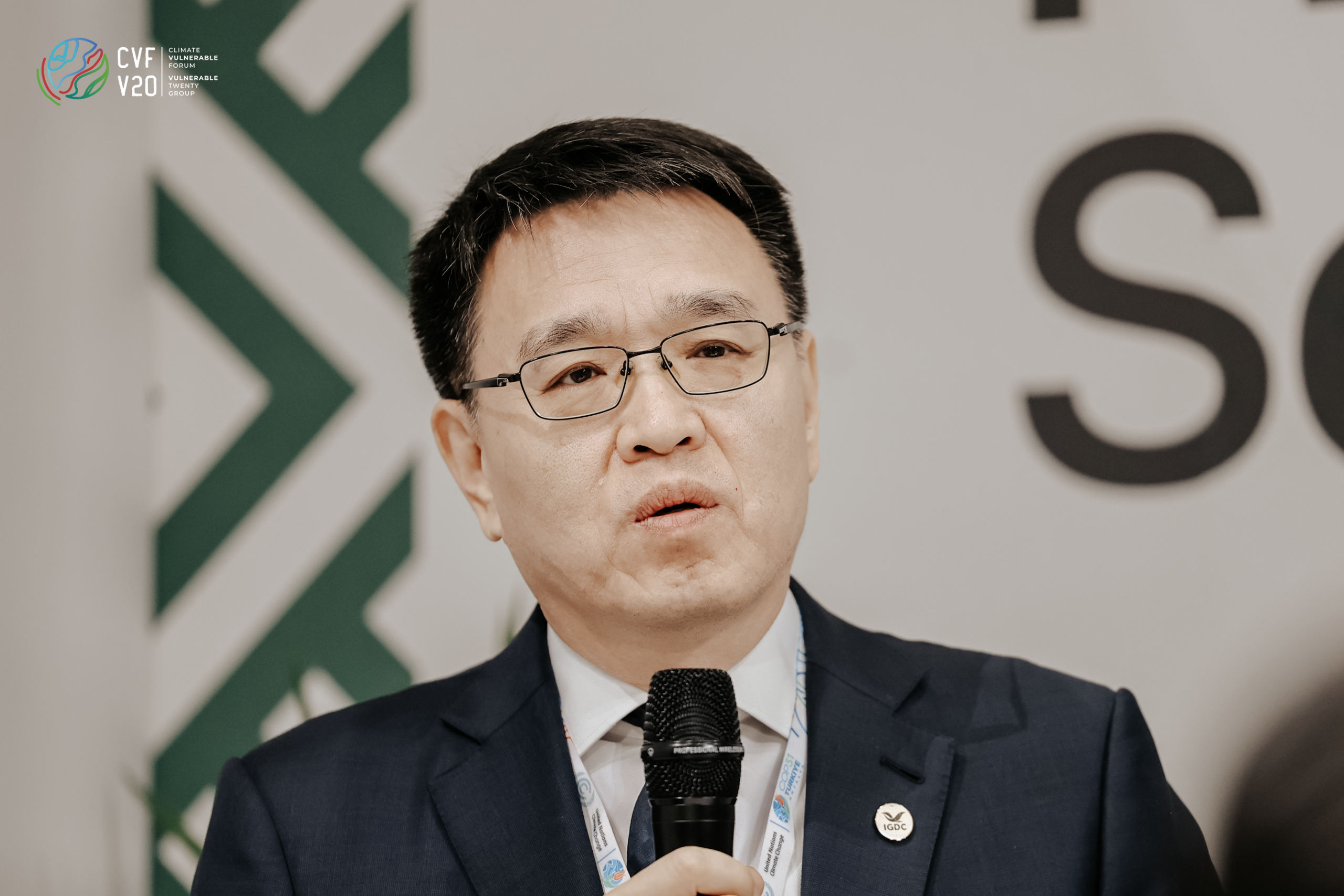
Mr. Zhao Yingmin, President of IGDC and former Vice Minister of Ecology and Environment of China, proposed three areas for joint work: co-designing bankable projects, strengthening regular exchanges and alignment with country platforms, and jointly exploring financing tools. “With the signing of the MoU between IGDC and the CVF-V20 as a starting point, we can transform discussions and exchanges into bankable projects,” he said.
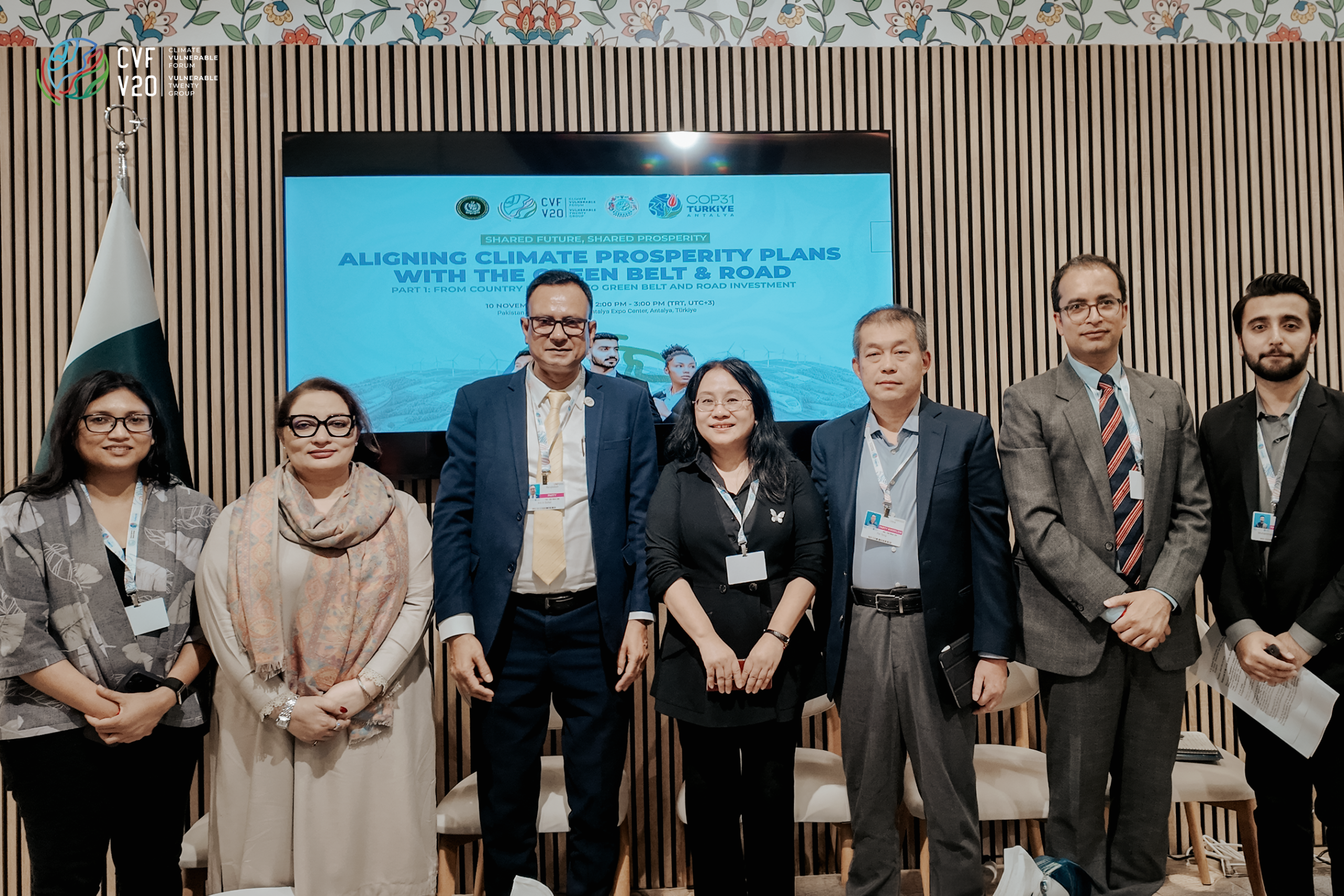
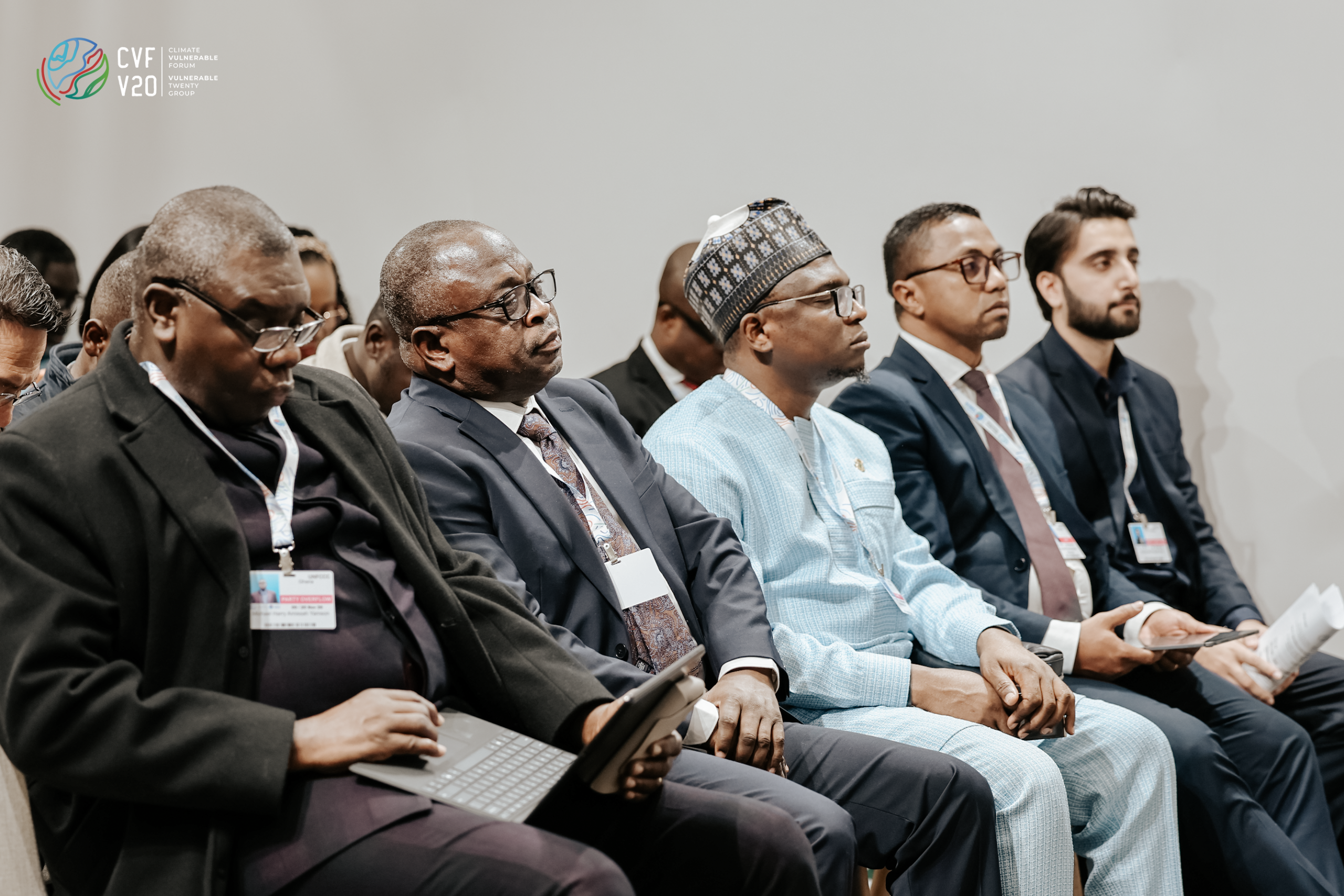
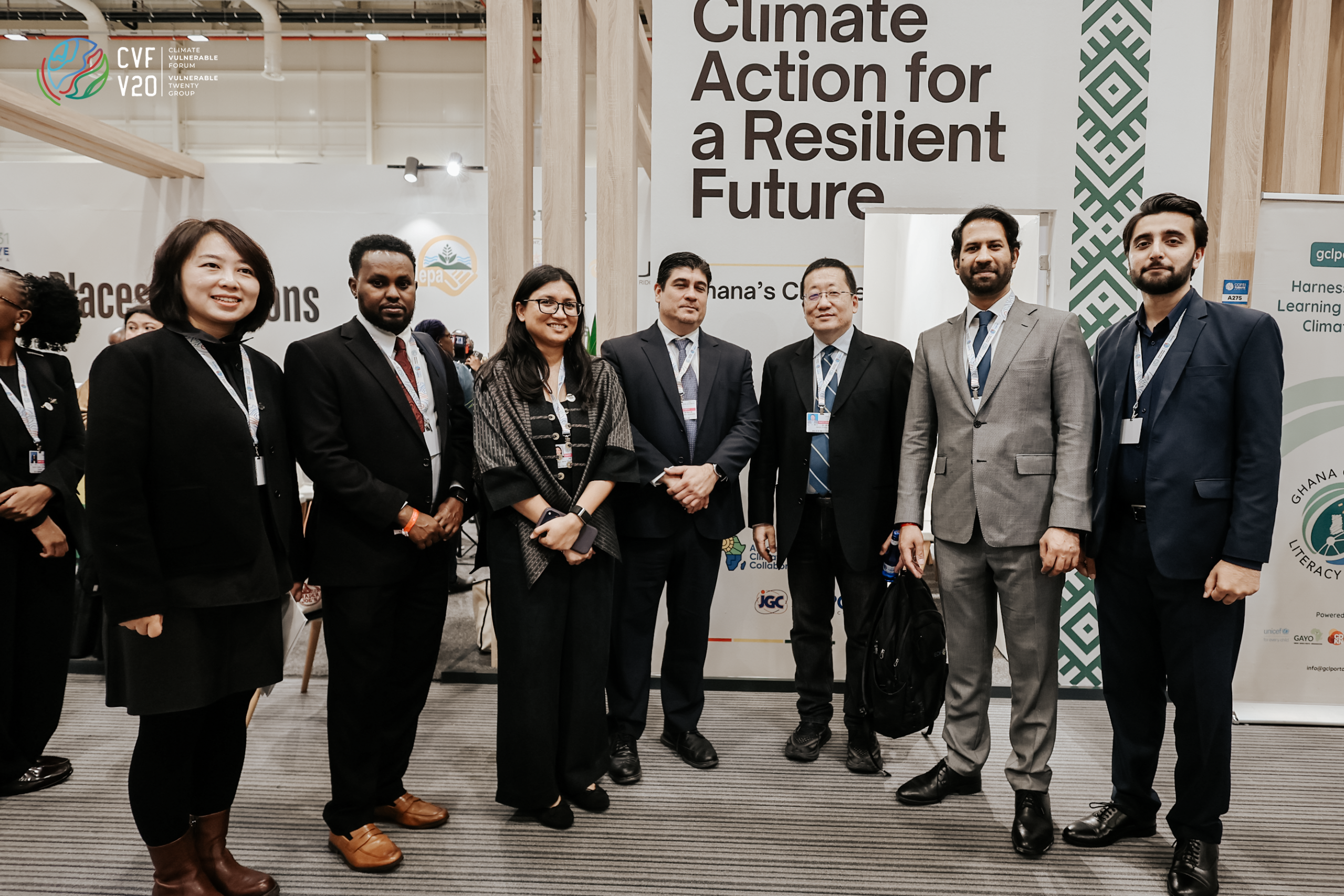
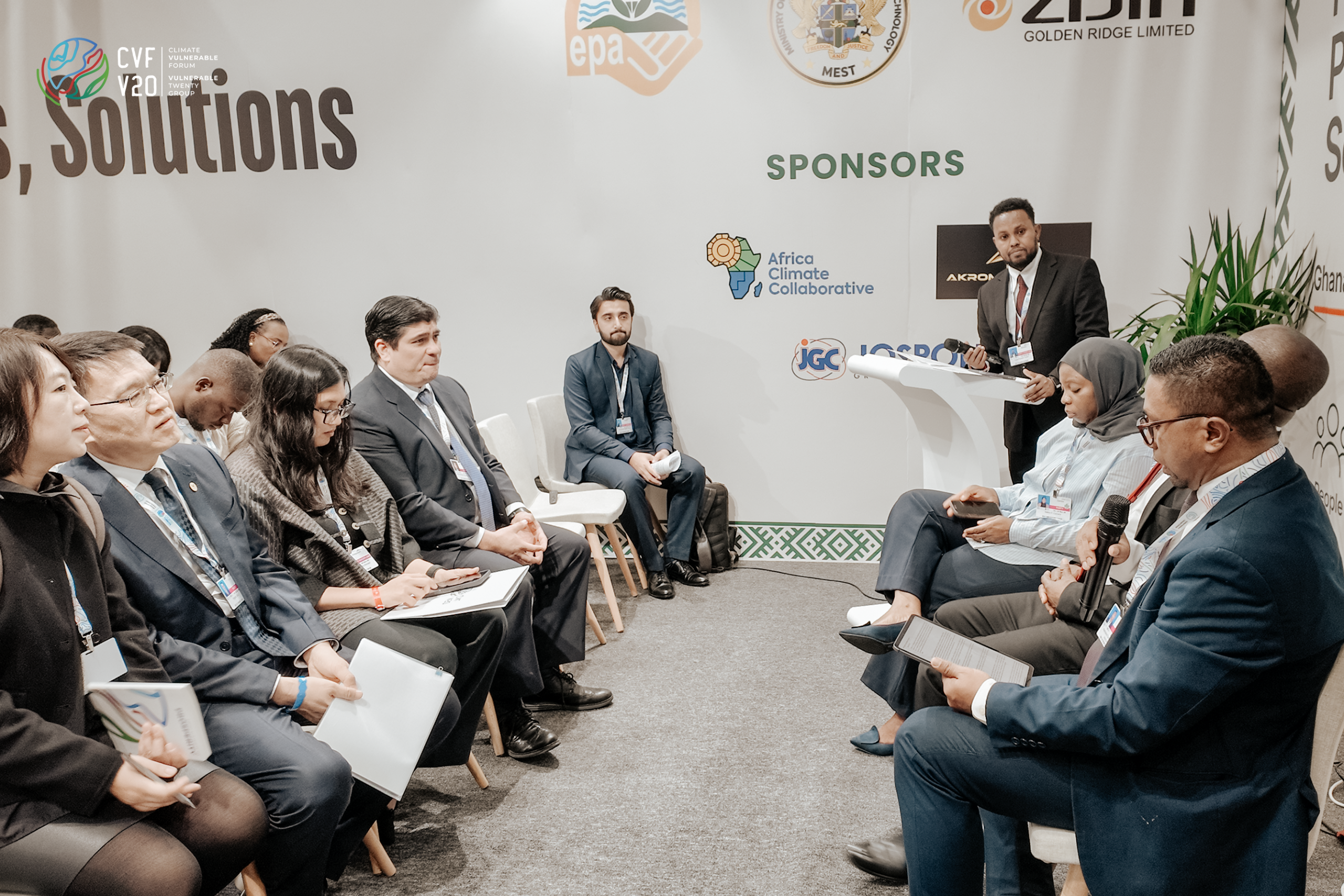
The signing concluded the two-day Shared Future, Shared Prosperity Dialogue, held at the Pakistan and Ghana Pavilions and co-organized by Pakistan’s Ministry of Climate Change and Environmental Coordination; Ghana’s Ministry of Environment, Science, and Technology; the CVF-V20 Secretariat; and IGDC.
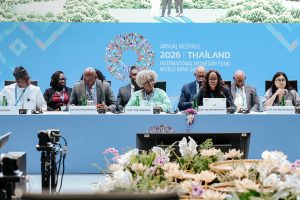
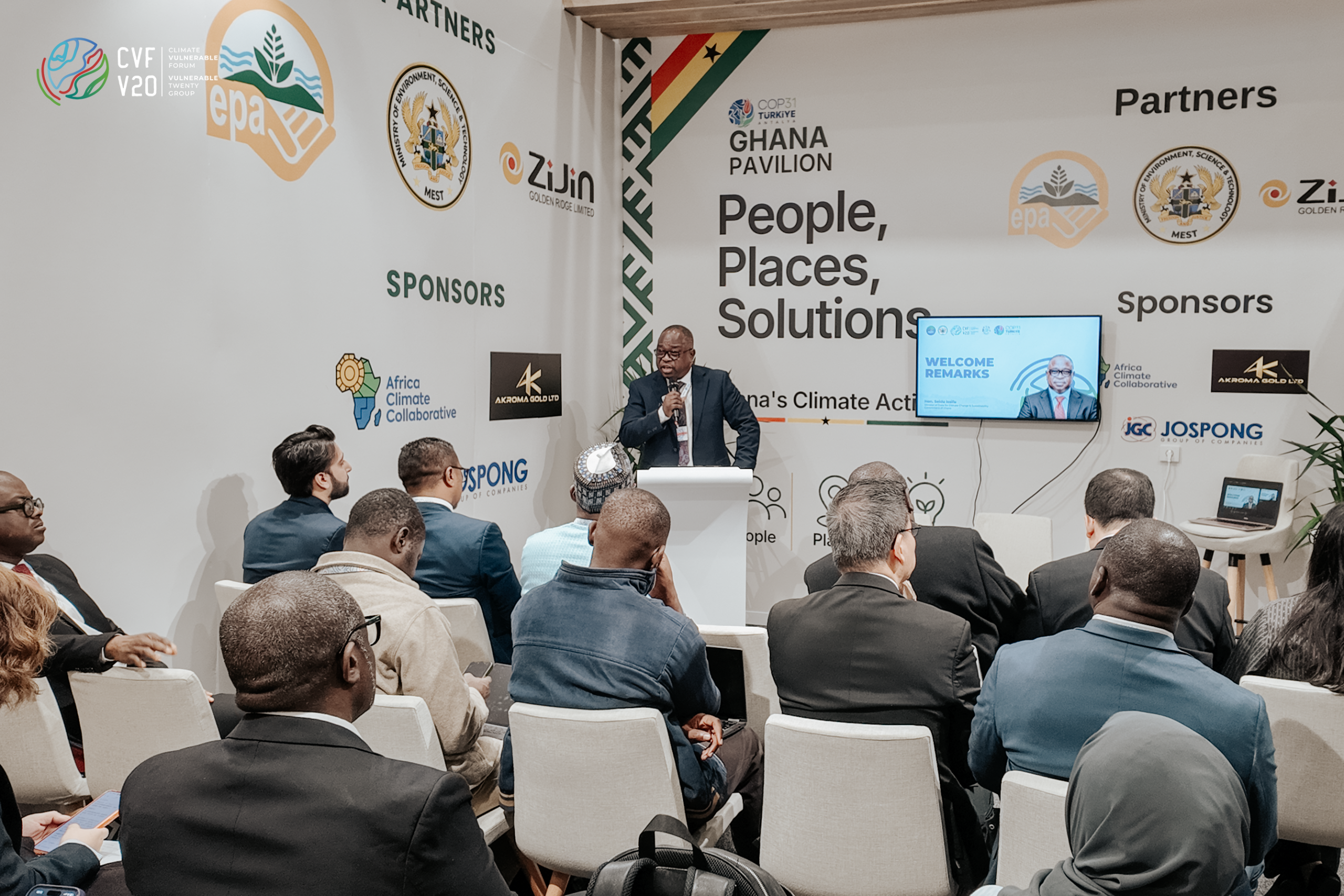
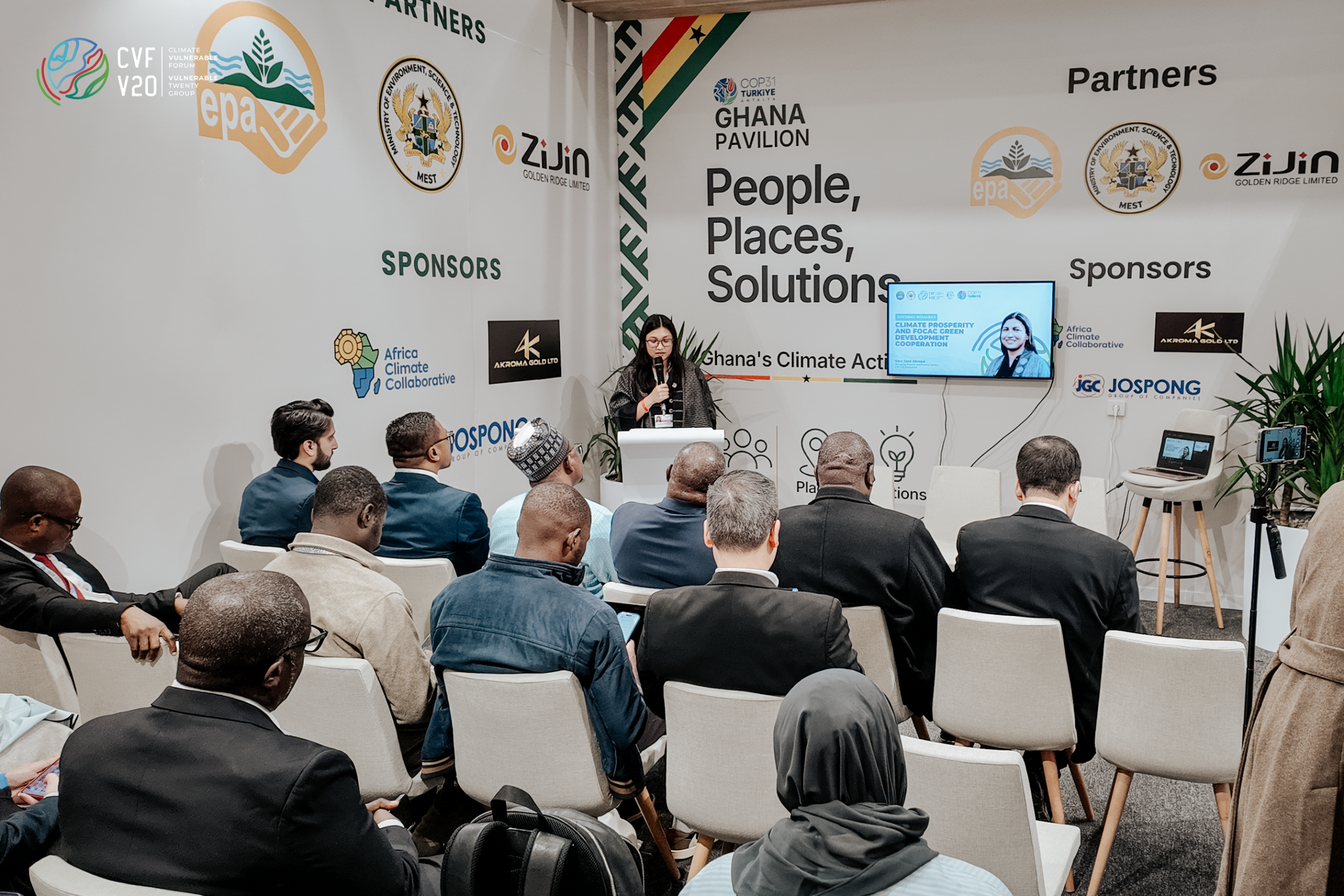
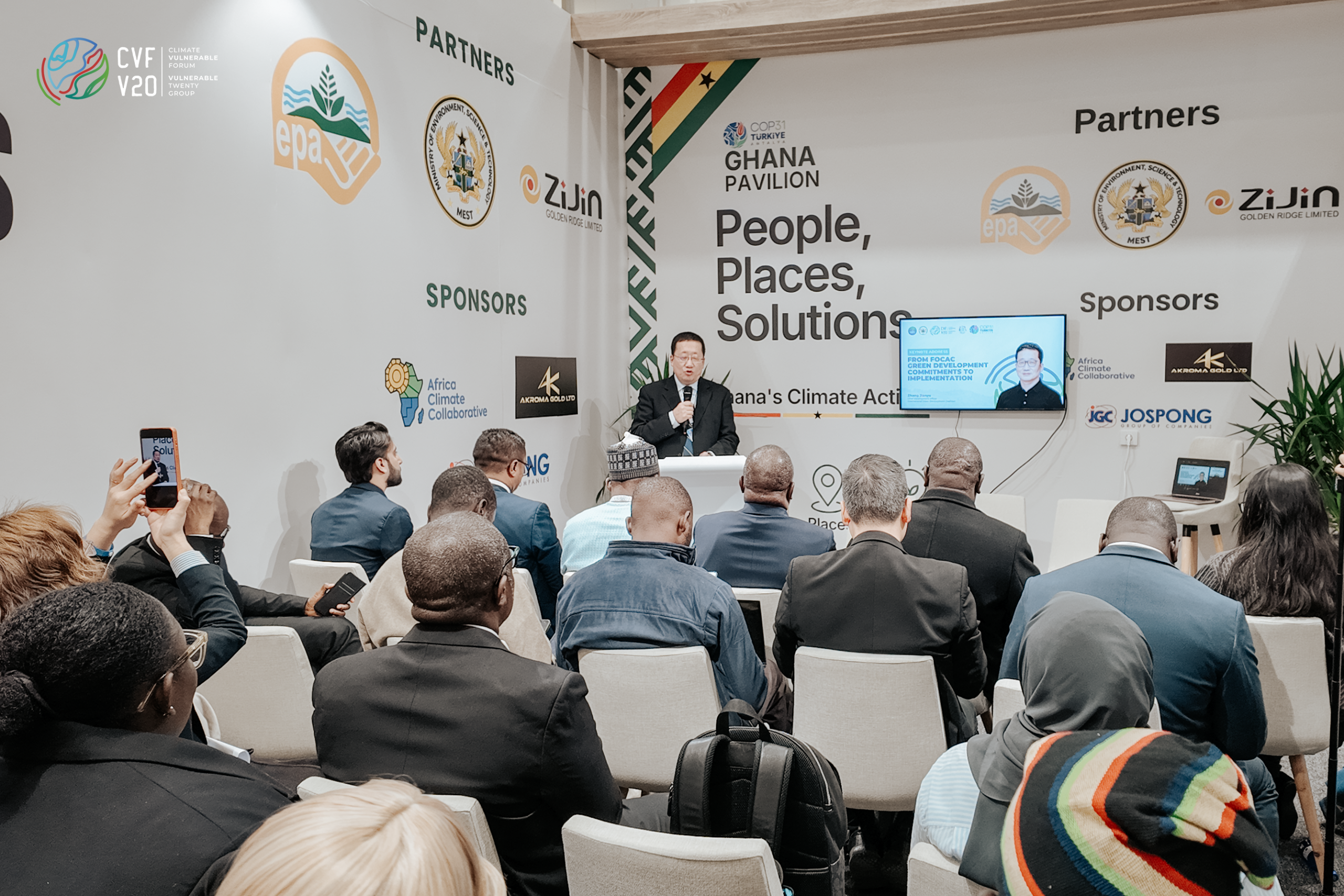
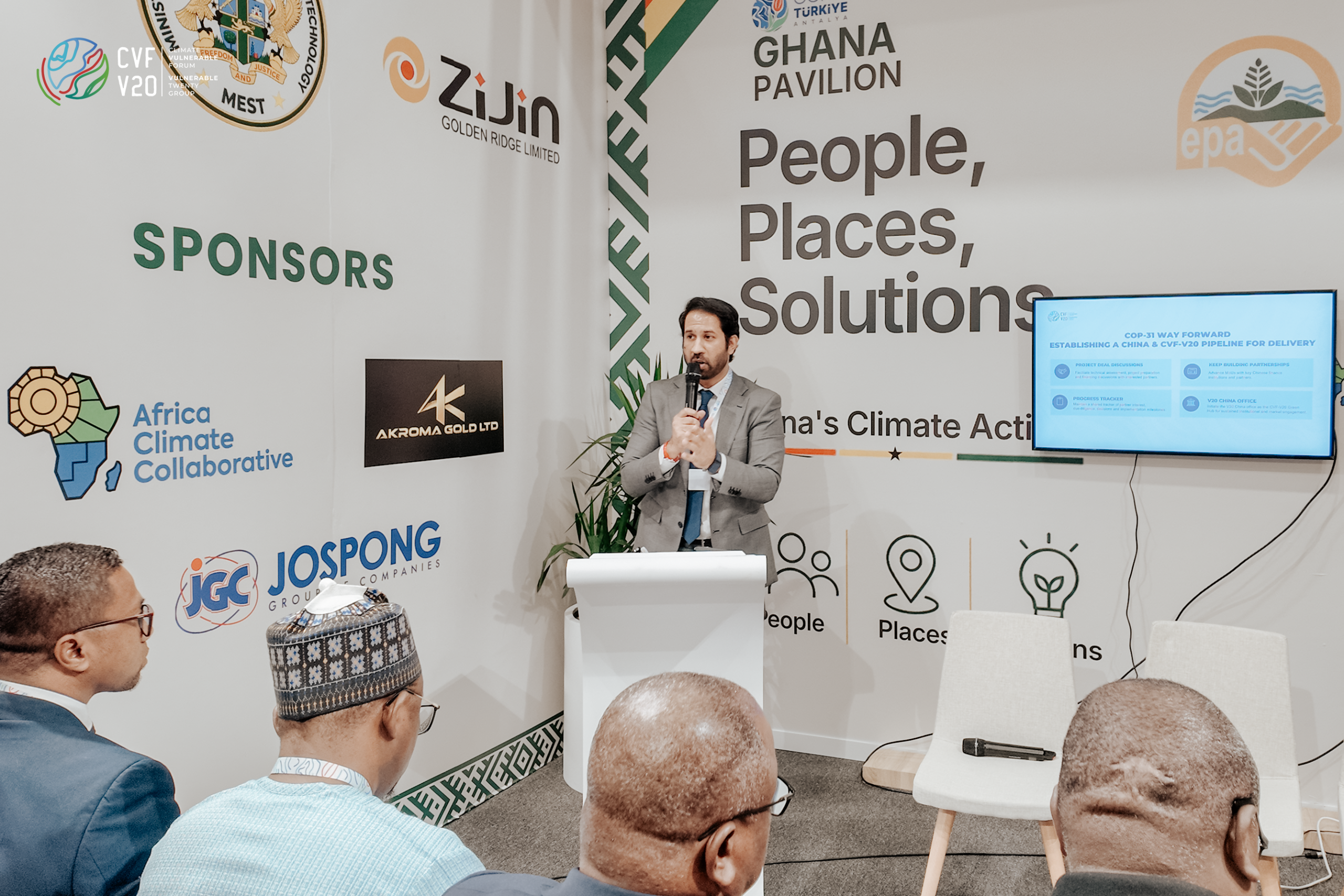
The November 11 session at the Ghana Pavilion focused on turning commitments made under the Forum on China-Africa Cooperation (FOCAC) into investment opportunities in Africa. Under the FOCAC Beijing Action Plan (2025-2027), China has committed to supporting 30 clean energy projects across the continent.
“For Ghana and other African countries, the Green Belt and Road Initiative presents an opportunity to accelerate investment in renewable energy, climate-resilient infrastructure, sustainable industrialization, and green technologies. Our collective task is to ensure that these investments respond to national development priorities, strengthen local capacities, and deliver lasting benefits to our people,” said H.E. Seidu Issifu, Ghana’s Minister of State for Climate Change and Sustainability.
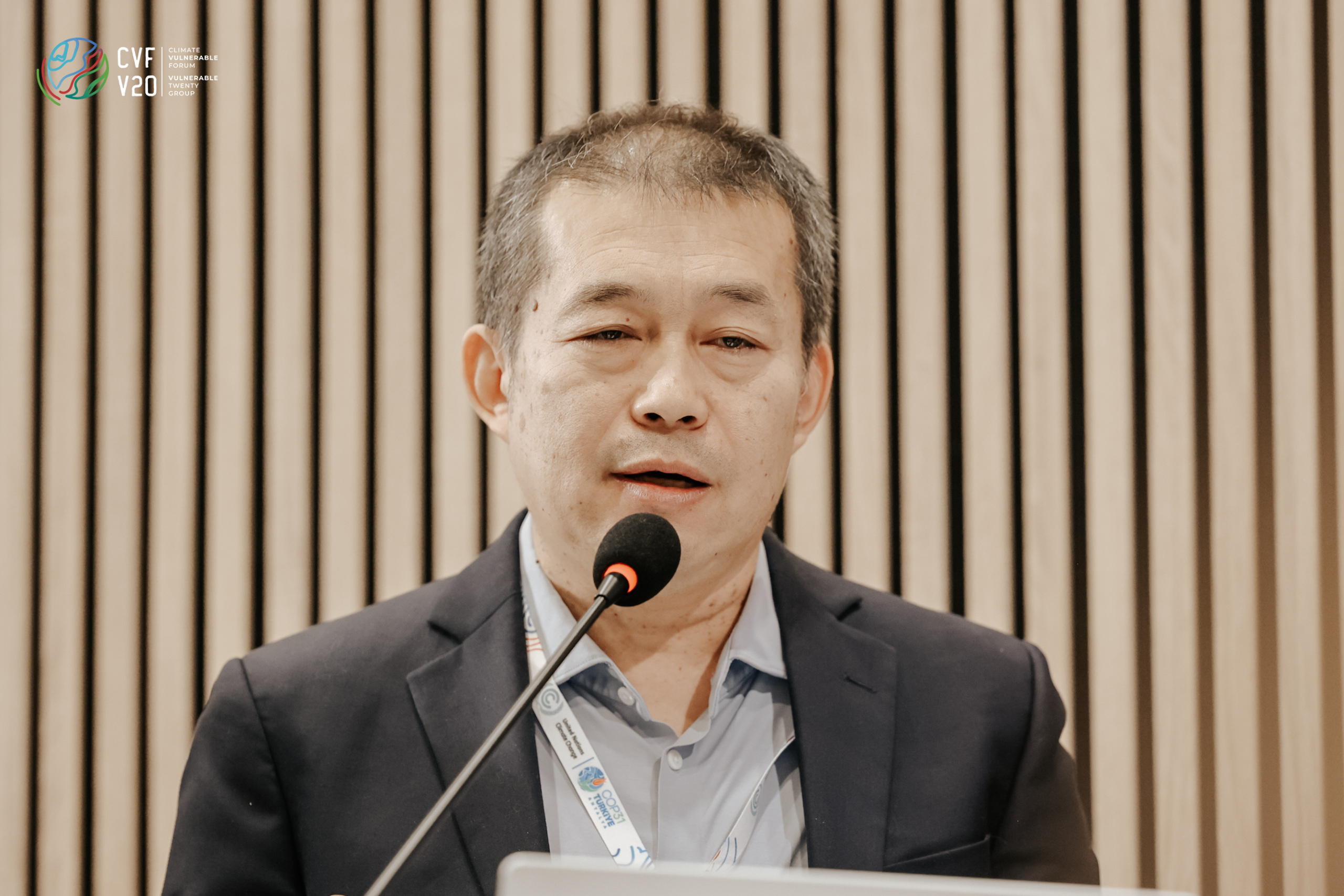
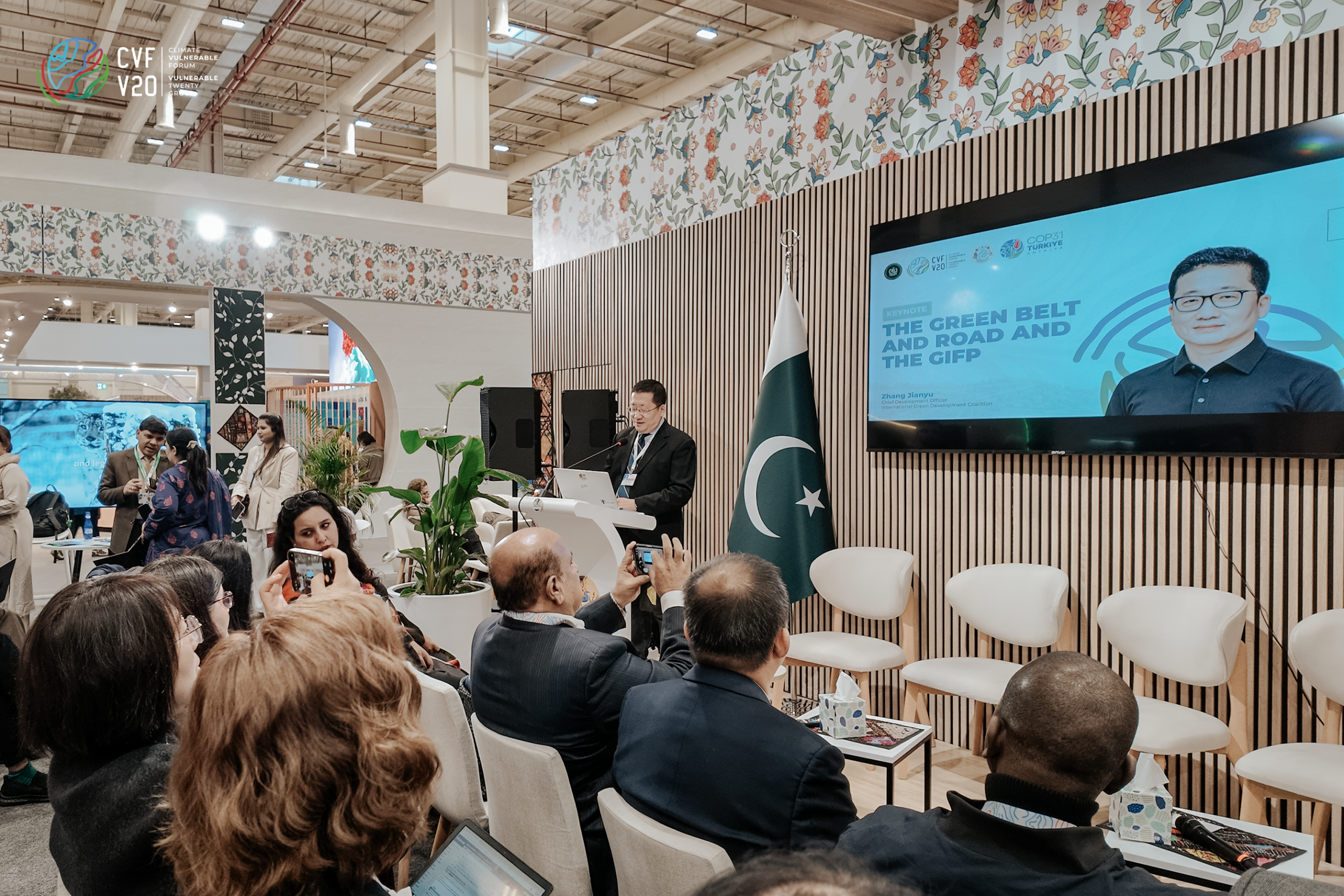
Mr. Zhang Jianyu, Executive Director of the BRI Green Development Institute, pointed to two opportunities to turn commitments into results:China’s zero-tariff treatment for all 53 African countries with which it has diplomatic relations, in place since 1 May 2026, and next year’s 10th FOCAC Ministerial Conference in the Republic of the Congo as opportunities to turn commitments into results. “Market access becomes lasting prosperity when it’s matched by investments in clean energy, productive capacity, local value addition, green industries, and resilient infrastructure,” he said.
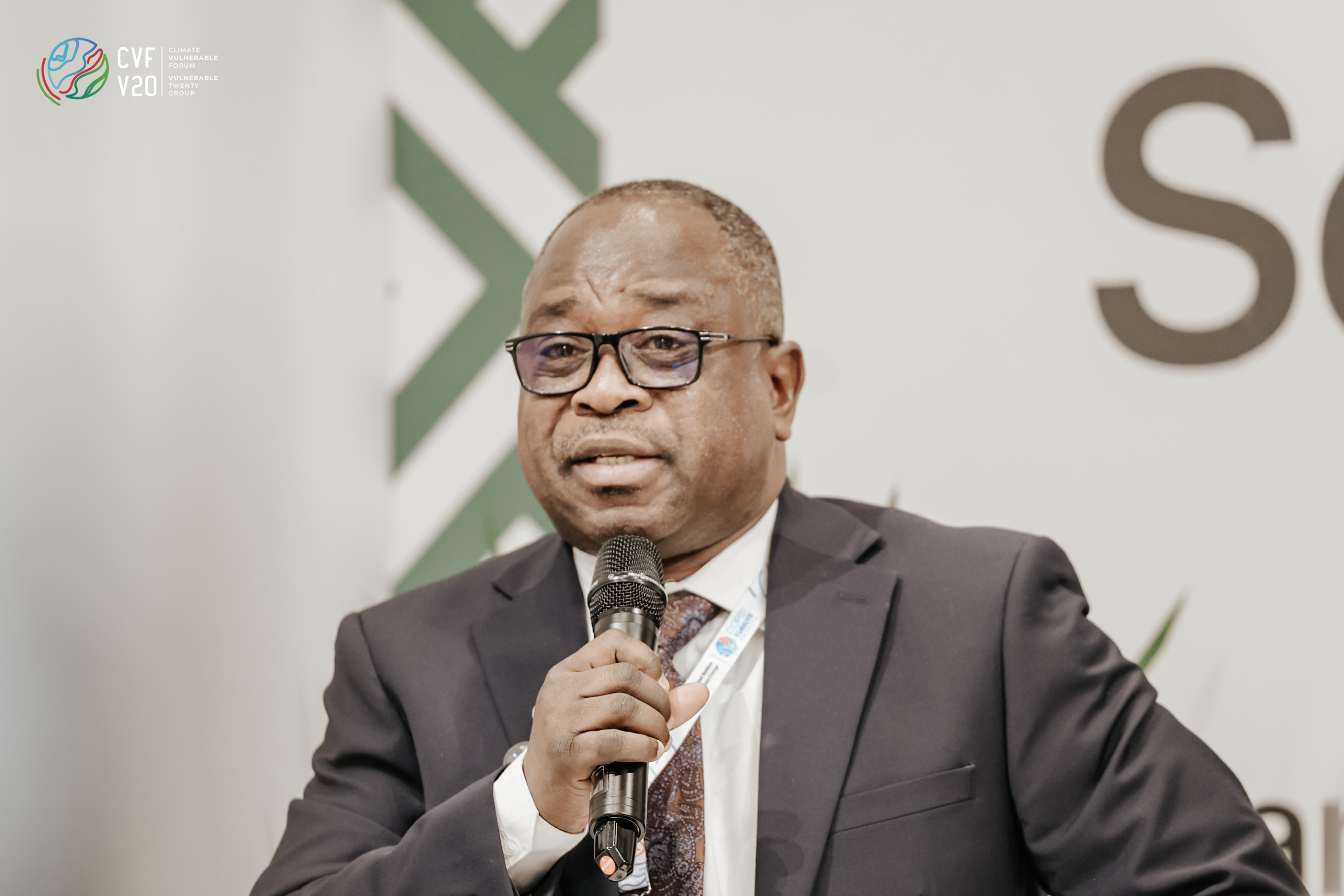
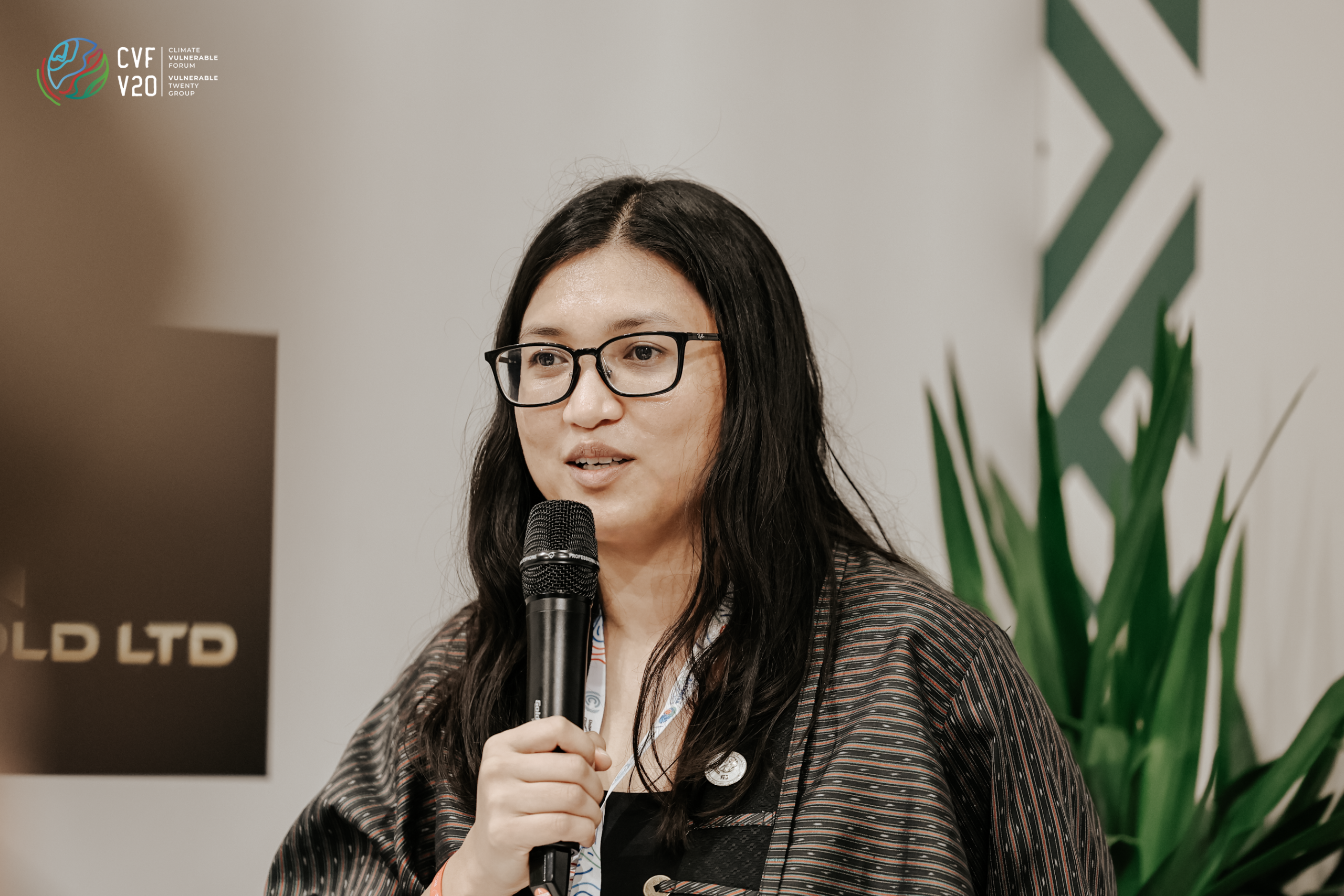
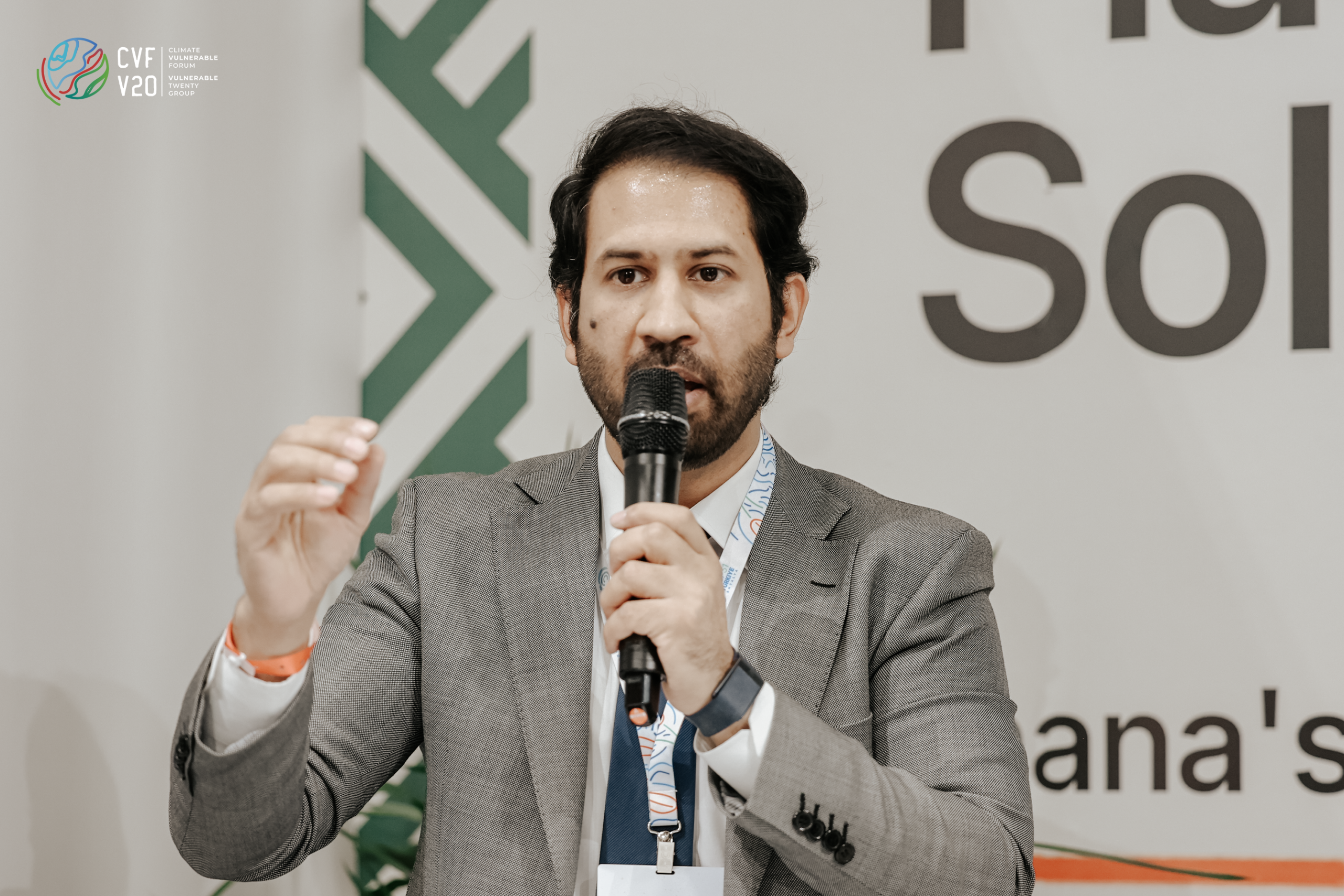
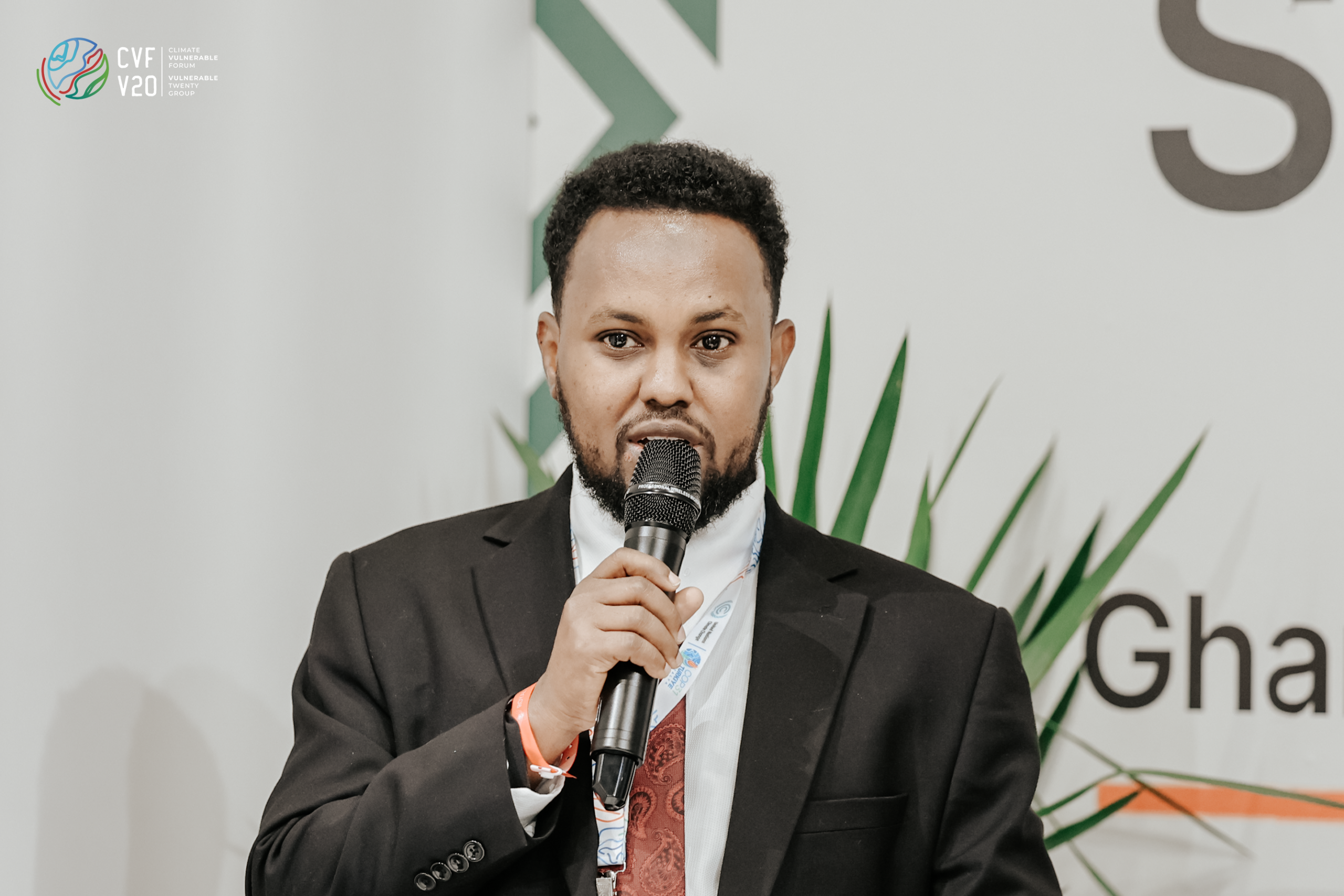
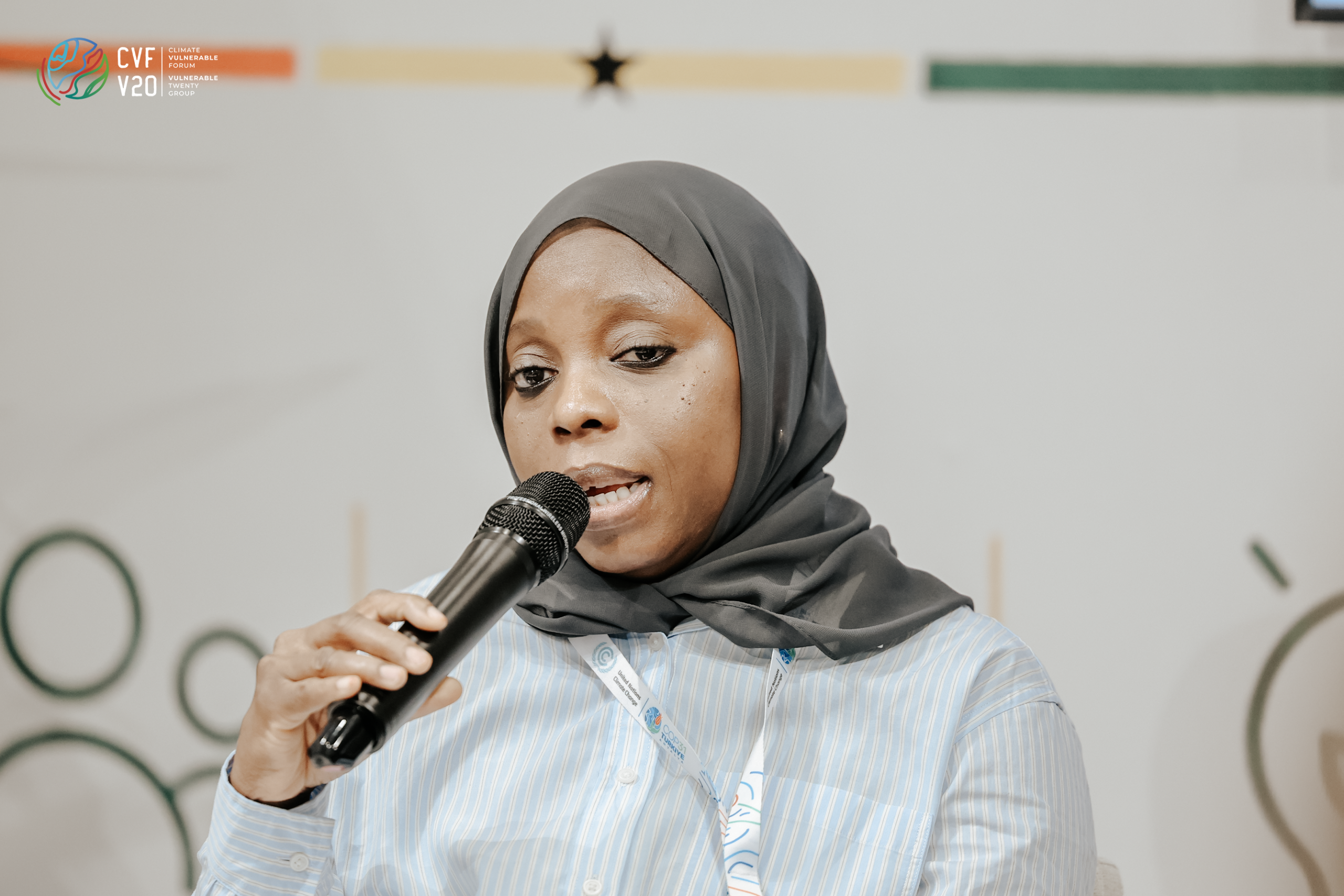
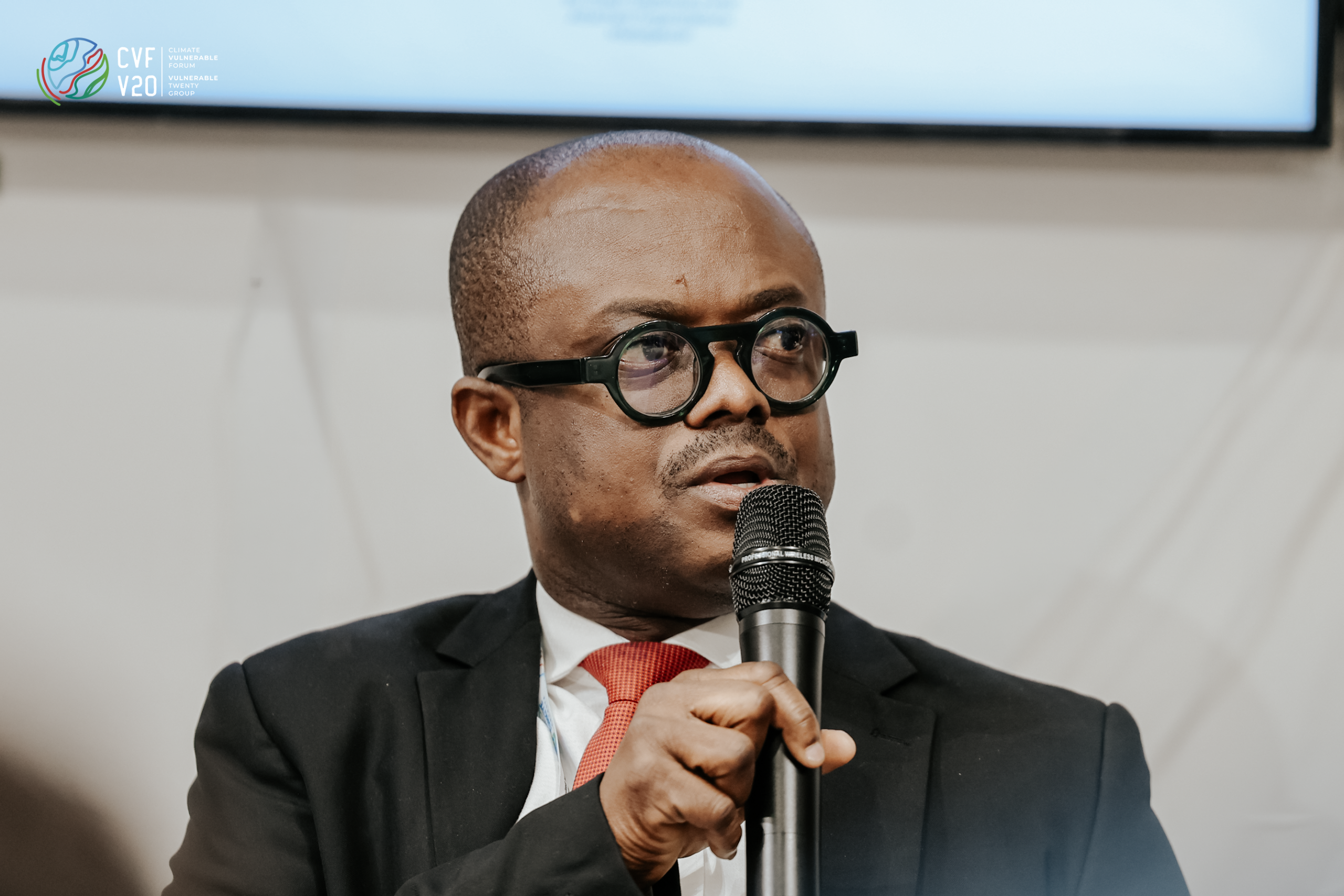
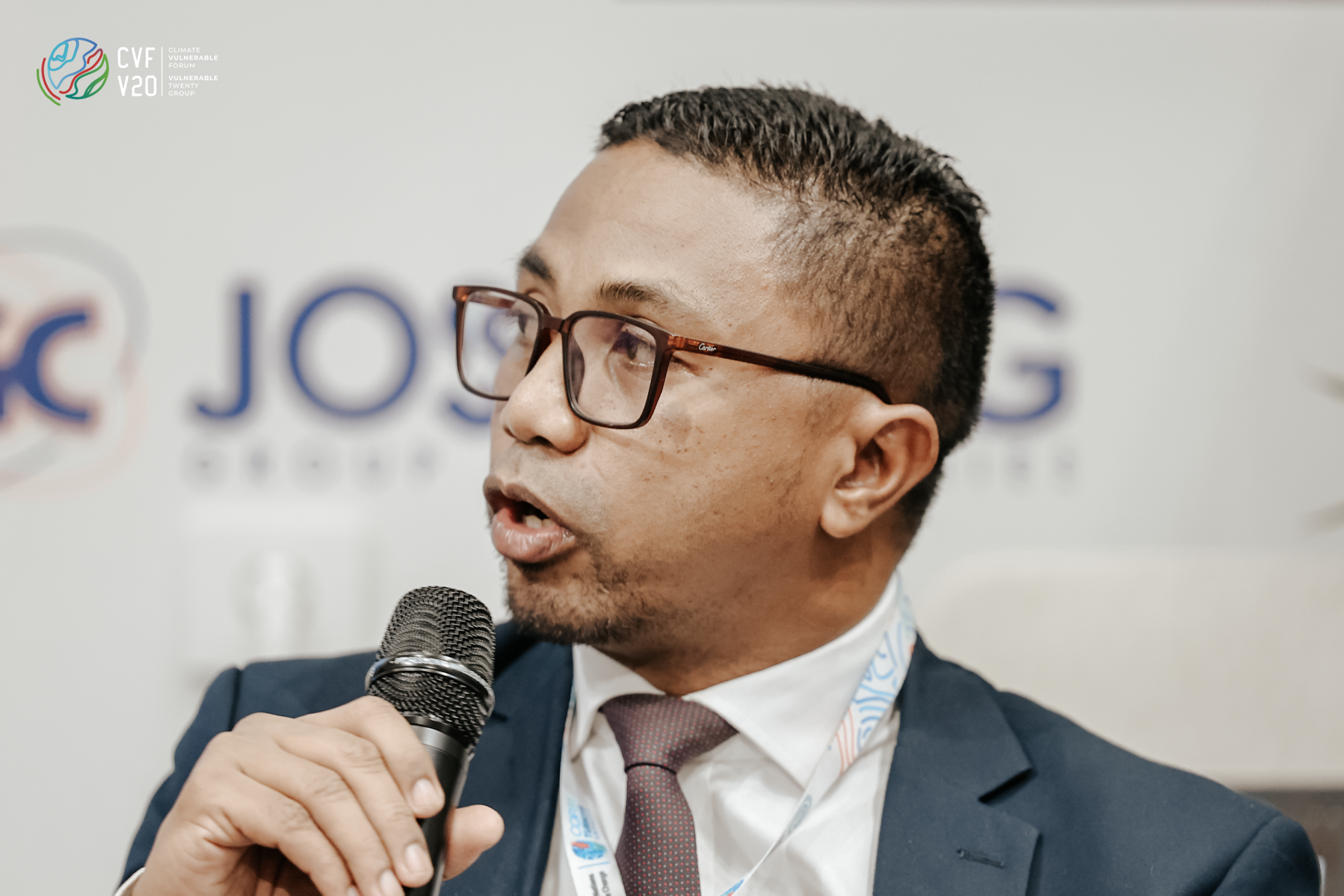
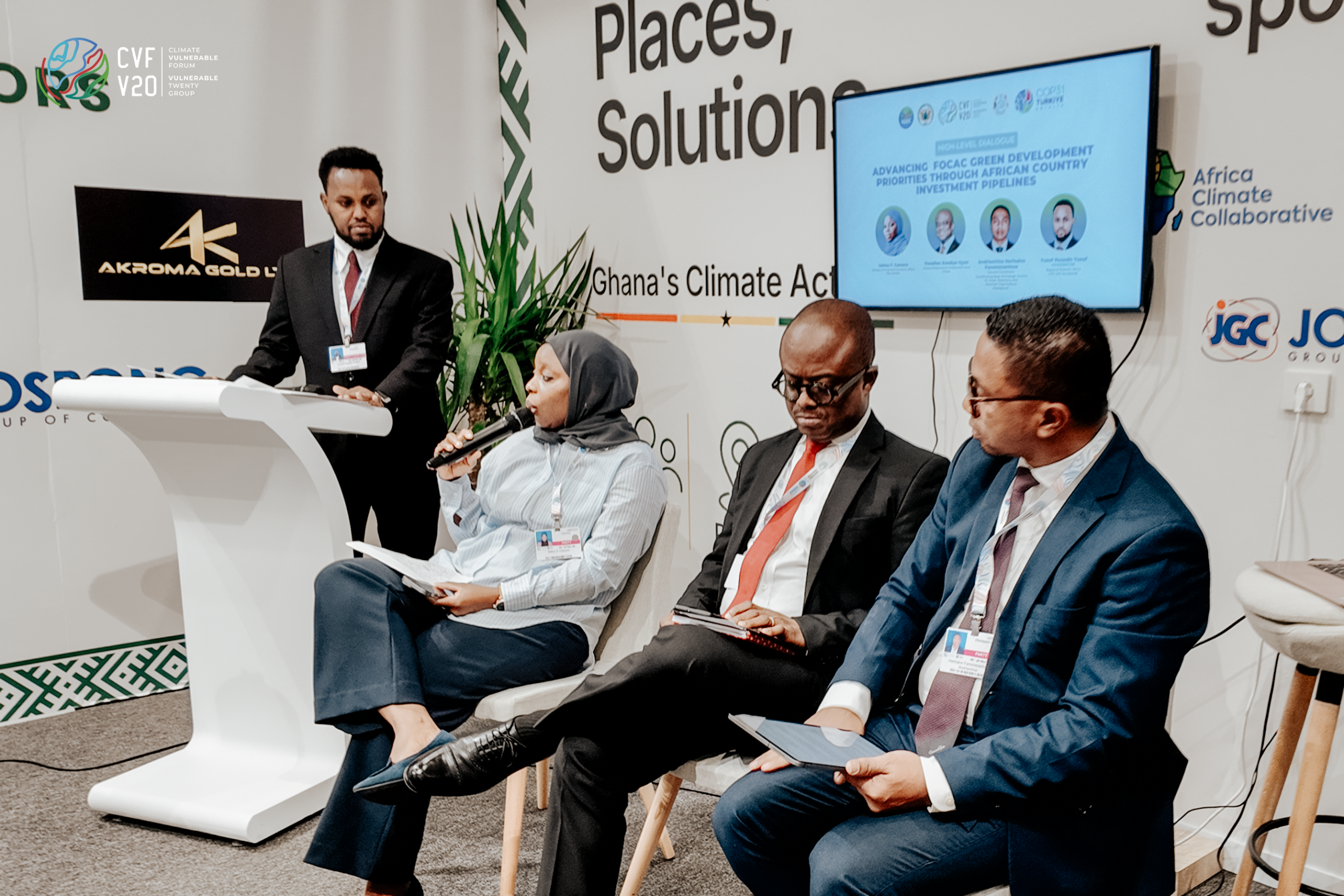
Panelists from The Gambia, Ghana and Madagascar shared how their countries are turning climate priorities into investment-ready projects. The Gambia’s Isatou Camara, The Director Climate Finance called for project-preparation support for her country’s USD 2.3 billion Climate Prosperity Investment Plan. Kwadwo Kwakye Gyan of the Ghana Infrastructure Investment Fund proposed a division of labor in which country platforms prepare projects and national funds structure and de-risk them for international partners while Madagascar’sMinistry of Environment and Sustainable Development representative Mr. Andrianirina Harinaivo Fanomezantsoa said forests and carbon “must be an asset for rural communities first, and only then for the market.”
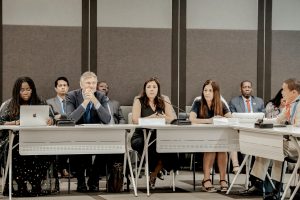
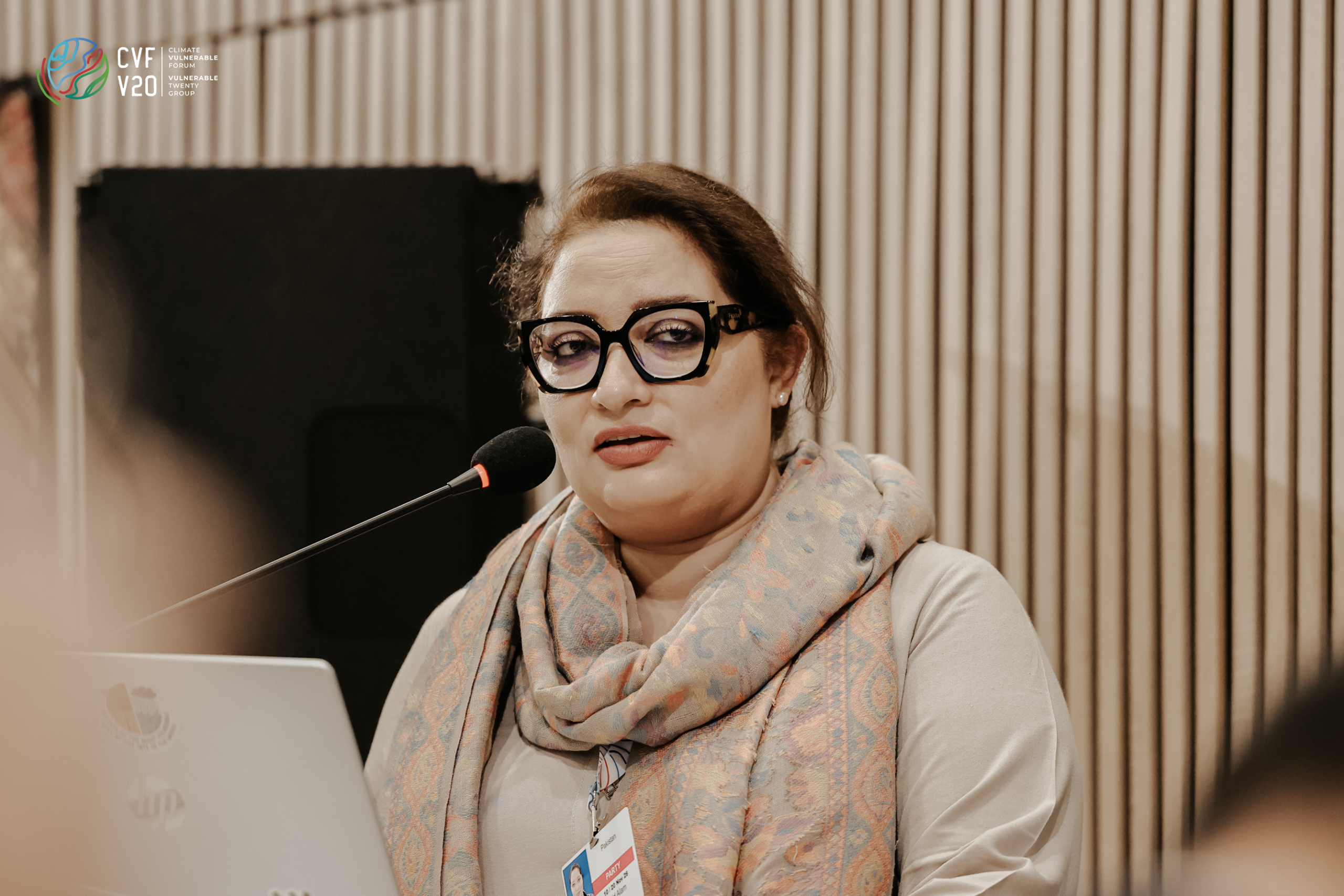
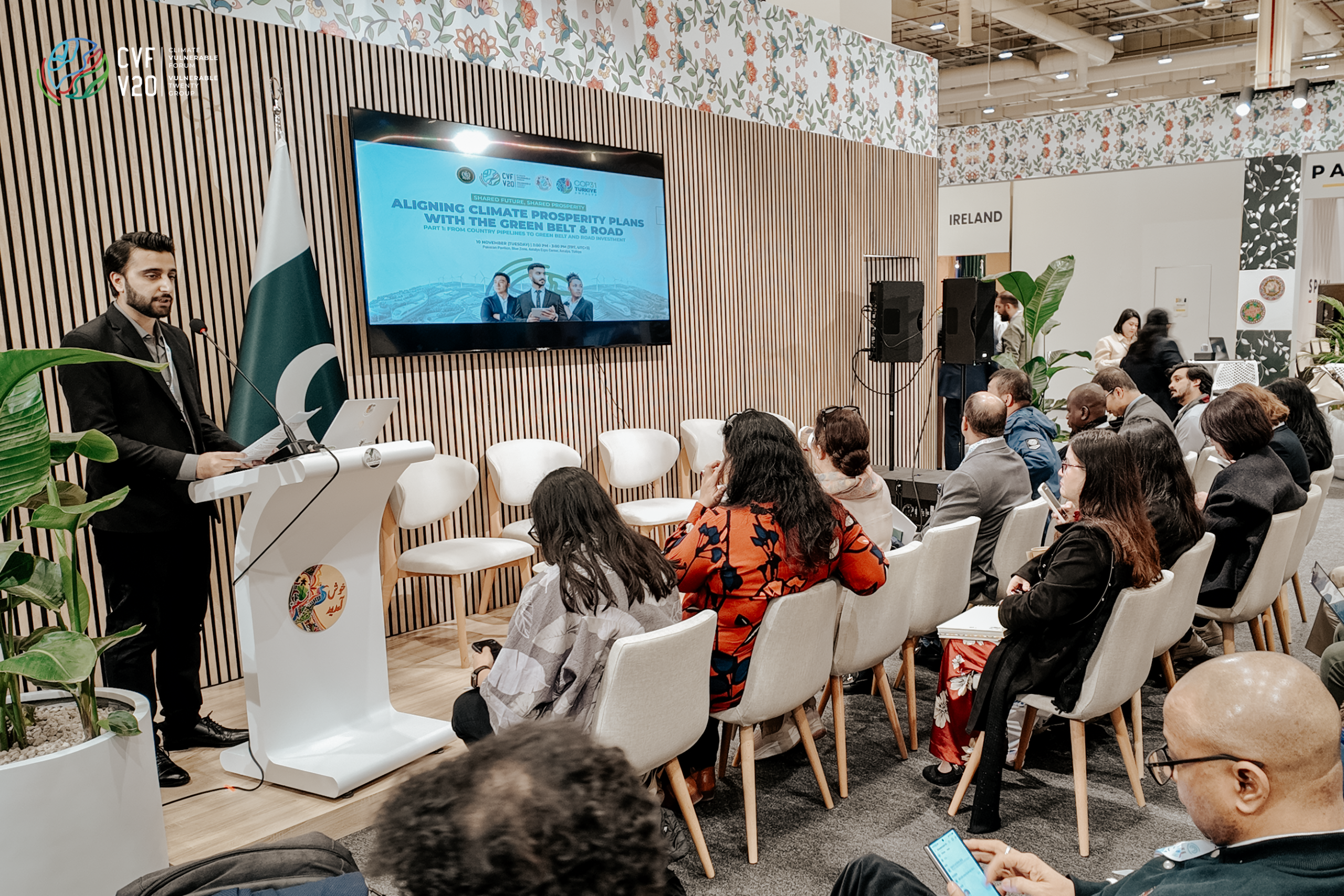
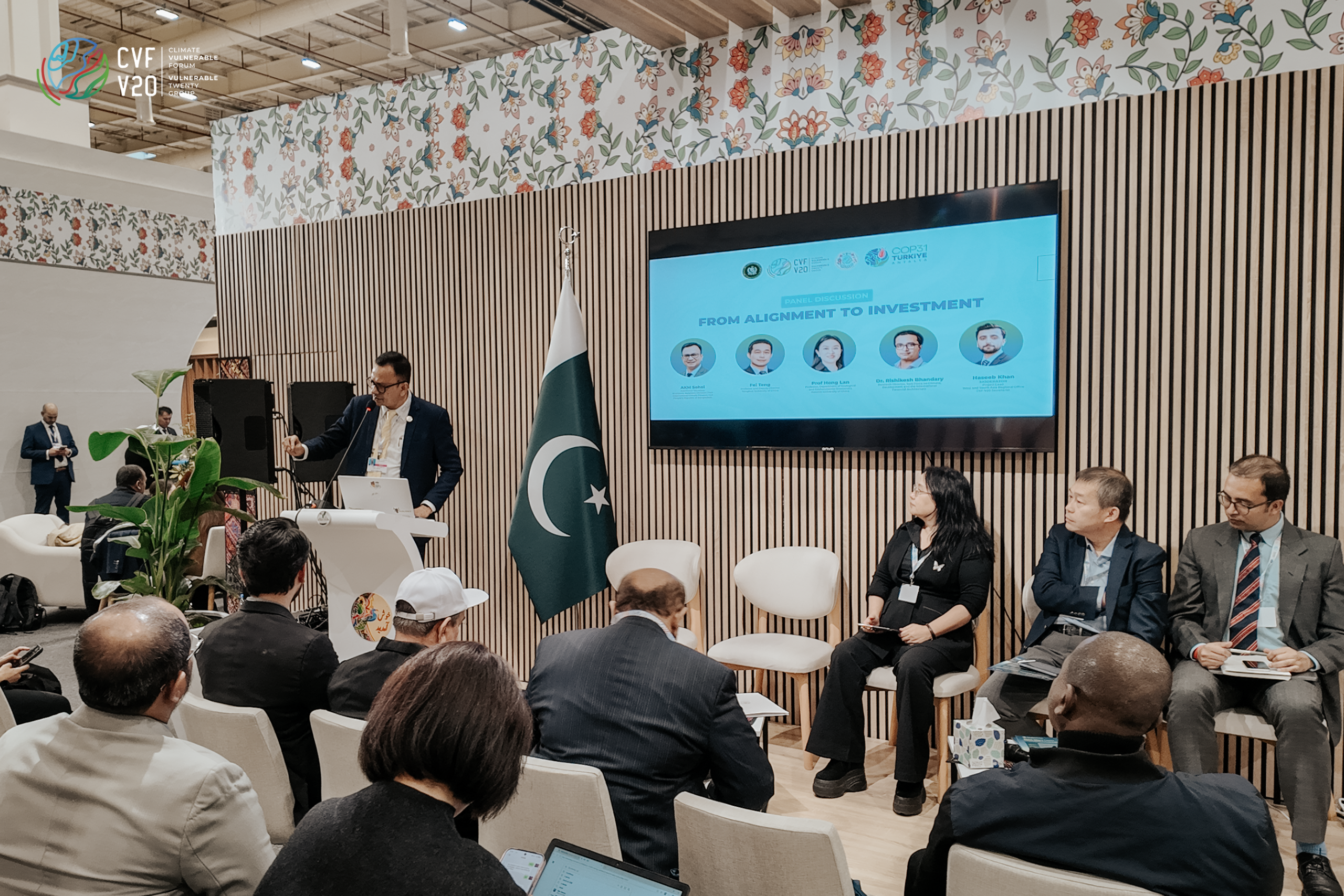
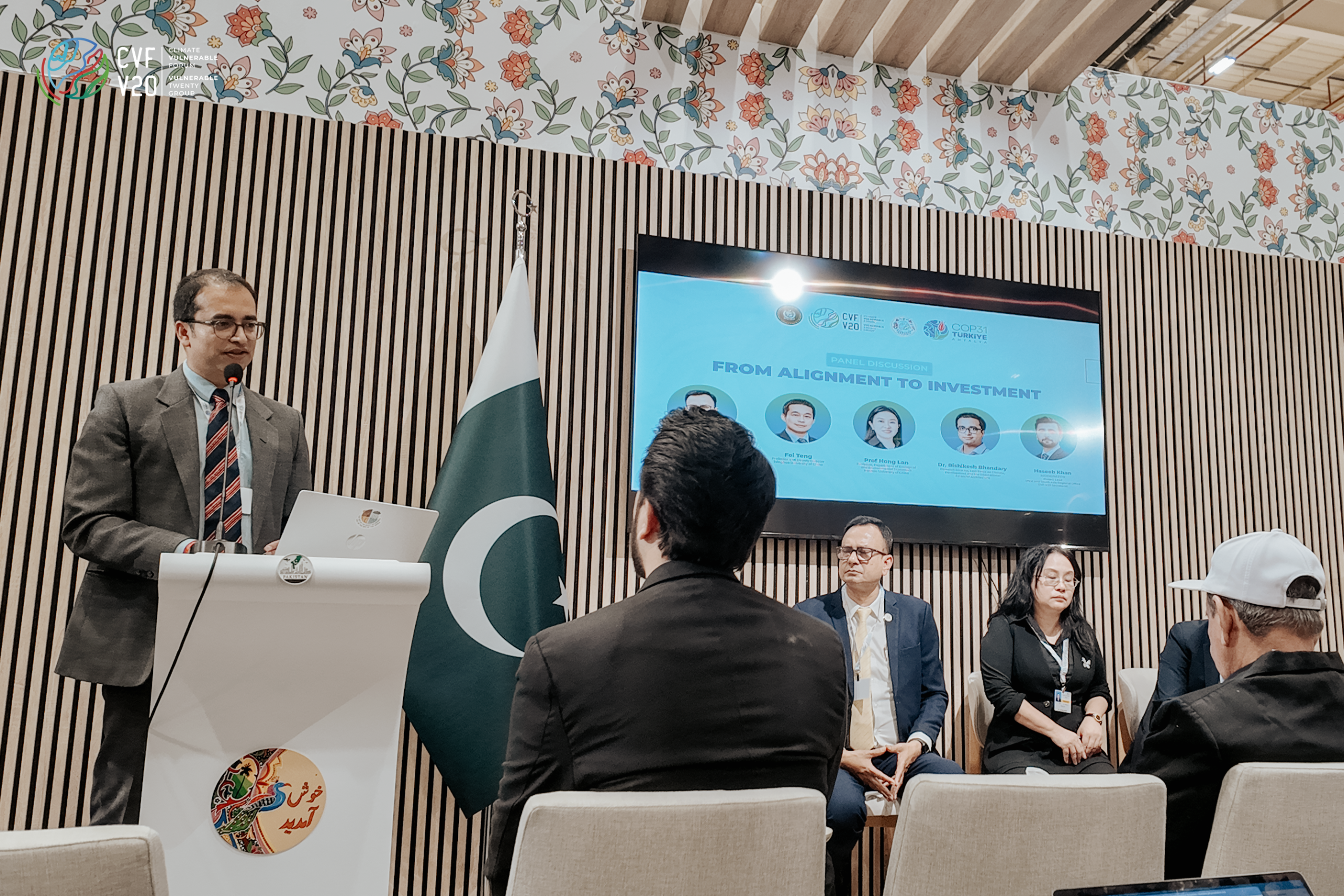
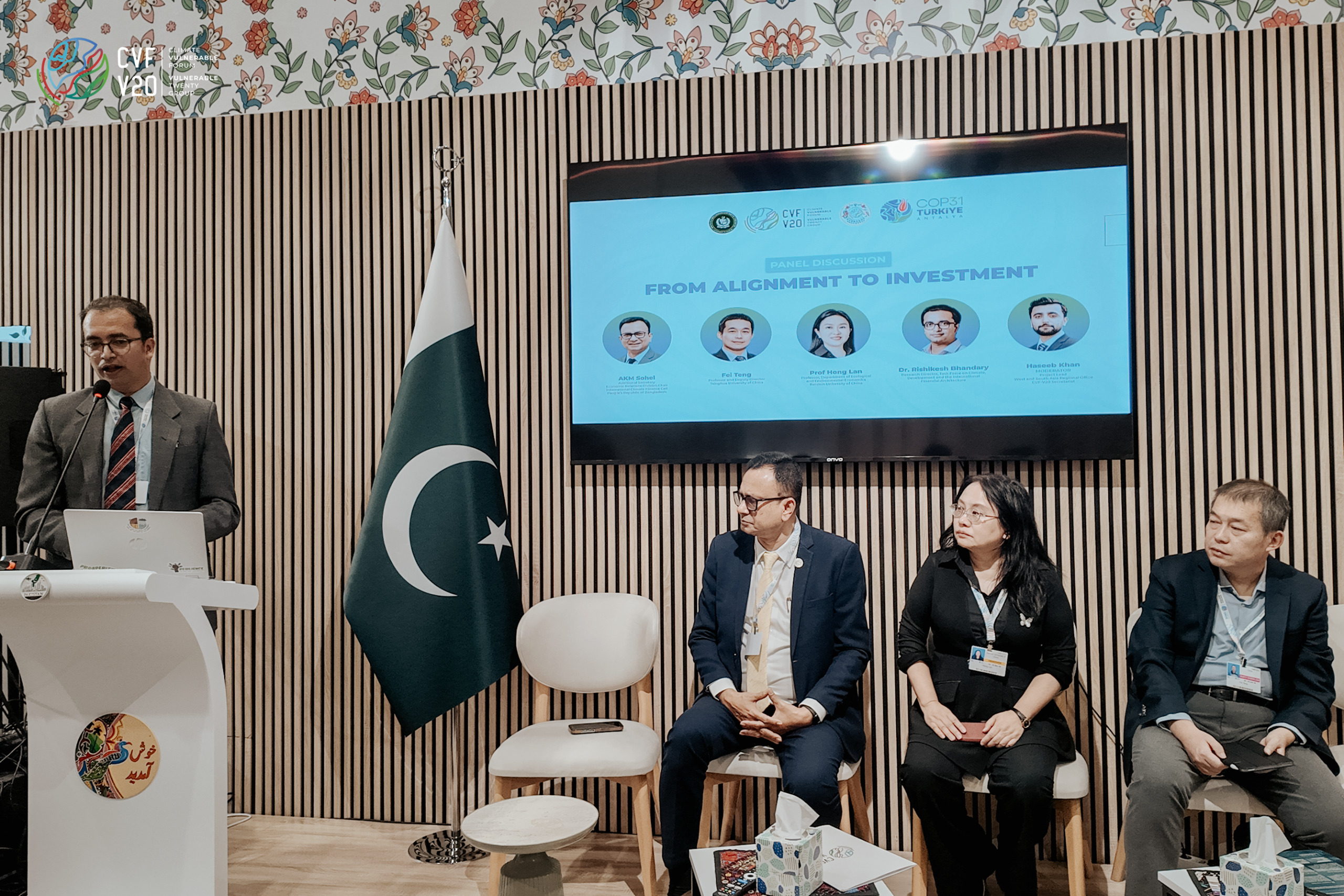
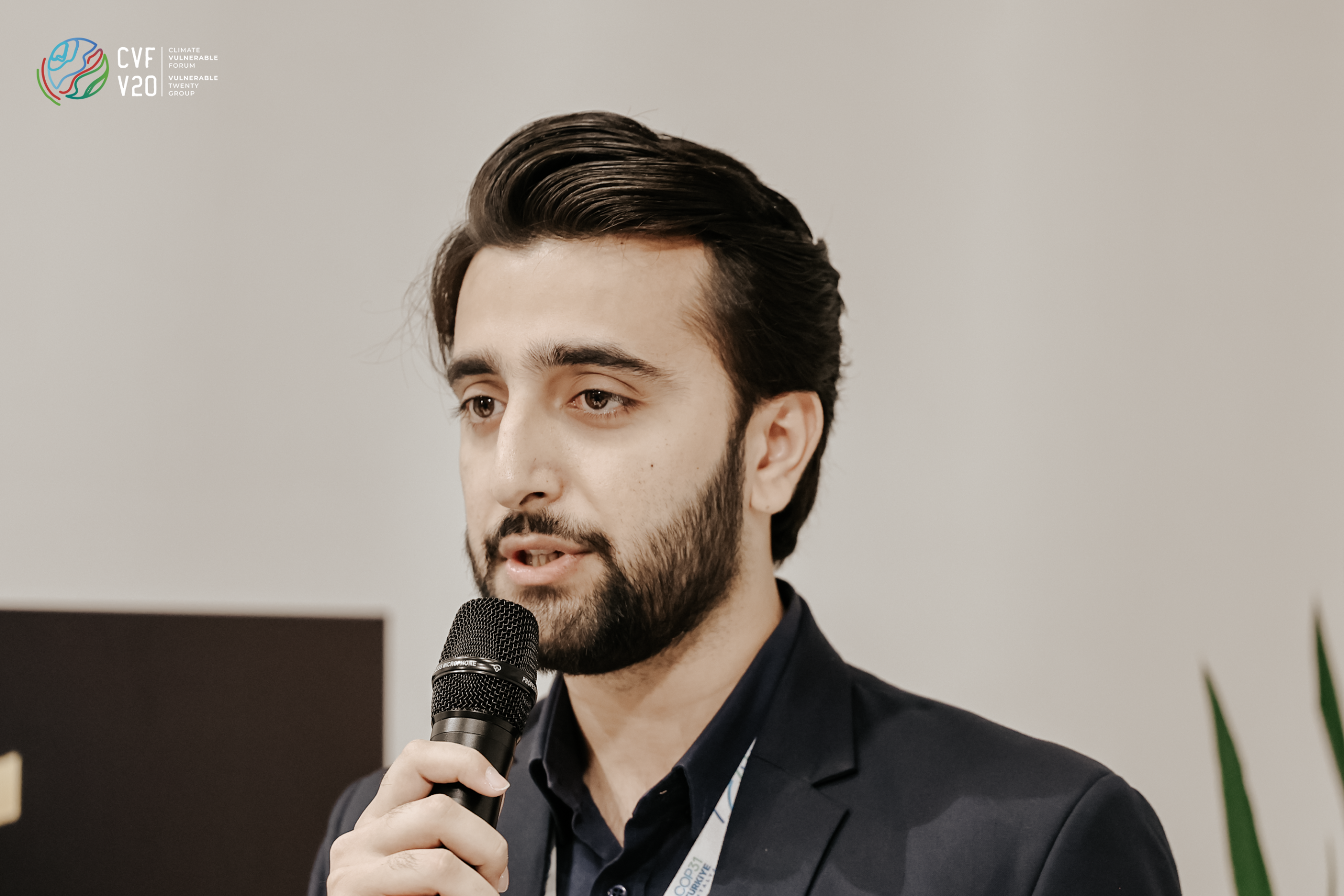
The November 10 session at the Pakistan Pavilion explored how CVF-V20 Country Platforms with priorities and pipeline from Climate Prosperity Plans can connect investment priorities with international finance, technology, and implementation partners. During the session, Ahmed emphasized that the challenge facing climate-vulnerable countries is not necessarily access to technology, but project delivery at scale. Country Platforms, she said, provide partners with “credible points of engagement and a single point of entry” for finance, technology, and implementation.
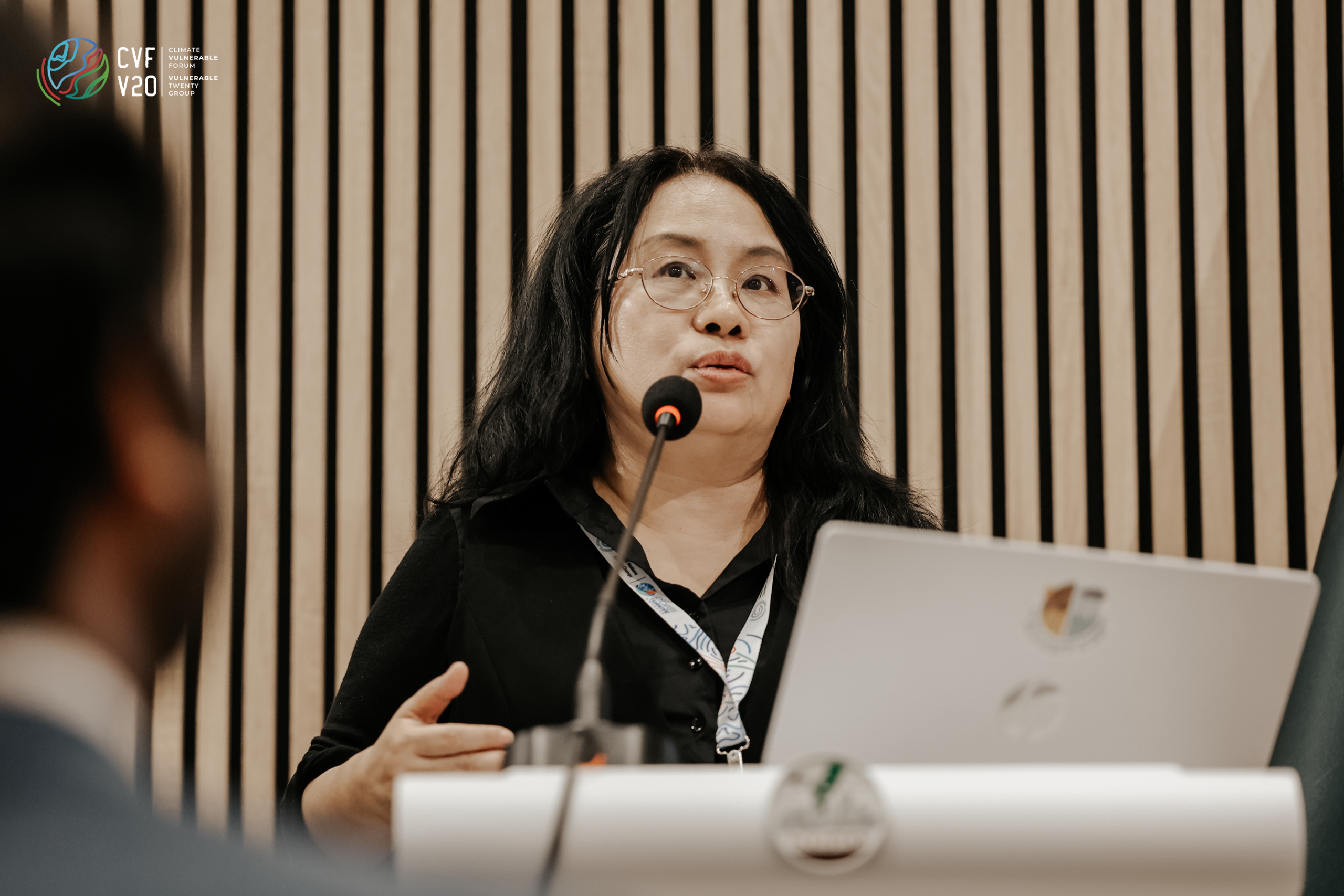
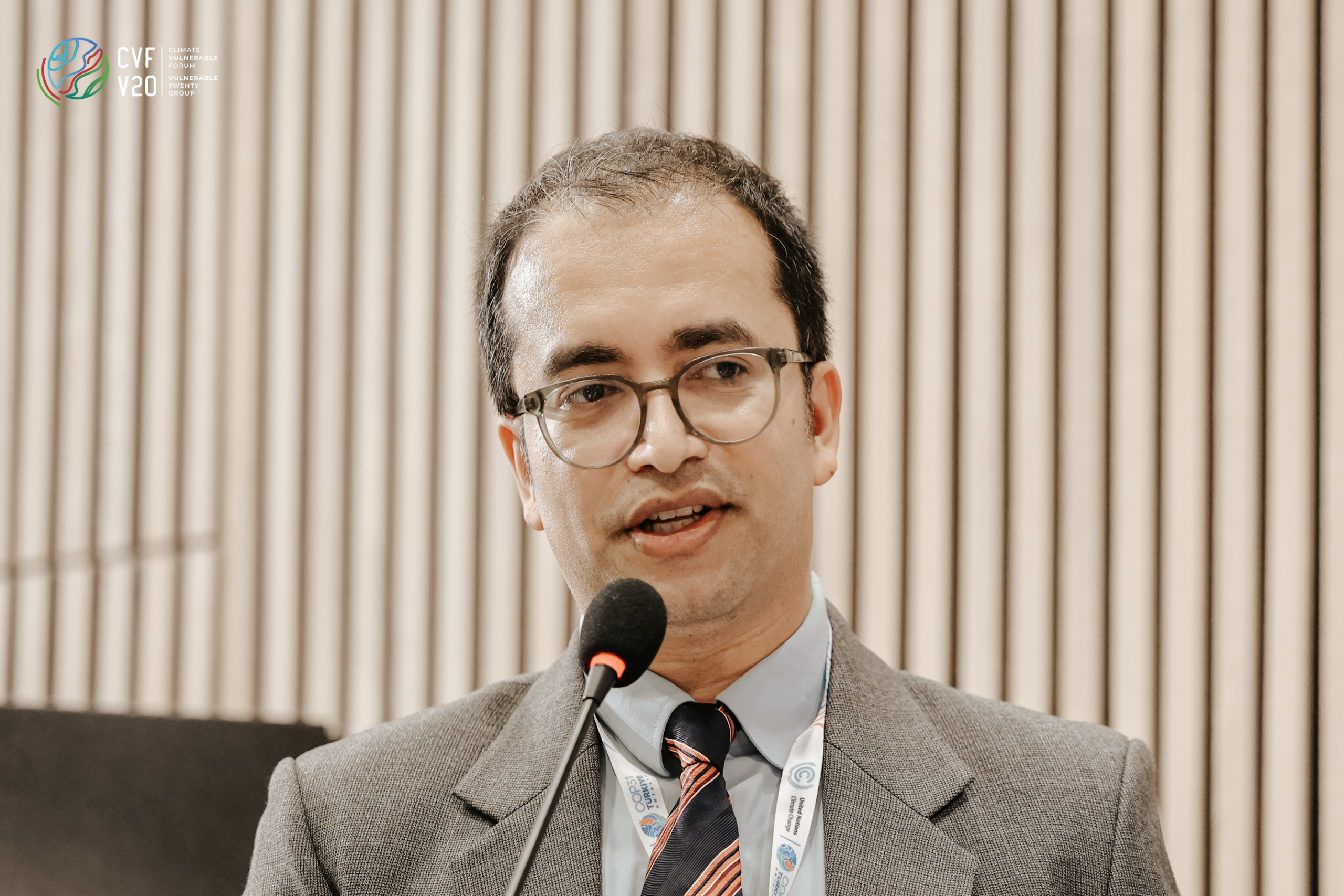
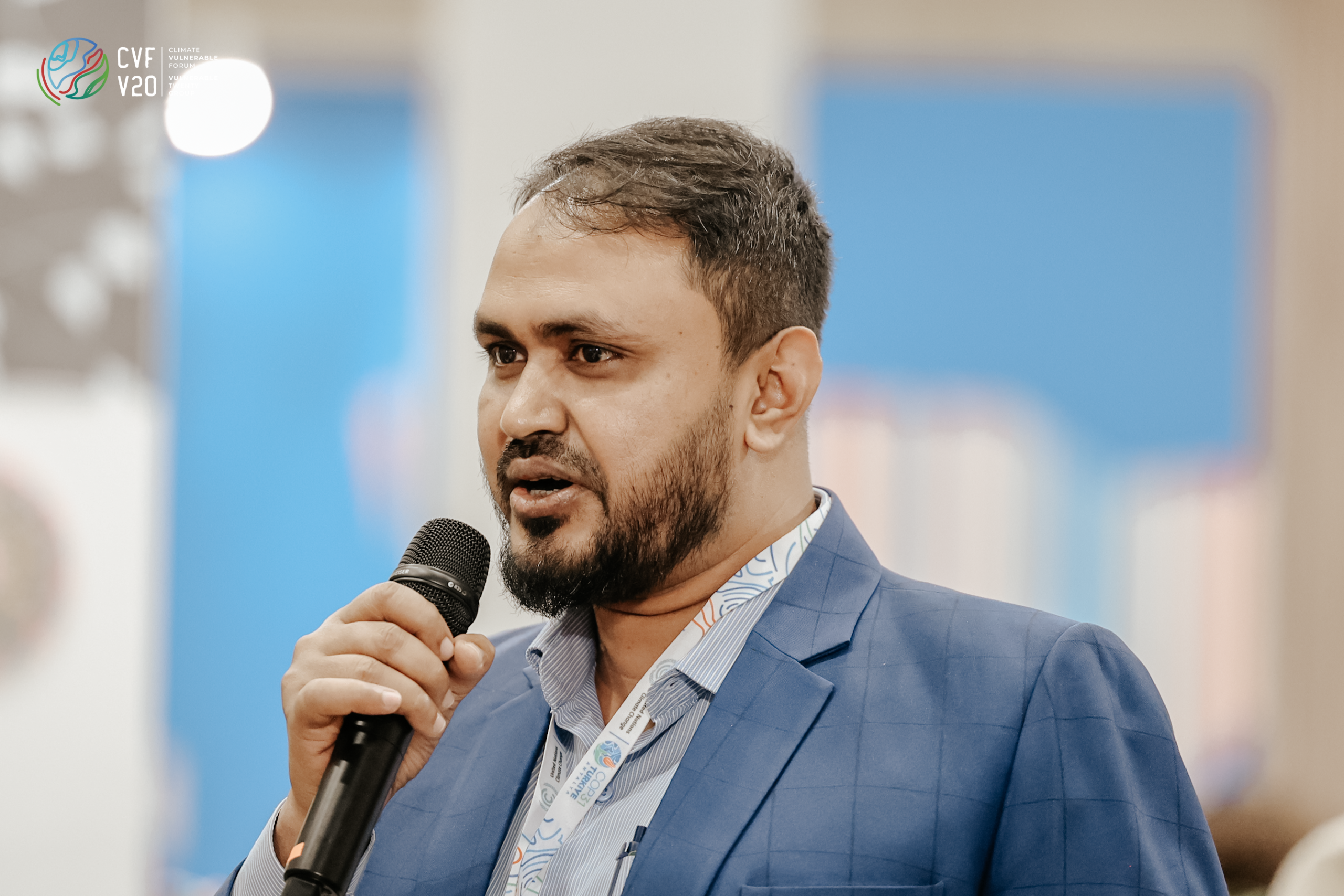
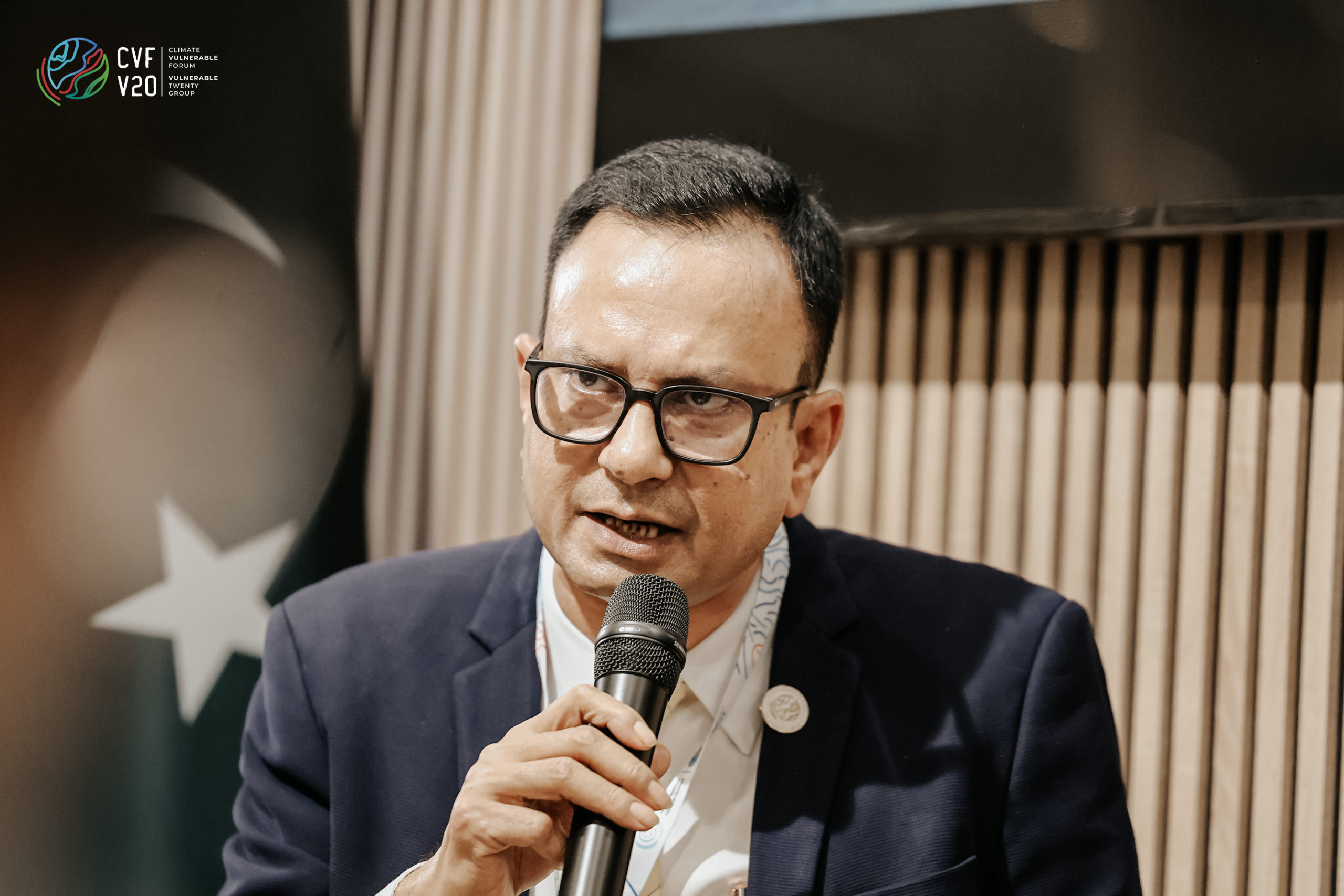
Panelists AKM Sohel of Bangladesh, Prof. Teng Fei of Tsinghua University, Prof. Hong Lan of Renmin University of China, and Dr. Rishikesh Ram Bhandary of the Task Force on Climate, Development and the International Financial Architecture discussed concessional and local-currency finance, carbon markets, local employment, and resilient energy systems.
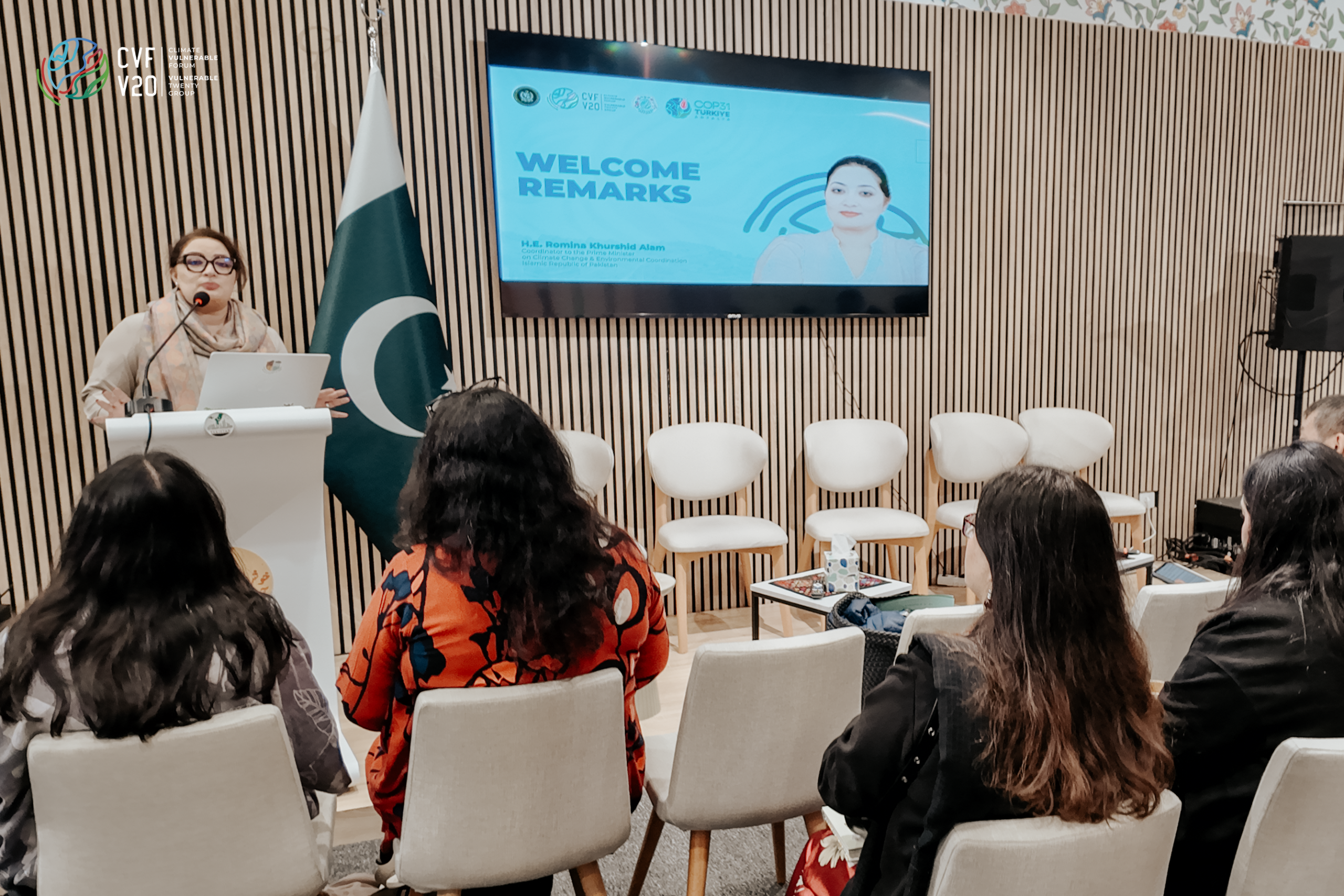
H.E. Romina Khurshid Alam, Pakistan’s Coordinator to the Prime Minister on Climate Change and Environmental Coordination, stressed that cooperation must deliver tangible results, including completed feasibility studies, secured financing, deployed technology, and stronger local industries
***
Established in April 2019 with its Secretariat in Beijing, the International Green Development Coalition for the Belt and Road Regions (IGDC) is an international partnership platform advancing green and sustainable development under the Belt and Road Initiative. It brings together more than 190 partners from around 50 countries, including government departments, international organizations, research institutions, companies and civil society organizations.
The CVF-V20 now represents 77 member countries from small island developing states (SIDS), least developed countries (LDCs), low to middle-income countries (LMICs), landlocked developing countries (LLDCs), and fragile and conflict-affected states (FCS). Working together, the CVF-V20 aims to achieve climate justice through the realization of Climate Prosperity Plans, which contain ambitious economic and financial resilience strategies designed to attract investment and resources that advance the attainment of the Sustainable Development Goals (SDGs), 30×30 Global Biodiversity, and help keep the average global temperature within the Paris Agreement’s 1.5°C safety threshold.
Africa: Benin, Burkina Faso, Cabo Verde, Central African Republic, Chad, Comoros, Côte d’Ivoire, Democratic Republic of the Congo, Eswatini, Ethiopia, Gabon, The Gambia, Ghana (Troika), Guinea, Kenya, Liberia, Madagascar, Malawi, Morocco, Mozambique, Namibia, Niger, Rwanda, Senegal, Sierra Leone, Somalia, South Sudan, Sudan, Tanzania, Togo, Tunisia, Uganda, Zambia
Asia: Afghanistan, Bangladesh (Troika), Bhutan, Cambodia, Jordan, Kyrgyzstan, Lebanon, Maldives, Mongolia, Nepal, Pakistan, Palestine, Philippines, Sri Lanka, Timor-Leste, Vietnam, Yemen
Caribbean: Barbados (Chair/Troika), Dominica, Dominican Republic, Grenada, Guyana, Haiti, Saint Lucia, Saint Vincent and the Grenadines, Suriname, Trinidad and Tobago
Latin America: Colombia, Costa Rica, Guatemala, Honduras, Nicaragua, Paraguay
Pacific: Fiji, Kiribati, Marshall Islands, Nauru, Palau, Papua New Guinea, Samoa, Solomon Islands, Tonga, Tuvalu, Vanuatu
For media enquiries, please contact [email protected].
For the latest updates, please follow us on: