African Parliaments Urged: Pull the Methane Emergency Brake

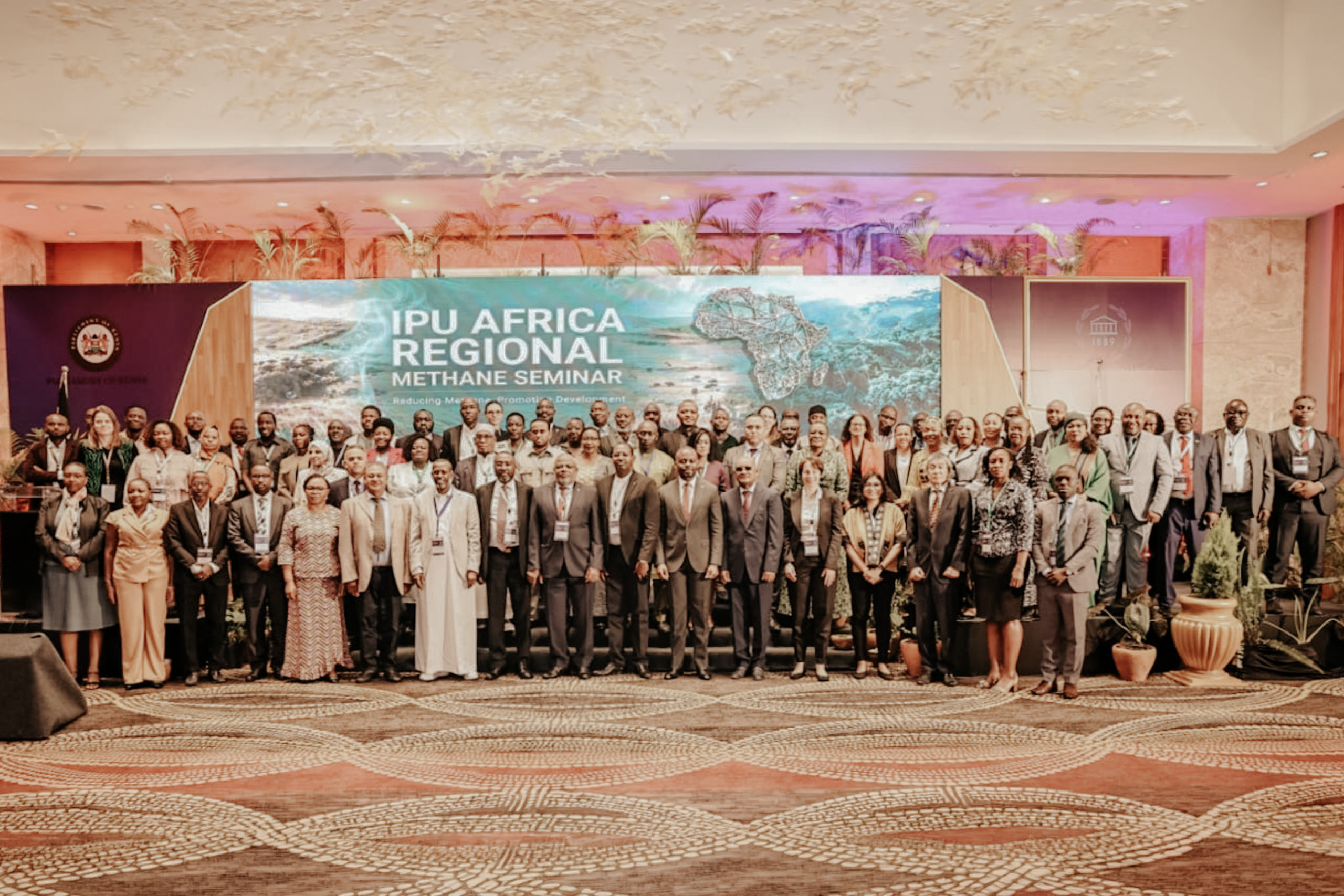
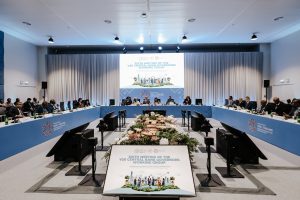
The regional workshop, hosted by the Parliament of Kenya, will provide a practical platform to discuss how parliaments can support action on methane across key sectors such as waste, agriculture, and energy, while contributing to national priorities related to economic development, public health, food security, and climate action. (Photo: Inter-Parliamentary Union)

Methane reduction has emerged as one of the few climate interventions that can deliver measurable results this decade, and for vulnerable nations absorbing the costs of extreme weather, speed matters. In Nairobi this month, the CVF-V20 urged African lawmakers to turn that opportunity into policy.

The seminar African Parliaments for Climate Action: Reducing Methane, Promoting Developmentheld on 15–16 May 2026, was convened by the Parliament of Kenya and the Inter-Parliamentary Union (IPU), in collaboration with Climate Parliament, the CVF-V20 GPG, the United Nations Environment Programme (UNEP), the Climate and Clean Air Coalition (CCAC), and the International Livestock Research Institute (ILRI). 

Sara Jane Ahmed, CVF-V20 Managing Director and Finance Advisor, laid out the group’s strategic framework for methane action, building on the momentum from the 16th V20 Ministerial Dialogue, held in Washington, D.C., in April, where finance ministers formally recognized methane abatement as a “critical near-term climate emergency brake” capable of helping keep the 1.5°C Paris limit in sight, while unlocking significant fiscal and commercial value from currently wasted energy resources.

Why Methane, Why Now

The CVF-V20’s focus on methane is grounded in science. Unlike carbon dioxide, which persists in the atmosphere for millennia, methane has a lifetime of roughly a decade, meaning reductions today produce measurable cooling within this decade. Ahmed framed the stakes in her presentation: “For vulnerable nations like ours, this matters enormously, because this can slow down warming in order to reduce heat waves, droughts, floods, food insecurity, and displacement.”

With 64 of its 74 members having signed on to the Global Methane Pledge, the CVF-V20 is not a passive voice in international negotiations. It is a market constituency of significant scale. Africa accounts for roughly 14 percent of global methane emissions, with relatively few super-emitters. Ahmed framed this not as grounds for complacency but as a strategic opportunity.

The International Energy Agency (IEA) notes that nearly half of fossil fuel methane emissions can be cut at zero net cost. In the waste sector, landfill gas capture can generate electricity and improve sanitation; in oil and gas, reducing leakage preserves fuel that can be sold rather than wasted—enough, Ahmed noted, to save the equivalent of Norway’s gas output per year. “Many methane interventions generate revenue, improve public health, and increase energy access, as well as strengthen infrastructure resilience,” she said. “Climate action and economic prosperity must and can advance together.”

Fixing the Finance Gap

The largest structural obstacle, Ahmed made clear, is finance. “Financing remains the largest obstacle,” she said. “In African countries, interest rates on loans can vary between 15 percent and 25 percent. This is against 3 to 5 percent that we see in developed economies like Europe and North America.” While US$3 trillion in global capital sits in Africa, very little is actually invested there. “We know why. Borrowing is expensive, servicing costs are high, bankable pipelines are thin, and institutions are working in parallel.”

To address this, Ahmed said the CVF-V20 is working on a compact with development finance institutions built on four pillars: making capital more affordable; bringing private investment into health, education, water, and energy; letting countries lead through their own climate prosperity plans; and building debt instruments that provide breathing room when disasters strike.  

Ahmed also shared ongoing efforts to operationalize the Lifeline Fund that will allow CVF-V20 member countries to pool just 0.01 percent of their dollar reserves to lend to each other when climate disasters strike. “We are stronger than we think, and we can help each other,” she said, “and by doing so, we hope to invite partnership on our terms, not on terms dictated in rooms where we have no voice.”

The Call to Parliaments

Ahmed’s recommendations to African parliaments were direct and implementation-focused. She urged lawmakers to: establish methane monitoring and reporting requirements; mandate leak detection and repair programs for oil and gas infrastructure; allocate funds for landfill gas capture and waste-to-energy systems; and advocate for concessional and affordable capital partnerships. On international cooperation, she was specific about what kind: “What we should look for is not only technology transfer, but actually technology co-development. We have practices in our home countries which we could share across the Global South.”

For the CVF-V20, voluntary action alone may no longer be enough. In recorded remarks at the seminar, H.E. The Most Honorable Elizabeth Thompson, Sherpa to the Chair of the CVF-V20, said that Prime Minister Mia Amor Mottley has begun exploring a legally binding framework to reduce and ultimately eliminate methane emissions, particularly in the fossil fuel sector. “If this can’t be done voluntarily, then mandatory approaches must be considered. Doing nothing is not an option.”

***

About CVF-V20

The CVF-V20 represents 74 member countries from small island developing states (SIDS), least developed countries (LDCs), low to middle-income countries (LMICs), landlocked developing countries (LLDCs), and fragile and conflict-affected states (FCS). Working together, the CVF-V20 aims to achieve climate justice through the realization of Climate Prosperity Plans, which contain ambitious economic and financial resilience strategies designed to attract investment and resources that advance the attainment of the Sustainable Development Goals (SDGs), 30×30 Global Biodiversity, and help keep the average global temperatures to the Paris Agreement’s 1.5°C safety threshold.

CVF-V20 Membership

Africa: Benin, Burkina Faso, Cabo Verde, Chad, Comoros, Côte d’Ivoire, Democratic Republic of the Congo, Eswatini, Ethiopia, Gabon, The Gambia, Ghana (Troika), Guinea, Kenya, Liberia, Madagascar, Malawi, Morocco, Mozambique, Namibia, Niger, Rwanda, Senegal, Sierra Leone, Somalia, South Sudan, Sudan, Tanzania, Togo, Tunisia, Uganda

Asia: Afghanistan, Bangladesh (Troika), Bhutan, Cambodia, Jordan, Kyrgyzstan, Lebanon, Maldives, Mongolia, Nepal, Pakistan, Palestine, Philippines, Sri Lanka, Timor-Leste, Vietnam, Yemen

Caribbean: Barbados (Chair/Troika), Dominica, Dominican Republic, Grenada, Guyana, Haiti, Saint Lucia, Suriname, Trinidad and Tobago

Latin America: Colombia, Costa Rica, Guatemala, Honduras, Nicaragua, Paraguay

Pacific: Fiji, Kiribati, Marshall Islands, Nauru, Palau, Papua New Guinea, Samoa, Solomon Islands, Tonga, Tuvalu, Vanuatu

Contact

For media enquiries, please contact [email protected]

For the latest updates, please follow us on: