Global North and South Lawmakers Exchange Lessons on Building Resilience
At two COP31 dialogues co-convened by the CVF Global Parliamentary Group, lawmakers from nine countries described the climate frontline at home, and how parliaments are responding
In Tana River County on Kenya’s coast, there is a small town called Kipini. Senator Danson Mungatana remembers a businessman building a fine hotel there, right by the sea, in the early 2000s. “If you go to Kipini, you will not see that building,” he told fellow lawmakers at COP31. “That whole building has been eaten up by the sea.” The people who live there now fear that one day the sea “will wake up and swallow the entire village.”
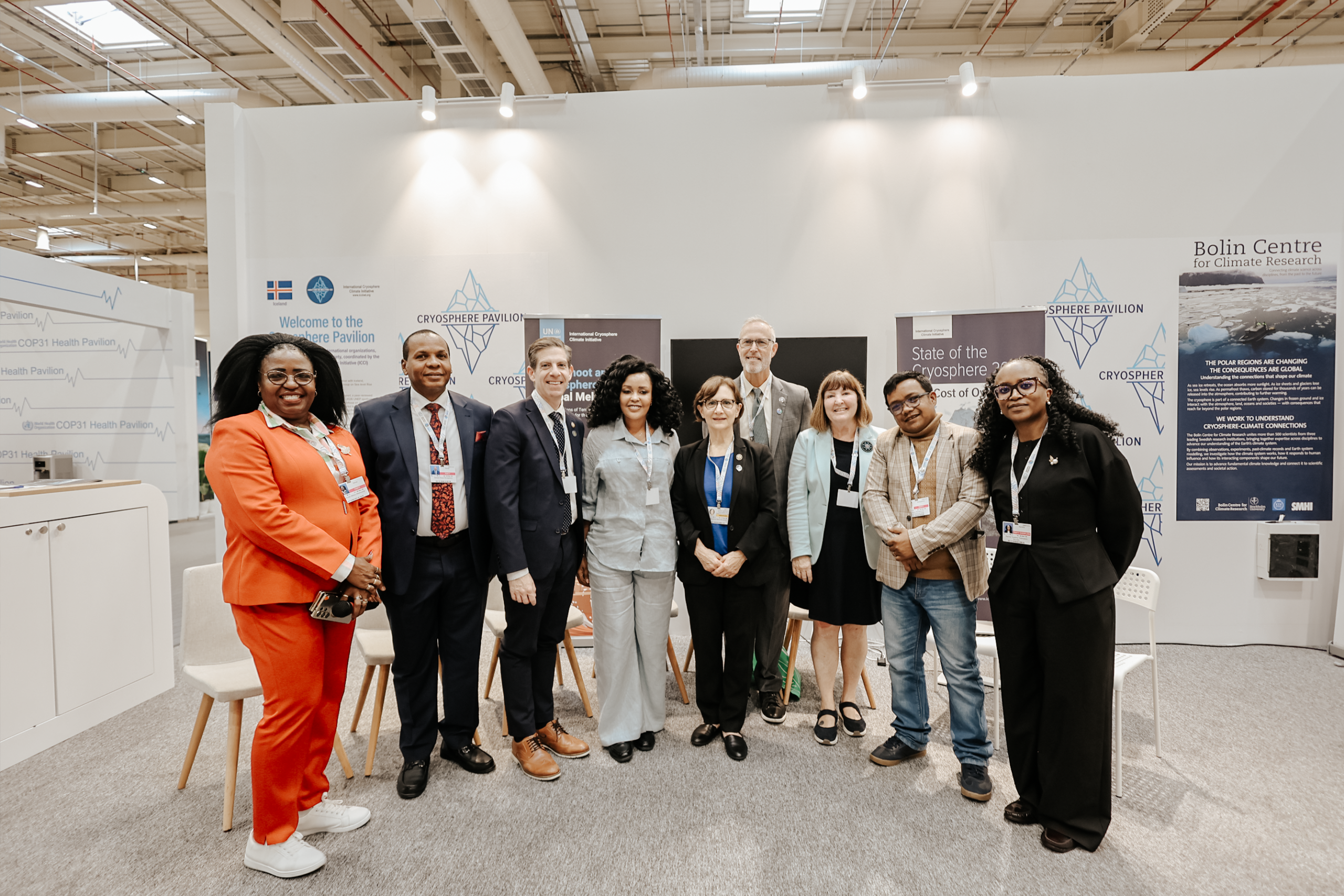
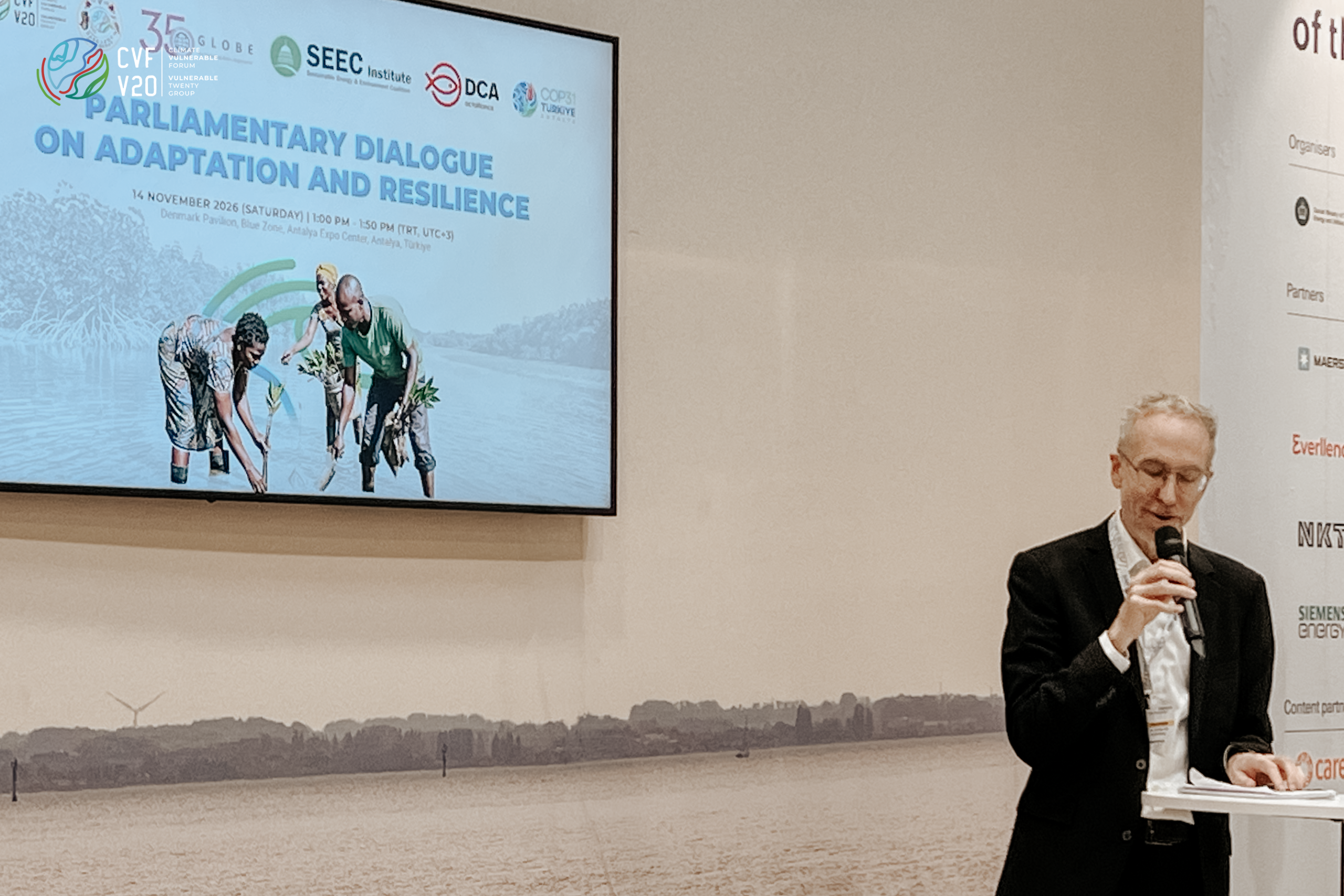
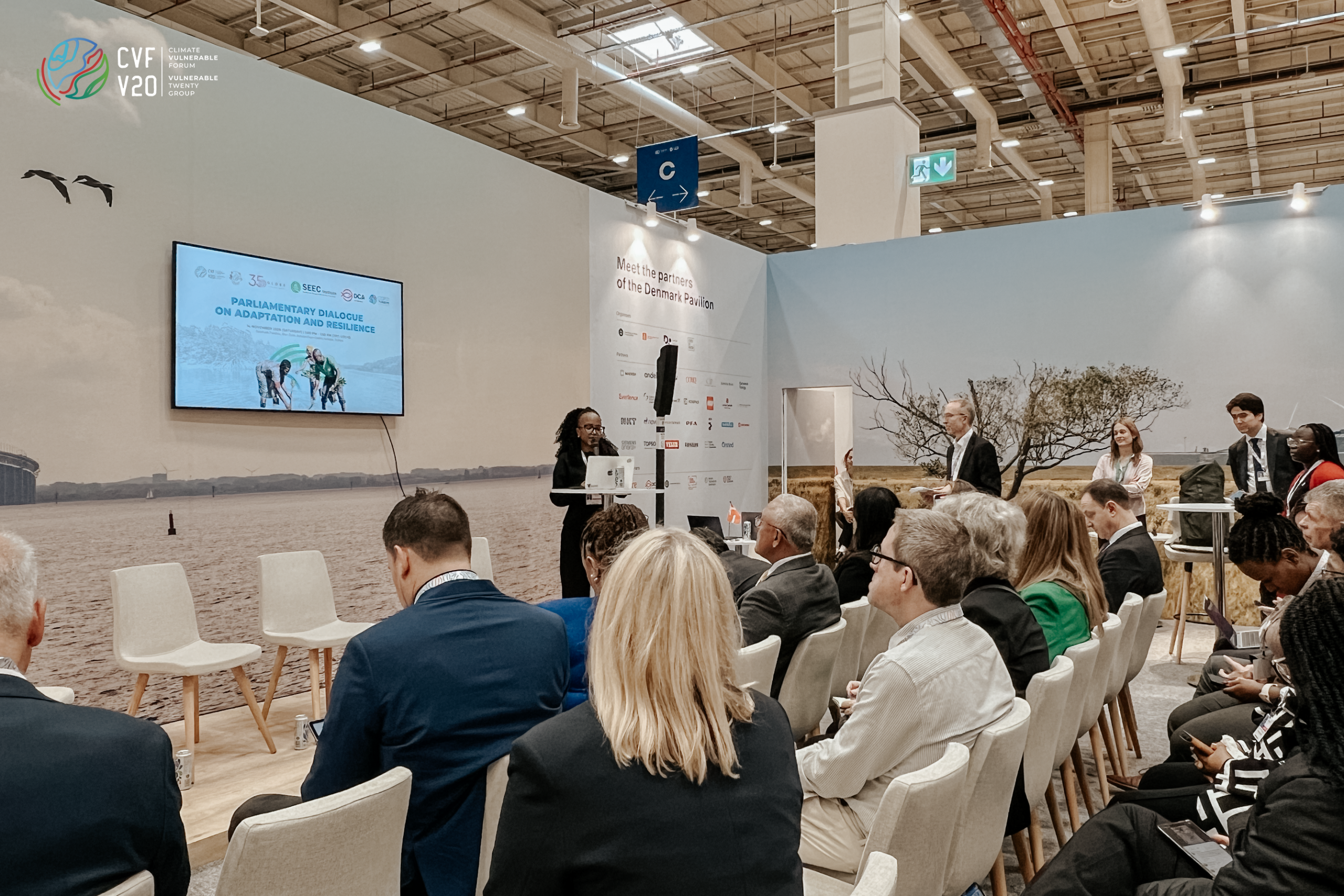
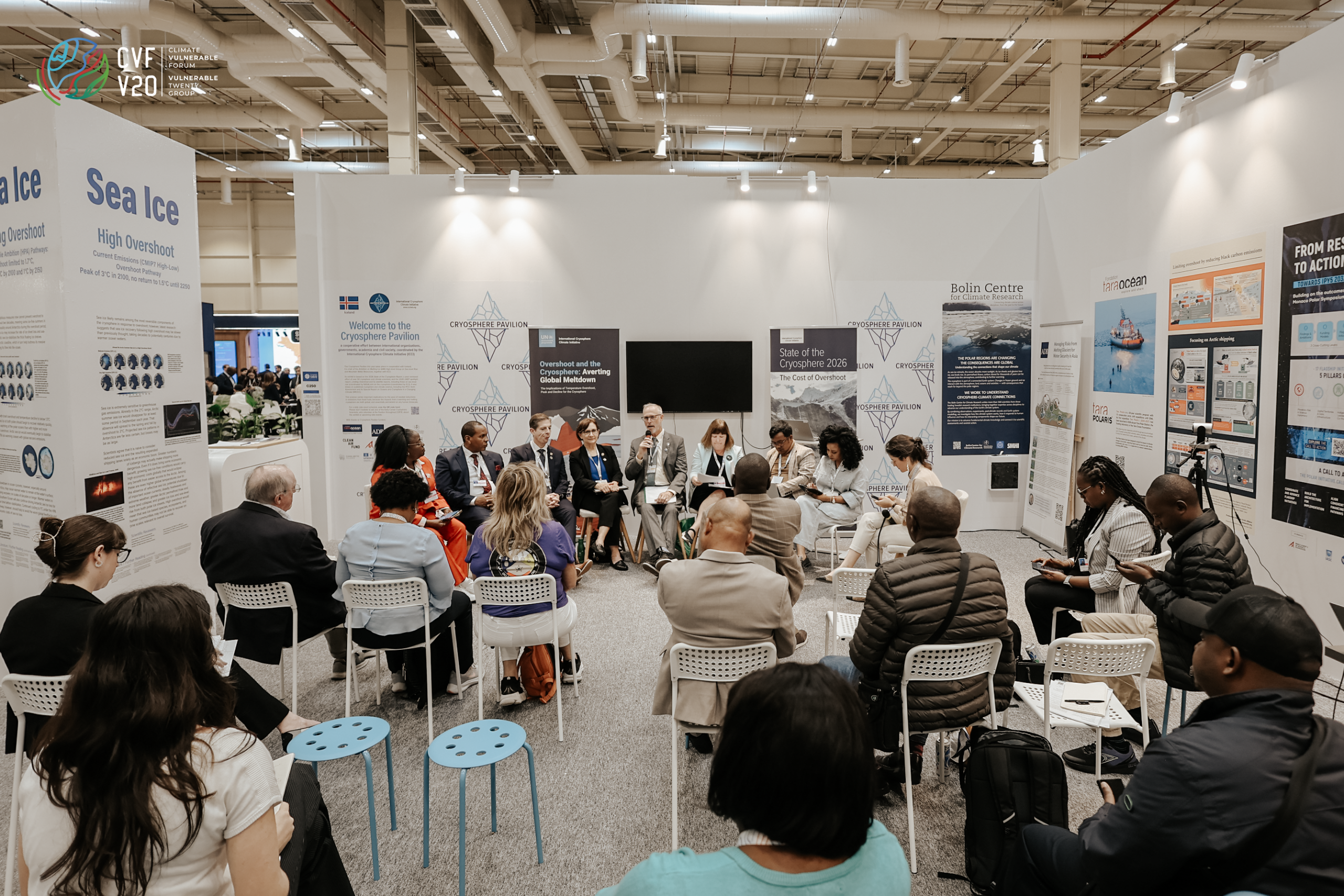
His was one of many first-hand accounts at two parliamentary dialogues on the sidelines of the 31st Conference of Parties to the United Nations Framework Convention on Climate Change (COP31): one on Oceans and Coastal Resilience held at the Cryosphere Pavilion, and one on Adaptation and Resilience at the Danish Pavilion. Both were convened by the Climate Vulnerable Forum (CVF) Global Parliamentary Group (GPG), with the SEEC Institute, GLOBE Legislators, and DanChurchAid.
Since 2021, the GPG has brought together legislators from CVF member states to drive climate action through policy and legislative leadership. At COP31, GPG members connected with their counterparts from the Global North to share legislative approaches to adaptation, loss and damage, and just transition. The exchanges placed a central question before lawmakers: how can the experiences of communities facing climate impacts be translated into stronger laws, accountable public spending and practical international cooperation?
The frontline, from coast to coast
“For Mozambique, the climate crisis is not a forecast,” said Hon. Nilza Dacal, after listing the cyclones that have hit her country since Idai in 2019. “It is our budget line every year.” She added: “We do not ask for charity; we ask for fairness and partnership.”
From Kilifi County, Hon. Gertrude Mbeyu, chair of Kenya’s Coast Parliamentary Group, described a coast where “the ocean is both our greatest asset and our growing risk.” Farmers there are building small sea walls to keep saltwater off their land. Hon. Livasoa Moratiavina Randriatahinamalala said Madagascar’s coastline of more than 5,000 kilometers faces the same pressures: erosion, saltwater intrusion, and damaged reefs and mangroves.
The story from the North was strikingly similar. Senator Mary Coyle said Canada’s Arctic, which is warming three times faster than the global average, “has served as the world’s air conditioner.” Now, with sea ice thinning and permafrost thawing, coastal bluffs are collapsing into the sea. Rep. Mike Levin said one of the busiest rail corridors in the United States, the line between San Diego and Los Angeles, “is falling into the Pacific Ocean right now.” Rep. Suzanne Bonamici, co-chair of the House Oceans Caucus, summed it up: “If the ocean isn’t healthy, the planet isn’t healthy.”
At the adaptation dialogue, Rep. Yassamin Ansari of Phoenix said that “over 600 people every single summer die as a result of extreme heat in my district alone.” Rep. Dave Min warned that rising insurance costs are pushing low-income families out of Southern California. Nepal’s Hon. Arjun Karki described August’s Bhote Koshi flood, which came with no early warning and damaged 13 hydropower projects. Of the 47 potentially dangerous glacial lakes in Nepal, 42 are in his province. “This flood disaster doesn’t recognize political boundaries,” he said. “It affects people without recognizing their passport and citizenship.”
These accounts exposed both shared risks and important differences. Climate impacts are damaging infrastructure, homes and livelihoods in countries at every income level. But for many climate-vulnerable developing countries, repeated disasters are compounded by limited fiscal space, debt pressures and insufficient access to affordable adaptation finance. This difference in capacity makes cooperation on financing and practical policy responses especially important.
Laws, budgets, and audits
The lawmakers kept returning to the three tools every parliament has. “As a parliamentarian, I answer to the people,” Hon. Dacal said. “As an auditor, I ask where the money went.”
South Africa’s Climate Change Act, which partly came into force in 2025, establishes a framework for coordinated climate action and requires every national department, province and municipality to adopt a binding adaptation plan. Hon. Wildri Peach said the goal is to ensure “legislation is created that will have a long-term impact,” rather than leaving adaptation to political planning cycles. At the continental level, Hon. Garry Sakata said that the Pan-African Parliament hopes to adopt a model climate framework law in 2027, covering the rights of Indigenous peoples, common but differentiated responsibilities, and the polluter-pays principle.
Others described specific, practical rules. Alongside Flanders’ Blue Deal investment program, Andries Gryffroy said, building in water-sensitive areas is now banned. “If it is a water-sensitive area, you cannot build a house or factory or warehouse.” He added: “It’s not about big theories. It’s just very pragmatic and very practical.” Rep. Kathy Castor said disaster recovery aid now pays to rebuild homes to stronger codes: “If we’re going to provide help for people to rebuild their home, then it can’t be subject to another flood or disaster.” Rep. Nikema Williams of Atlanta, Georgia, described her Whole Home Repairs Act, which funds U.S. families to weatherize their homes before storms hit. It became law this year without the president’s signature.
These examples demonstrated the range of parliamentary responses available, from national climate frameworks and land-use controls to housing standards and targeted assistance. They also showed why legislation must be matched by implementation, adequate budgets and scrutiny of whether public resources are reaching those most at risk.
On oversight, Senator Mungatana called for international climate finance to be ring-fenced for specific programs so it reaches the communities it was meant for. Hon. Mbeyu made the case for funding ocean science: “We cannot legislate for what we do not measure.”
What cooperation must deliver
Hon. Dacal’s asks were clear. She called for adaptation finance that reaches the coastline, and finance that does not deepen debt. She called for formal recognition of parliaments and audit institutions in climate finance, “because accountability belongs to the citizens.” And she called for a loss and damage fund “that works at the speed of a cyclone.”
“We cannot stop the cyclone,” Hon. Dacal said. “But we can decide whether each one destroys the same school, the same road, and the same mangrove forest again.”
Resilience depends not only on what governments commit to do, but also on whether finance is affordable, accessible, and effectively used. Parliamentarians can help by scrutinizing national adaptation budgets, examining financing terms, tracking expenditure and ensuring that community priorities are reflected in investment decisions. The dialogues also demonstrated the value of maintaining cooperation across political and geographical divides. The U.S. members were candid about their own government. Rep. Jared Huffman promised that “the United States will be back in a position of leadership, in a position of partnership with the rest of the world, very soon.” Rep. Williams said her colleagues had come with a simple purpose: “We’re here to listen. We’re here to learn and to build trust.” Rep. Bonamici reminded the room why that matters: “The ocean doesn’t know boundaries or borders.”
For the CVF-V20 Global Parliamentary Group, bringing lawmakers from the Global North and Global South into direct dialogue is part of a wider effort to connect lived experience with legislative action, strengthen climate oversight and foster peer learning across parliaments. The challenge now is to carry those lessons beyond COP31, into the laws, budgets and oversight processes that determine whether communities are better protected when the next disaster comes.
***
RECENT ARTICLES
CVF Youth Fellows Graduate at COP31