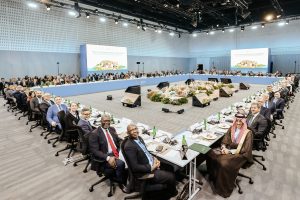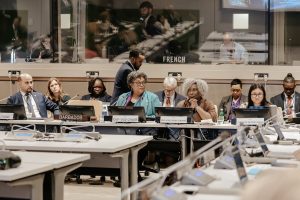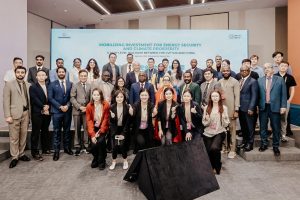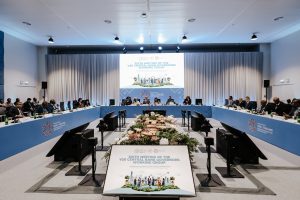

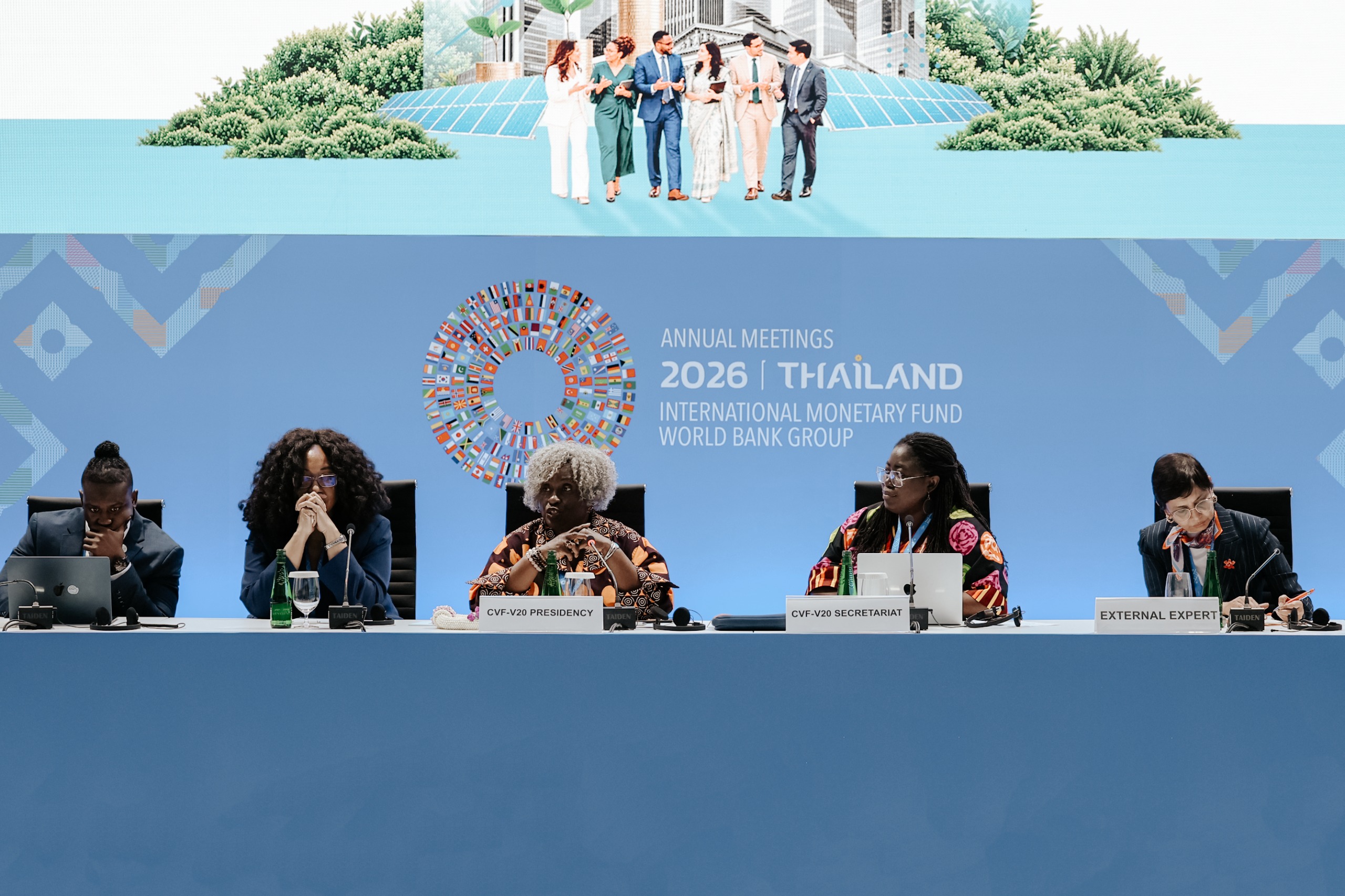
Bangkok, Thailand—Climate Vulnerable Forum and V20 Finance Ministers (CVF–V20) member countries called on development partners to strengthen the national institutions responsible for turning Climate Prosperity Plans into financed and implemented investments.
The roundtable, “National Deal Teams and Platforms: The Institutional Backbone of Green Investment and Industrial Cooperation,” took place during the 2026 Annual Meetings of the World Bank Group and the International Monetary Fund. It followed the 17th V20 Ministerial Dialogue, whose communiqué calls for expanded direct access to climate finance and support for the staffing, systems, and fiduciary capacity of national and regional institutions and V20 Deal Teams working through country platforms and delivery units.
A common concern ran through the discussion: national institutions are expected to demonstrate a track record before they can access finance, yet often lack the preparation funding and transaction responsibilities needed to build that experience. Participants called for partnerships that address this capacity paradox by enabling national teams to lead investments and learn through delivery.
“Direct access must mean more than money reaching a national account. National and regional institutions must progressively take control of four things: the capital management, the decisions, the transactions, and the capability to do the next deal. Intermediation must prove its value. It should strengthen delivery and build local and regional ecosystems and intermediaries on the ground, not substitute them with parallel international structures. The test is simple. When the project ends, the institutions, expertise and systems must remain.” said H.E. Ambassador The Most Honorable H. Elizabeth Thompson, Ambassador for Climate Change, Small Island Developing States and Law of the Sea, and Sherpa to Prime Minister Mia Amor Mottley, S.C., M.P., Chair of the CVF-V20 Government of Barbados.
Providing the expert framing, Kavita Sinha, a globally recognized investment and development finance leader with expertise in mobilizing private and public capital, explained how country platforms and deal teams can connect national investment priorities with appropriate sources of capital with the right risk appetite.
“Country platforms help countries prioritize and sequence investments as well as coordinate among different stakeholders, internal and external. However, prioritization is not enough. Countries need multidisciplinary deal teams to convert those priorities into financed, implemented projects that mobilize capital at the scale and speed needed. We need to build expertise within domestic institutions at all levels, buy specialized skills where needed and borrow expertise from each other as well as development partners with a clear, long-term plan for building highly skilled capacity at home. The aim is for countries to deliver not just one deal, but a continuous stream of high quality deals, retain expertise and apply what they learn to the next deal,” said Sinha.
Country interventions highlighted that platforms should connect government, development partners, and investors around a common investment pipeline; while national deal teams bring together the expertise needed to prepare, structure, and negotiate transactions.
Richard Addo, Chief Economic Officer at Ghana’s Ministry of Finance, emphasized that a country platform is a coordination and delivery mechanism rather than another institution. He called for support to capitalize the Ministry’s project preparation facility and help convert sector priorities into bankable investments.
Isatou Camara, Director of the Climate Finance Directorate at The Gambia’s Ministry of Finance and Economic Affairs, described a government-led workshop that brought ministries and agencies together to assess project readiness and identify preparation gaps. She called for this hands-on approach to continue through financing and implementation, with national officials involved beyond supplying information to consultants or receiving final reports.
Dr. Naila Jabeen, Joint Economic Adviser at Pakistan’s Ministry of Finance, and Kamal Dahir Gutale, Permanent Secretary in Somalia’s Office of the Prime Minister, similarly emphasized the need for predictable preparation finance, including resources for feasibility studies, risk assessment and transaction structuring..
Haiti’s Fritz-Gérald Louis, Director and World Bank Focal Point, Ministry of Economy and Finance, called for transparent intermediation costs, measurable contractual commitments to skills transfer and arrangements to retain national expertise. It also proposed exploring a pilot investment from its Climate Prosperity Plan, potentially in a secure economic zone, with its selection and governance validated by Haitian authorities.
Representatives from Bhutan, Madagascar and Haiti reinforced the case for pooling specialist expertise regionally while keeping priorities, decisions and public accountability under national control. These include Sangay Chojay of Bhutan’s Department of Macro-Fiscal and Development Finance, Rakotomanana Andrianaivo of Madagascar’s Ministry of Economy and Finance, and Haiti’s Fritz-Gérald Louis. Chojay called for harmonized reporting requirements and programmatic preparation support to reduce pressure on small administrations, and cautioned that graduation from least developed country status should not narrow access to concessional finance.
A.K.M. Sohel, Additional Secretary in the Economic Relations Division of Bangladesh’s Ministry of Finance, shared experience with climate budget tagging and monitoring, and highlighted subnational allocations guided by vulnerability rather than an equal division of resources. He offered to exchange these practical lessons with other member countries.
The Chief Executive Officer of the Ghana Infrastructure Investment Fund, Nana Dwemoh Benneh, demonstrated how existing national transaction institutions can support this approach. Drawing on its experience in infrastructure investment, the Fund proposed measuring progress through capital mobilization, the share of transaction functions performed by domestic institutions, and whether subsequent investments require less external support.
Partner contributions identified complementary forms of support. Silvia Mancini, Lead, Country Partnerships Unit of the Adaptation Fund emphasized direct access through national implementing entities and readiness assistance anchored in country priorities. Jacob Thoppil, Head of Partnerships and External Relations, Climate Investment Funds stressed the need for local ownership, simpler access to a complex financing architecture and the role of concessional finance in enabling higher-risk investments. Drawing on Brazil’s experience with subnational sovereign wealth funds, Leandro Teodoro Ferreira, Executive Director of the Forum of Brazilian Sovereign Wealth Funds (FFSB), highlighted how cooperation among local governments can strengthen their capacity to manage resource revenues and invest in local development. He emphasized resilience and intergenerational savings, alongside the importance of development strategies supported by local communities.
The discussion identified practical priorities for further work: financing project preparation, supporting national teams throughout live transactions, coordinating partner requirements and making the transfer of expertise an explicit part of external support. Across the interventions, participants emphasized a shared test of success: more finance reaching implementation, greater national authority over investment decisions and institutions better equipped to deliver the next project.
Functional direct access (working definition): Nationally designated institutions progressively securing the authority, resources and capability to control financing decisions and lead the preparation, negotiation and delivery of investments that advance country priorities. Each investment should strengthen their ability to lead the next. Progress is measured by the responsibilities national institutions actually exercise and the capability they retain, not solely by the channel through which finance flows.
National deal teams: Nationally mandated, multidisciplinary teams, anchored in a country platform or designated national institution, that originate, prepare, structure and negotiate priority investments, so that each transaction leaves national staff better able to lead the next.
V20 Deal Team: A core team of international and regional transaction specialists being established by the CVF-V20 Secretariat to deliver CPPs and the V2V Compact. It will work through country platforms and national delivery units to support the origination, structuring, advisory, and closing of Climate Prosperity Plan and Compact investments, strengthening local and regional ecosystems and intermediaries rather than substituting for them.
***
The CVF-V20 now represents 77 member countries from small island developing states (SIDS), least developed countries (LDCs), low to middle-income countries (LMICs), landlocked developing countries (LLDCs), and fragile and conflict-affected states (FCS). Working together, the CVF-V20 aims to achieve climate justice through the realization of Climate Prosperity Plans, which contain ambitious economic and financial resilience strategies designed to attract investment and resources that advance the attainment of the Sustainable Development Goals (SDGs), 30×30 Global Biodiversity, and help keep the average global temperature within the Paris Agreement’s 1.5°C safety threshold.
Africa: Benin, Burkina Faso, Cabo Verde, Central African Republic, Chad, Comoros, Côte d’Ivoire, Democratic Republic of the Congo, Eswatini, Ethiopia, Gabon, The Gambia, Ghana (Troika), Guinea, Kenya, Liberia, Madagascar, Malawi, Morocco, Mozambique, Namibia, Niger, Rwanda, Senegal, Sierra Leone, Somalia, South Sudan, Sudan, Tanzania, Togo, Tunisia, Uganda, Zambia
Asia: Afghanistan, Bangladesh (Troika), Bhutan, Cambodia, Jordan, Kyrgyzstan, Lebanon, Maldives, Mongolia, Nepal, Pakistan, Palestine, Philippines, Sri Lanka, Timor-Leste, Vietnam, Yemen
Caribbean: Barbados (Chair/Troika), Dominica, Dominican Republic, Grenada, Guyana, Haiti, Saint Lucia, Saint Vincent and the Grenadines, Suriname, Trinidad and Tobago
Latin America: Colombia, Costa Rica, Guatemala, Honduras, Nicaragua, Paraguay
Pacific: Fiji, Kiribati, Marshall Islands, Nauru, Palau, Papua New Guinea, Samoa, Solomon Islands, Tonga, Tuvalu, Vanuatu
For media enquiries, please contact [email protected].
For the latest updates, please follow us on: