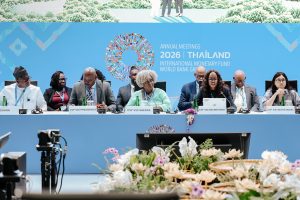
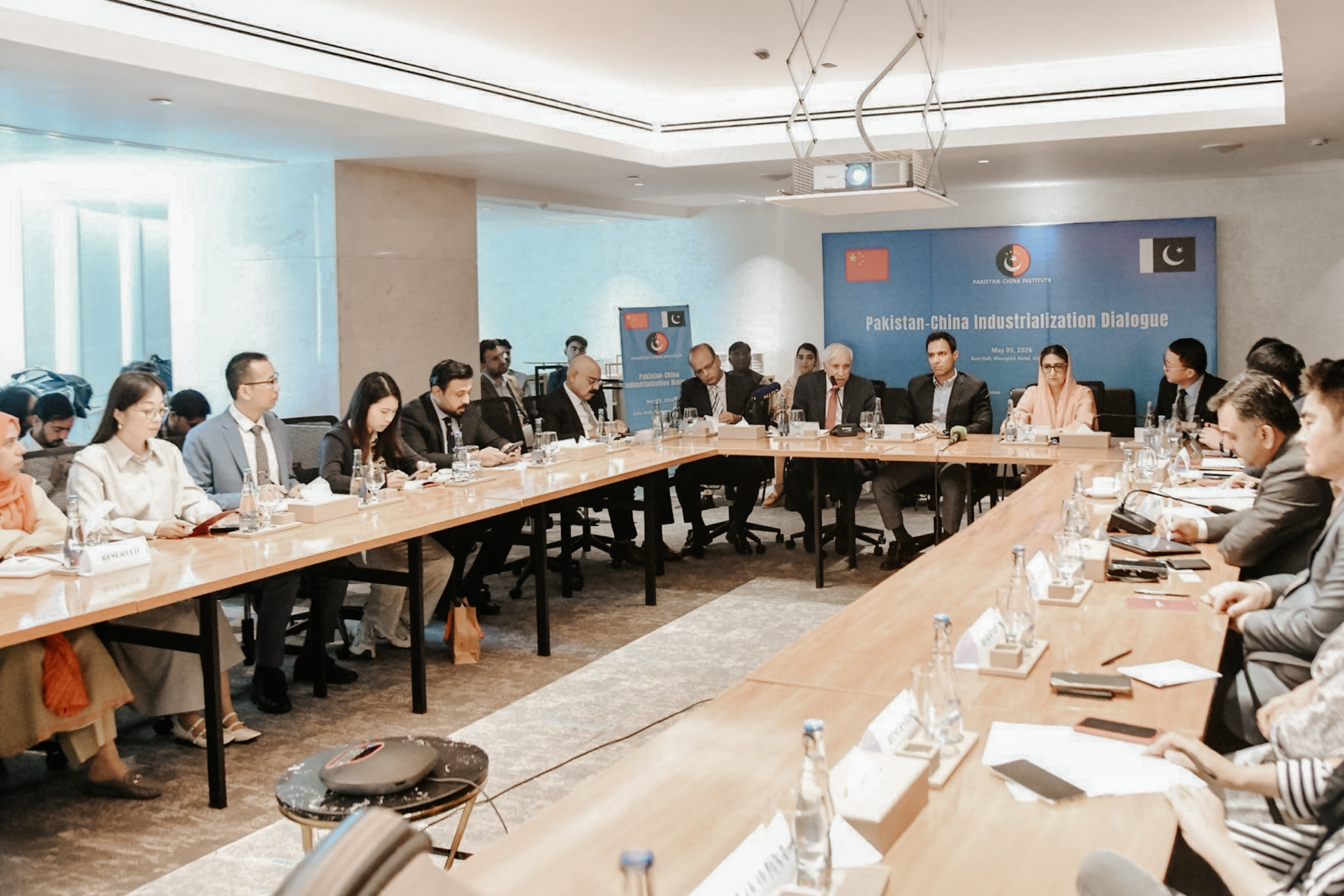
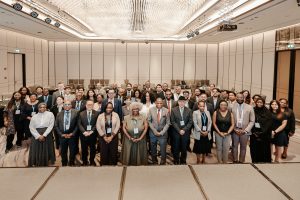
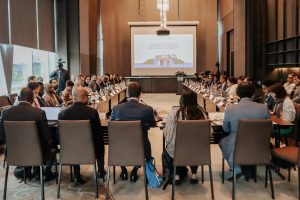
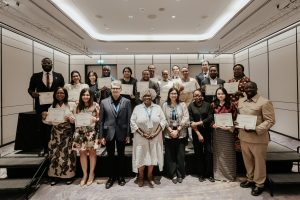
The CVF-V20 participated in the Pakistan-China Industrialization Dialogue, hosted by the Pakistan-China Institute on 5 May 2026, bringing the perspective of climate-vulnerable economies into discussions on industrial transformation, strategic finance, and resilient development. The dialogue brought together policymakers, business leaders, Chinese and Pakistani enterprises, financial institutions, and experts to explore how Pakistan-China cooperation can move from connectivity toward joint production, technology transfer, export competitiveness, and climate-smart industrialization.
Speaking on behalf of the CVF-V20 Secretariat, Hamza Haroon, Regional Director for South and West Asia, stressed that climate risk is now directly linked to fiscal pressure, economic instability, and the ability of vulnerable economies to industrialize. He noted that CVF-V20 countries require around US$490 billion per year by 2030, while current flows remain far below the required scale.
Haroon presented CPPs as practical tools for turning climate vulnerability into investment opportunities. He highlighted Pakistan’s CPP as a country-owned, fully costed investment strategy in which green industrialization and Green Economic Zones are central priorities. These create clear opportunities for Chinese manufacturers, policy finance institutions, export credit agencies, and development partners to support solar manufacturing, battery storage, EV assembly, industrial electrification, and resilient infrastructure.
The dialogue reinforced the potential for V20-China cooperation as a model for climate-smart economic transformation across the Global South, linking industrial growth with resilience, investor readiness, and long-term shared prosperity.
For climate-vulnerable economies, partnerships of this kind represent not just a financing opportunity but a pathway to the kind of green industrialization that makes development durable.