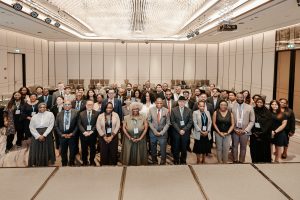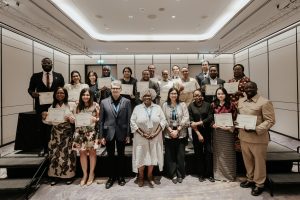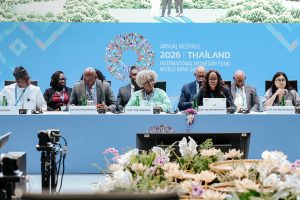
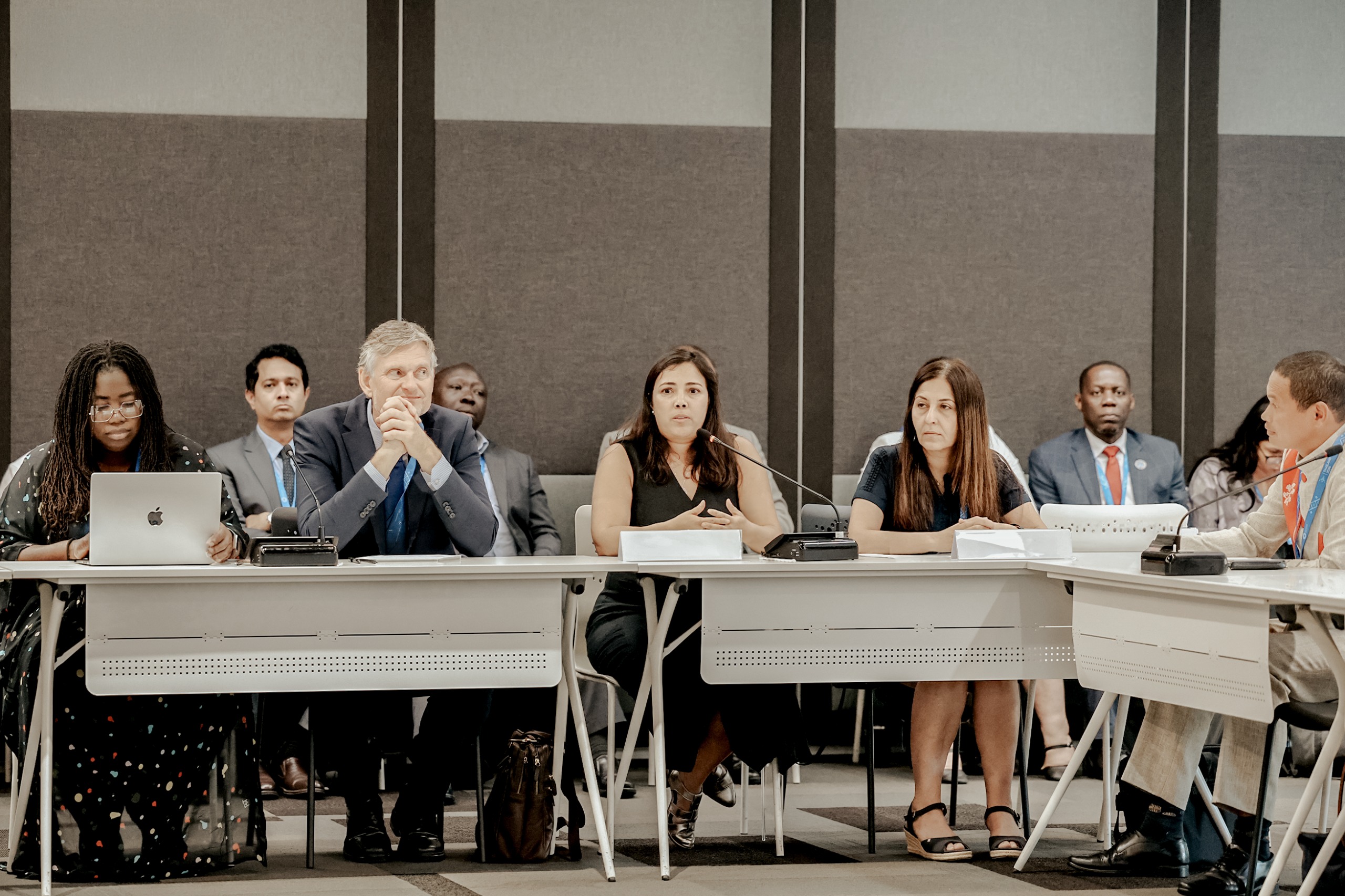
Bangkok, Thailand—As climate risks intensify and fiscal pressures constrain investment, countries and development partners are confronting a shared challenge: how to translate national climate and development priorities into sustained implementation. Discussions at the World Bank and IMF Annual Meetings highlighted the need to build on existing plans, strengthen national institutions, rethink how international support is organized, and move beyond measuring plans and financing commitments towards tangible development outcomes.
These are the central discussions to the implementation dialogue co-hosted by CVF-V20 Secretariat and 2050 Pathways Platform, building on an initial roundtable at the 30th Conference of the Parties to the UN Framework Convention on Climate Change (COP30) in Belém, where countries and partners emphasised three principles: international support should work through the national system of recipient countries, including those of CVF-V20 countries, development partners must act with greater coherence, and national institutions must sit at the core of delivery.
Countries and development partners explored which existing practices should be preserved, which should be discontinued, and how support arrangements could evolve to meet the delivery challenge.
Participants highlighted the importance of preserving approaches that put national priorities at the forefront.
Countries welcome the growing practice of development partners seeking to understand their priorities and aligning support accordingly, rather than introducing externally determined agenda—although this was not consistent across countries. National roadmaps and development plans, including Nationally Determined Contributions, emerged vital in navigating domestic priorities and targets. Effective coordination across government was also identified as a practice worth strengthening, particularly collaboration between finance, planning, environment, and sectoral ministries, as this results in investment opportunities and project targets becoming more locally-focused; whilst also preventing duplication and streamlining efforts.
Other practices worth preserving included access to grants and highly concessional finance, particularly for adaptation, alongside peer learning and the maintenance of strong environmental and social standards.
Participants identified several practices that continue to undermine country-led implementation. Repeated assessment, overlapping feasibility studies, and externally driven priorities were among the recurring concerns. Countries questioned the need for new plans and studies when national strategies and assessments already exist, particularly where domestic expertise is available. The dialogue highlighted concerns about external consultants and development partners seeking to shape country platforms around their own priorities, rather than building on existing national assessments, institutional capabilities, and locally developed solutions.
The dialogue raised questions on trust in the national institutional capabilities, coordination mechanisms and the necessary functions to advance implementation, even when partners exit the space.
Fragmentation was highlighted as a significant challenge. The proliferation of small, short-term projects and initiatives, alongside separate application, approval and reporting requirements across development partners, places considerable pressure on national institutions. Participants questioned bureaucratic processes and reporting requirements that consume scarce capacity without contributing meaningfully to implementation.
The discussion also challenged technical assistance and consultancy models that produce studies without transferring expertise or strengthening national capabilities. Participants called for an end to approaches that create unnecessary dependence on external support, emphasizing the importance of building on existing national knowledge and institutions.
International development cooperation is changing. Development partners are reviewing their strategies, seeking greater efficiency and reconsidering how to measure effectiveness and value for money. They felt the need to move from financing individual projects to supporting coherent national programs. The technical assistance landscape must also evolve to support implementation and strengthen lasting national capabilities.
Greater mutual reliance between development partners, starting with multilateral development banks, climate funds emerged as a practical priority to reduce duplication, streamline processes and accelerate delivery. Participants emphasised the importance of financing instruments that reflect countries’ fiscal realities.
One message came through loud and clear: implementation will only work if partners line up behind countries’ own plans. Participants pointed to national investment programs, portfolios, and country platforms as the organizing frame for delivery, built on the systems countries already have. For the CVF-V20 members, Climate Prosperity Plans (CPPs) offer country-owned investment and financing frameworks that connect development priorities with investment strategies, financing instruments and delivery arrangements. Learning from implementation can inform future decisions as circumstances change. The discussion highlighted that countries are not standing still. Across regions, governments, including CVF-V20 member states, are already strengthening institutions, reforming systems, and advancing climate action despite significant fiscal and implementation challenges.
The Bangkok dialogue reinforced that moving from planning to implementation requires more than adjustments to existing practices. It calls for a shift in how countries organise and prioritise investments, how international partners deploy finance and expertise, and how both are held accountable for delivery. This also means changing what counts as success: not simply the number of plans produced, projects approved or resources committed, but whether these efforts strengthen national capabilities, translate into sustained investment and deliver tangible results for people and economies.
With reforms to the international financial architecture already underway, including efforts to modernise multilateral development banks and climate funds, and development partners reconsidering their strategies, 2027 could provide an opportunity to realign how countries and partners work together. As efficiency and value for money gain prominence, the real test will be whether these reforms make the international system more responsive to countries’ priorities and better equipped to support implementation at the scale and pace required.
Note: The discussion was based on a framework developed by Dileimy Orozco, Independent Advisor on Sustainable Finance and Economic Governance, who also moderated the session.
***
The CVF-V20 now represents 77 member countries from small island developing states (SIDS), least developed countries (LDCs), low to middle-income countries (LMICs), landlocked developing countries (LLDCs), and fragile and conflict-affected states (FCS). Working together, the CVF-V20 aims to achieve climate justice through the realization of Climate Prosperity Plans, which contain ambitious economic and financial resilience strategies designed to attract investment and resources that advance the attainment of the Sustainable Development Goals (SDGs), 30×30 Global Biodiversity, and help keep the average global temperature within the Paris Agreement’s 1.5°C safety threshold.
Africa: Benin, Burkina Faso, Cabo Verde, Central African Republic, Chad, Comoros, Côte d’Ivoire, Democratic Republic of the Congo, Eswatini, Ethiopia, Gabon, The Gambia, Ghana (Troika), Guinea, Kenya, Liberia, Madagascar, Malawi, Morocco, Mozambique, Namibia, Niger, Rwanda, Senegal, Sierra Leone, Somalia, South Sudan, Sudan, Tanzania, Togo, Tunisia, Uganda, Zambia
Asia: Afghanistan, Bangladesh (Troika), Bhutan, Cambodia, Jordan, Kyrgyzstan, Lebanon, Maldives, Mongolia, Nepal, Pakistan, Palestine, Philippines, Sri Lanka, Timor-Leste, Vietnam, Yemen
Caribbean: Barbados (Chair/Troika), Dominica, Dominican Republic, Grenada, Guyana, Haiti, Saint Lucia, Saint Vincent and the Grenadines, Suriname, Trinidad and Tobago
Latin America: Colombia, Costa Rica, Guatemala, Honduras, Nicaragua, Paraguay
Pacific: Fiji, Kiribati, Marshall Islands, Nauru, Palau, Papua New Guinea, Samoa, Solomon Islands, Tonga, Tuvalu, Vanuatu
For media enquiries, please contact [email protected].
For the latest updates, please follow us on: