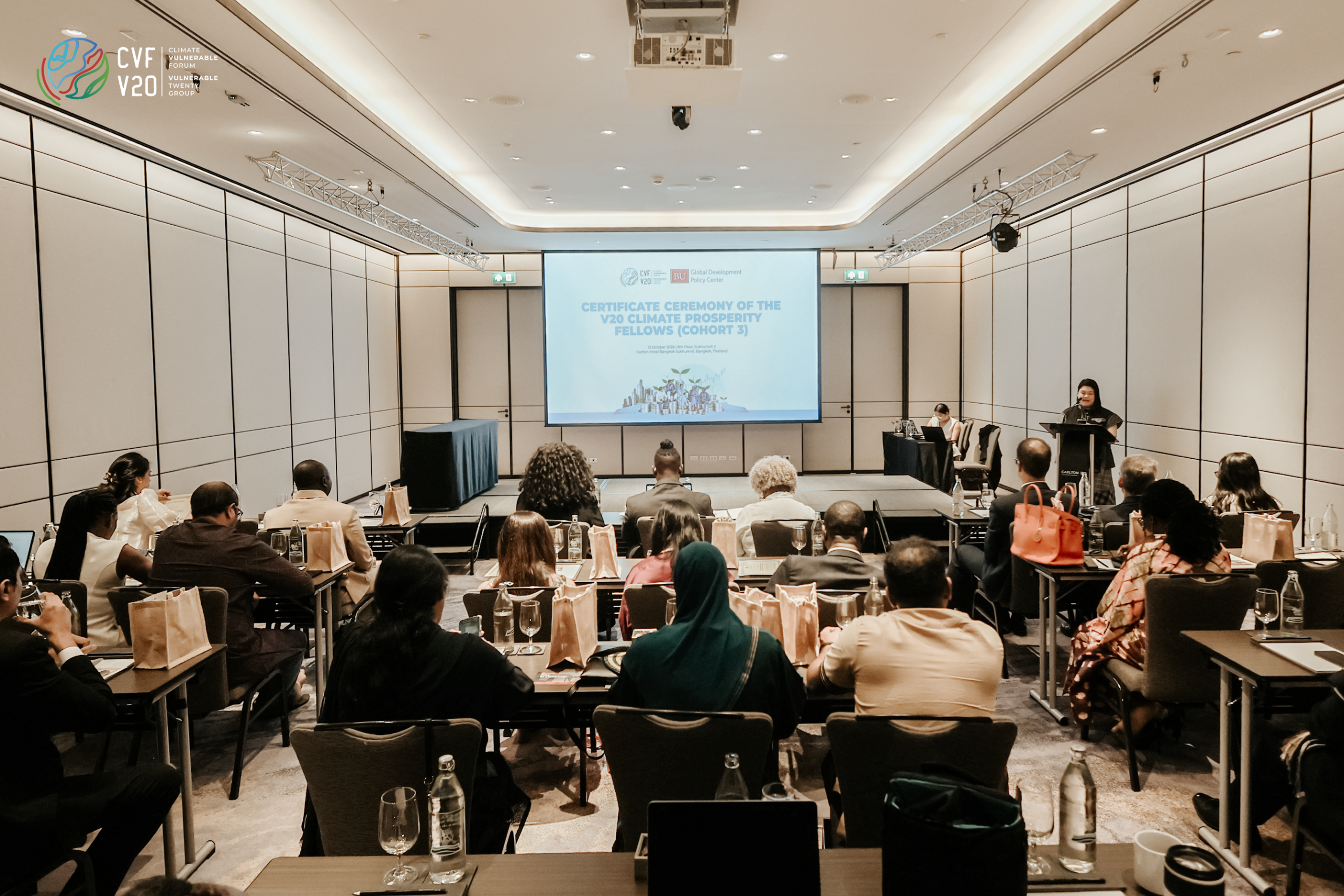
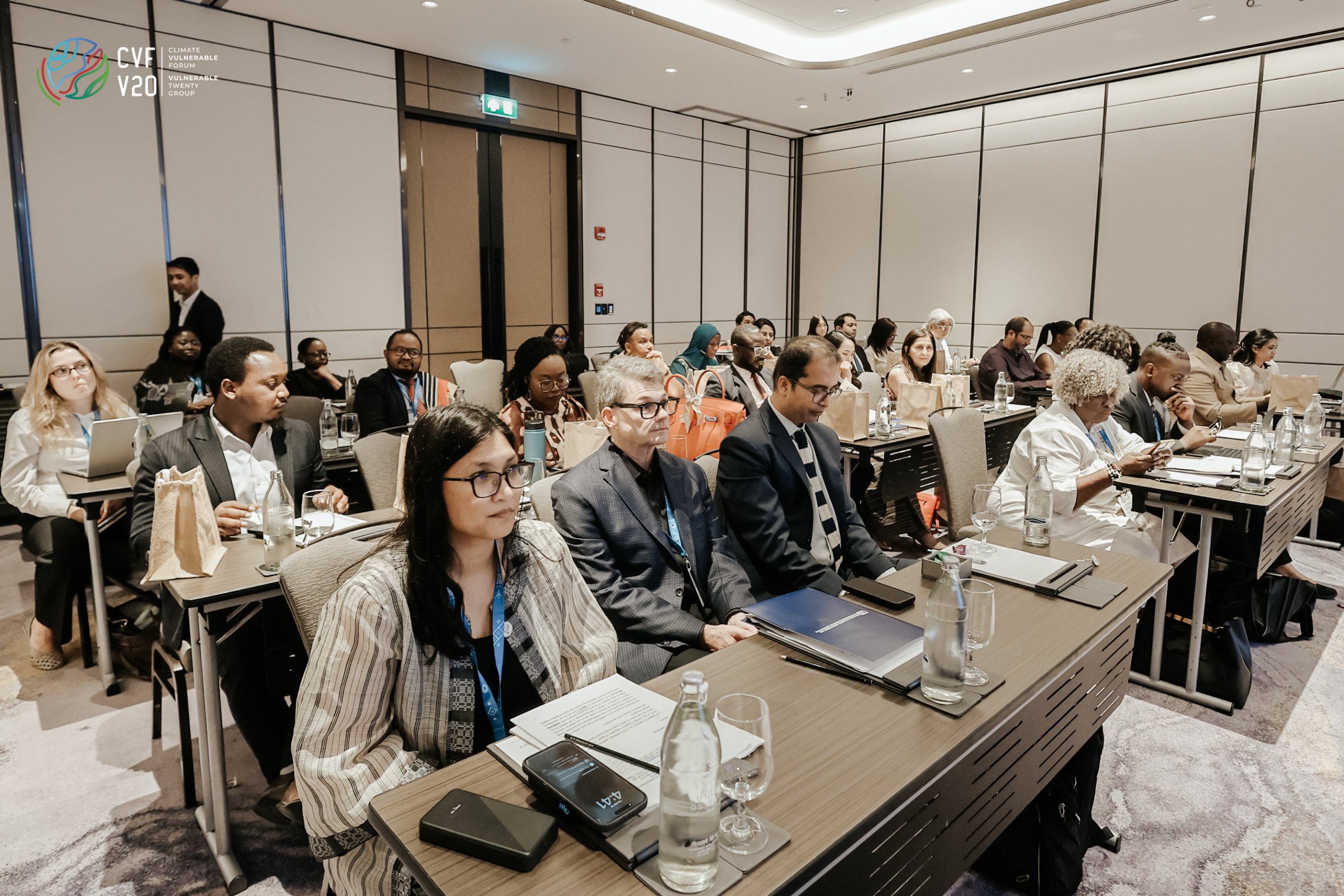
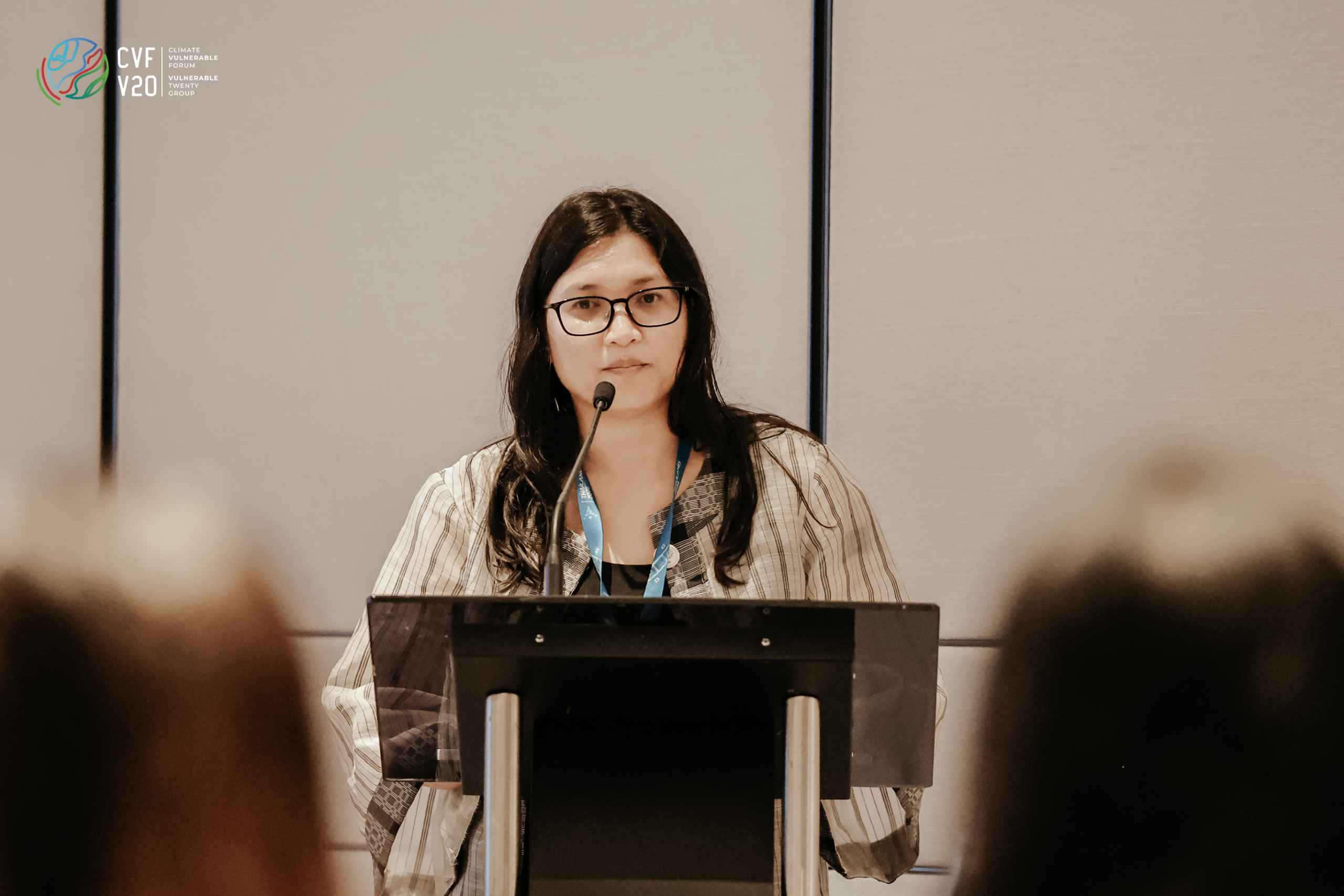
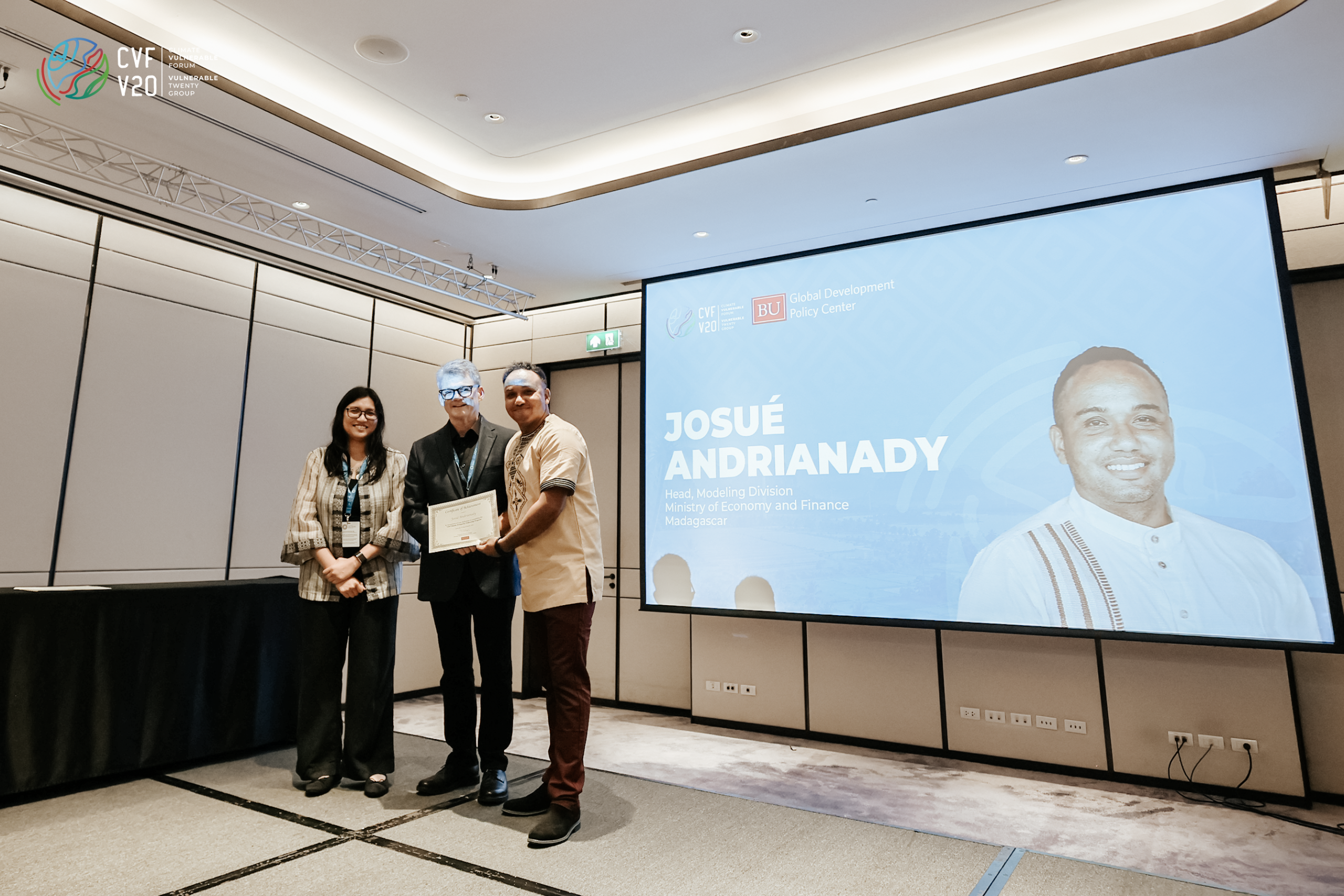
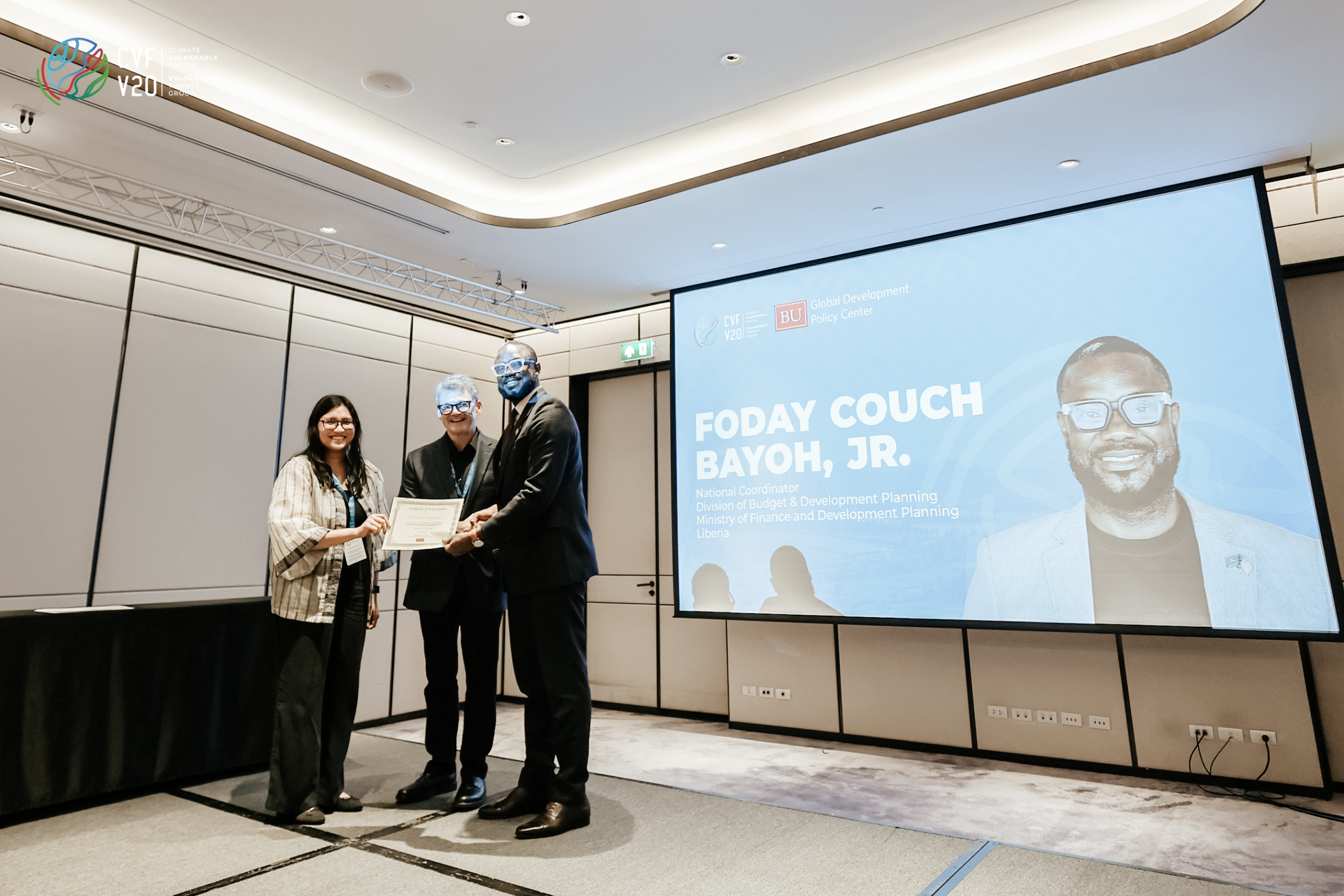
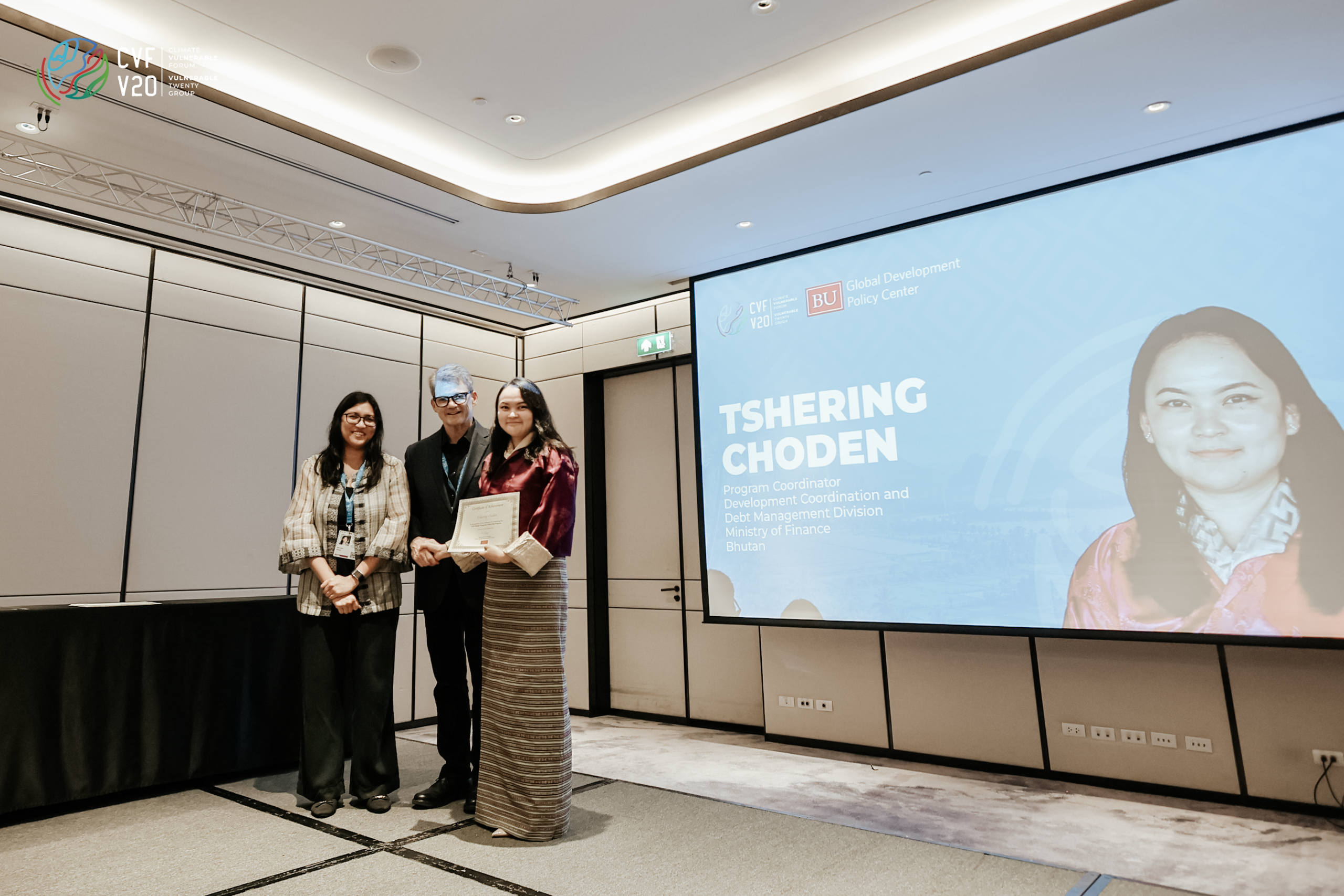
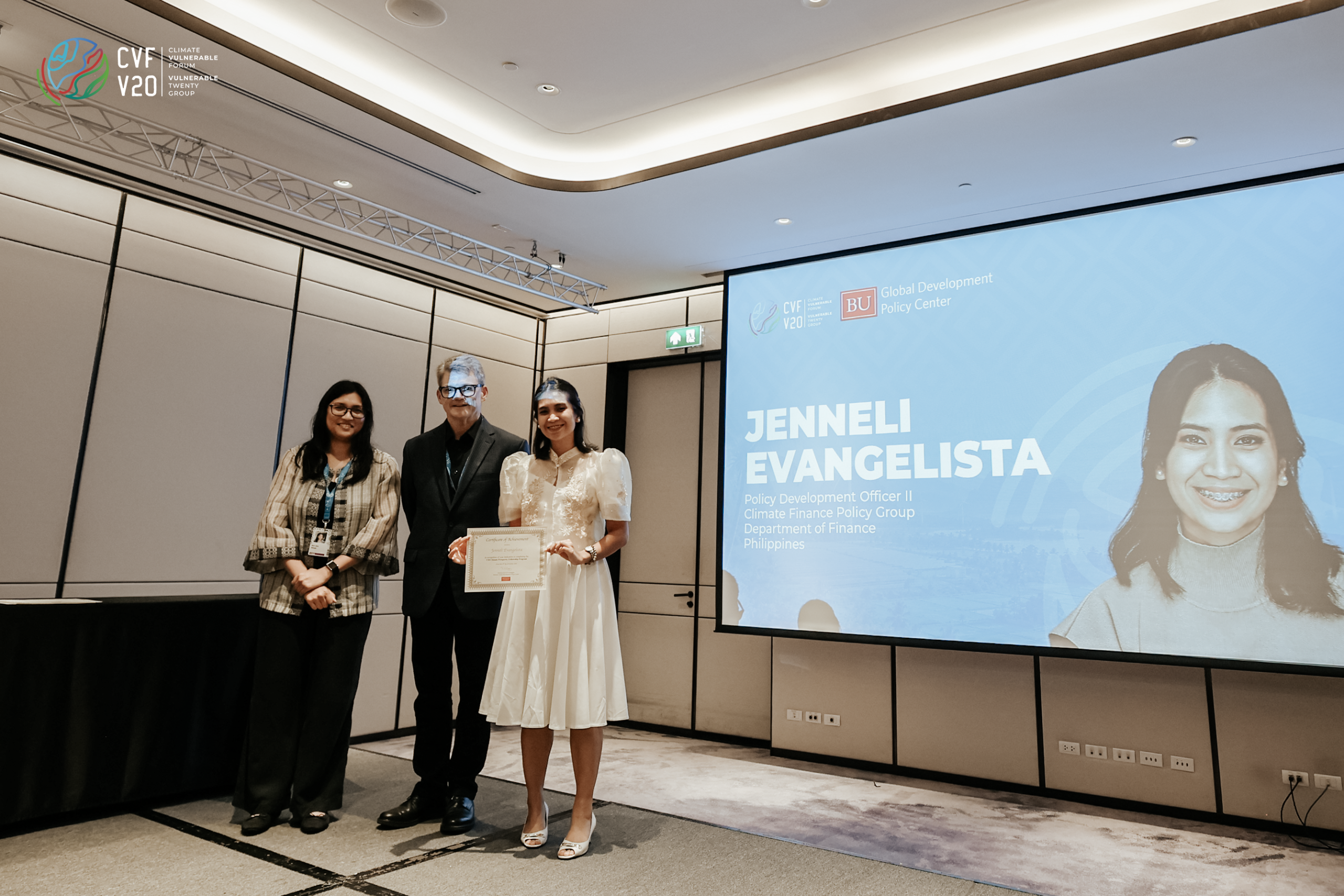
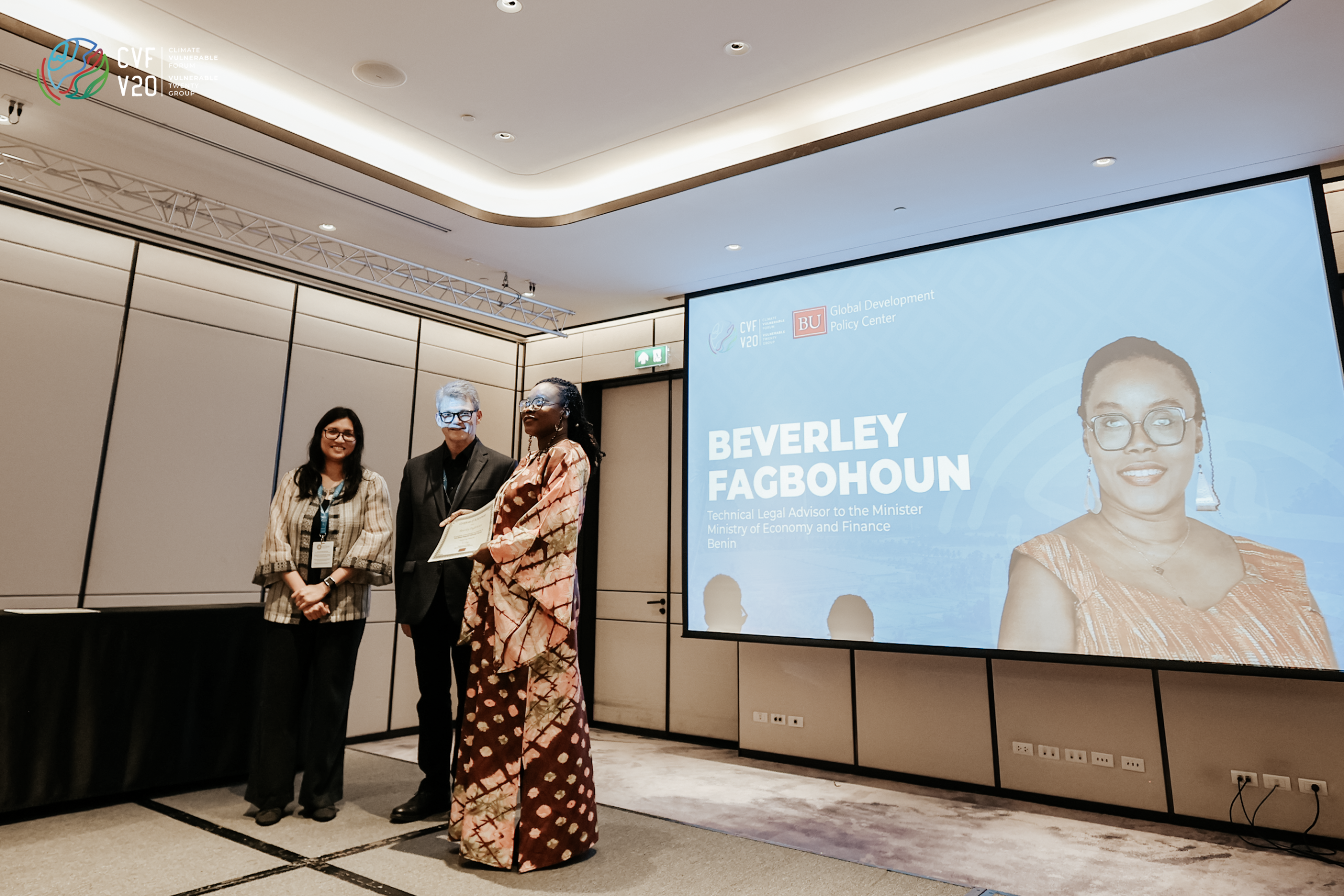
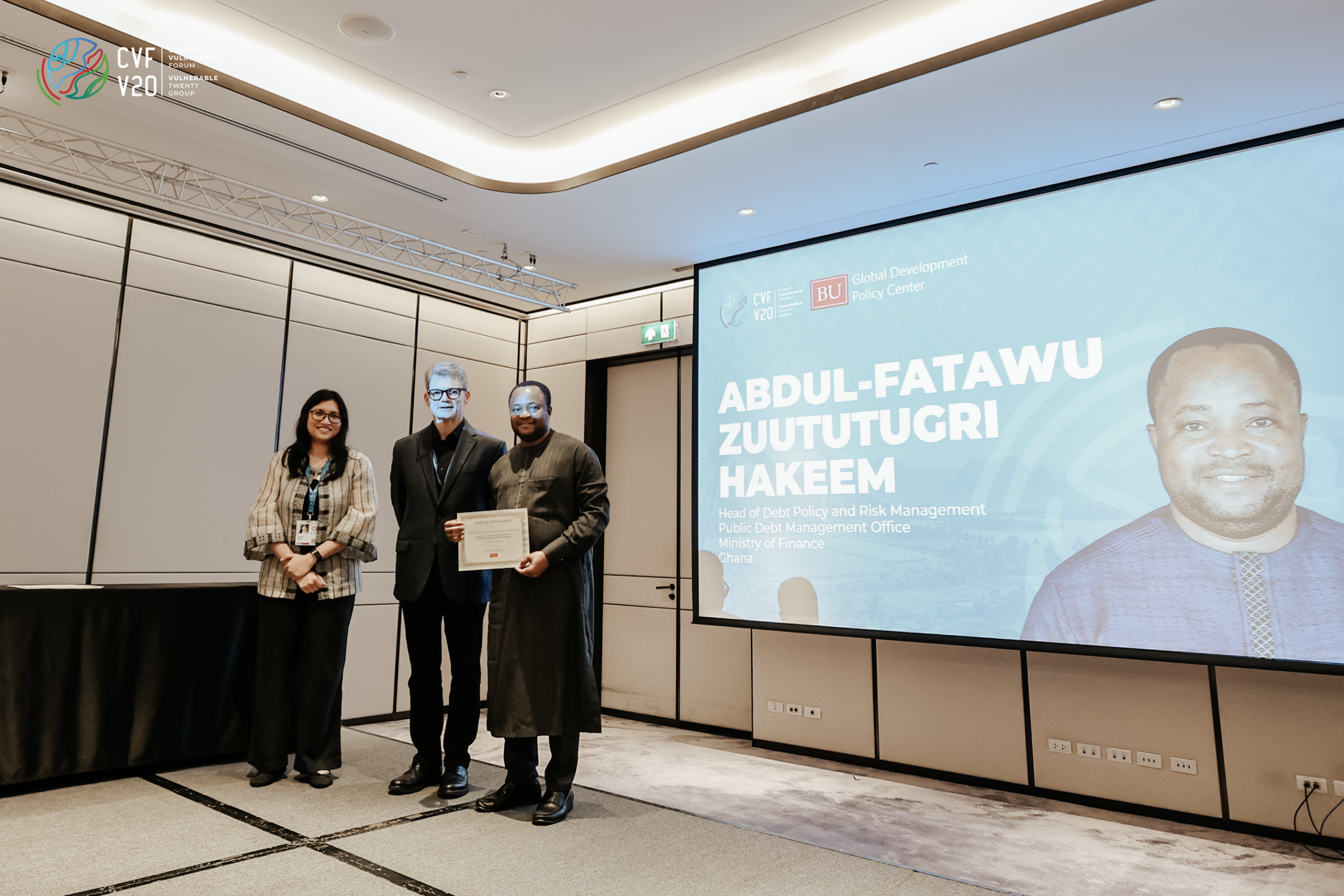
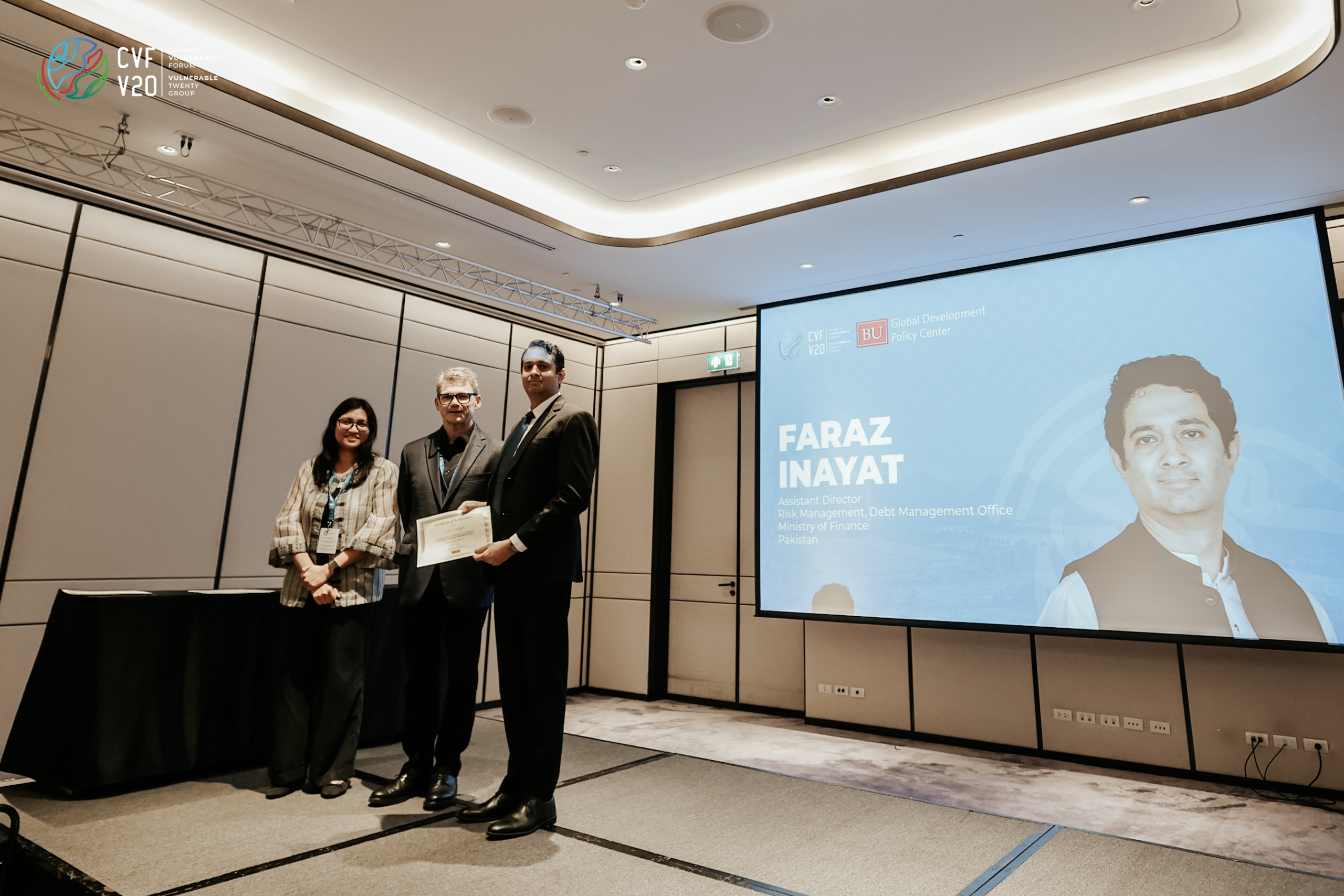
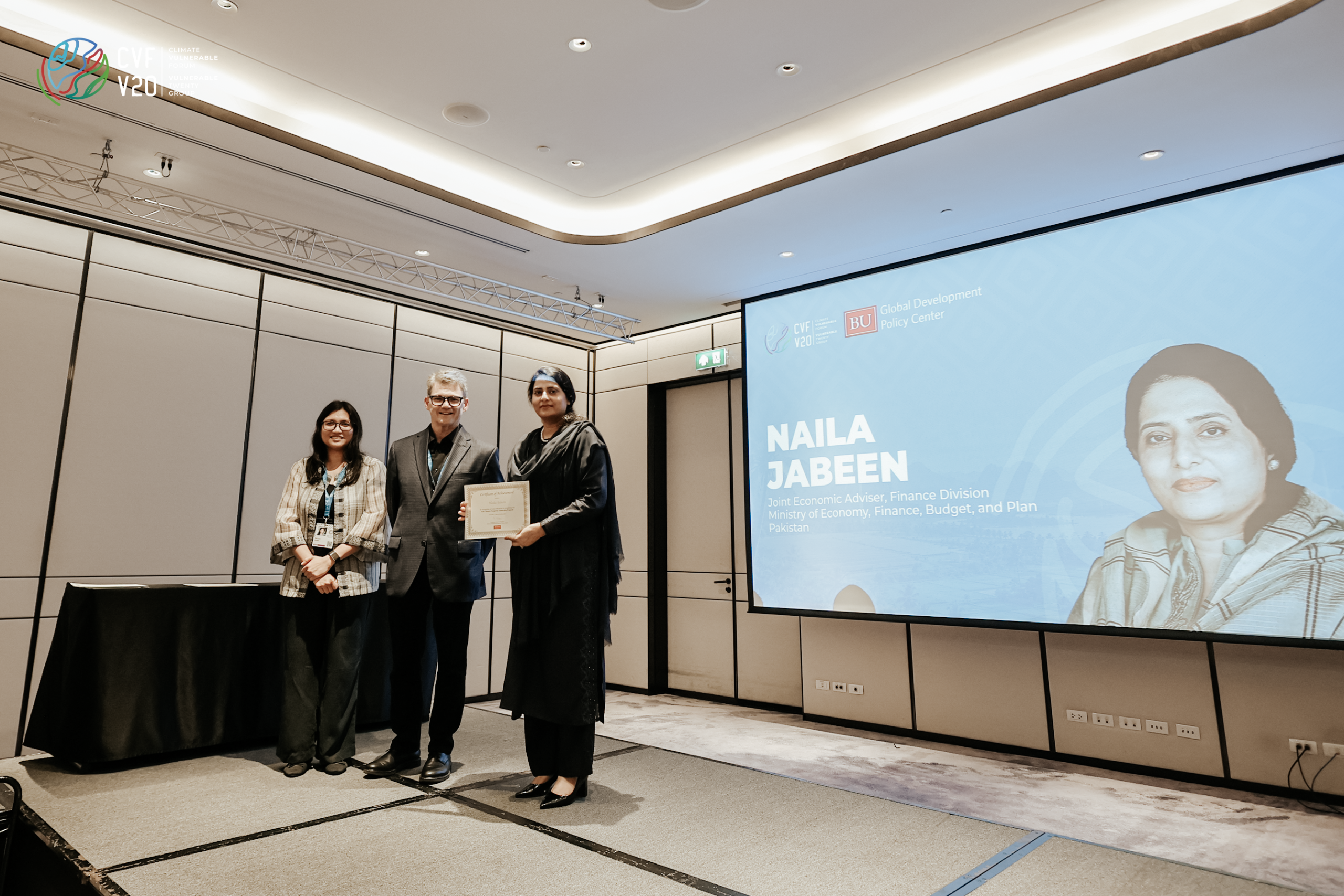
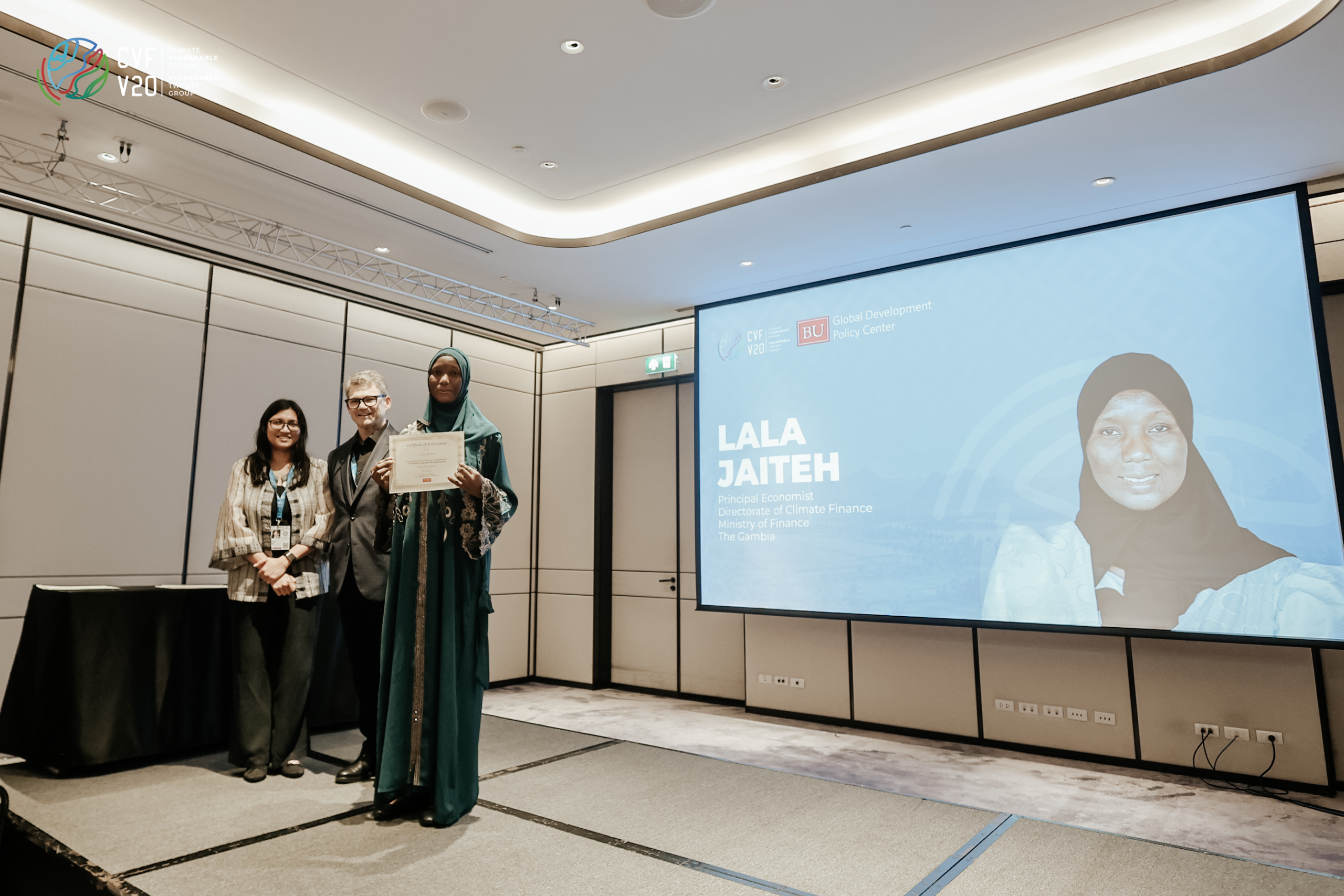
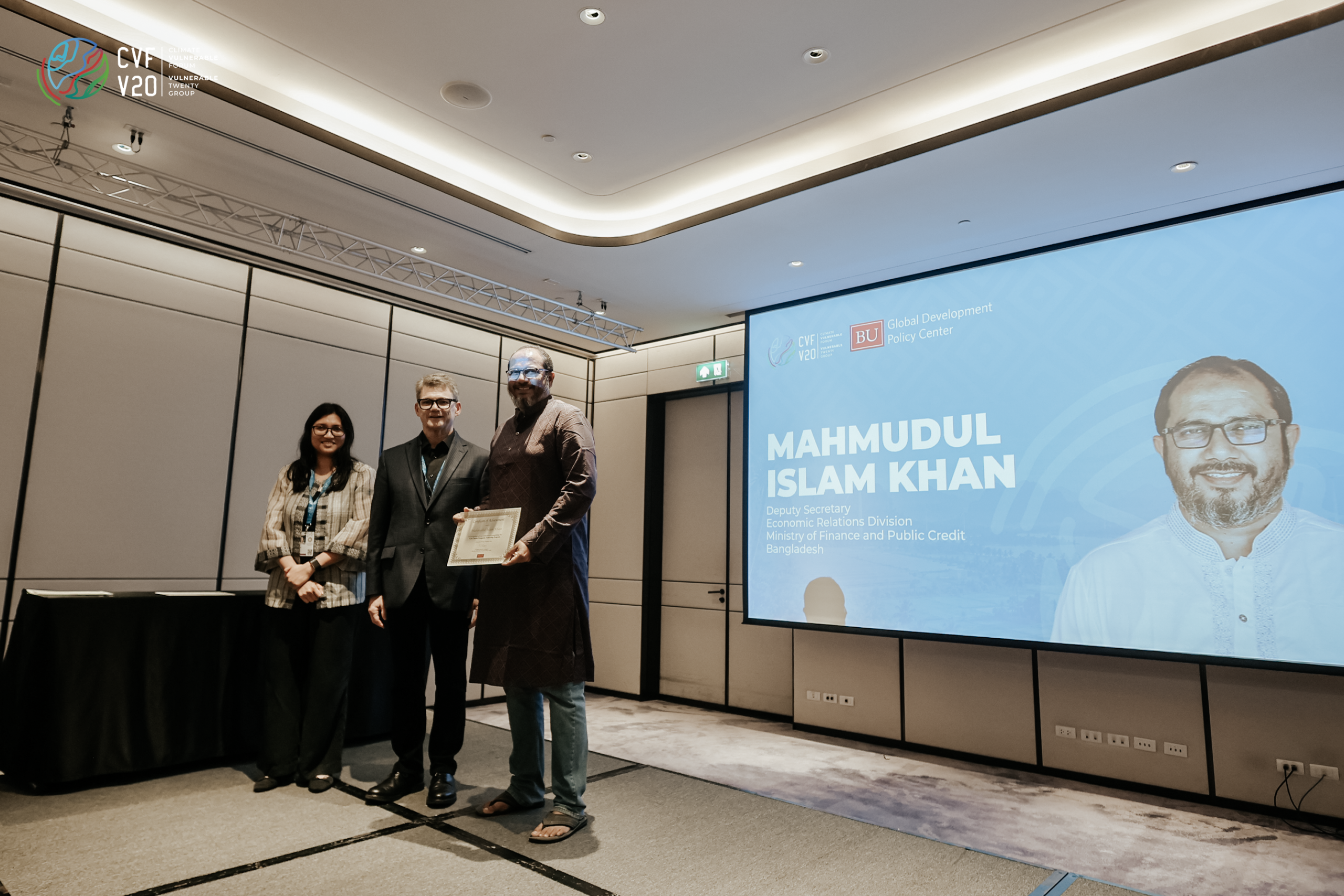
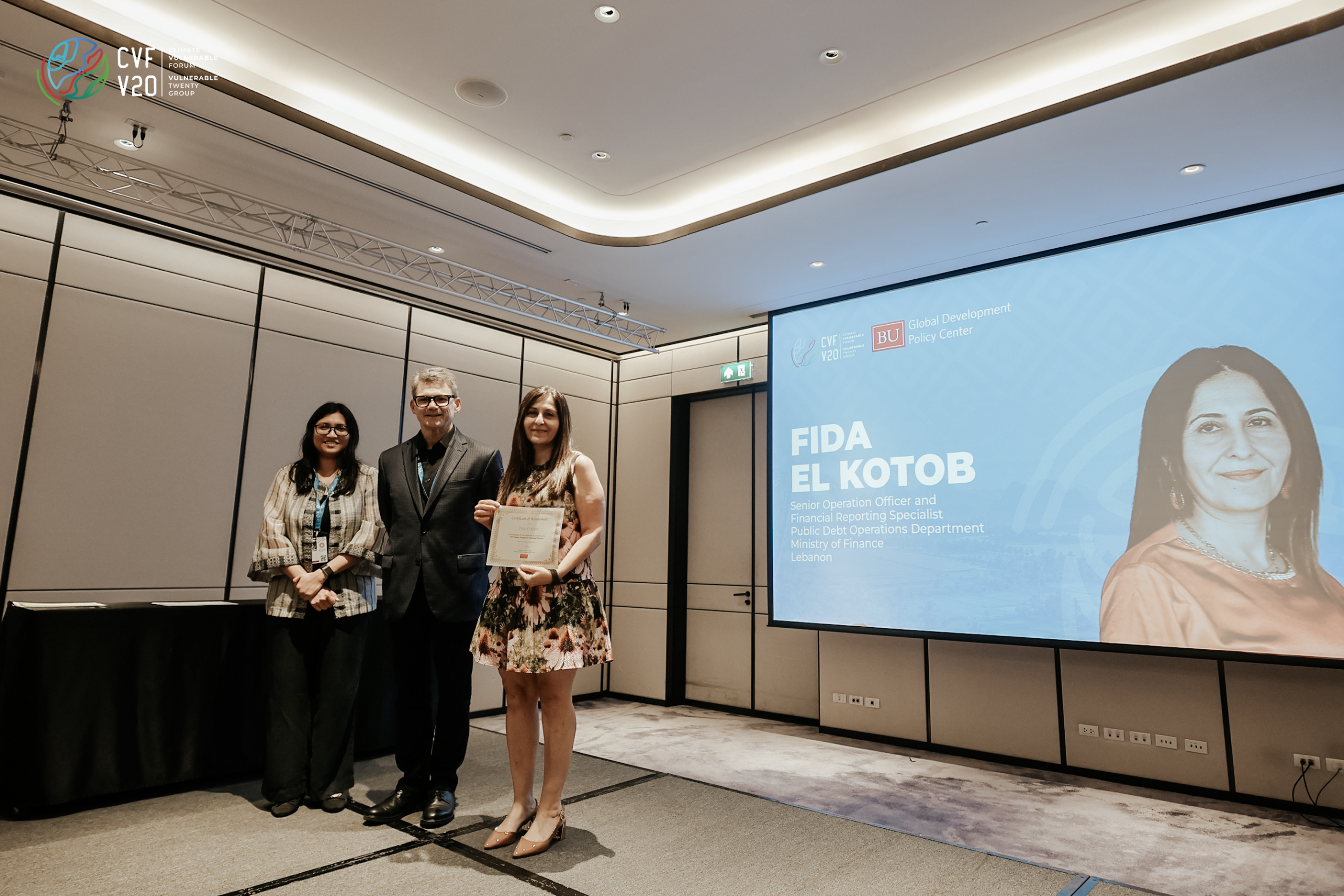
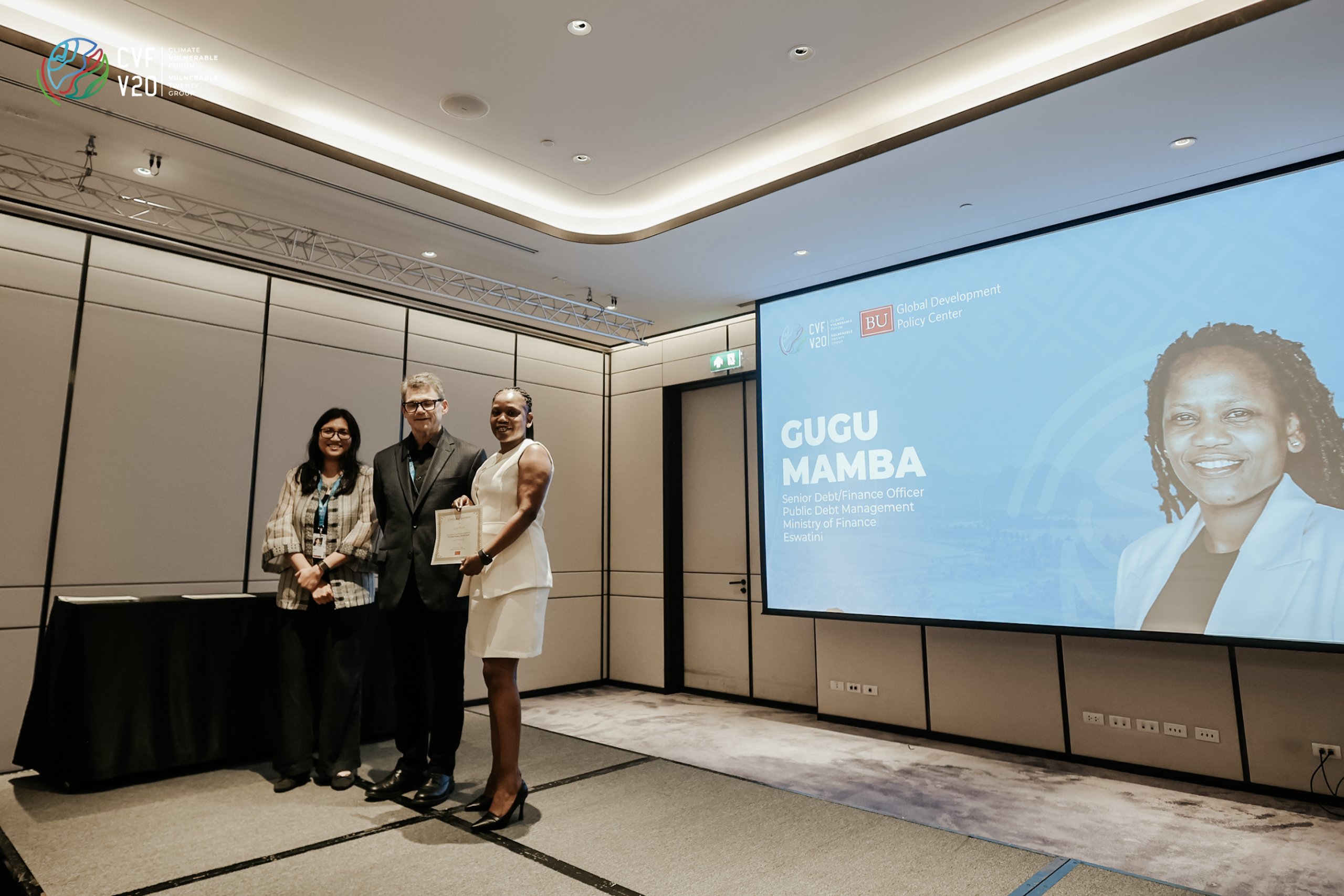
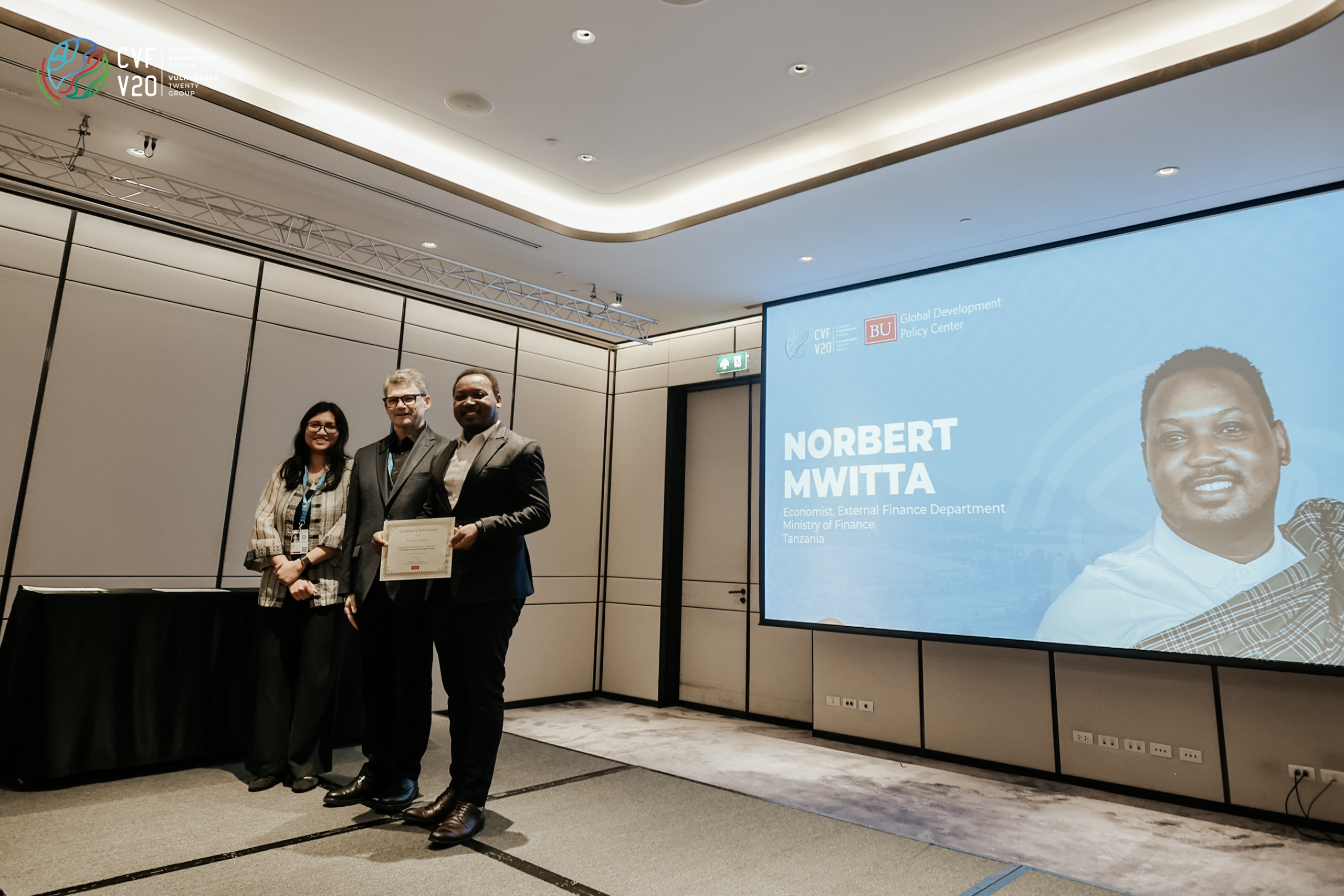
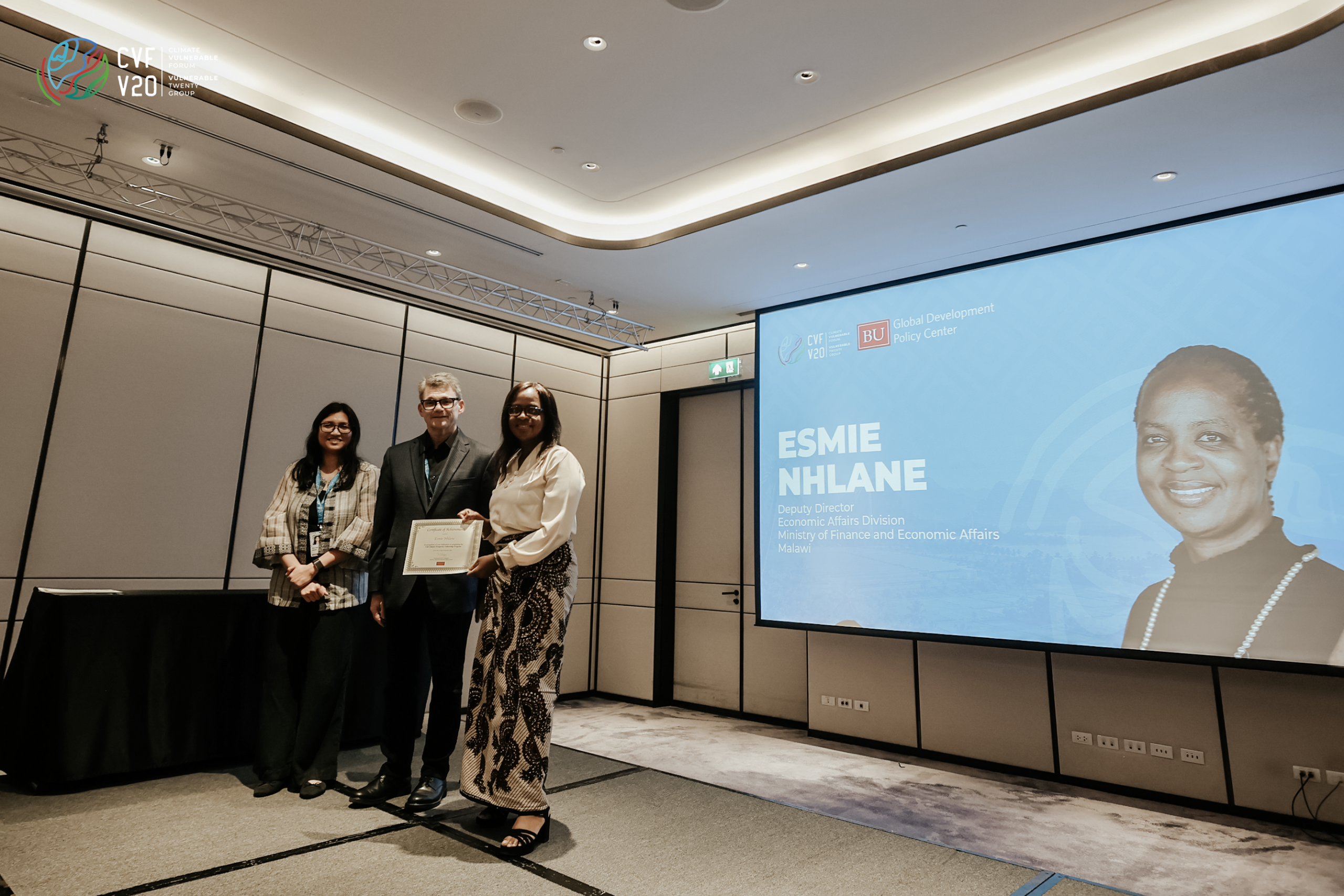
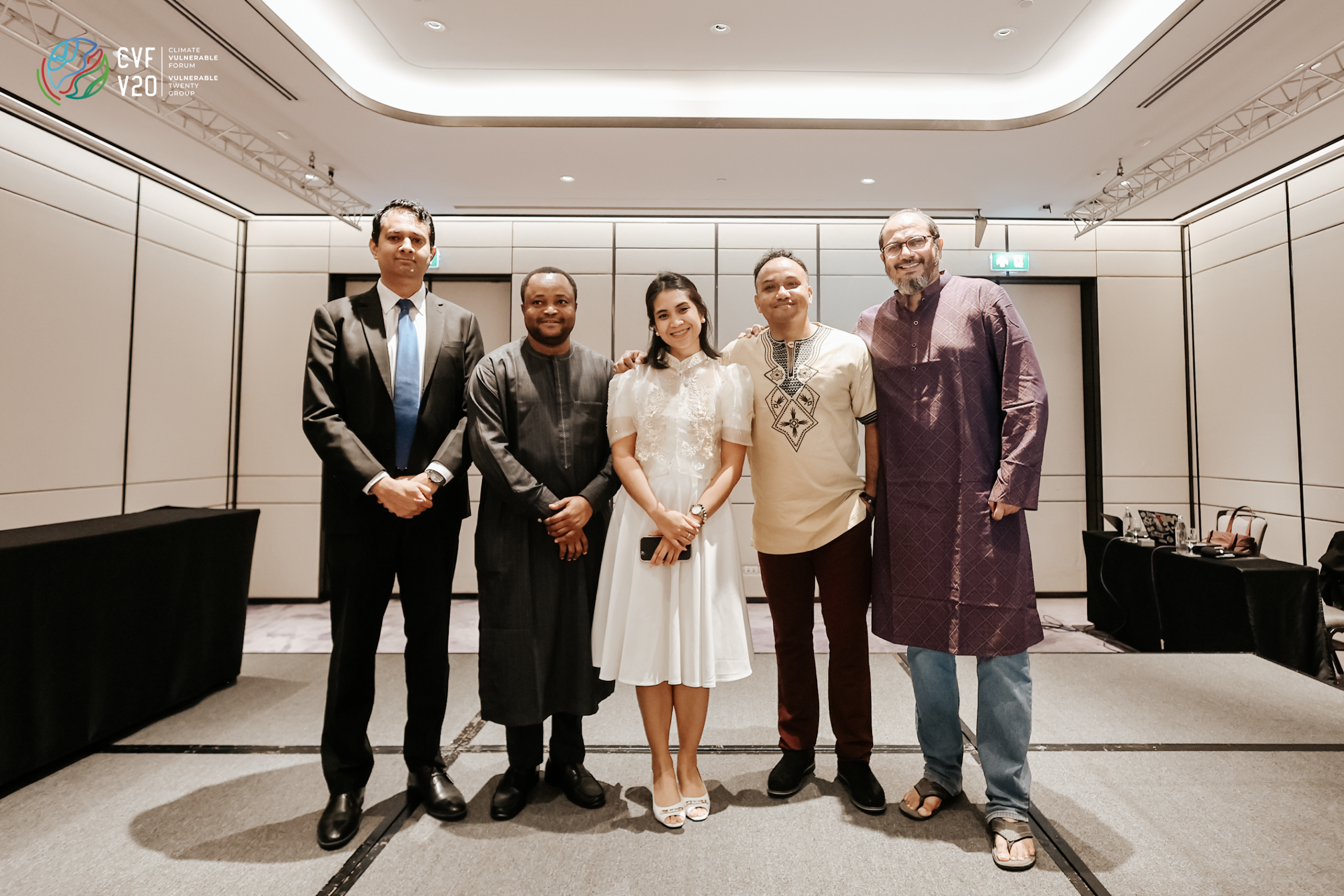
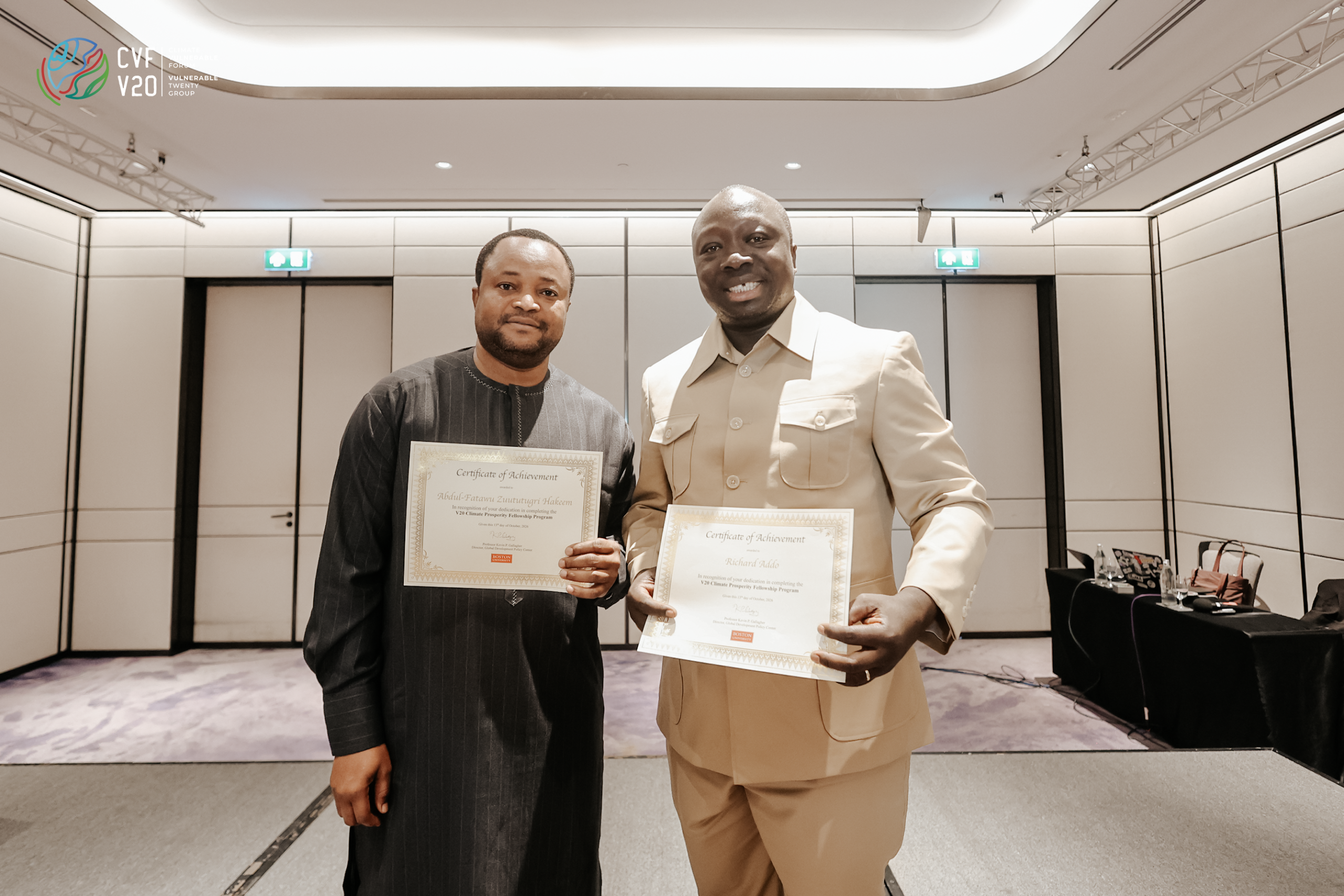
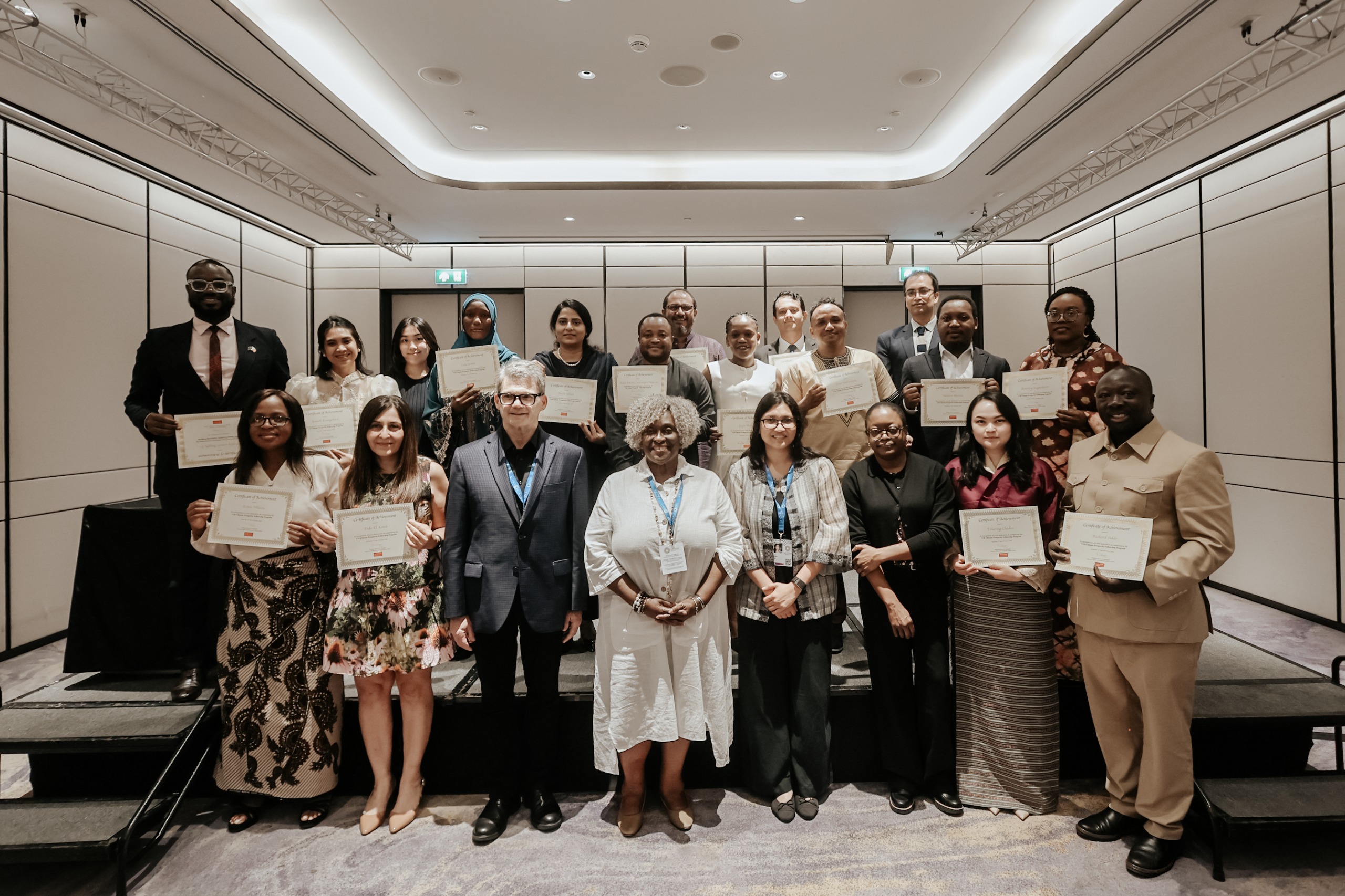
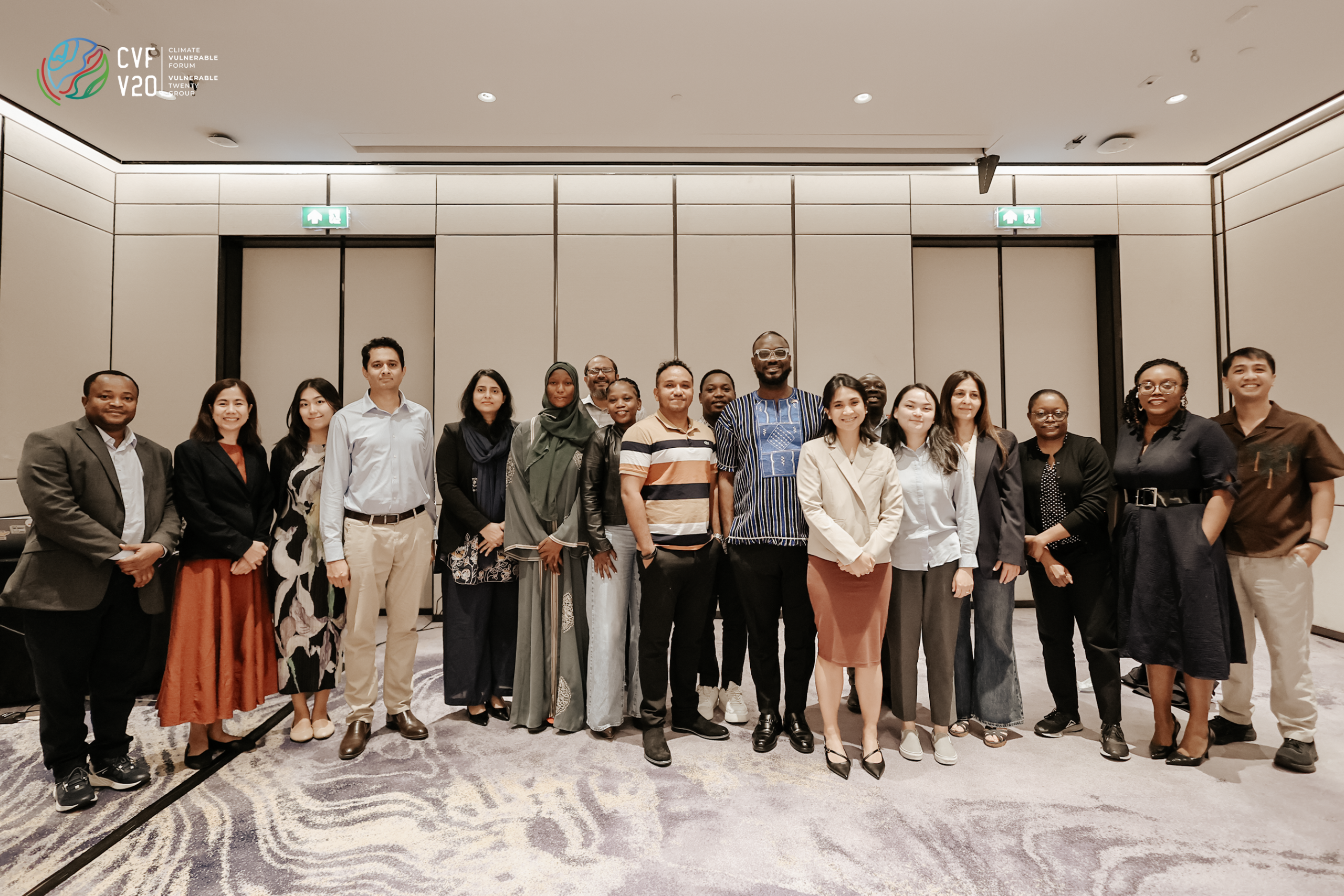
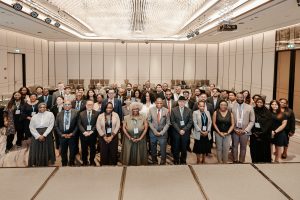
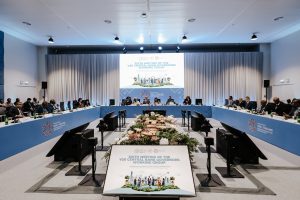
Bangkok, Thailand—Nineteen senior government officials from ministries of finance, economy, and planning across 14 climate-vulnerable countries have completed the third cohort of the V20 Climate Prosperity Fellowship Program, implemented by the Climate Vulnerable Forum and V20 Finance Ministers (CVF-V20) and Boston University Global Development Policy Center.
Representing countries include Bangladesh, Benin, Bhutan, Eswatini, The Gambia, Ghana, Kyrgyzstan, Lebanon, Liberia, Madagascar, Malawi, Pakistan, the Philippines, and Tanzania. This new set of fellowship alumni contributes to a growing network of leaders equipped to advance ongoing efforts on international financial architecture reform and climate prosperity agenda.
Following 10 months of deep engagement with climate-aligned financial systems, practical training in policy negotiation and strategic advocacy, and focused sessions on innovative financing approaches, the fellowship held the Final Residency and Certification Ceremony in the margins of the 2026 Annual Meetings of the World Bank Group and the International Monetary Fund in Bangkok, Thailand.
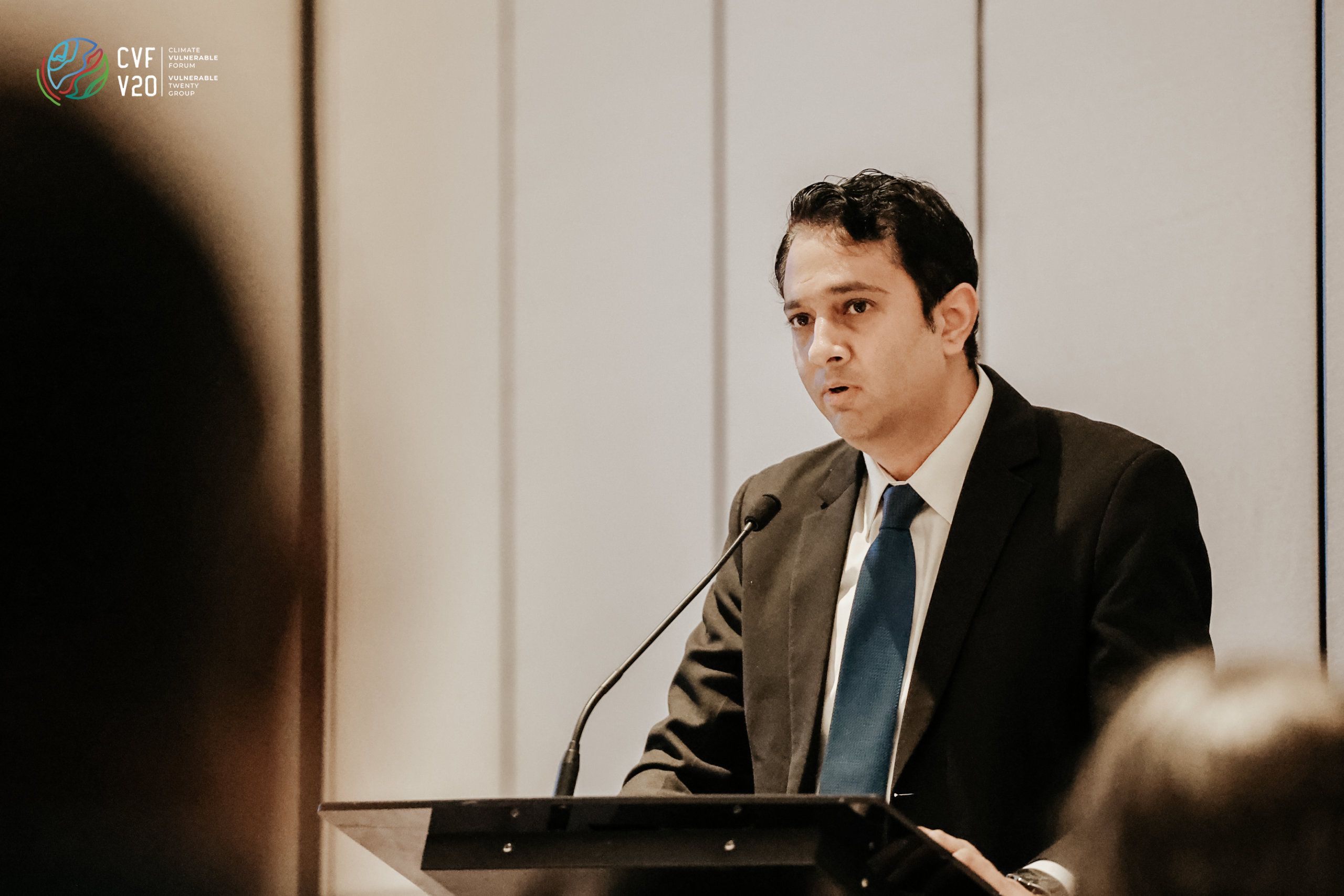
“The fellowship began with a very good start: an overview and history of financial architecture and how it all evolved over the decades, the role of the institutions, the MDBs, the important instruments, the tools that can be utilized to address some of [climate-related economic] challenges, including the impact on the fiscal and debt indicators of climate-vulnerable countries,” Faraz Inayat, Assistant Director of the Risk Management, Debt Management Office at Pakistan’s Ministry of Finance, shared.
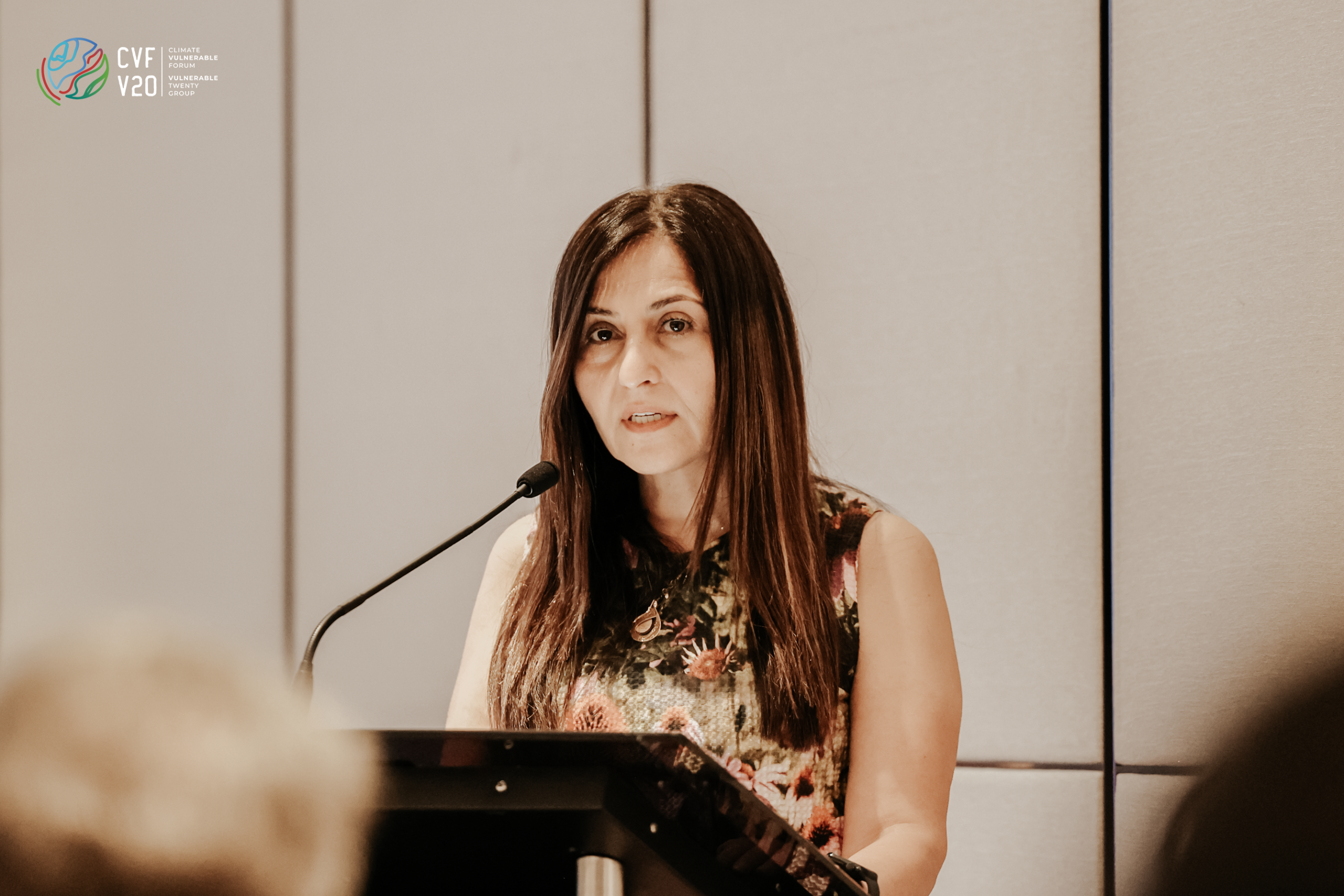
“It has deepened my understanding of the critical link between climate action, debt sustainability, and climate finance. It has reinforced the importance of integrating climate consideration into financial policy decision-making,” Fida El Kotob, Senior Operations Officer and Financial Reporting Specialist at the Public Debt Operations Department of the Ministry of Finance in Lebanon, added.
As part of the three-day residency, fellows presented their capstone projects on debt analytics, sovereign debt negotiation, debt-for-development swaps, and disaster risk financing.
One research studied climate shocks and public debt in Pakistan, revealing a total damage of US$14.9 billion and a total loss of US$15.2 billion from all flood disasters in 2022, while projecting debt to reach 103.4 percent of Gross Domestic Product by 2031, as climate shocks persist. But their analysis revealed that scaling up Climate Prosperity Plan investment raises debt-to-GDP ratio by eight points, peaking only at 62 percent in 2028 and 60 percent in 2037.
Another capstone project focused on Catastrophe Deferred Drawdown Option, providing recommendations for national governments and development partners in addressing the common implementation challenges in sustaining reforms, inter-agency coordination, technical capacity, fiscal management, debt implications, trigger timing, renewal requirements, and political commitments.
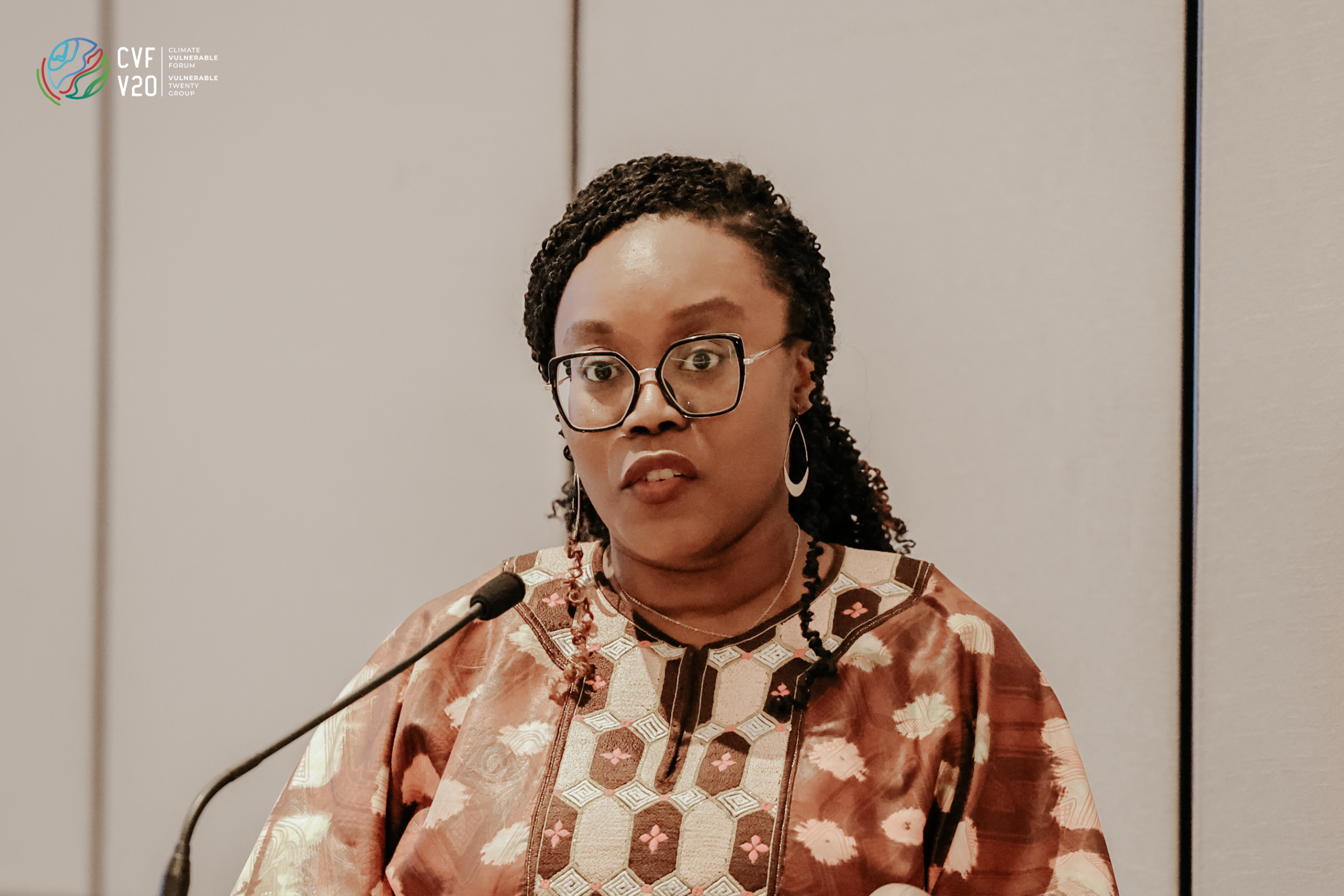
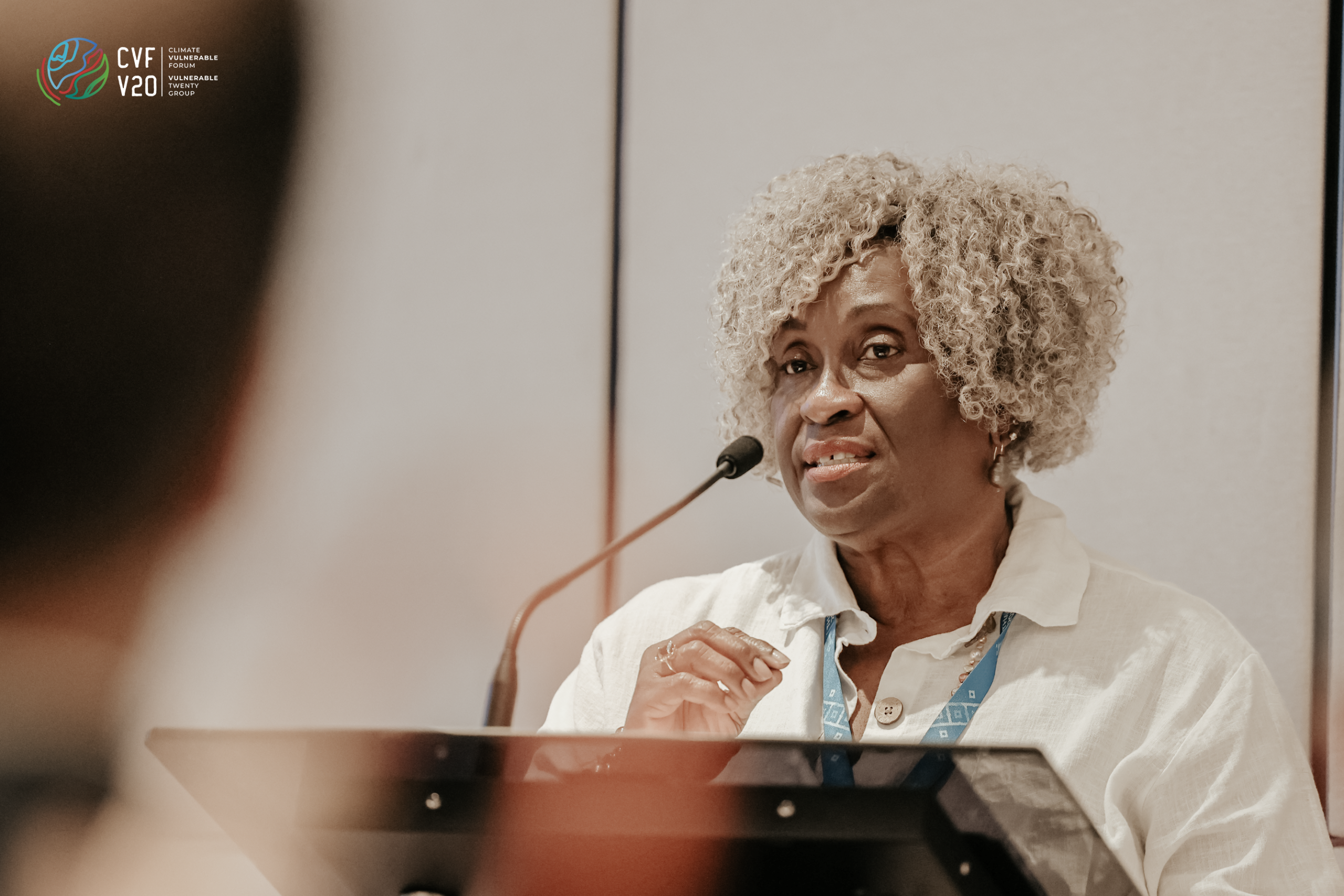
“The value of sitting with people who understand the challenges that your countries face, not because they’ve read about it, but because they deal with it in their everyday lives and their realities: our conversations, our different perspectives, and even maybe the disagreements we had along the way are part of this learning experience,” Beverley Fagbohoun, Technical Legal Advisor to the Minister of Economy and Finance in Benin, said.
Fellows also examined the legal foundations, institutional frameworks, policy tests, and country perspectives surrounding preferred creditor treatment (PCT). The analysis indicated that extending PCT to new institutions necessitates a robust legal basis and a comprehensive review of mandates, concessionality, counter-cyclicality, market access, and reciprocity.
Debt-for-development swaps experiences of Barbados, Côte d’Ivoire, and Gabon were featured in the discussion—all of which presents recurring design features on buyback, credit enhancement, ring-fenced savings, and sustainability targets. These cases steered fellows to conduct a feasibility study on grants, concessional loan, conventional refinancing, and debt swap for Rwanda.
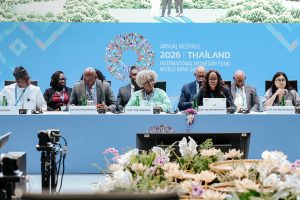
Fellows also participated in the 2026 Annual Meetings in Bangkok, Thailand to help advance CVF-V20 priority agendas and foster South-South cooperation throughout its official events.
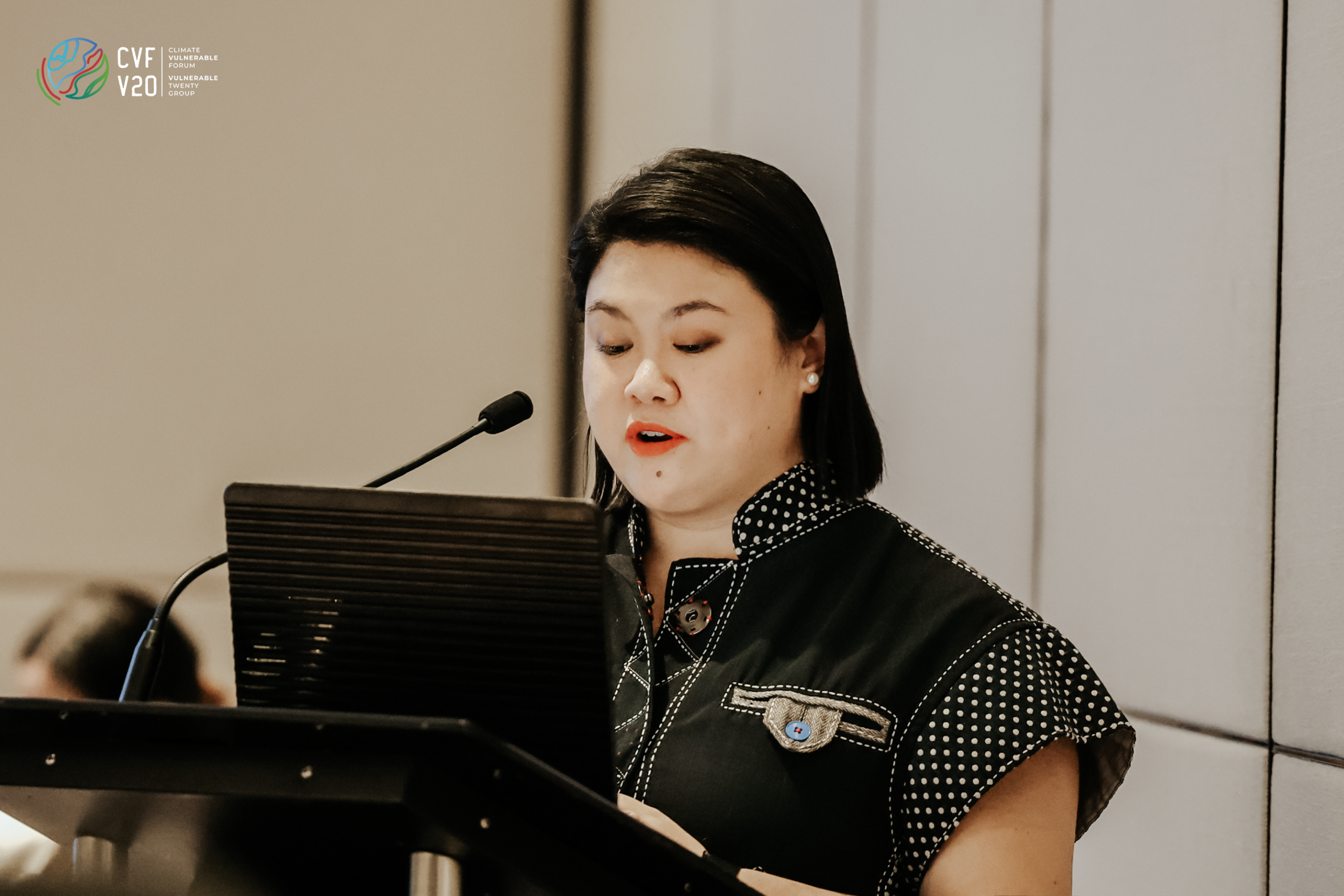
H.E. Ambassador The Most Honorable H. Elizabeth Thompson, Ambassador for Climate Change, Small Island Developing States and Law of the Sea, and Sherpa to Prime Minister Mia Amor Mottley, S.C., M.P., Chair of the CVF-V20 left a challenge to the fellows:
“The V2V Compact will only be as strong as what our ministries negotiate within it. And that improvements will be driven by senior officials who know the numbers and can turn them into a Minister’s position. And our Climate Prosperity Plans only become prosperity when someone in the finance ministry turns them into a pipeline that an investor can say yes to.”
Sessions and residencies are over, but their commitment to support government institutions and promote regional cooperation in shaping climate finance policy, mobilizing domestic resources, and accessing international financial mechanisms remains.
***
The CVF-V20 now represents 77 member countries from small island developing states (SIDS), least developed countries (LDCs), low to middle-income countries (LMICs), landlocked developing countries (LLDCs), and fragile and conflict-affected states (FCS). Working together, the CVF-V20 aims to achieve climate justice through the realization of Climate Prosperity Plans, which contain ambitious economic and financial resilience strategies designed to attract investment and resources that advance the attainment of the Sustainable Development Goals (SDGs), 30×30 Global Biodiversity, and help keep the average global temperature within the Paris Agreement’s 1.5°C safety threshold.
Africa: Benin, Burkina Faso, Cabo Verde, Central African Republic, Chad, Comoros, Côte d’Ivoire, Democratic Republic of the Congo, Eswatini, Ethiopia, Gabon, The Gambia, Ghana (Troika), Guinea, Kenya, Liberia, Madagascar, Malawi, Morocco, Mozambique, Namibia, Niger, Rwanda, Senegal, Sierra Leone, Somalia, South Sudan, Sudan, Tanzania, Togo, Tunisia, Uganda, Zambia
Asia: Afghanistan, Bangladesh (Troika), Bhutan, Cambodia, Jordan, Kyrgyzstan, Lebanon, Maldives, Mongolia, Nepal, Pakistan, Palestine, Philippines, Sri Lanka, Timor-Leste, Vietnam, Yemen
Caribbean: Barbados (Chair/Troika), Dominica, Dominican Republic, Grenada, Guyana, Haiti, Saint Lucia, Saint Vincent and the Grenadines, Suriname, Trinidad and Tobago
Latin America: Colombia, Costa Rica, Guatemala, Honduras, Nicaragua, Paraguay
Pacific: Fiji, Kiribati, Marshall Islands, Nauru, Palau, Papua New Guinea, Samoa, Solomon Islands, Tonga, Tuvalu, Vanuatu
For media enquiries, please contact [email protected].
For the latest updates, please follow us on: