Bangkok, Thailand—In March 2023, Cyclone Freddy tore through southern Malawi, destroying homes, roads and crops. It also forced the Treasury to reopen a budget Parliament had only recently approved. Money meant for classrooms, clinics and development programs was redirected to emergency relief.
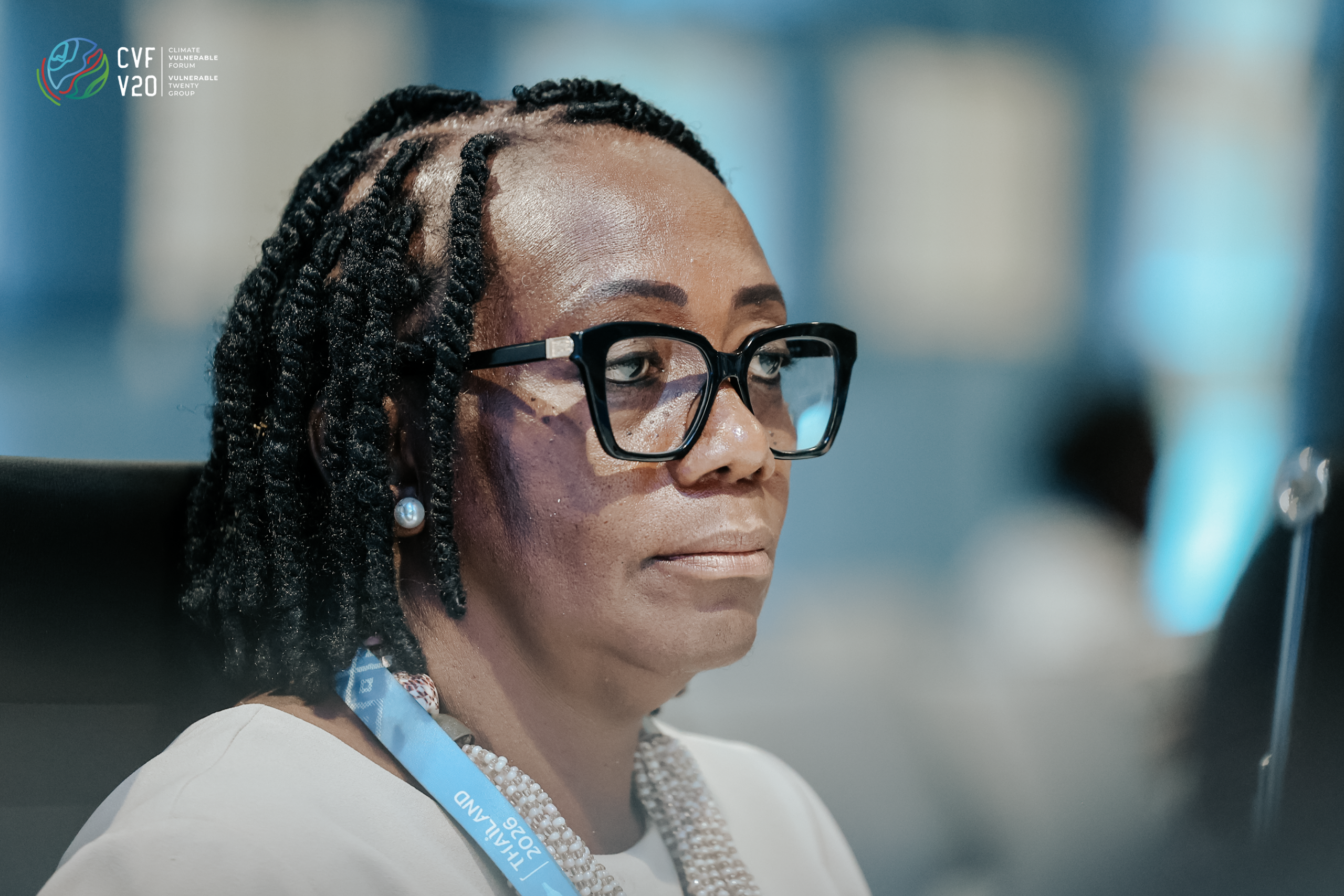
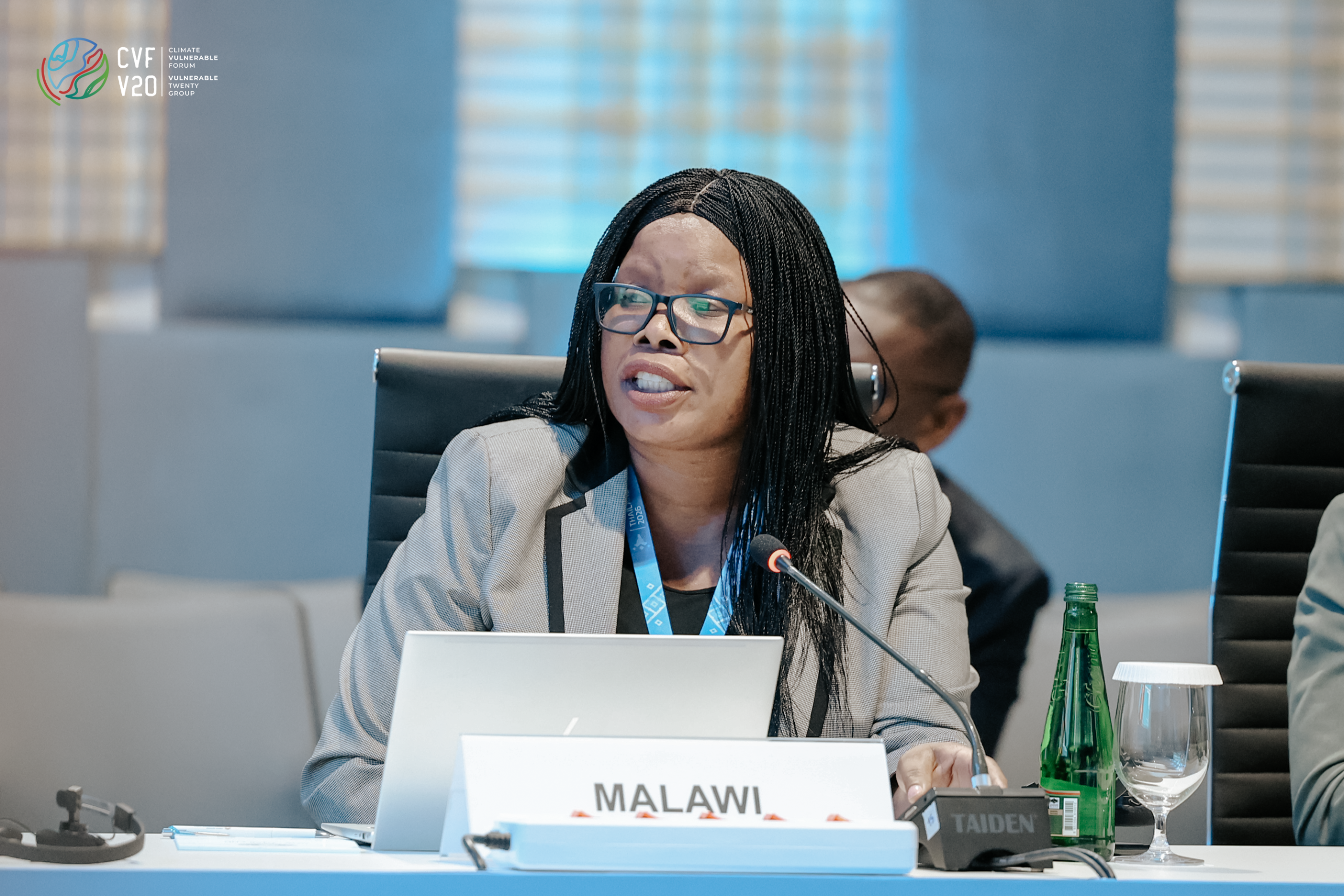
This was not a one-off. Between 2015 and 2023, climate-related disasters caused US$1.2 billion in damage in Malawi, Hon. Esther Jolobala, Second Deputy Speaker of the Parliament of Malawi, told colleagues in Bangkok. What this means, she said, is that “with every drought, flood, or cyclone, scarce development resources are diverted towards emergency response.”
The same squeeze is being felt across the member countries of the Climate Vulnerable Forum and V20 Finance Ministers (CVF-V20). The Fourth V20 Debt Review, presented in Bangkok, found that nine in ten assessed members are still outside the low-risk category for debt distress. In 2024, 33 V20 countries have spent 10 percent or more of government revenue on external debt service.
The V20’s finance ministers spent the week tackling the problem. On October 12, they adopted the 17th Ministerial Communiqué, which advances the Vulnerability to Viability (V2V) Compact. The next day, V20 central bank governors advanced the Lifeline Fund toward establishment.
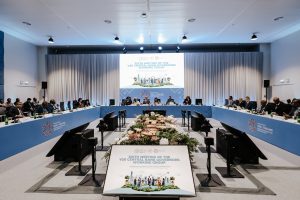
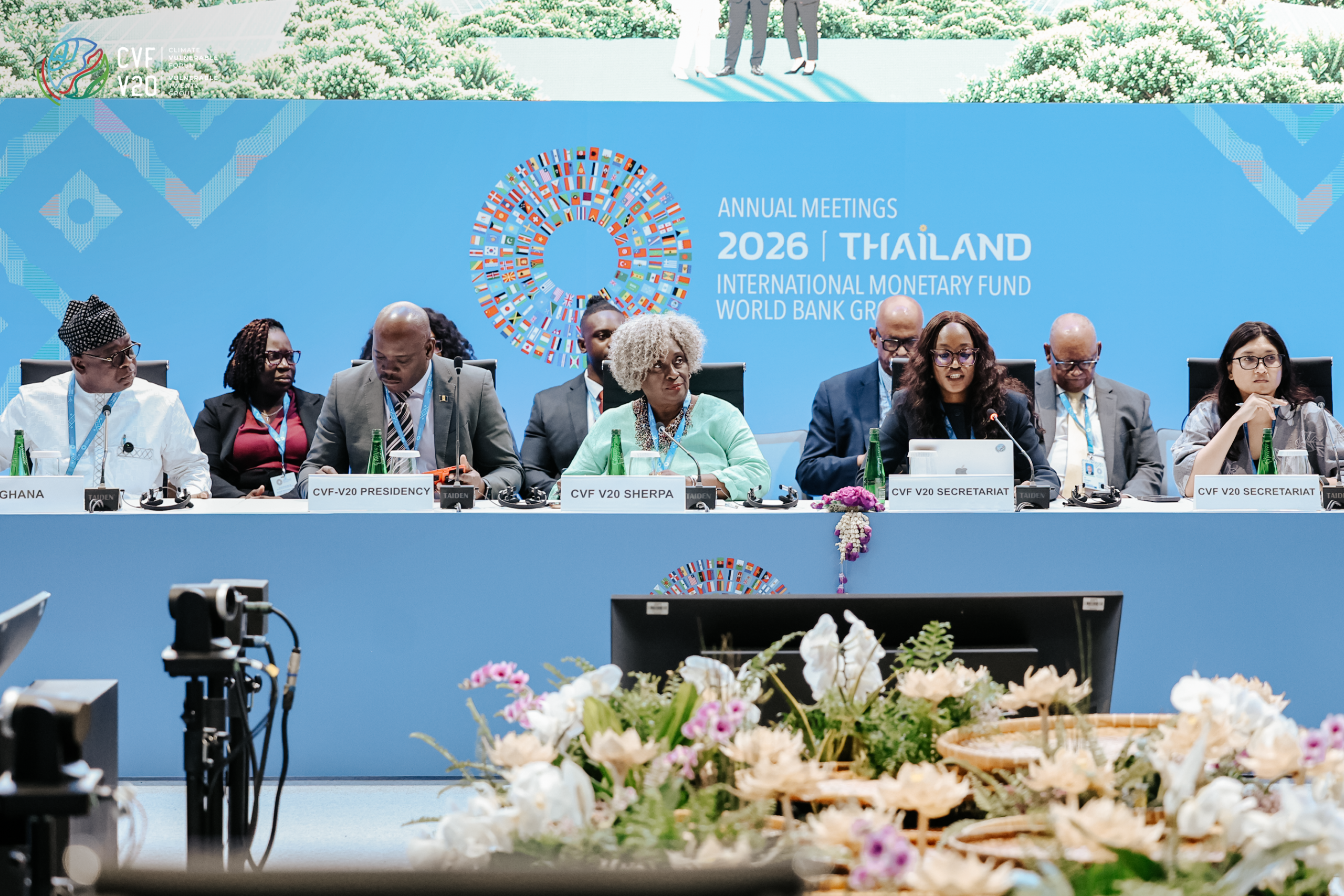
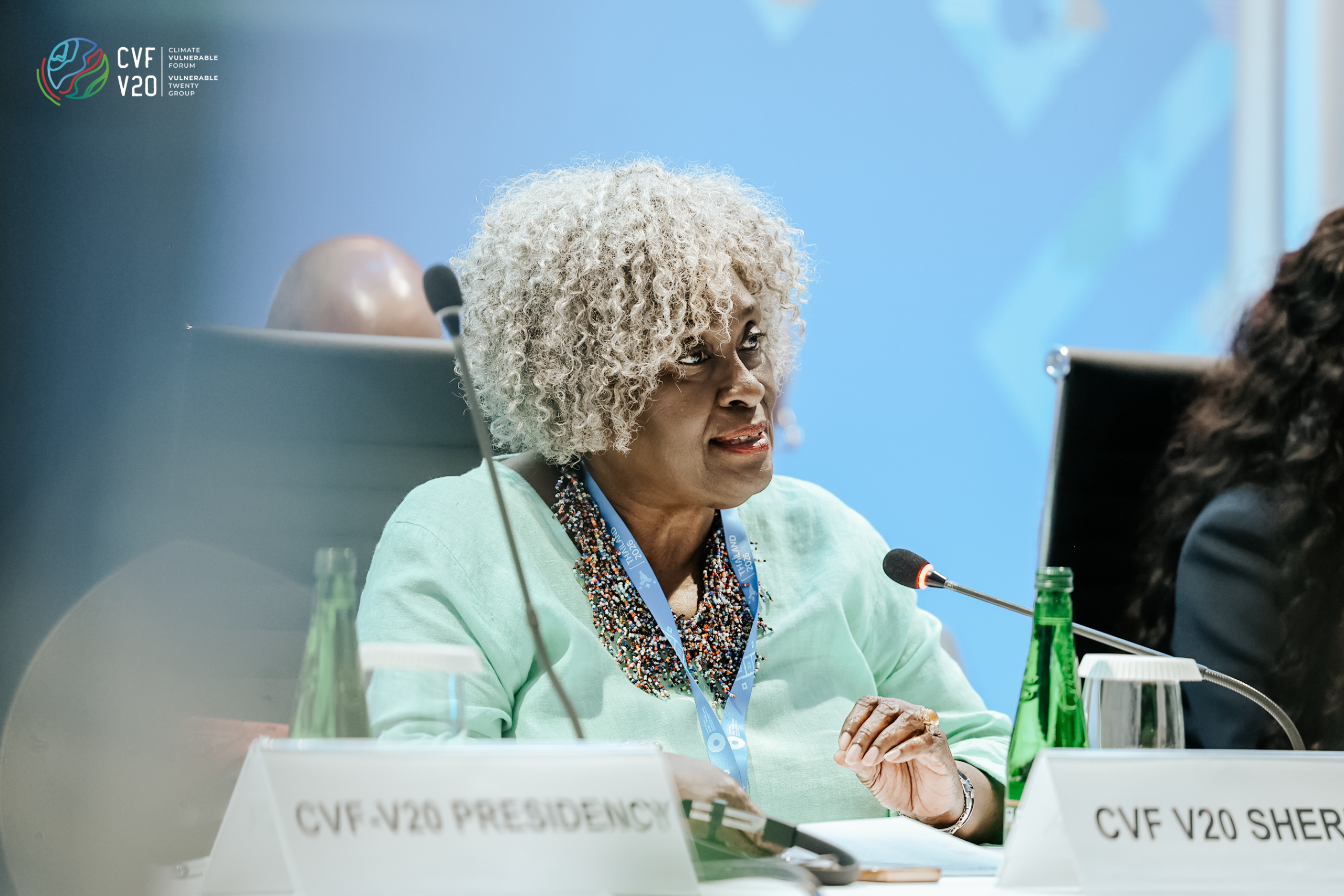
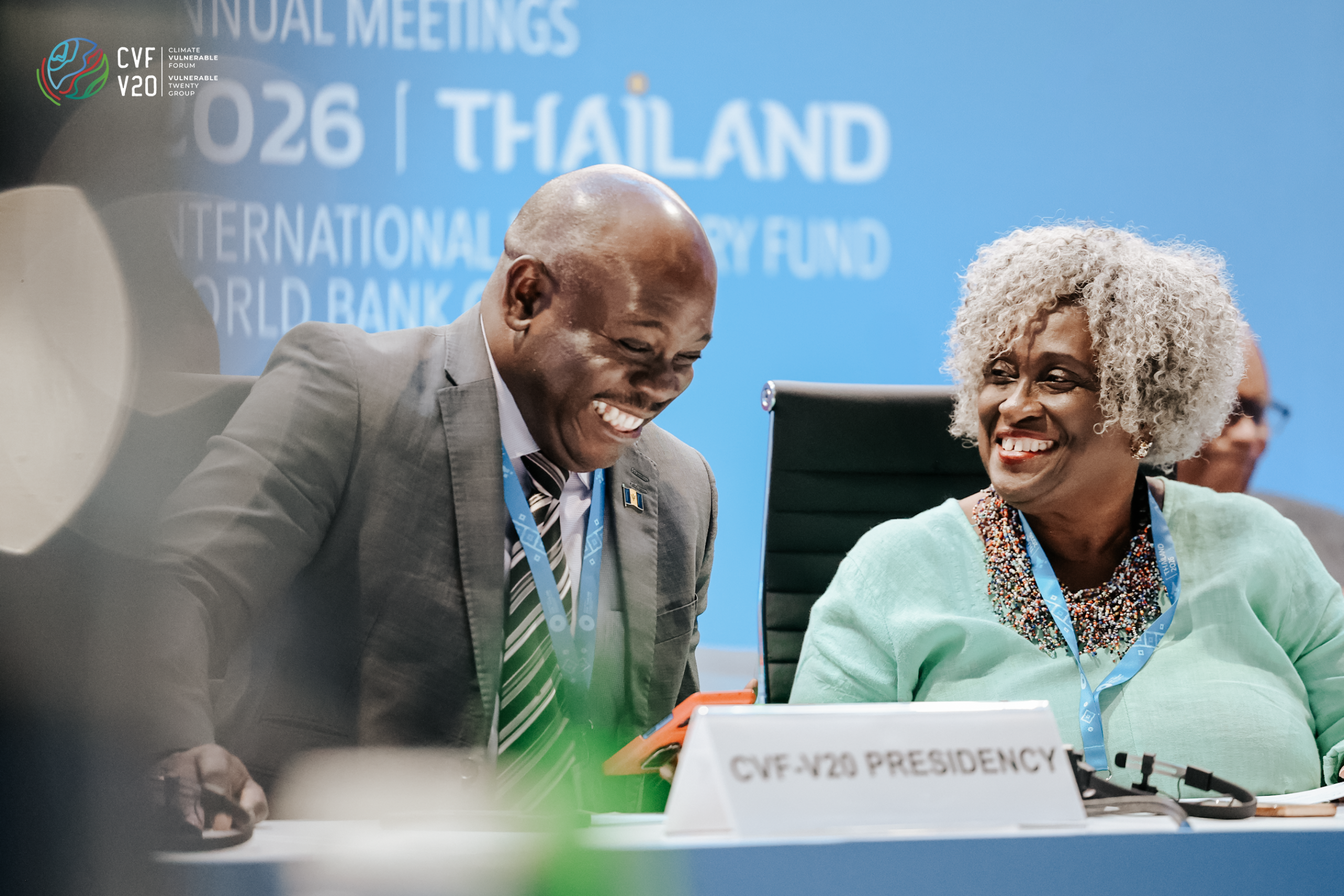
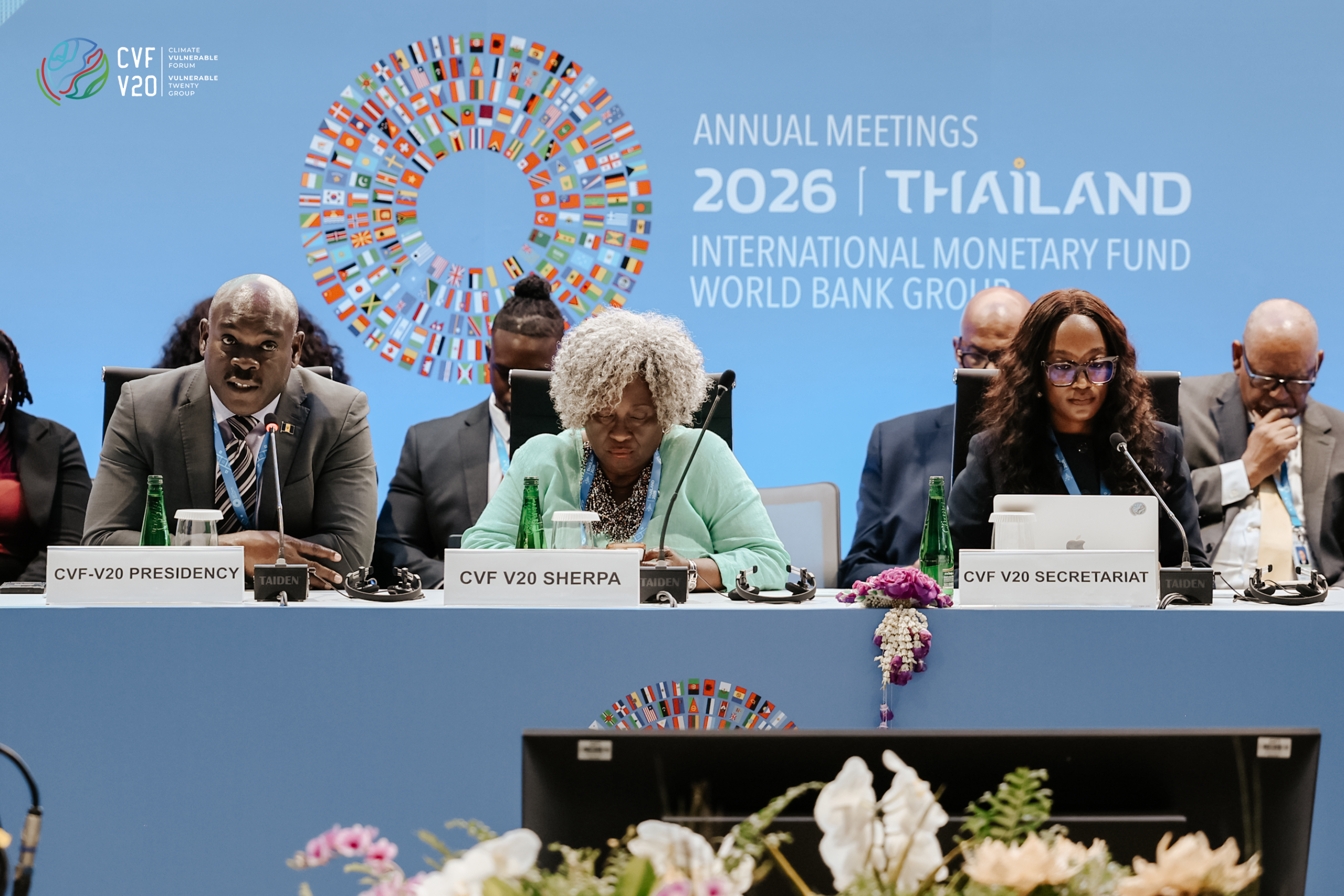
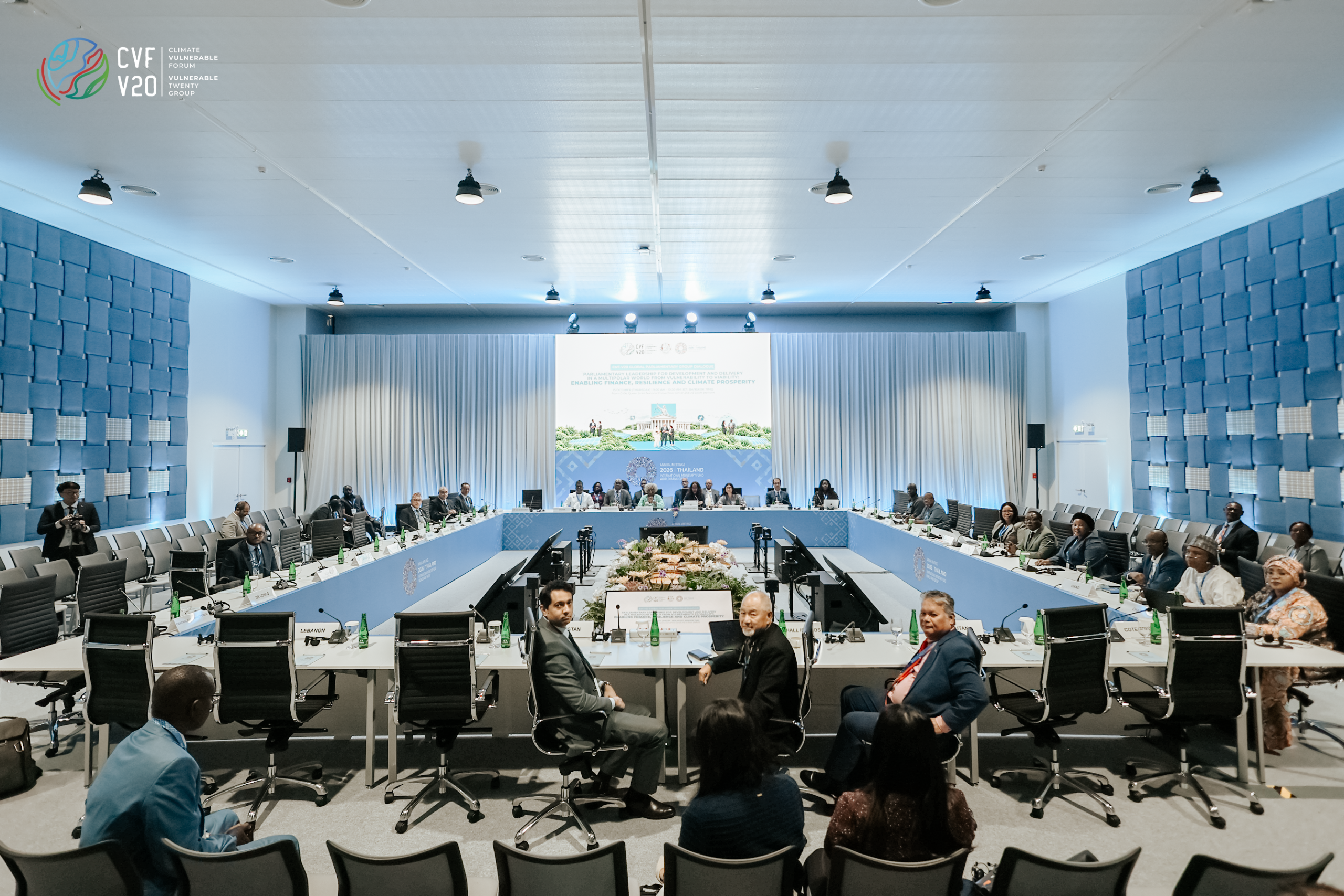
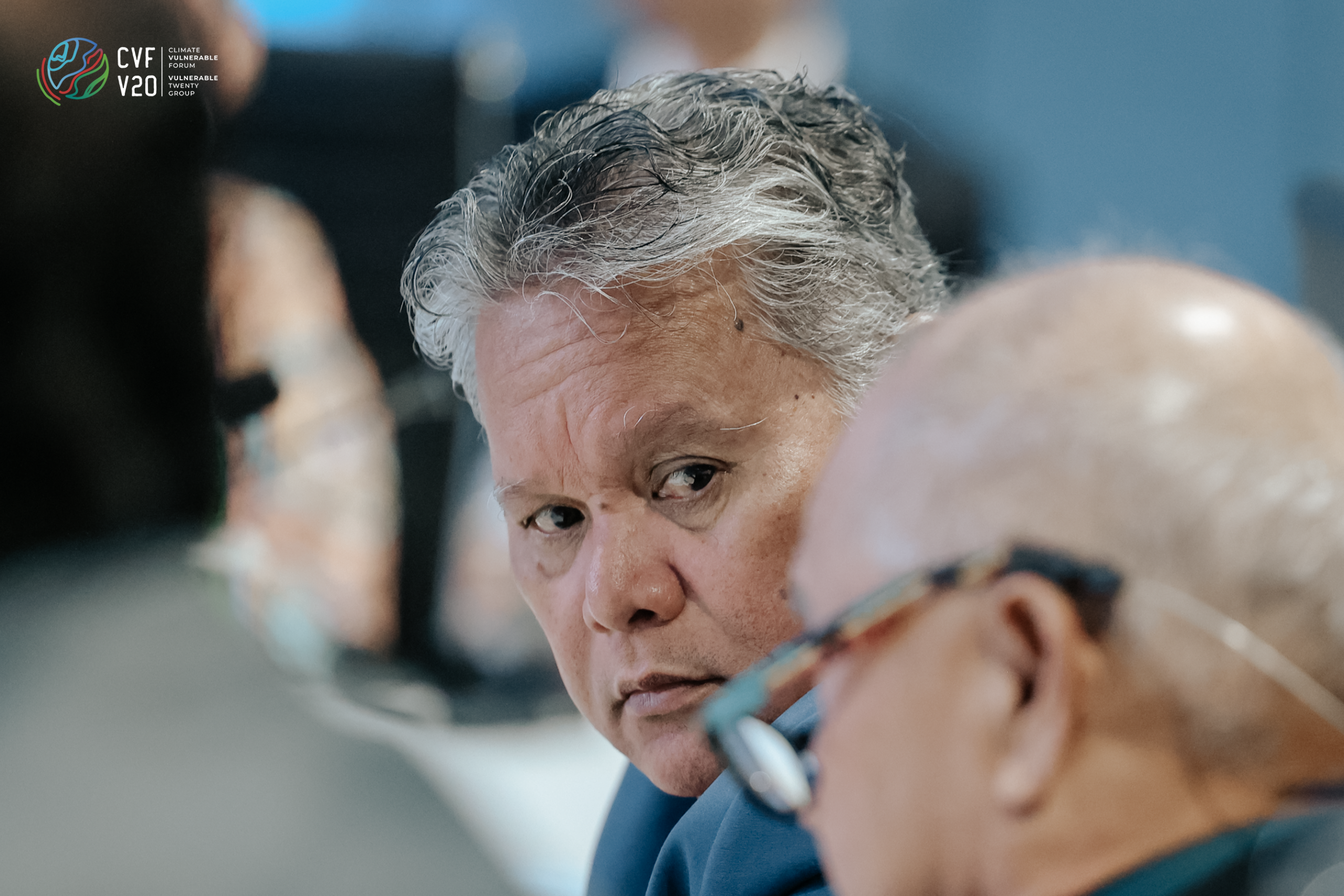
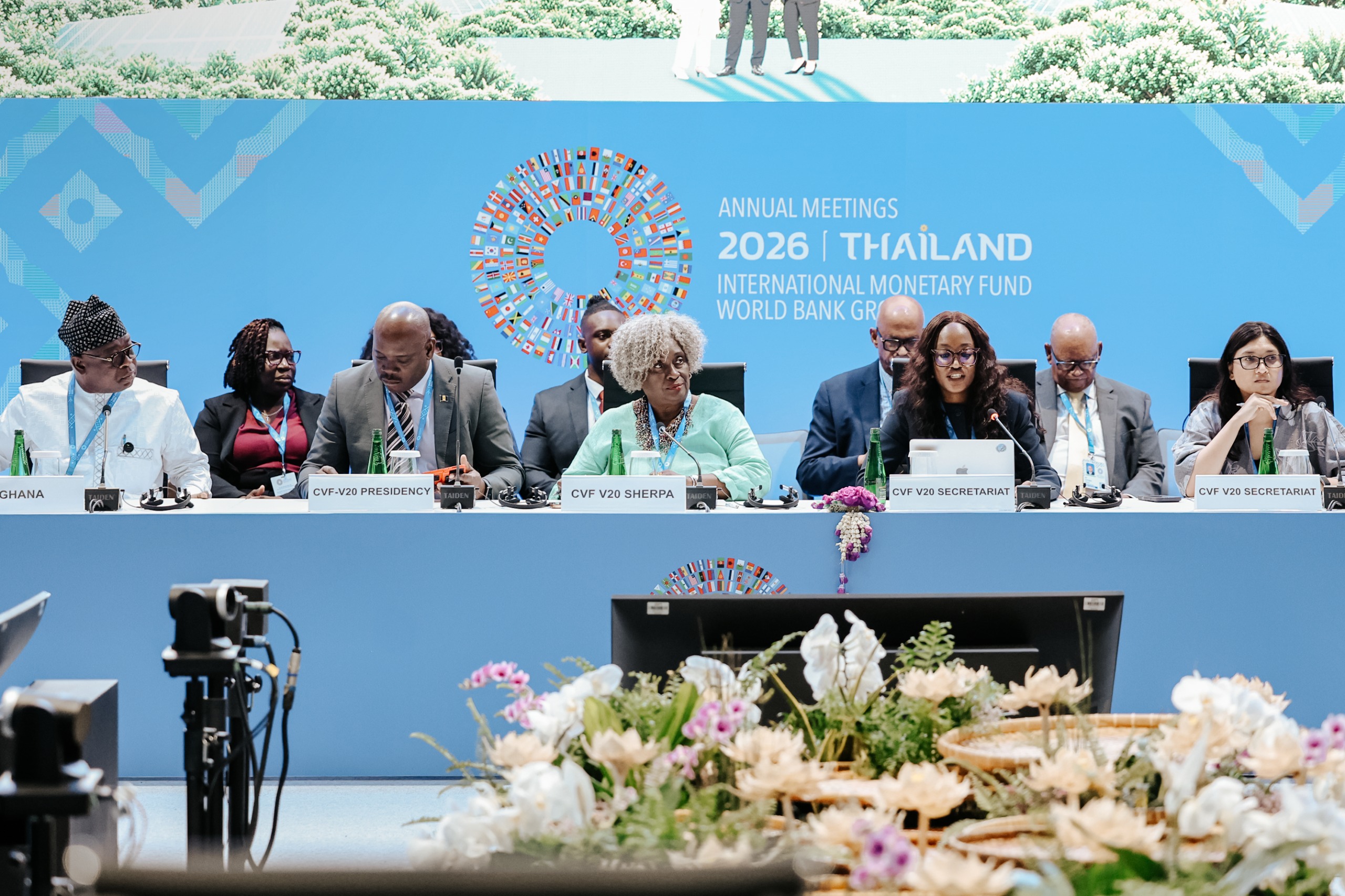
But none of it takes effect without parliaments. Legislatures approve the loans, pass the budgets, and ratify the treaties. On October 15, the CVF-V20 Global Parliamentary Group met on the margins of the International Monetary Fund (IMF) and World Bank Annual Meetings to work out what parliaments would need to deliver on the CVF-V20’s priorities. “The task now is for you to take that agenda back home,” Ambassador Elizabeth Thompson, Sherpa to CVF-V20 Chair Prime Minister Mia Amor Mottley of Barbados, told them, “back to your communities, back to your parliaments, and through your budgets, your laws, your oversight.”
Ambassador Thompson pointed to Jamaica to show how little protection even well-prepared countries have when disaster strikes. Hurricane Melissa caused damage now estimated at close to US$12 billion. Jamaica had a catastrophe bond, regional insurance and contingent credit, and they paid out “less than three cents for every dollar of damage the country suffered.” IMF support could not be disbursed sooner than 11 weeks after the storm.
The Lifeline is being designed to close that gap. It will be a reserve pool built from members’ own central bank reserves. It would lend within weeks when a climate shock hits a country’s balance of payments. The aim is to have it running by April 2027.
Getting there runs through national legislatures. Dr. Rishikesh Ram Bhandary of the Task Force on Climate, Development and the International Financial Architecture said that “the value of the Lifeline Fund will really hinge on its legal design.” It will need domestic approvals, which he called “an opportunity for parliaments also to play a very leadership role.”
Rapid finance raises a hard question for parliaments: how do you move money quickly without giving up oversight?
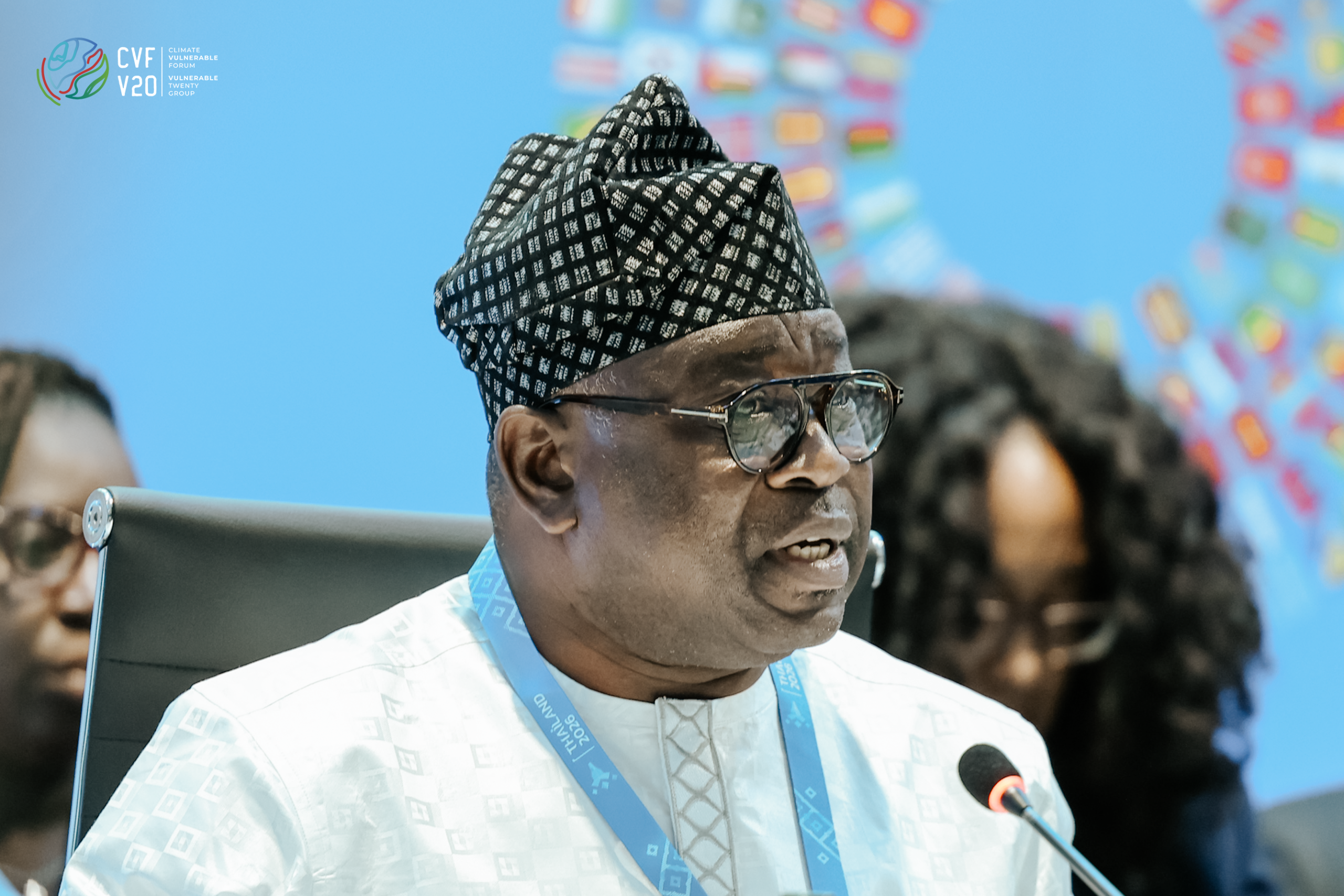
Hon. Jolobala’s answer was to agree the terms in advance. Parliament, she said, should approve beforehand the conditions that trigger emergency financing, what the money may be used for, the accounts it flows through, and when the executive must report back. “The real question is whether the rules are established before disaster strikes or improvised in the middle of a crisis,” she said.
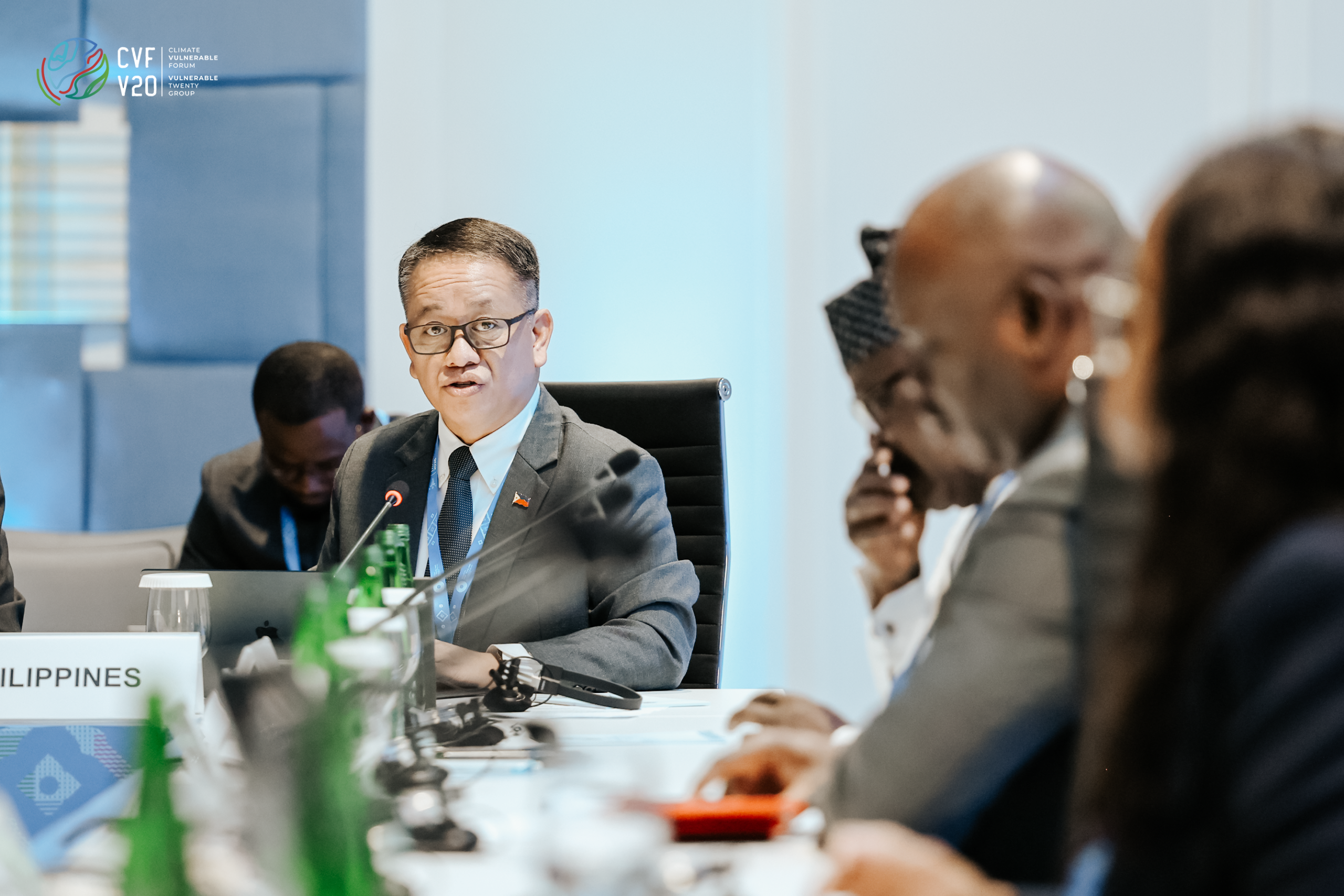
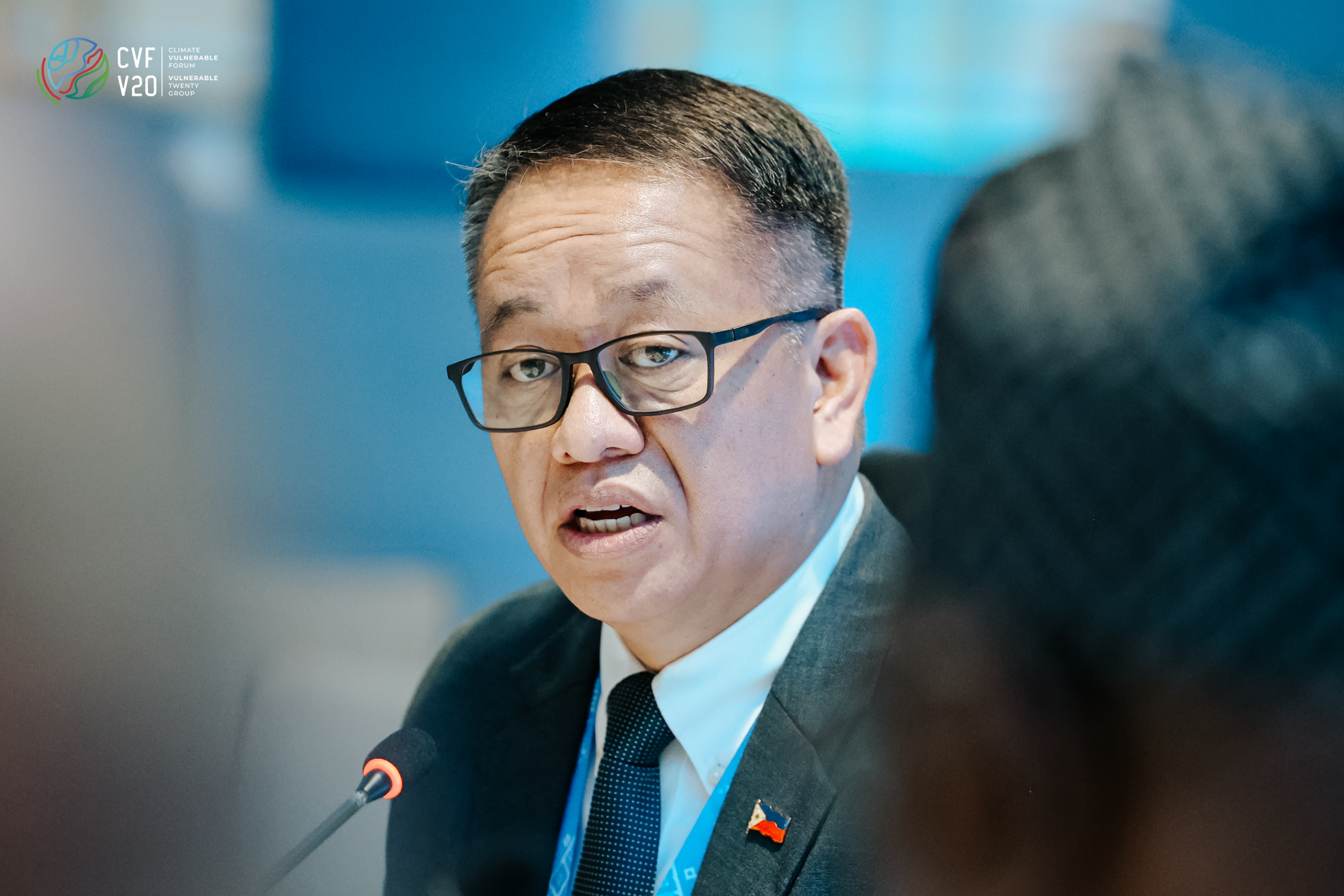
The Philippines has begun to do this. Rep. Jose Manuel Alba, Vice-Chairperson of the Committees on Climate Change of the Philippine House of Representatives, pointed to a new law, Republic Act No. 12287 or the Declaration of State of Imminent Disaster Act, which authorizes the release of calamity funds as soon as pre-identified triggers are met, shifting the country toward anticipatory action.
The Philippines’ experience also shows what post-disaster scrutiny requires. The country was among the global pioneers of climate budget tagging, which labels spending that addresses climate change. But public scrutiny of the government’s flood-management program over the past year showed that labeling spending as climate-resilient is not the same as verifying what was built on the ground. Rep. Alba summed up the approach: “Clear rules before a crisis, speed when it strikes, and a full account afterwards.”
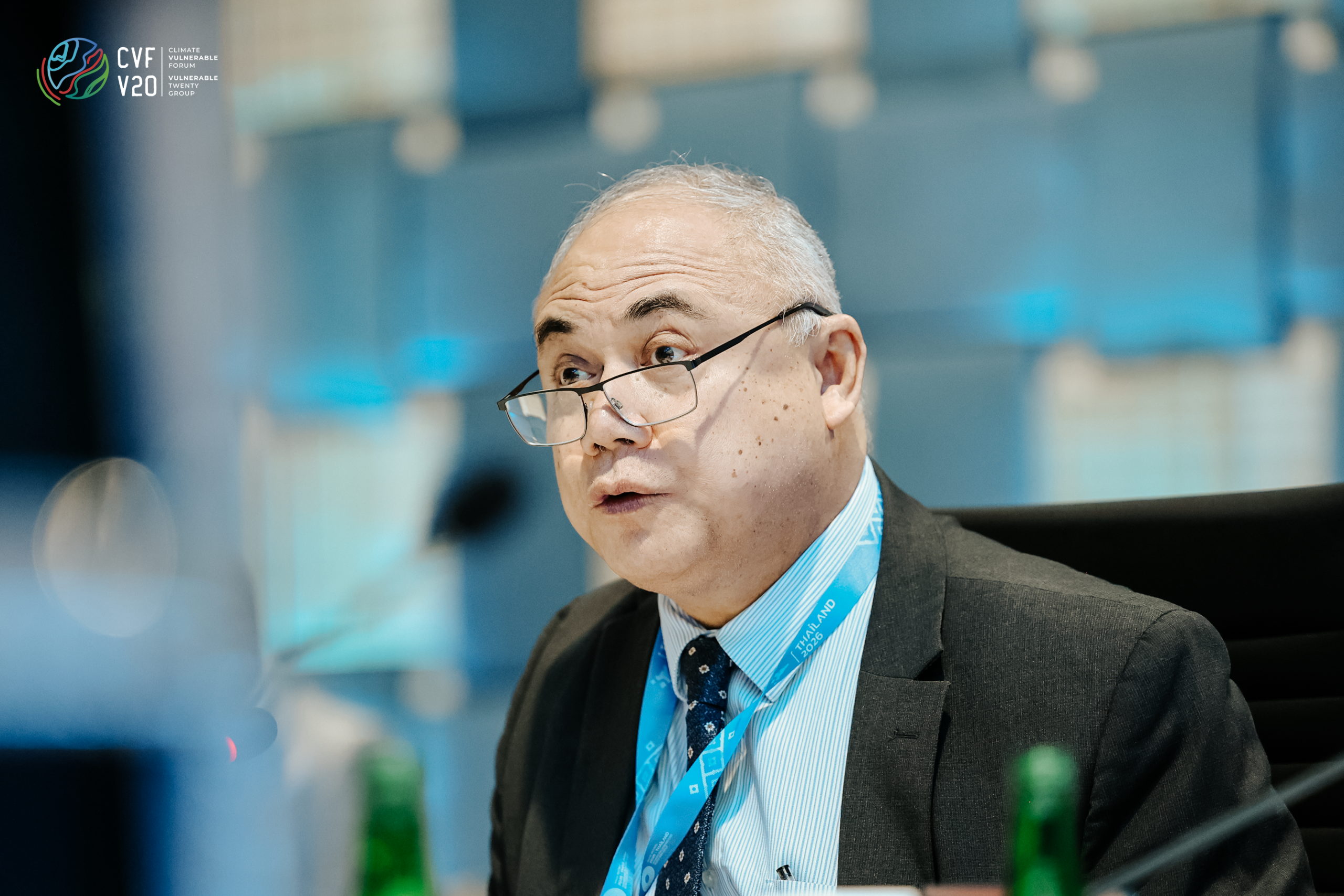
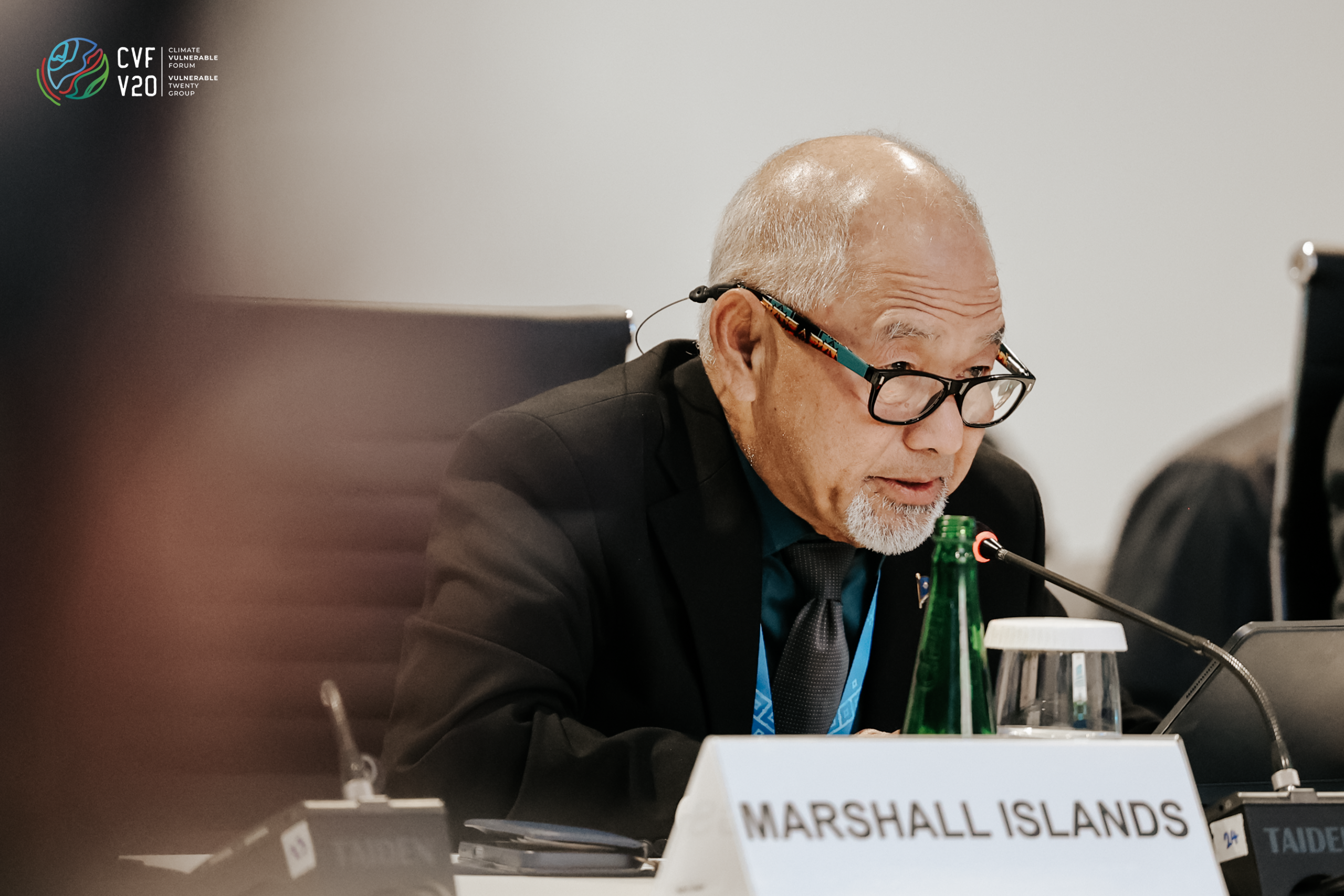
Smaller states stressed that scrutiny takes capacity. Former Tonga Prime Minister Hon. Dr. Aisake Eke welcomed the CVF-V20’s technical support to strengthen parliaments’ scrutiny and oversight, while Senator Jack Ading of the Marshall Islands said parliaments “need timely access to financial and climate risk information, technical expertise, and stronger engagement with finance ministries, international financial institutions, and development partners.”
Emergency finance is only part of the picture. The bigger burden is the debt countries carry in ordinary years, and the V2V Compact aims to improve the terms of that finance, not just increase the amount. Ambassador Thompson said the world still finances “essential human security needs with debt too short for the assets being built and too costly for the communities that depend on them.”
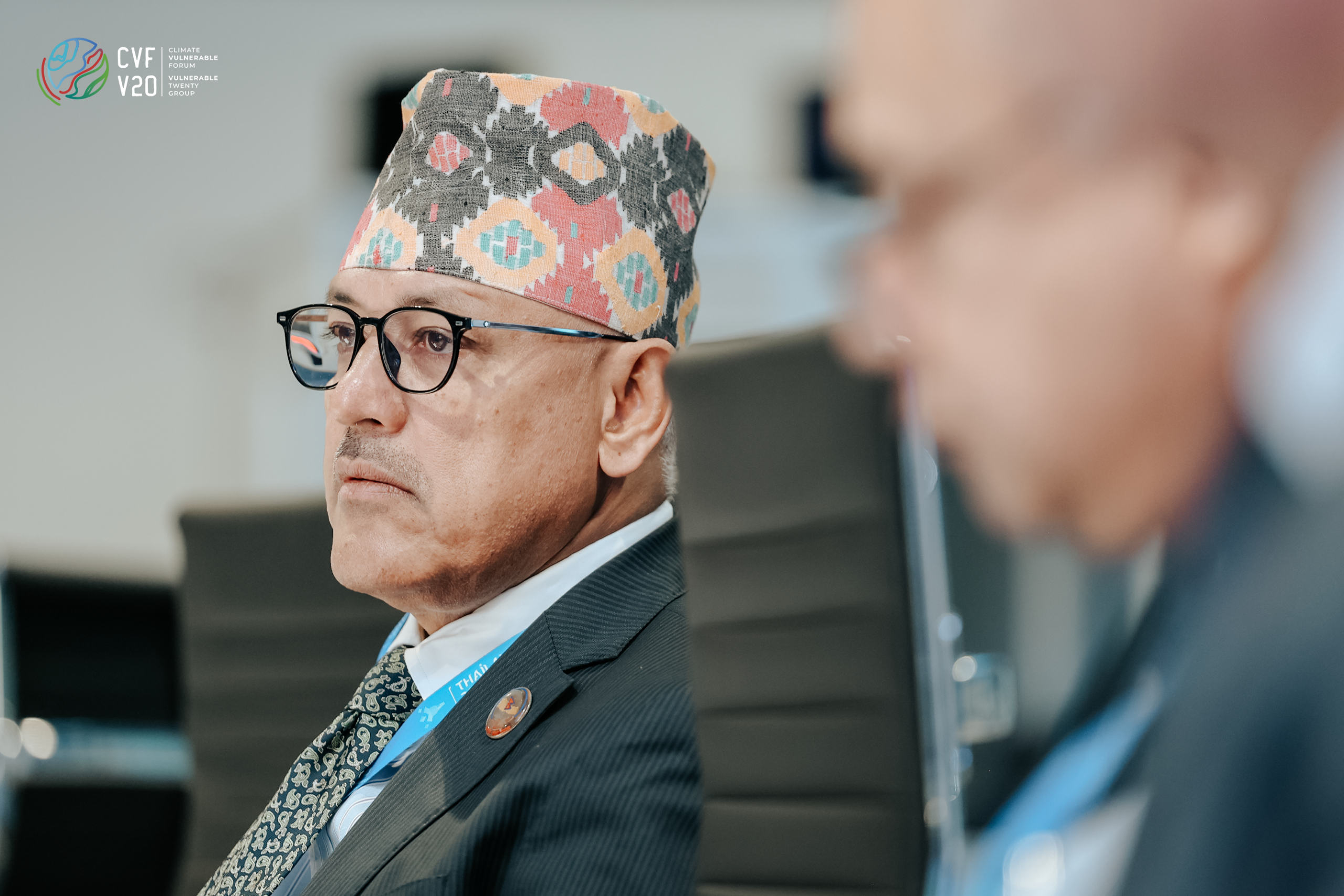
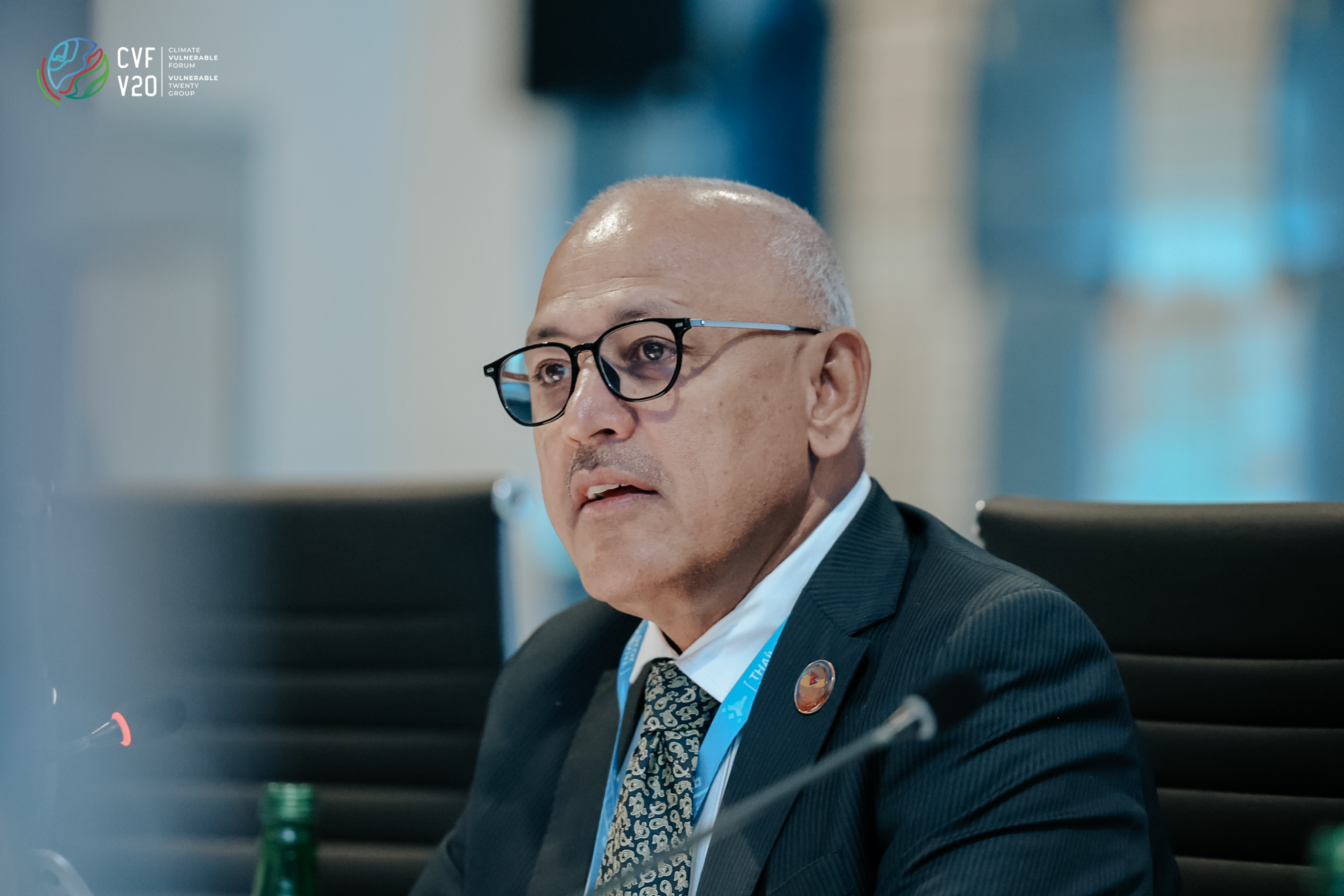
Hon. Dr. Arjun Kumar Karki of Nepal made the same point from his country’s experience. Speaking weeks after the Bhote Koshi–Trishuli flood claimed more than 1,400 lives, he said a hospital, water system or climate-resilient road built to serve generations should not be financed on terms that put immediate and unsustainable pressure on the national budget.
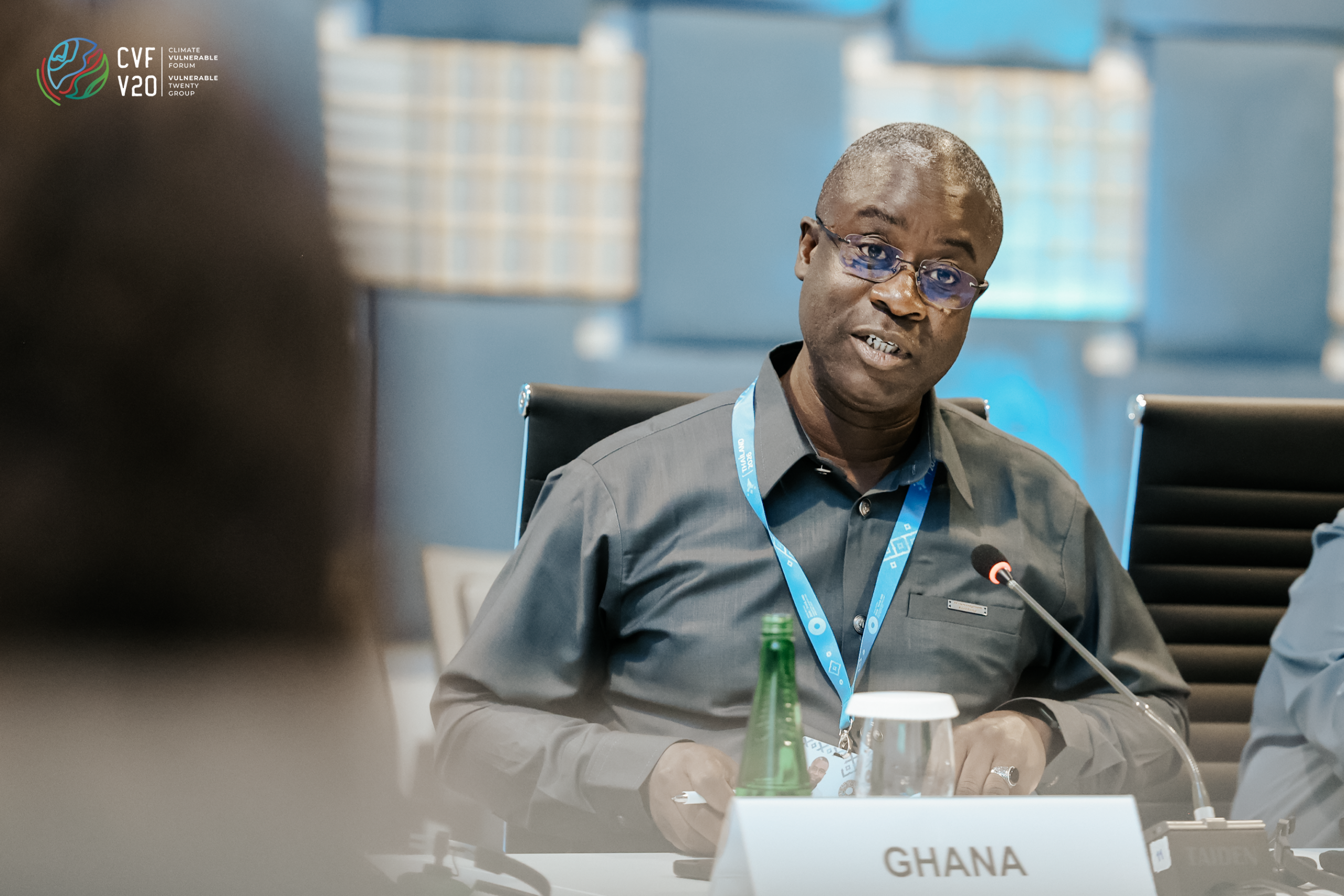
Parliaments, as discussed during the dialogue, are well placed to insist on better terms, because they approve the budgets and, in some countries, the loan agreements themselves. Ghana’s Hon. Dr. Godfred Seidu Jasaw said the Compact should become a benchmark for lawmakers. “Does the financing match the life of the investment? Is it affordable? Is it maintainable across budget cycles?”
Hon. Moussa Mahamat Haggar of Chad spoke from his country’s experience as the first to reach a debt-restructuring agreement under the G20 Common Framework. He backed climate-resilient debt clauses as the norm for new lending and said finance committees need comparable data on other V20 countries’ loan terms before they ratify their own.
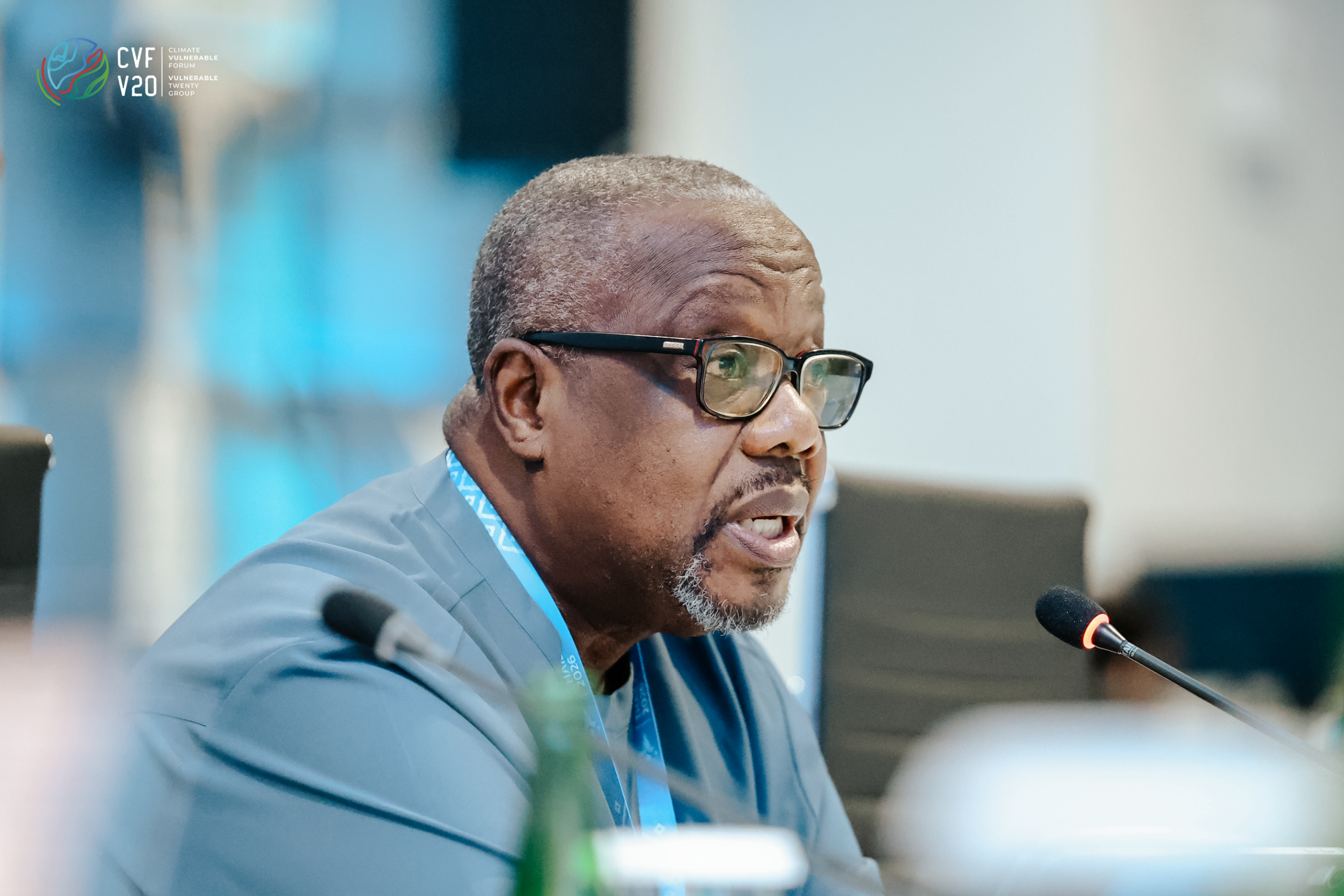
Securing better finance is only the first step. Parliaments must also make sure it delivers. Ghana’s Hon. Samuel Atta Mills, Ranking Member of the Public Accounts Committee, said parliaments’ work does not stop when a loan or budget is approved, and that they must check whether the money produced the results it promised. “Moving from vulnerability to viability is not a slogan,” he said. “It is a ledger, and we should make sure that it balances.”
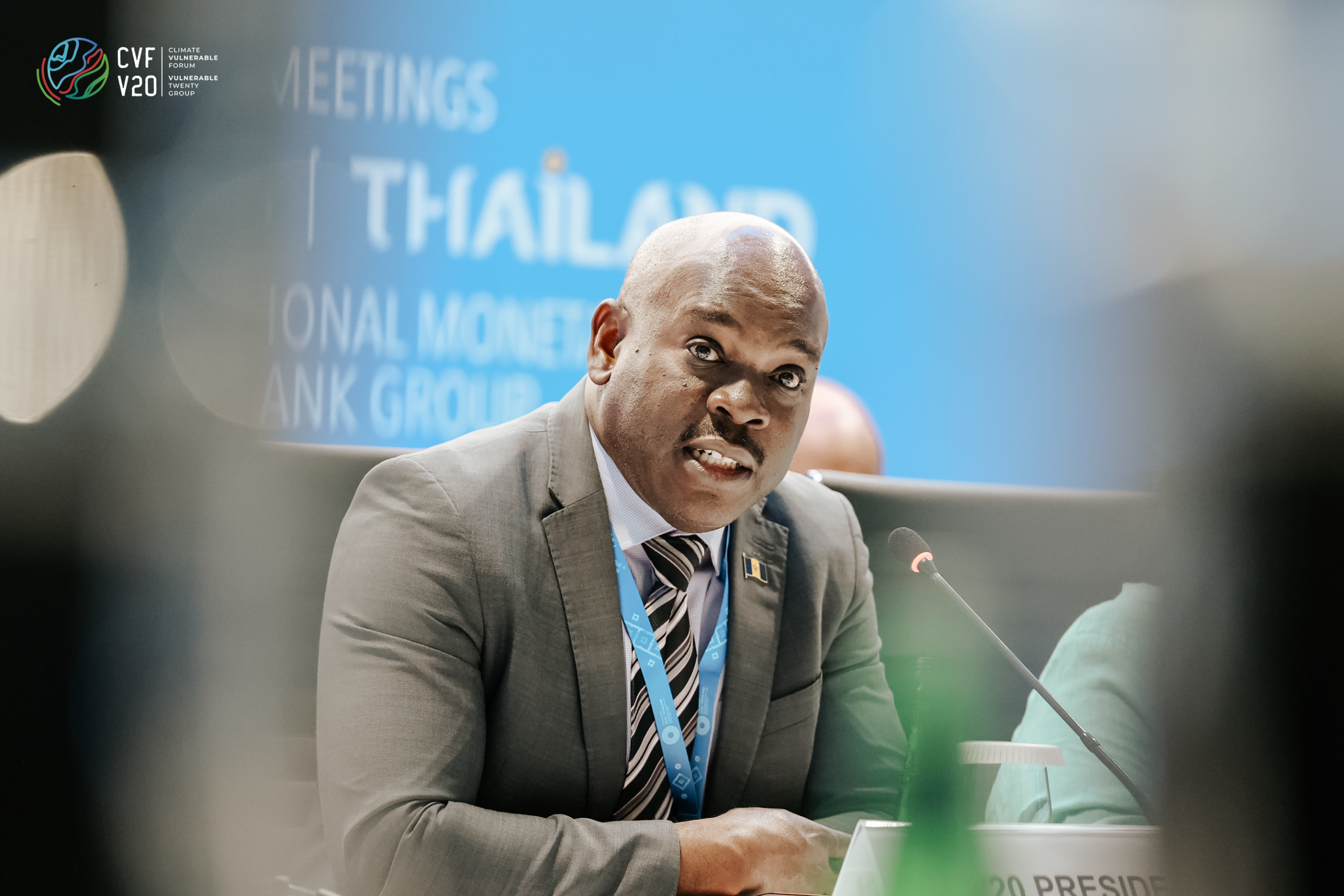
Barbados’ Minister of Finance Ryan Straughn, himself an elected MP, said the work now moves to national chambers: “The time now, as we leave Bangkok, is to go back home and to do the actual work.” Ghana’s Minister of State for Climate Change and Sustainability, Hon. Seidu Issifu, added that governments must also be partners in that work. “We must move from plans to bankable projects,” he said.
Rep. Alba closed the dialogue with a reminder: “Our success will not be measured by the commitments we make, but by the lives we improve.”
***
The CVF-V20 now represents 77 member countries from small island developing states (SIDS), least developed countries (LDCs), low to middle-income countries (LMICs), landlocked developing countries (LLDCs), and fragile and conflict-affected states (FCS). Working together, the CVF-V20 aims to achieve climate justice through the realization of Climate Prosperity Plans, which contain ambitious economic and financial resilience strategies designed to attract investment and resources that advance the attainment of the Sustainable Development Goals (SDGs), 30×30 Global Biodiversity, and help keep the average global temperature within the Paris Agreement’s 1.5°C safety threshold.
Africa: Benin, Burkina Faso, Cabo Verde, Central African Republic, Chad, Comoros, Côte d’Ivoire, Democratic Republic of the Congo, Eswatini, Ethiopia, Gabon, The Gambia, Ghana (Troika), Guinea, Kenya, Liberia, Madagascar, Malawi, Morocco, Mozambique, Namibia, Niger, Rwanda, Senegal, Sierra Leone, Somalia, South Sudan, Sudan, Tanzania, Togo, Tunisia, Uganda, Zambia
Asia: Afghanistan, Bangladesh (Troika), Bhutan, Cambodia, Jordan, Kyrgyzstan, Lebanon, Maldives, Mongolia, Nepal, Pakistan, Palestine, Philippines, Sri Lanka, Timor-Leste, Vietnam, Yemen
Caribbean: Barbados (Chair/Troika), Dominica, Dominican Republic, Grenada, Guyana, Haiti, Saint Lucia, Saint Vincent and the Grenadines, Suriname, Trinidad and Tobago
Latin America: Colombia, Costa Rica, Guatemala, Honduras, Nicaragua, Paraguay
Pacific: Fiji, Kiribati, Marshall Islands, Nauru, Palau, Papua New Guinea, Samoa, Solomon Islands, Tonga, Tuvalu, Vanuatu
For media enquiries, please contact [email protected].
For the latest updates, please follow us on: