Building Effective Support for Country-Led Approaches
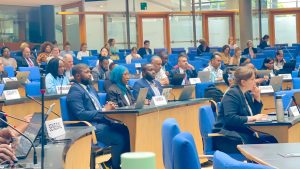
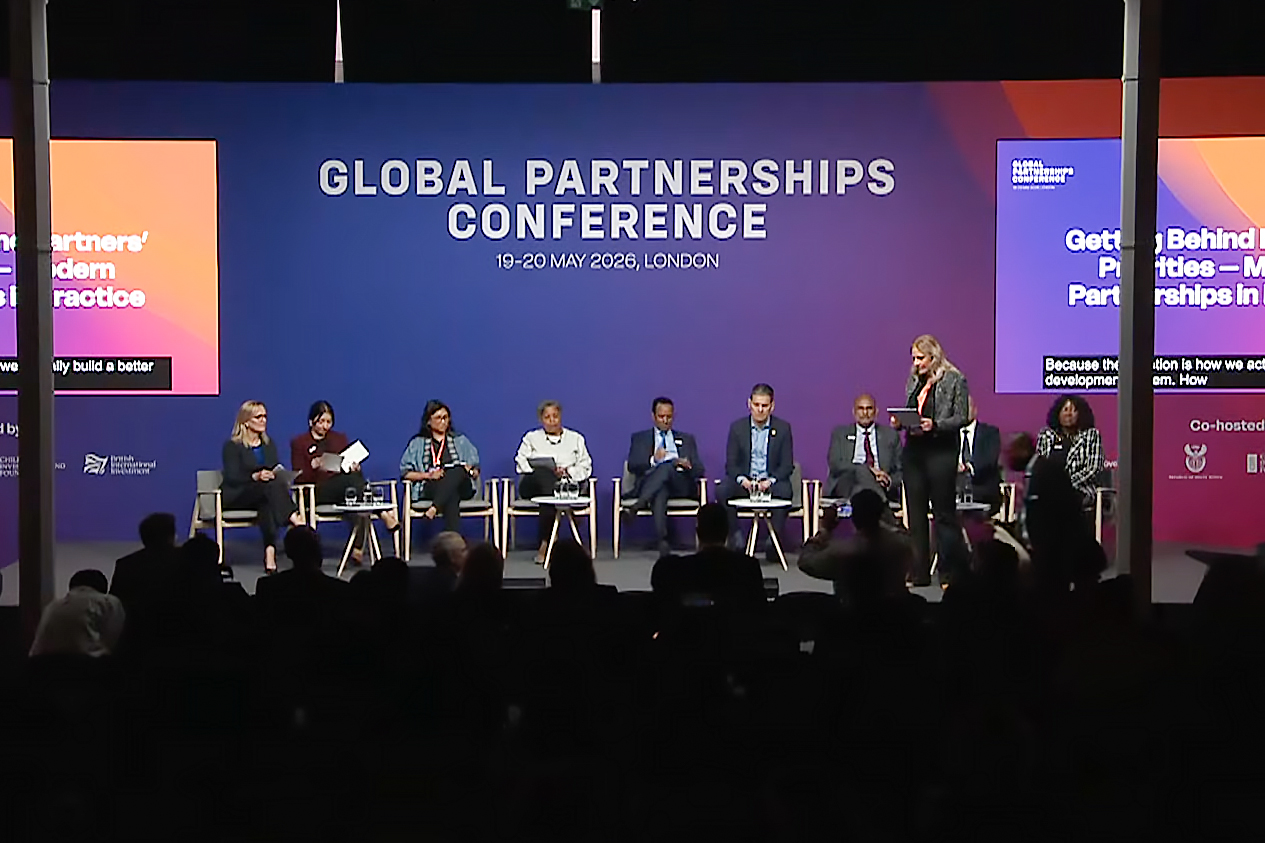
In the margins of the Global Partnership Conference, the Climate Vulnerable Forum-V20 Finance Ministers (CVF-V20) Secretariat, Global Capacity Building Coalition (GCBC), and the Foreign, Commonwealth, and Development Office co-hosted a roundtable to discuss implementable reforms to support country platforms and other country-led approaches.
Gambia Looks to Kenya’s Climate Playbook as Landmark Climate Bill Nears Passage
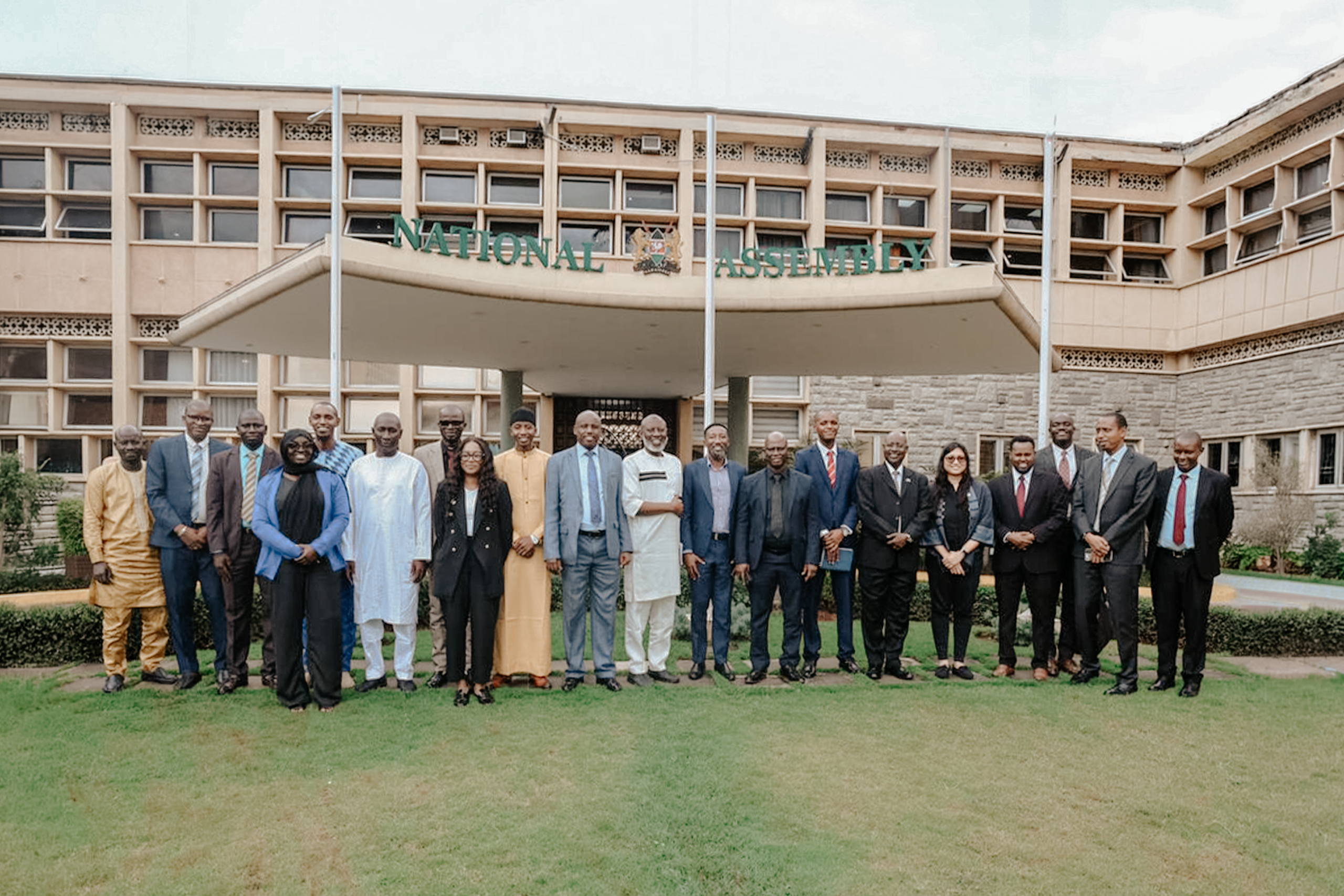
A delegation of Gambian lawmakers traveled to Nairobi this week to study how Kenya built one of Africa’s most advanced climate governance systems, as The Gambia moves closer to passing its own climate change law. Led by Hon. Yaya Gassama, Chairperson of The Gambia’s National Assembly Select Committee on Environment, Sustainable Development, and NGO Affairs, the delegation held two days of meetings with Kenyan parliamentary committees, the Ministry of Environment, the National Treasury, and Kenya’s Special Envoy for Climate Change, Ambassador Ali Mohamed.

Experts Urge Swift Delivery of Pakistan’s Climate Prosperity Plan
Senior government officials, multilateral development banks and finance institutions, and climate finance experts, convened at the Breathe Pakistan International Climate Change Conference 2026, issuing a call to urgently accelerate the delivery of Pakistan’s Climate Prosperity Plan and warning that financing gaps and implementation delays risk undermining the country’s climate resilience goals. The high-level session titled “Mobilising Climate Finance for Pakistan,” was held on May 6 and organized by Dawn Media in partnership with the Climate Vulnerable Forum and V20 Finance Ministers (CVF-V20) Secretariat and forms part of a broader national effort to translate climate ambition into concrete investment at scale.
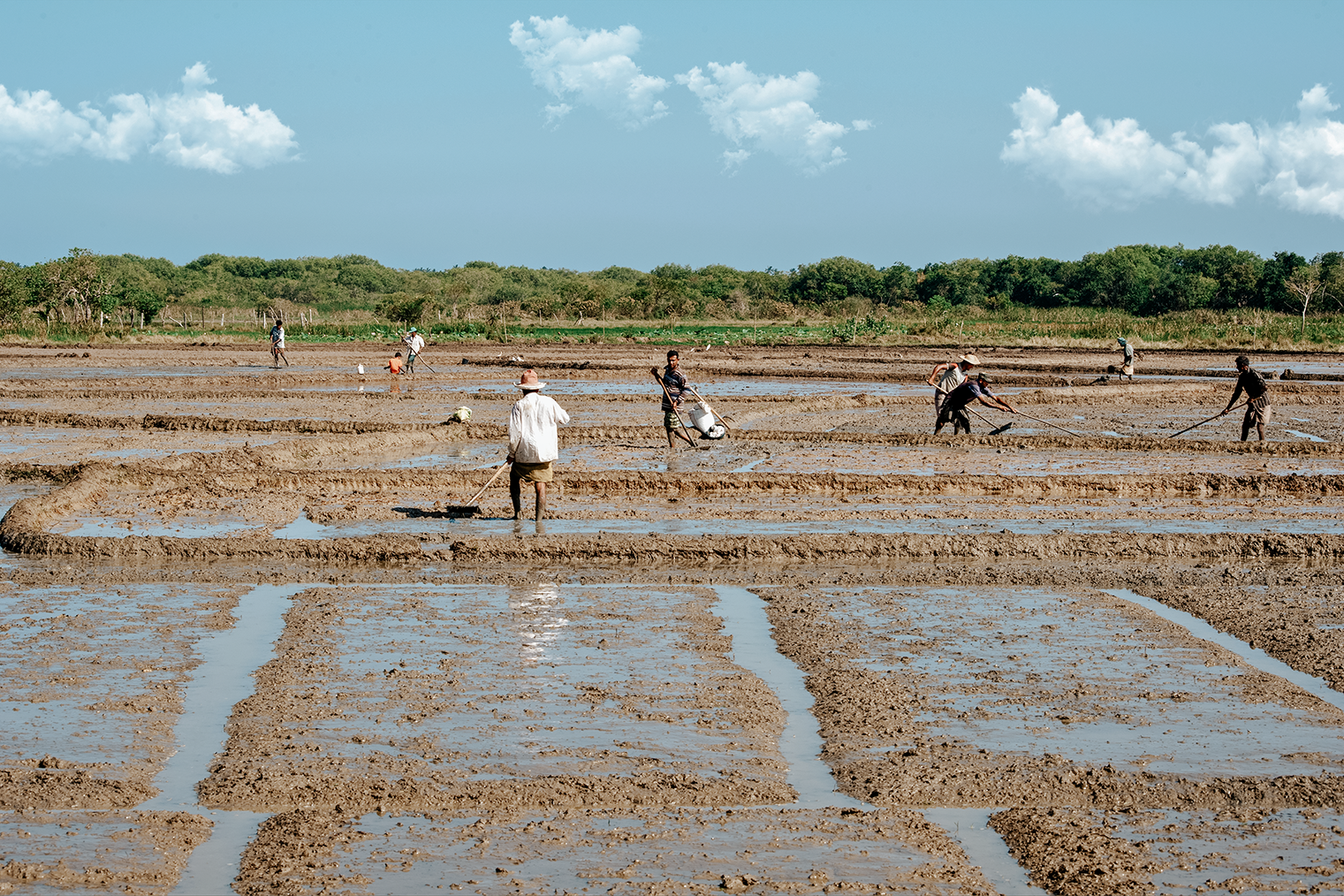
100 Farmers in Sri Lanka to Receive Solar Irrigation Systems
Farmers in Sri Lanka’s North Central Province will soon gain access to affordable solar-powered irrigation systems through a new initiative launched by the Our Movement of Lanka (OML) and Pan Asia Bank, with support from the CVF-V20 Secretariat.

Climate-Vulnerable Countries Assert Carbon Market Leadership
Climate-vulnerable nations from across Africa, Asia, the Caribbean, Latin America, and the Pacific convened today to spotlight concrete steps they are taking to harness high-integrity carbon markets as a driver of economic resilience and climate prosperity, demonstrating that they are not waiting for climate finance to arrive, but actively building the architecture to attract it.
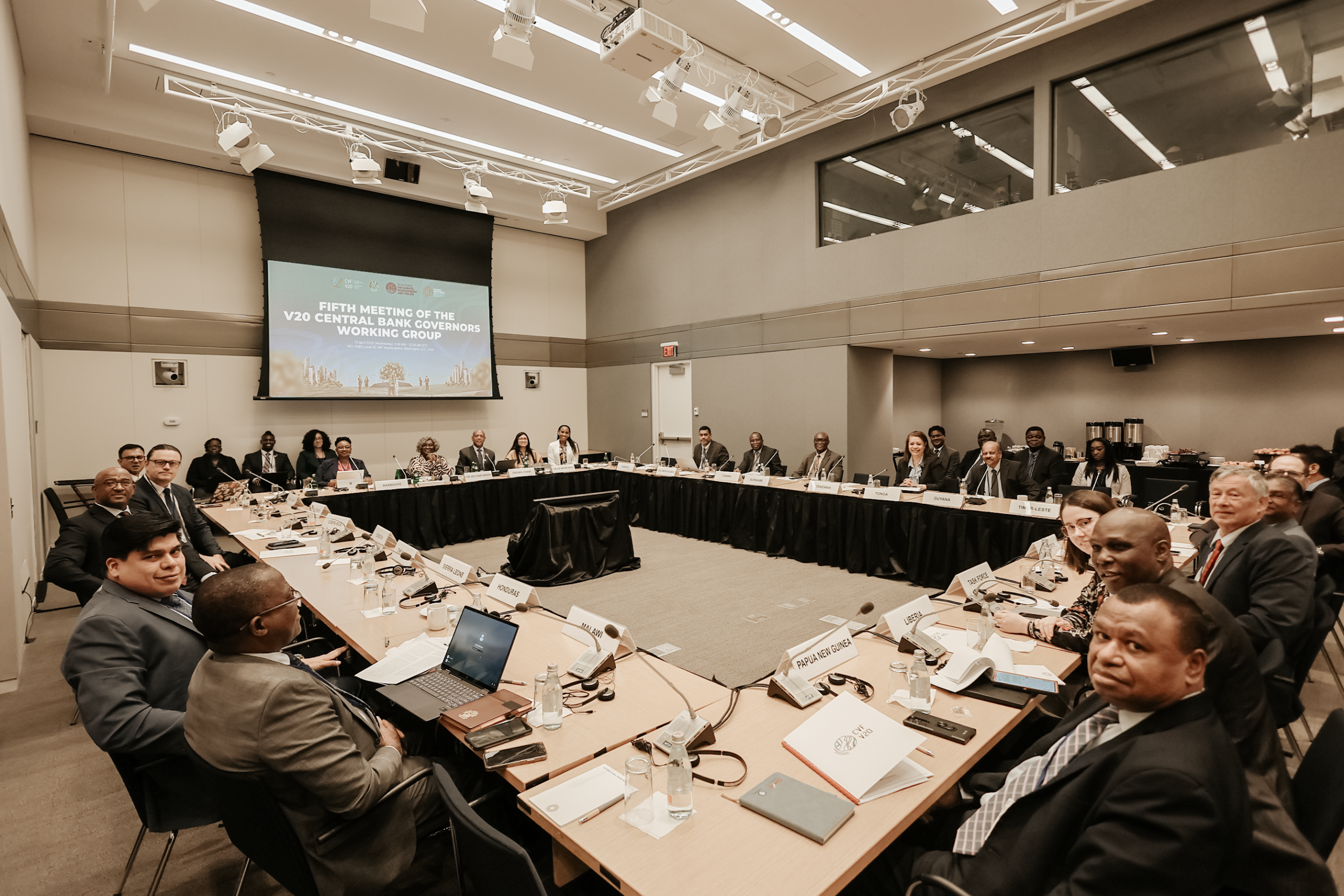
V20 Central Bank Governors Advance the Lifeline Fund Following Political Launch at Spring Meetings
Central bank governors from climate-vulnerable countries today advanced the operational pathway for the Lifeline Fund, following its political launch at the 16th V20 Ministerial Dialogue on 14 April. The Lifeline Fund is a new multi-regional financial arrangement designed to provide rapid, targeted liquidity support to countries facing balance-of-payments pressures after climate shocks.
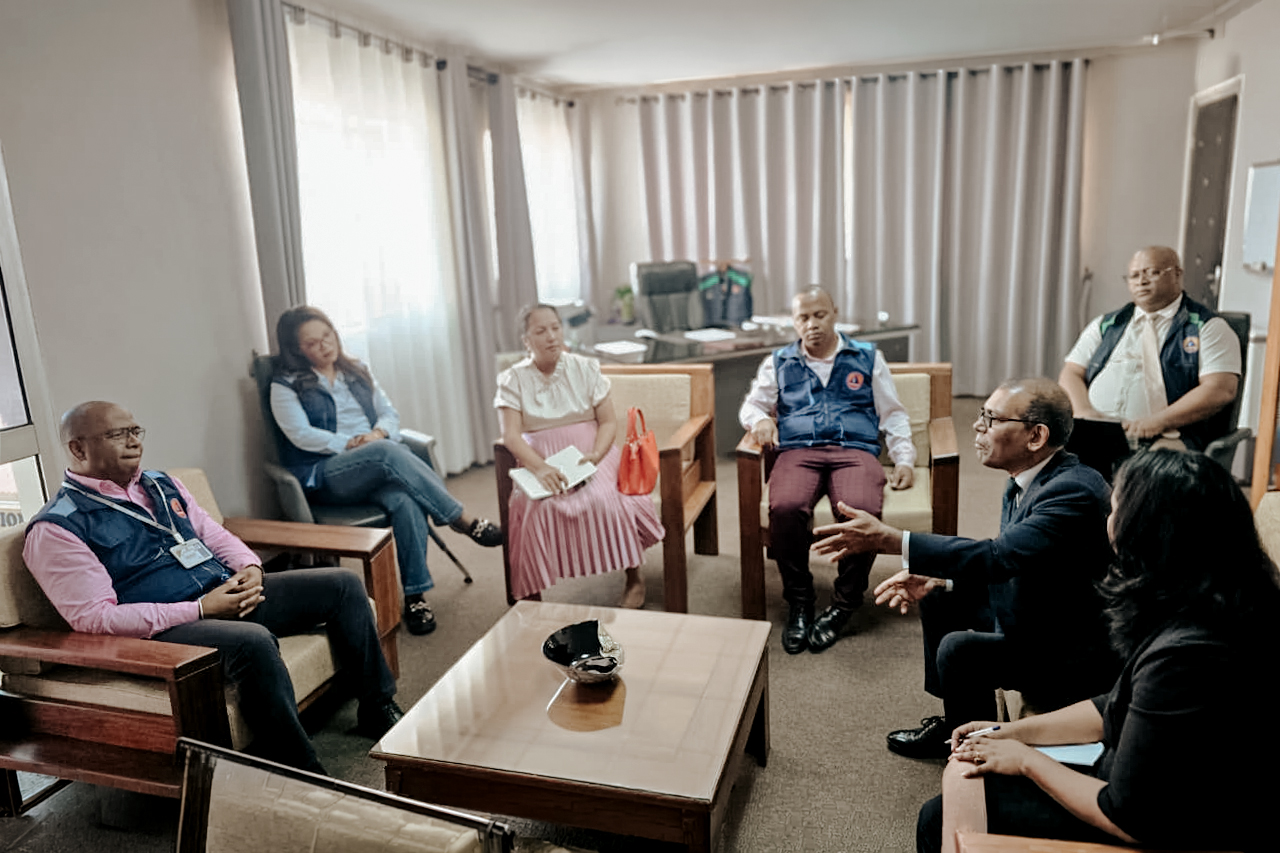
When Climate Reality Hits Home: CVF-V20 Secretariat in Madagascar as a Category 4 Cyclone Makes Landfall
As a Category 4 cyclone slams into Madagascar’s coastline, the force of climate change is no longer abstract, it is immediate, physical, and deeply human. The CVF Secretariat team on the ground is witnessing firsthand how climate vulnerability translates into real-time emergency response, institutional coordination, and community resilience under pressure.
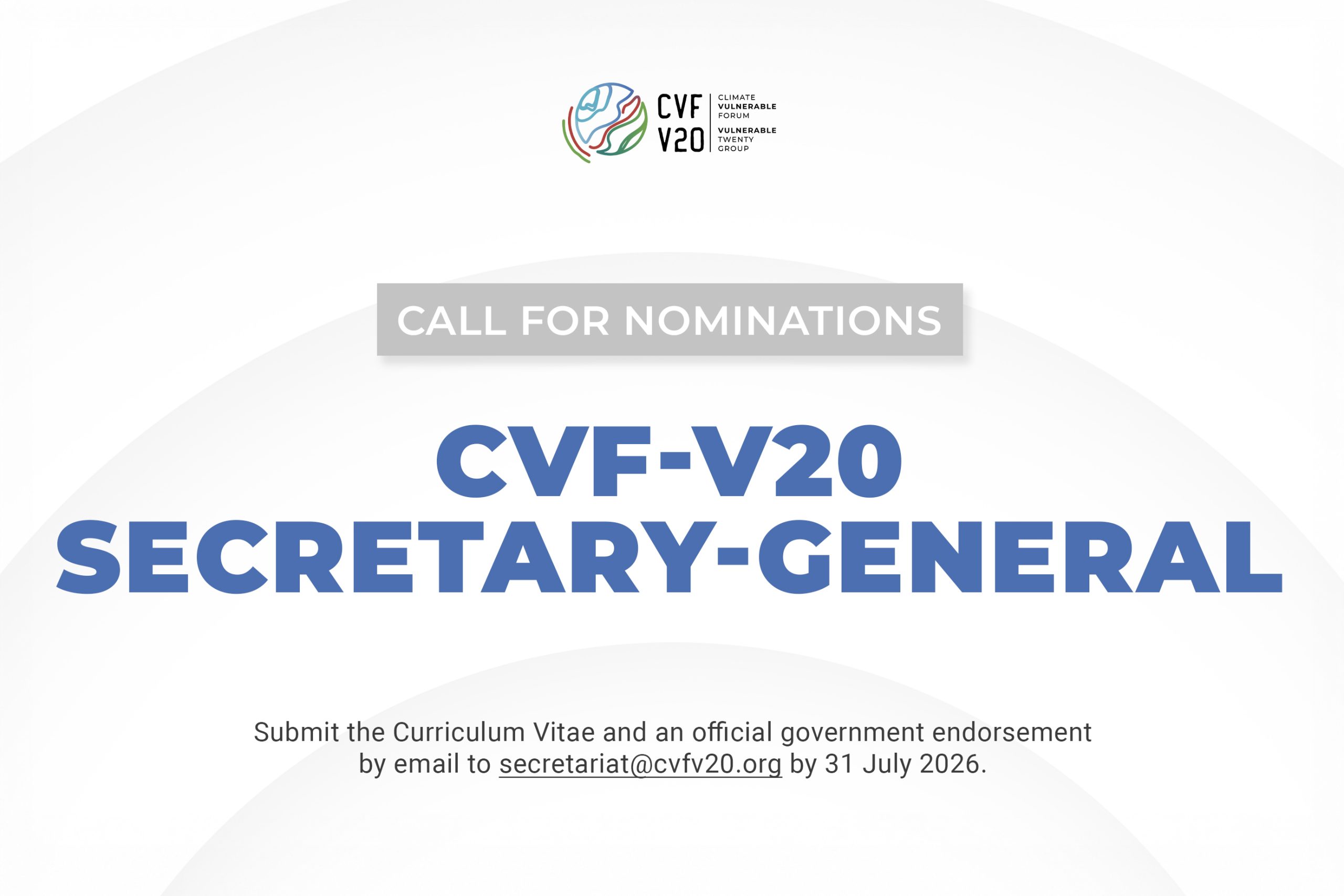
Call for Nominations: Secretary-General of the CVF-V20
The Secretary-General is the head of the Secretariat, responsible for overall leadership and cooperation, with a primary focus on coordination and engagement with CVF-V20 Heads of State, Heads of Government, Parliamentarians, and Ministers.
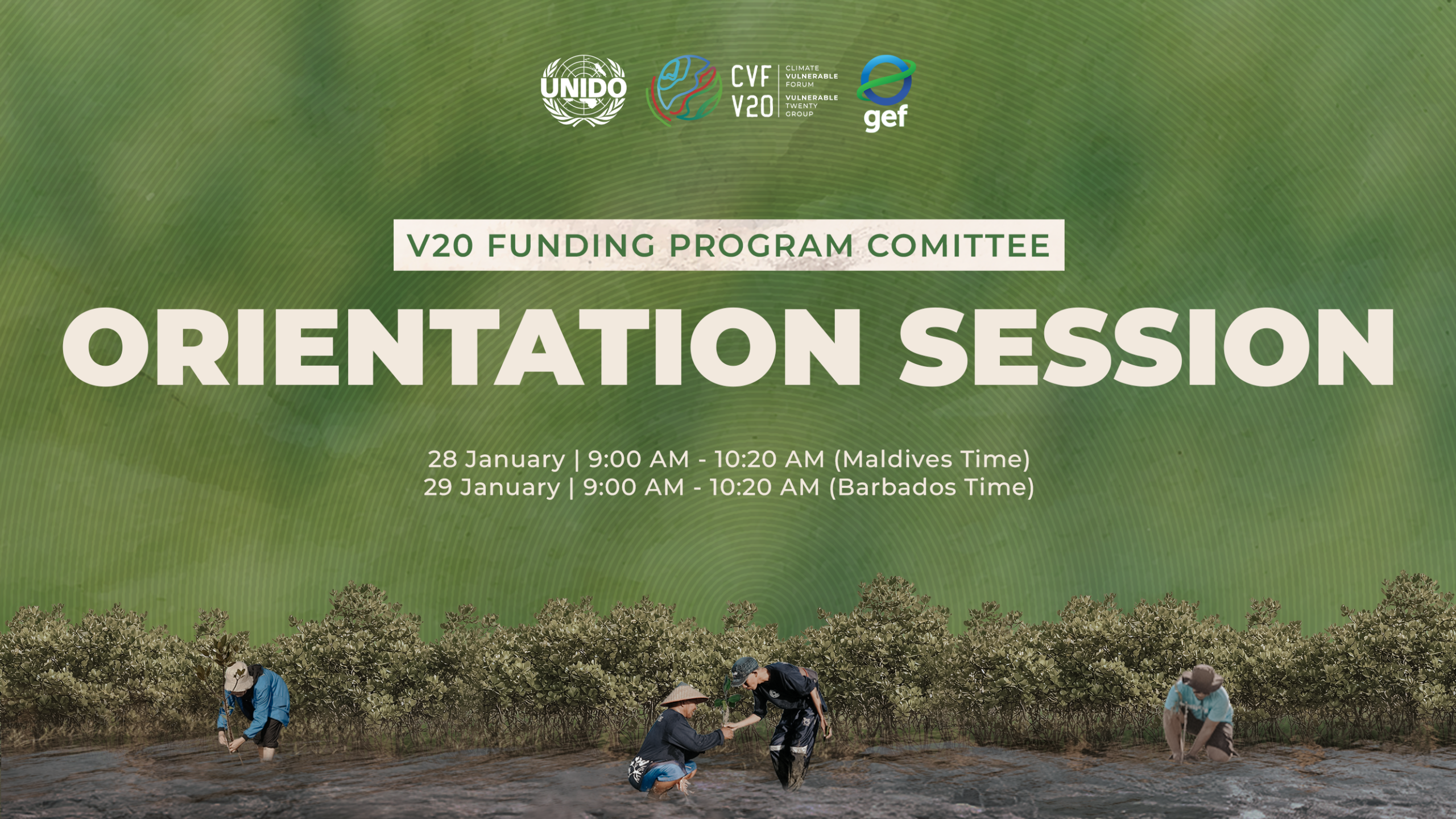
VFP Committee Begins Oversight of Five-Year Climate Adaptation Initiative
The CVF-V20 Secretariat recently welcomed the newly appointed members of the V20 Funding Program (VFP) Committee during a two-day orientation session, officially launching their work to oversee a five-year initiative supporting innovative climate change adaptation across CVF-V20 member countries.
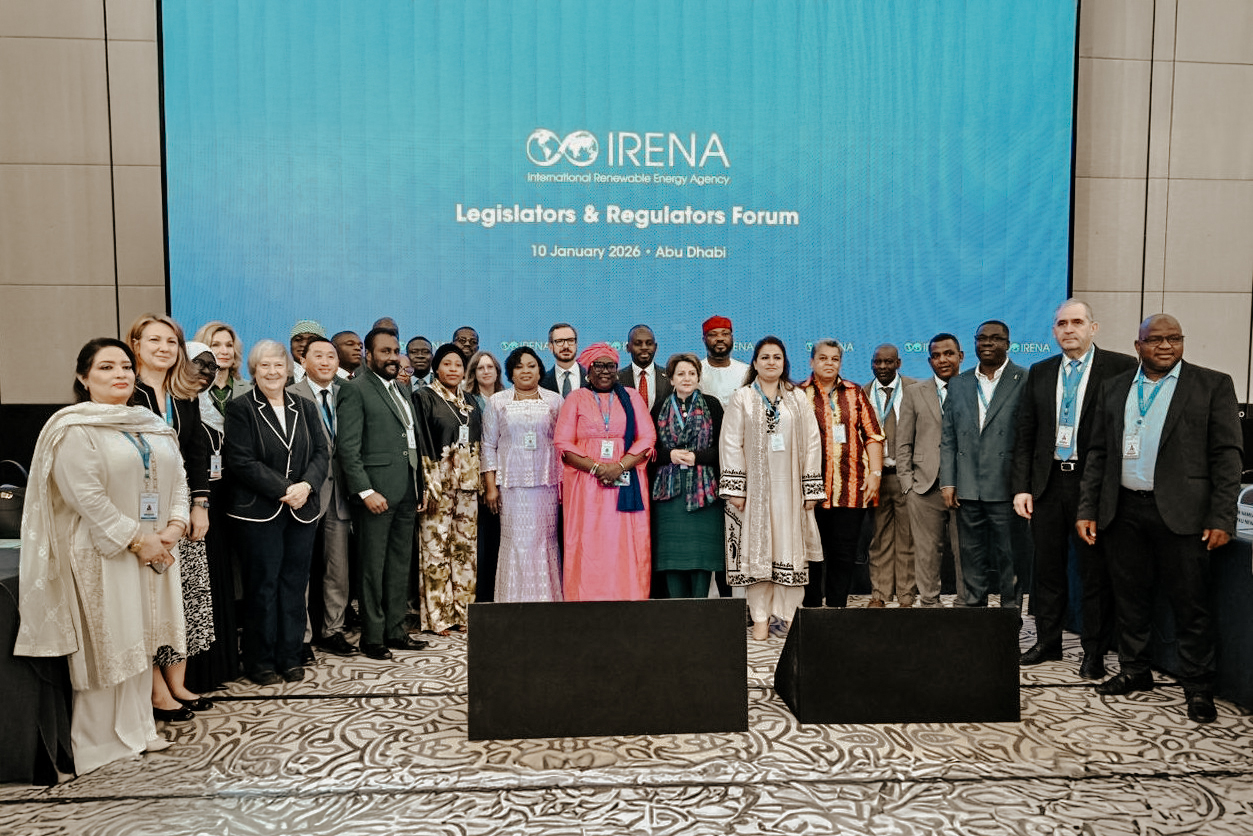
CVF-V20 Parliamentarians Urge Enabling Frameworks to Turn Climate Ambition Into Renewable Energy Investments
Legislators and energy regulators from CVF-V20 countries joined global counterparts at the IRENA Legislators and Regulators Forum, held during the 16th IRENA Assembly on January 10, to advance legislative and regulatory solutions designed to accelerate renewable energy deployment while delivering inclusive, resilient development.
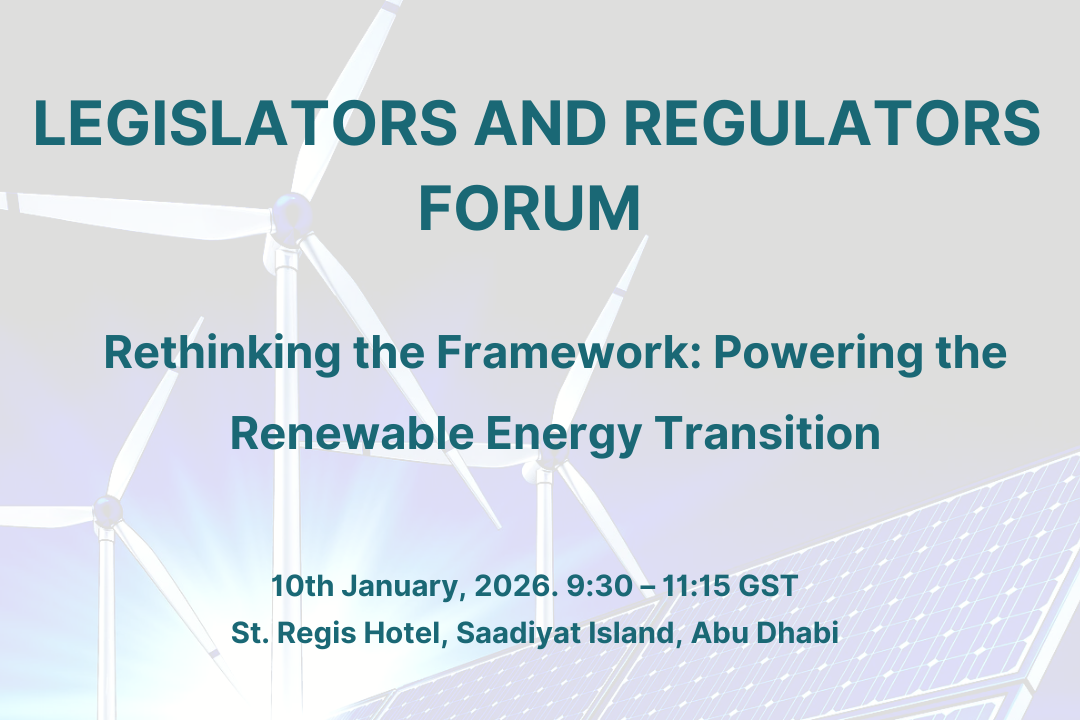
Advancing Renewable Energy Leadership at the 16th IRENA Assembly
The Climate Vulnerable Forum (CVF), the World Future
Council (WFC), and the Global Renewables Congress (GRC) are proud to participate in and
support the International Renewable Energy Agency (IRENA) at the 16th IRENA Assembly in Abu Dhabi, taking place from 10 to 12 January 2026.
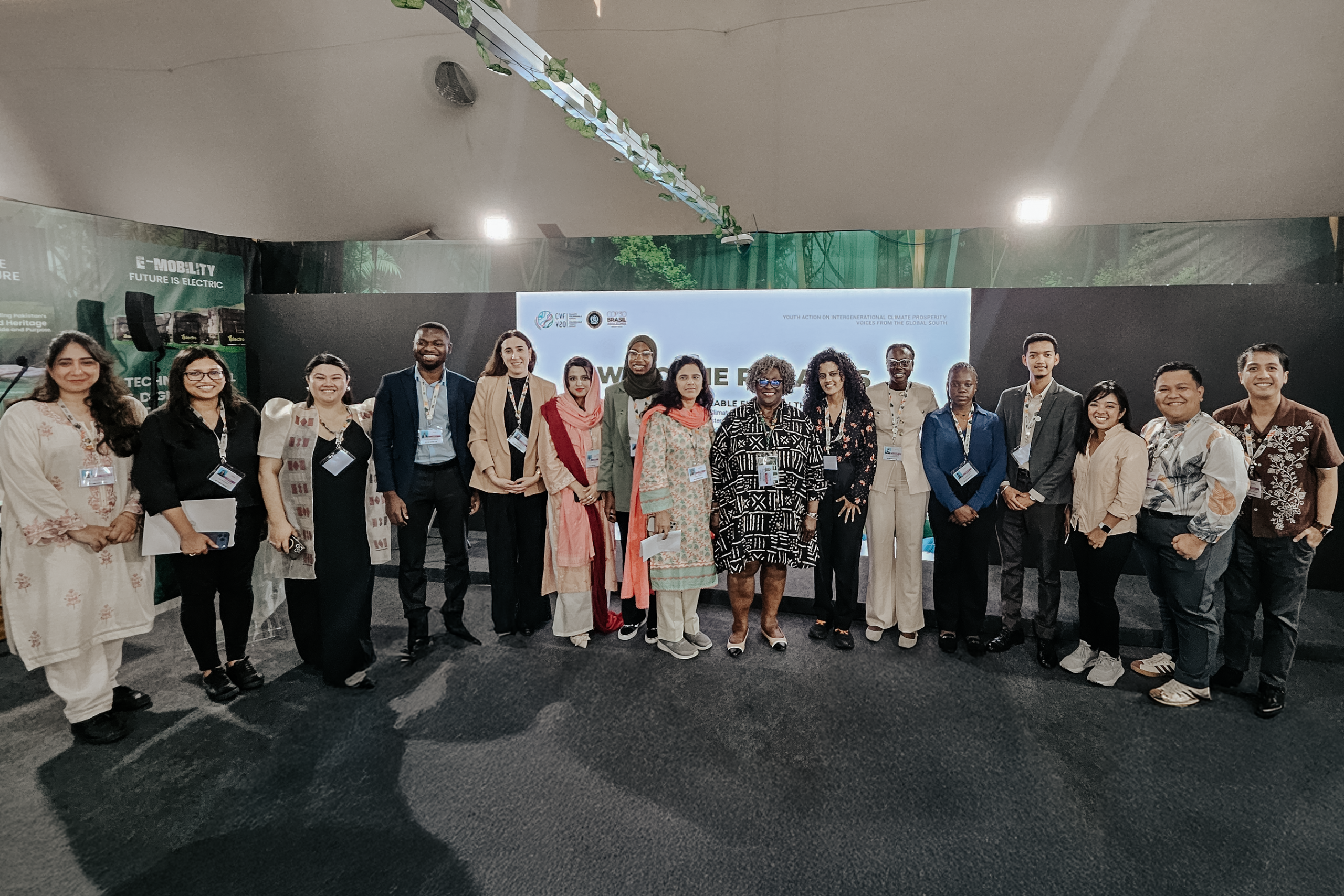
CVF Youth Fellows Call for Urgency, Ambition, and Accountability at COP30
Youth and climate justice advocates from the Global South demanded greater ambition, faster timelines, and stronger accountability on the sidelines of COP30 in Belem.