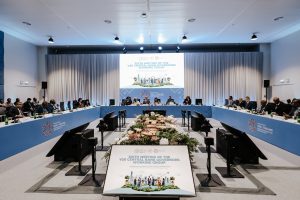
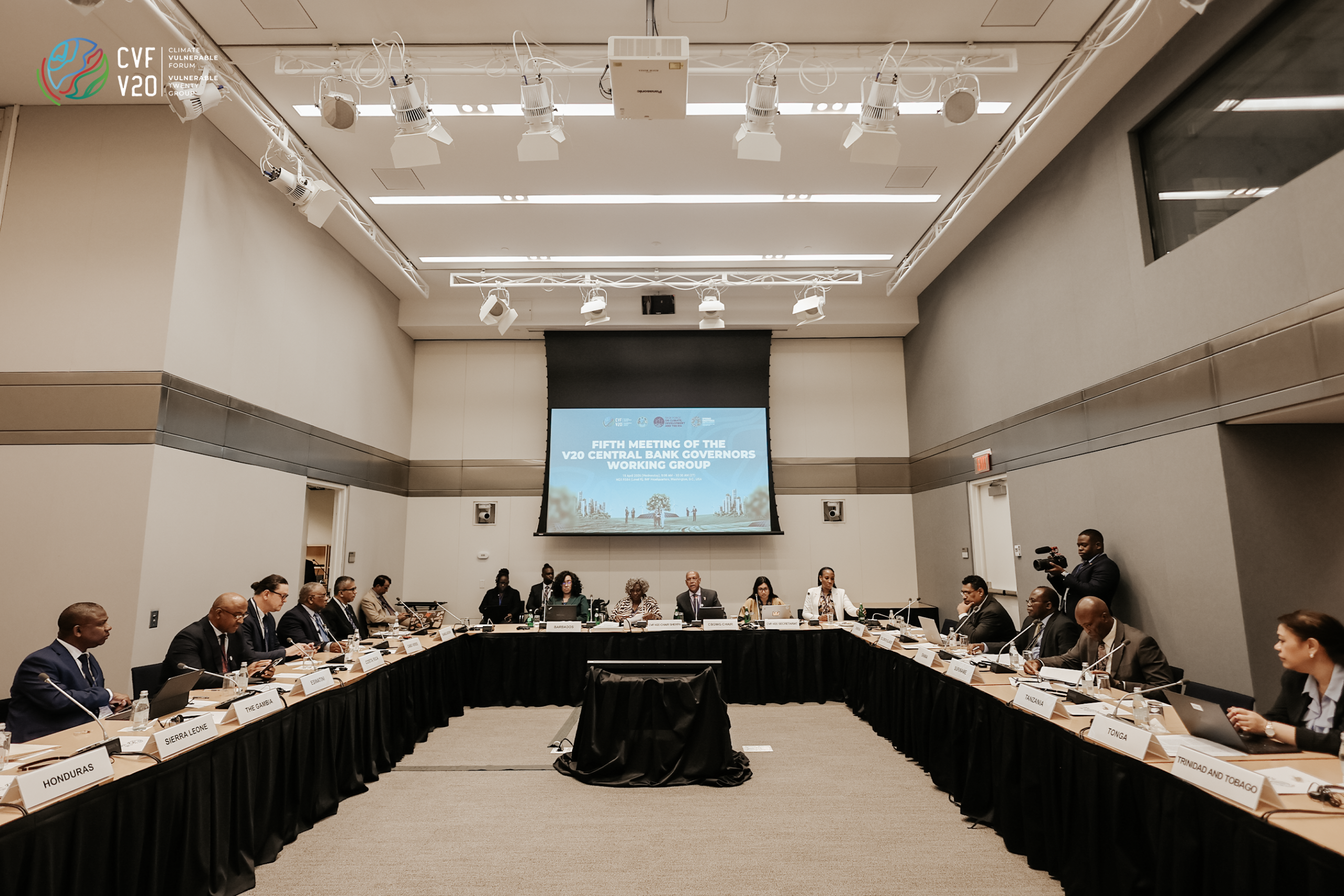
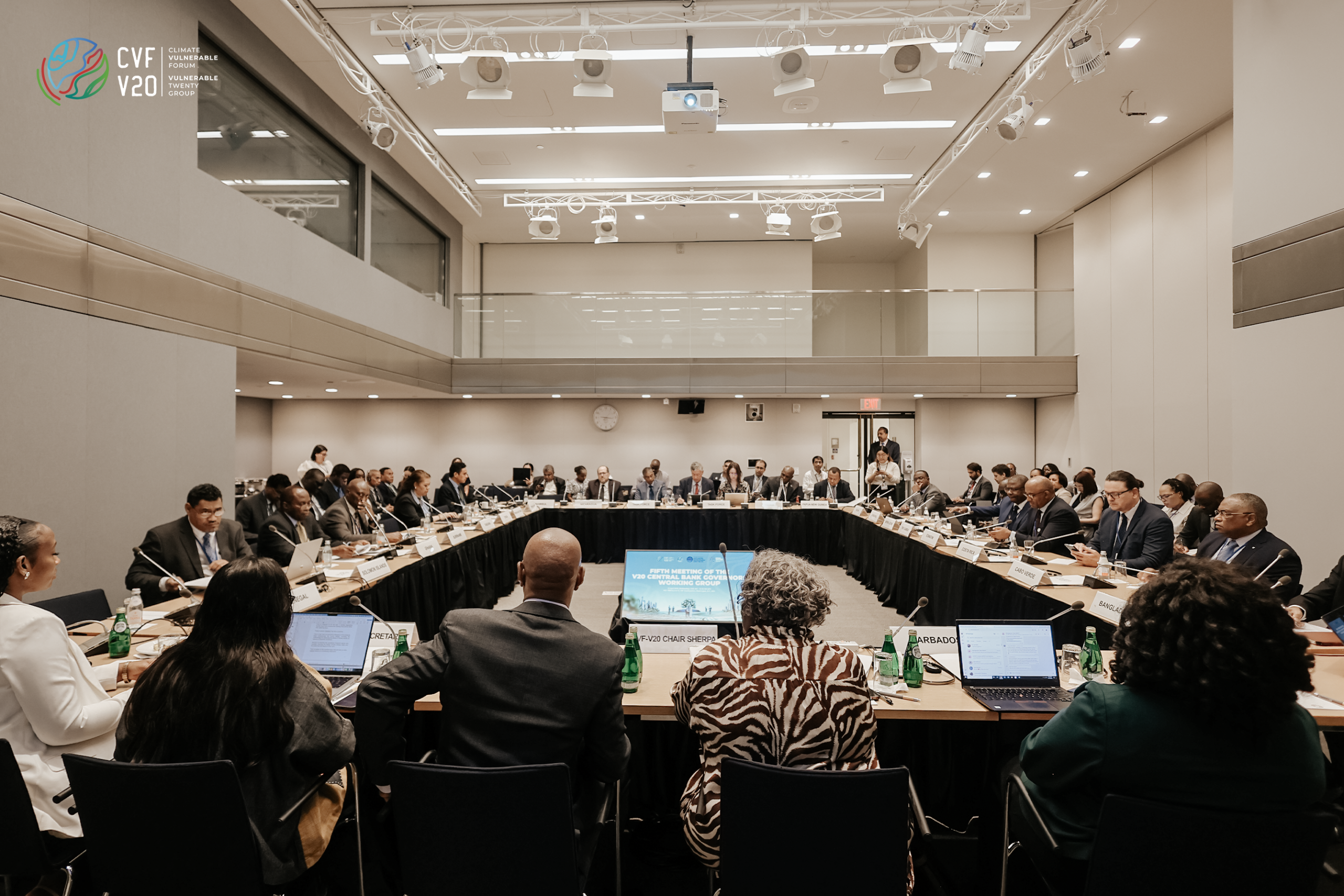
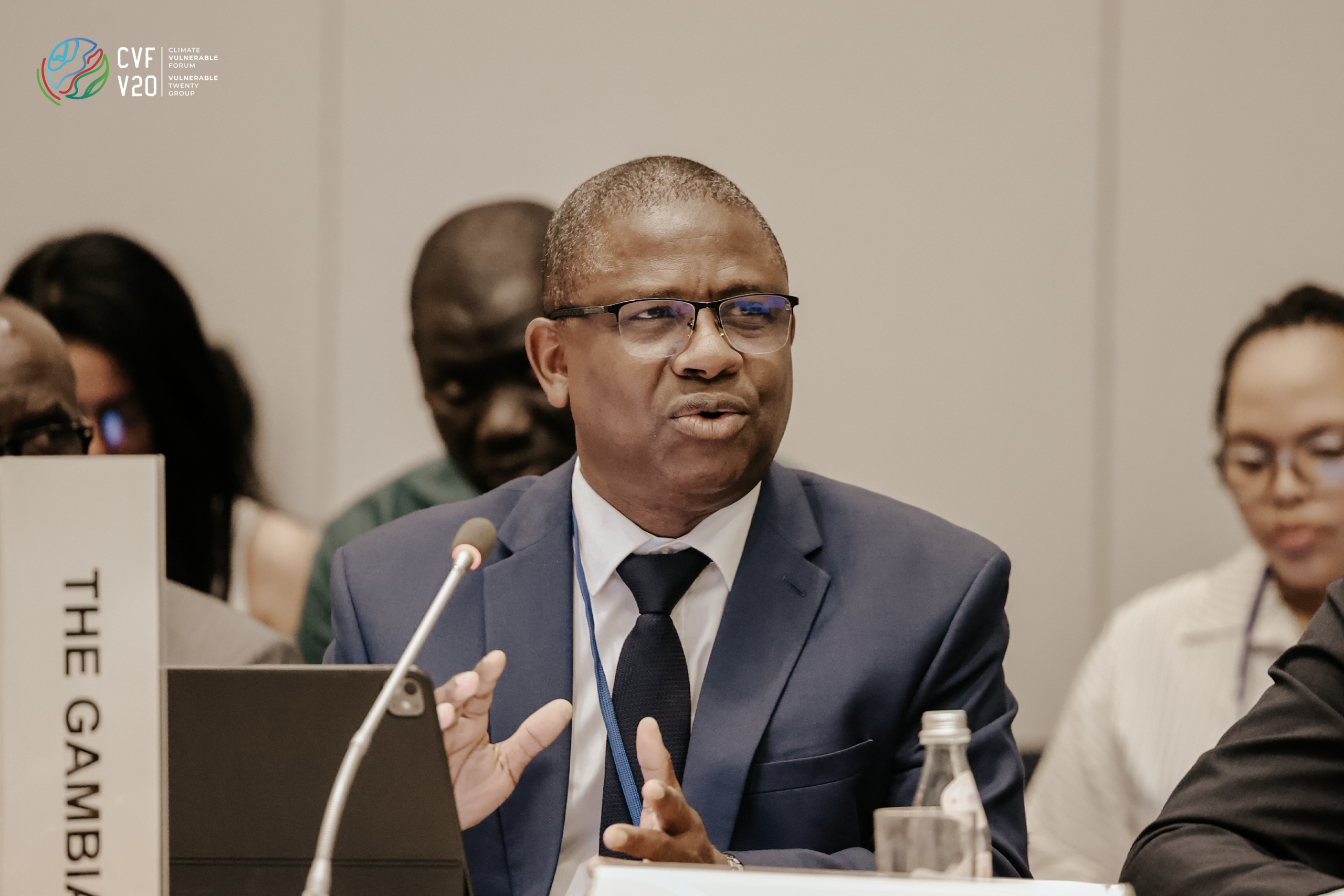
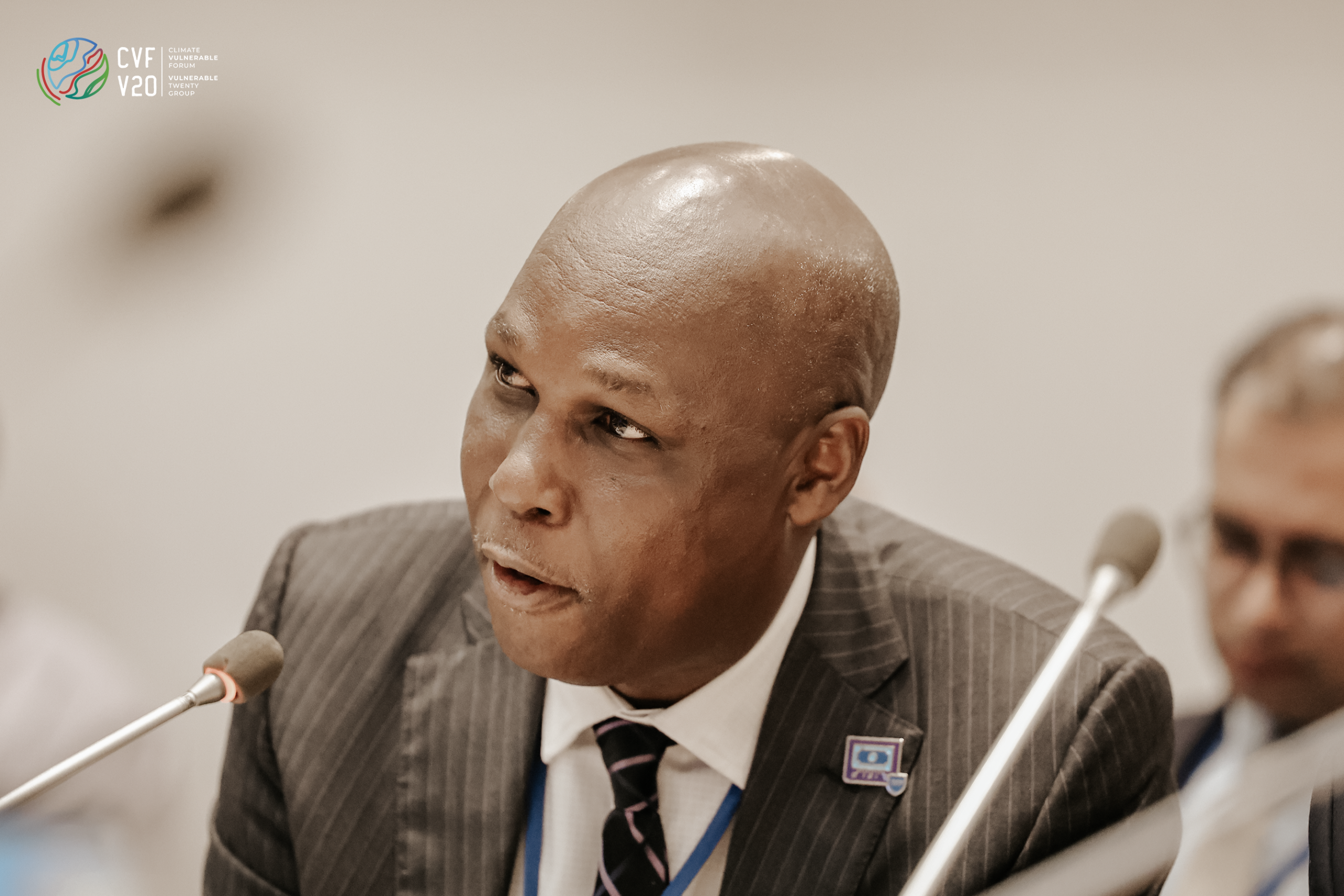
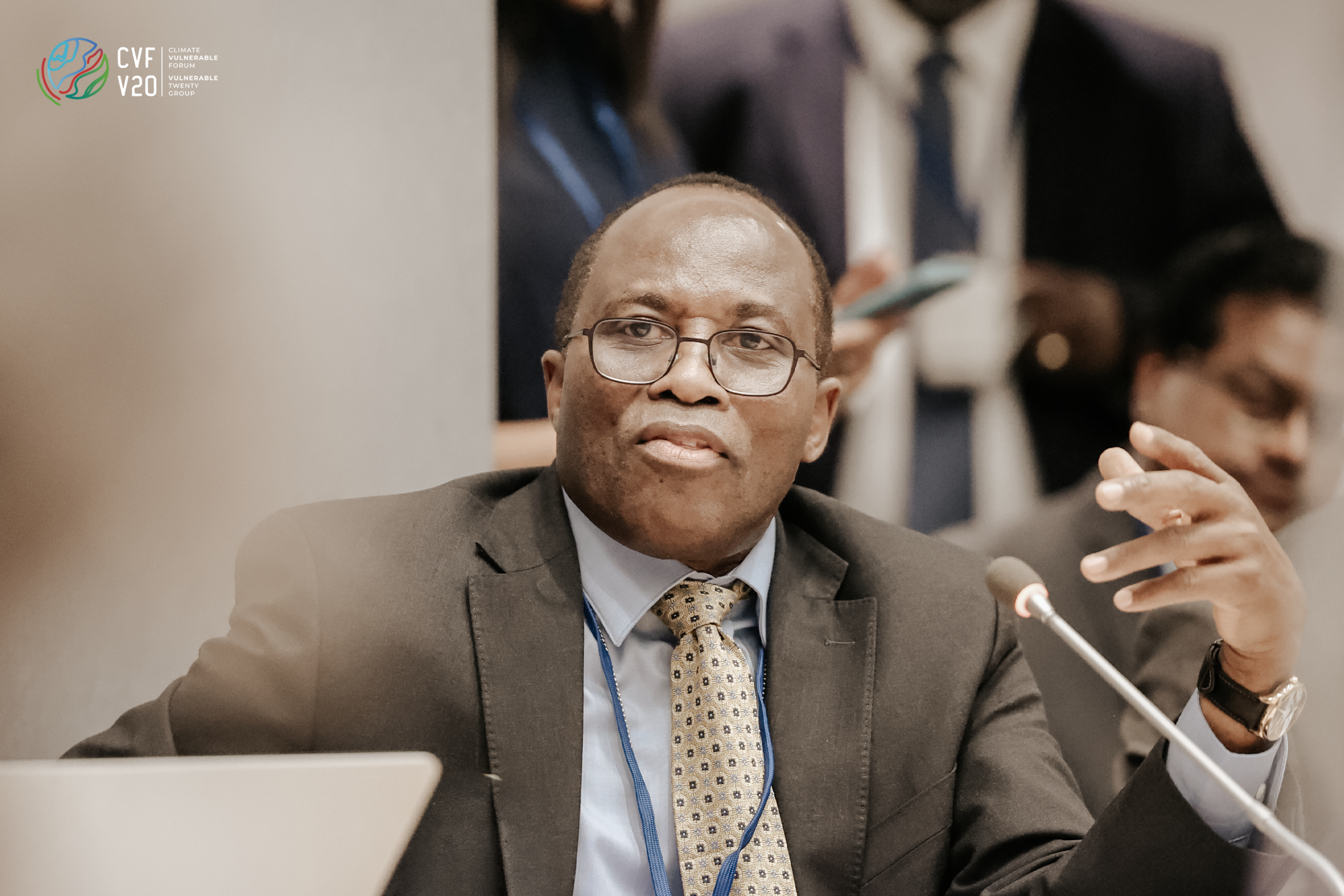
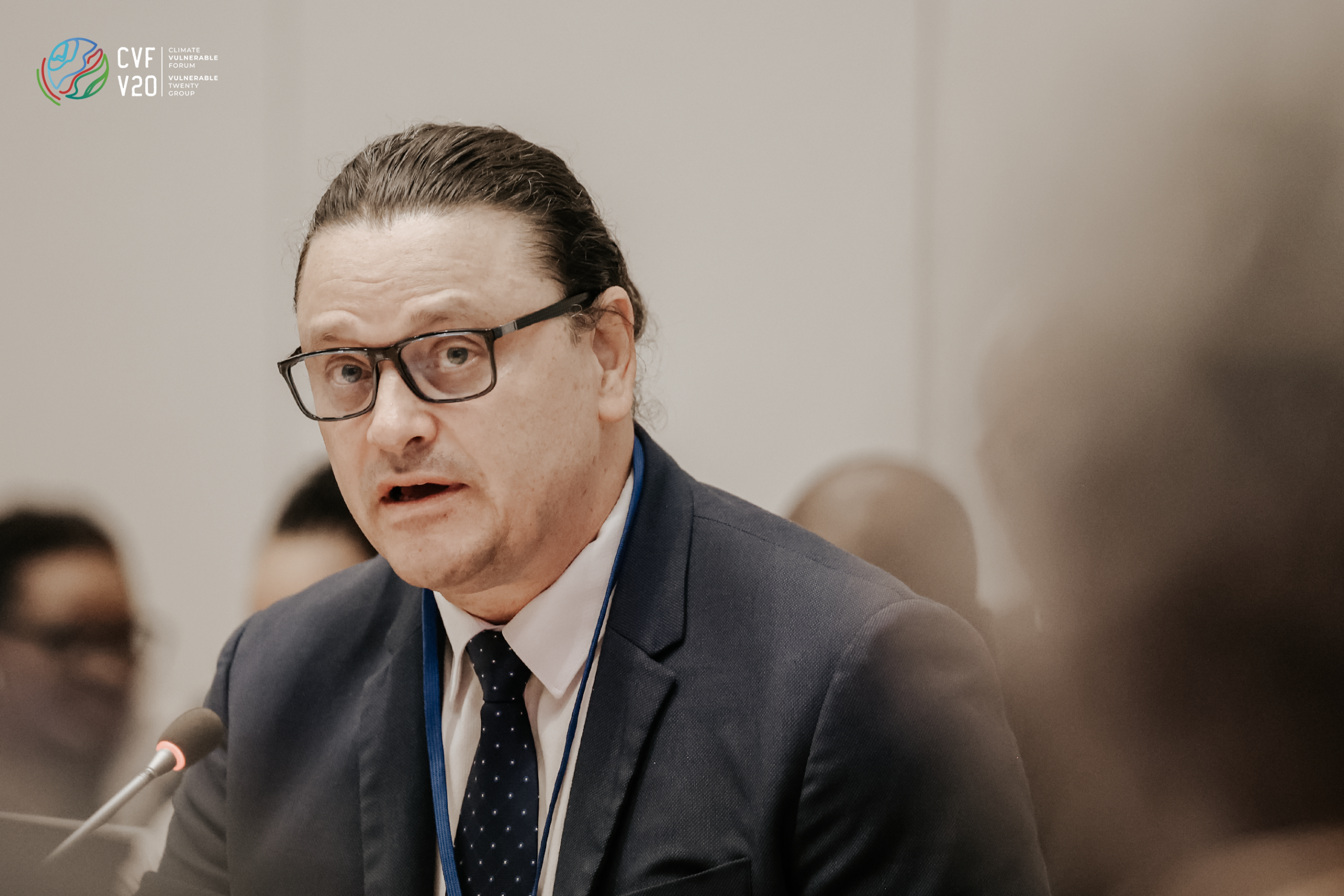
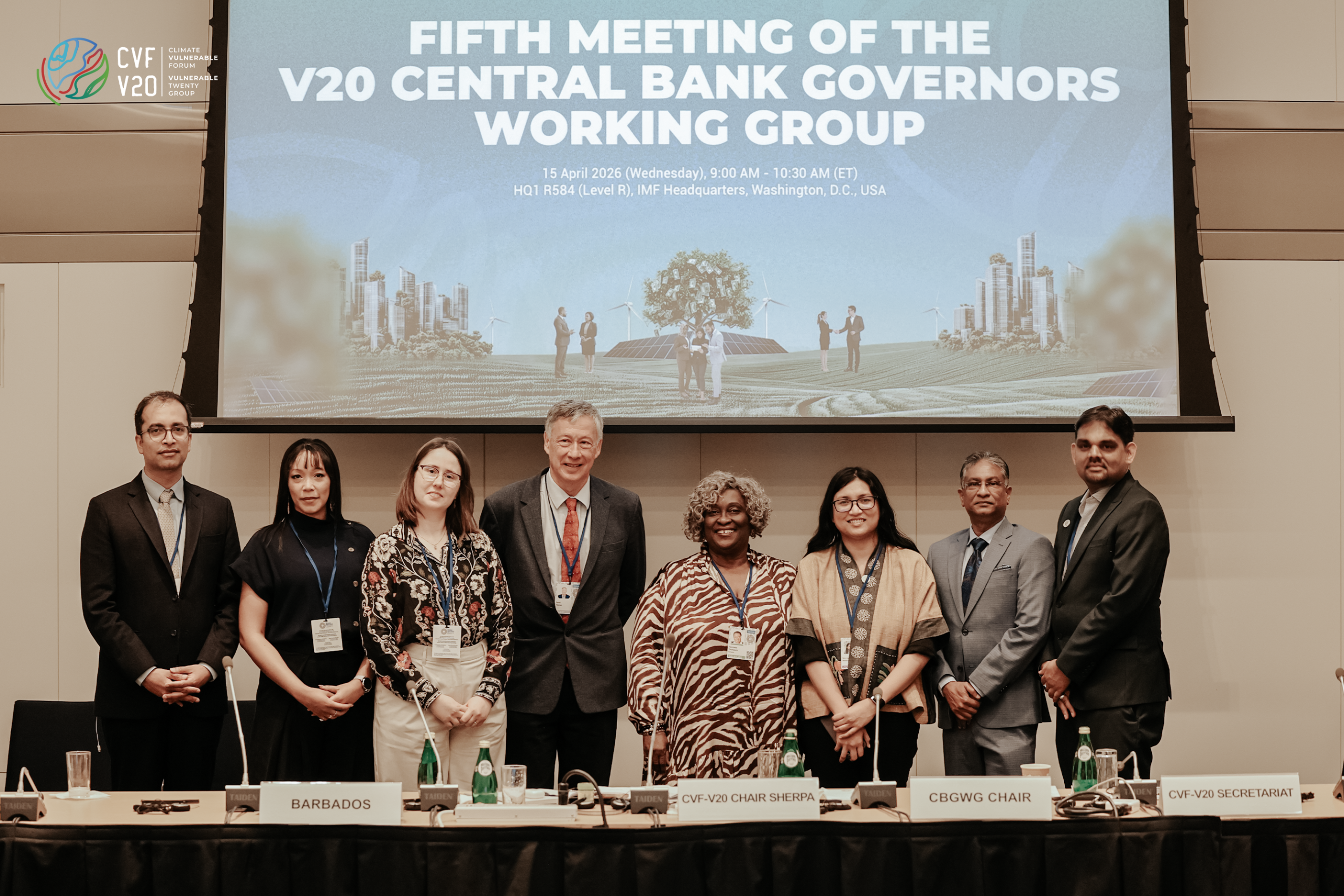
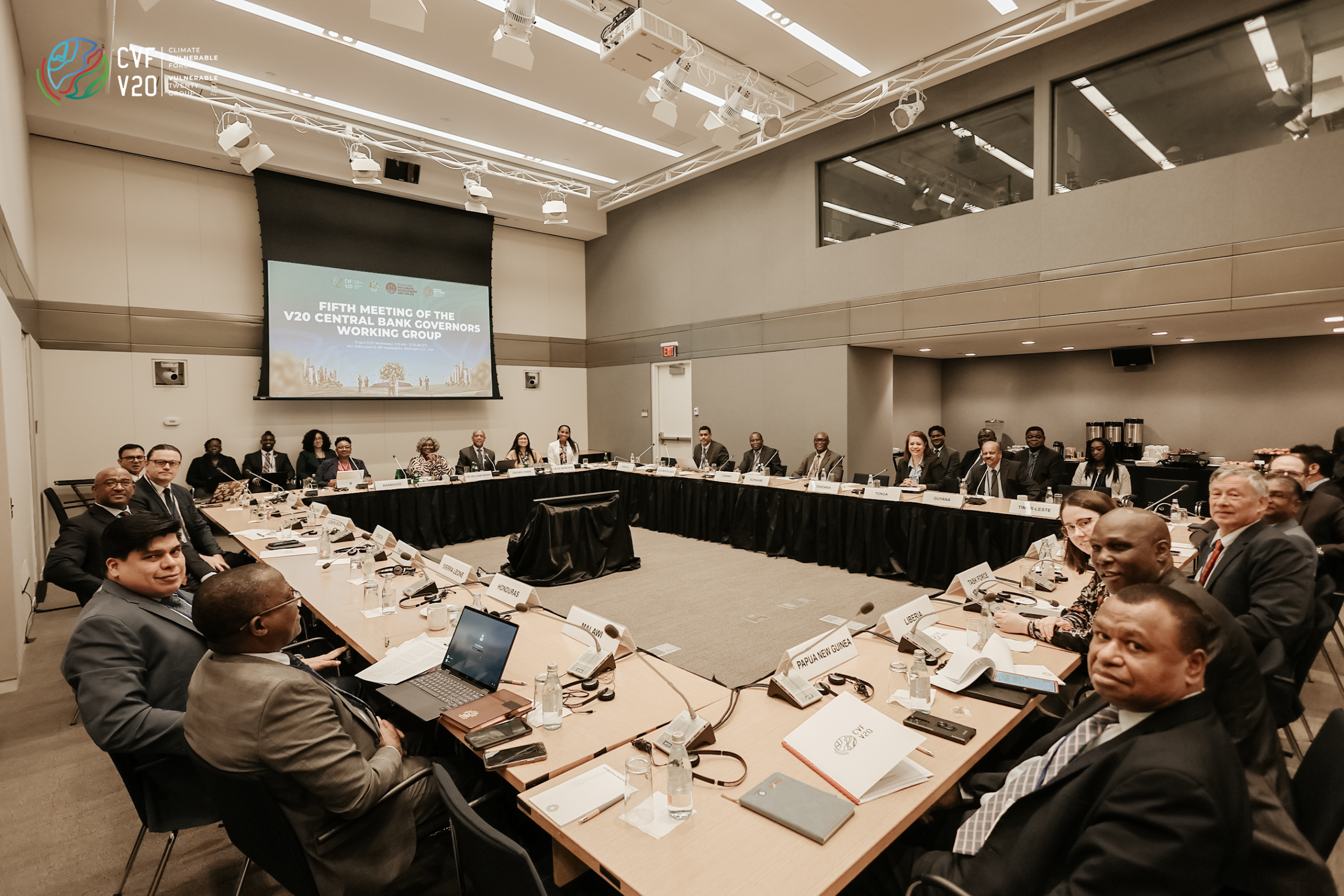

Washington D.C.—Central bank governors from climate-vulnerable countries today advanced the operational pathway for the Lifeline Fund, following its political launch at the 16th V20 Ministerial Dialogue on 14 April. The Lifeline Fund is a new multi-regional financial arrangement designed to provide rapid, targeted liquidity support to countries facing balance-of-payments pressures after climate shocks.
Barbados, Ghana, Honduras, Liberia, Nicaragua, and The Gambia have signaled their intent to join the Lifeline Fund as founding members, reflecting broad geographic representation across the Caribbean, Africa, and Latin America. The Fund’s capitalization target is US$1 billion, with an initial operational phase of US$300 to US$400 million.
The Lifeline Fund responds to a structural gap in the Global Financial Safety Net. For over 50 member countries of the Climate Vulnerable Forum and V20 Finance Ministers (CVF-V20), including many small island developing states and least developed countries, there is no access to currency swaps or regional financial arrangements. When a climate shock strikes, these economies face immediate pressure on foreign exchange reserves, export earnings, and external financing conditions, with no dedicated instrument to provide fast, predictable liquidity to address climate-related balance-of-payments stress.
The Lifeline Fund is designed to fill the gap between the onset of a climate shock and the arrival of broader recovery financing. Its value lies in speed, predictability, and fit-for-purpose support when countries face immediate external pressure. The Fund complements existing mechanisms within the Global Financial Safety Net, including IMF facilities, regional financial arrangements, and bilateral swap lines, by adding a faster, more targeted, and climate-responsive layer of support.
The Lifeline Fund represents an institutional first: the world’s first multi-regional financial arrangement within the Global Financial Safety Net. Every existing regional financial arrangement to date serves a single geography. The Lifeline Fund spans the Caribbean, Africa, Asia, Latin America, and the Pacific simultaneously, drawing on the diversity of its membership as a financial strength.
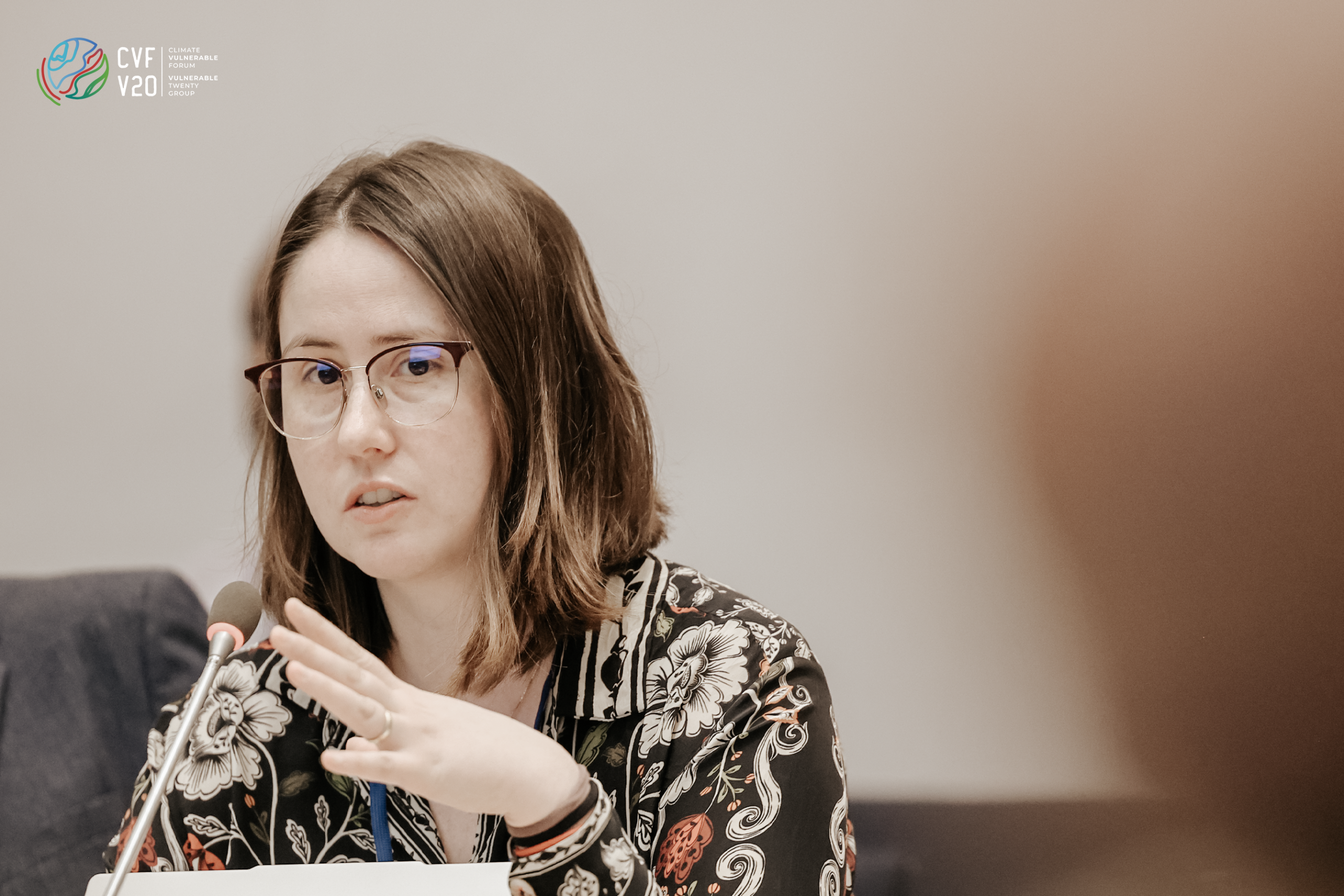
Rigorous analysis conducted by technical experts from V20 central banks and the Task Force on Climate, Development, and the International Financial Architecture confirms that risk pooling across V20 members is both feasible and efficient. Twenty-five years of data show that climate shocks are weakly correlated across V20 members, meaning countries are not all hit at the same time. V20 countries also differ markedly in economic size, trade openness, reserve adequacy, and shock absorption capacity. This heterogeneity is the financial foundation that makes mutual support viable, supporting a Fund sized at between US$436 million and US$984 million, equivalent to 0.1 percent to 0.2 percent of the group’s combined US$504 billion in foreign exchange reserve equivalents.
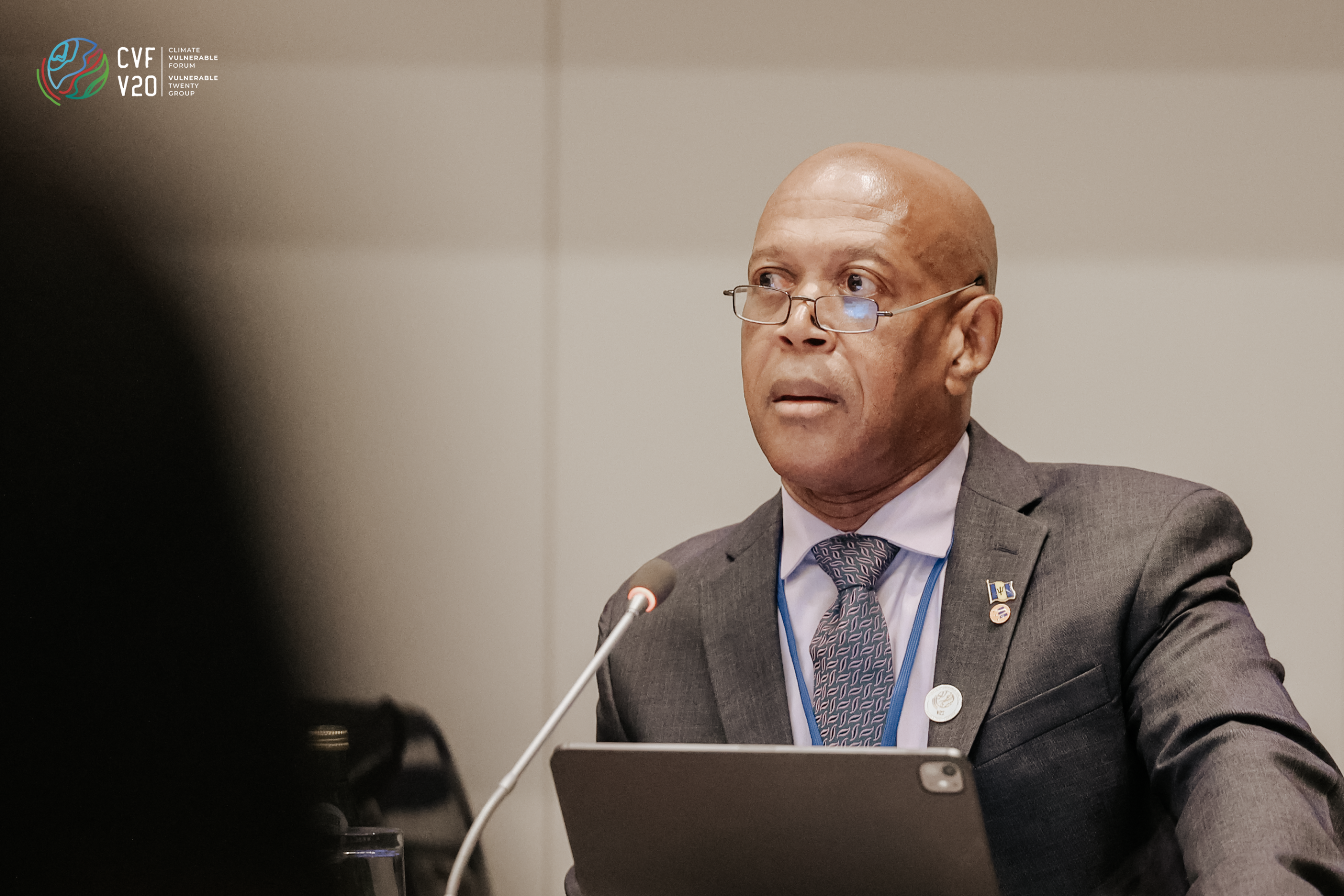
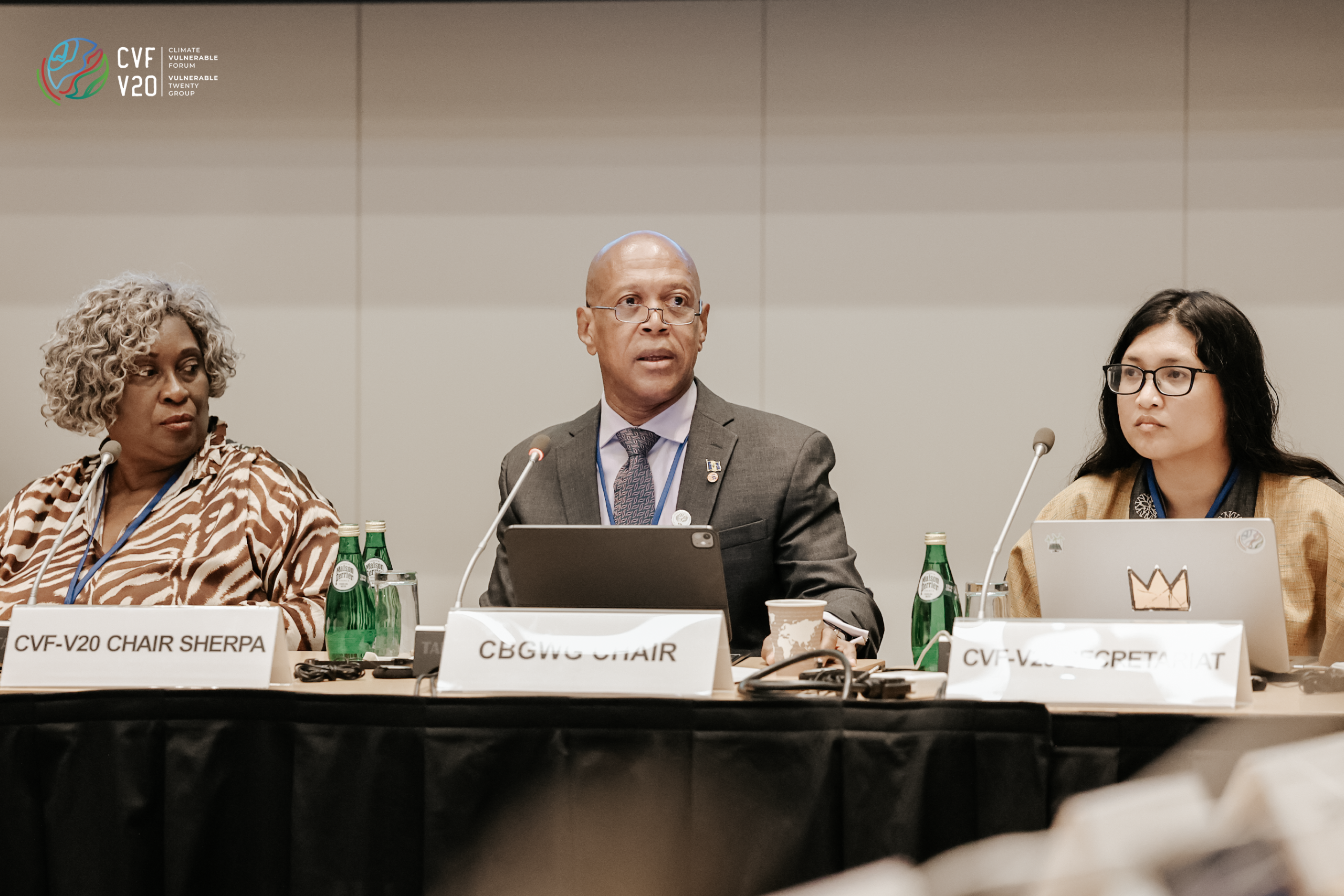
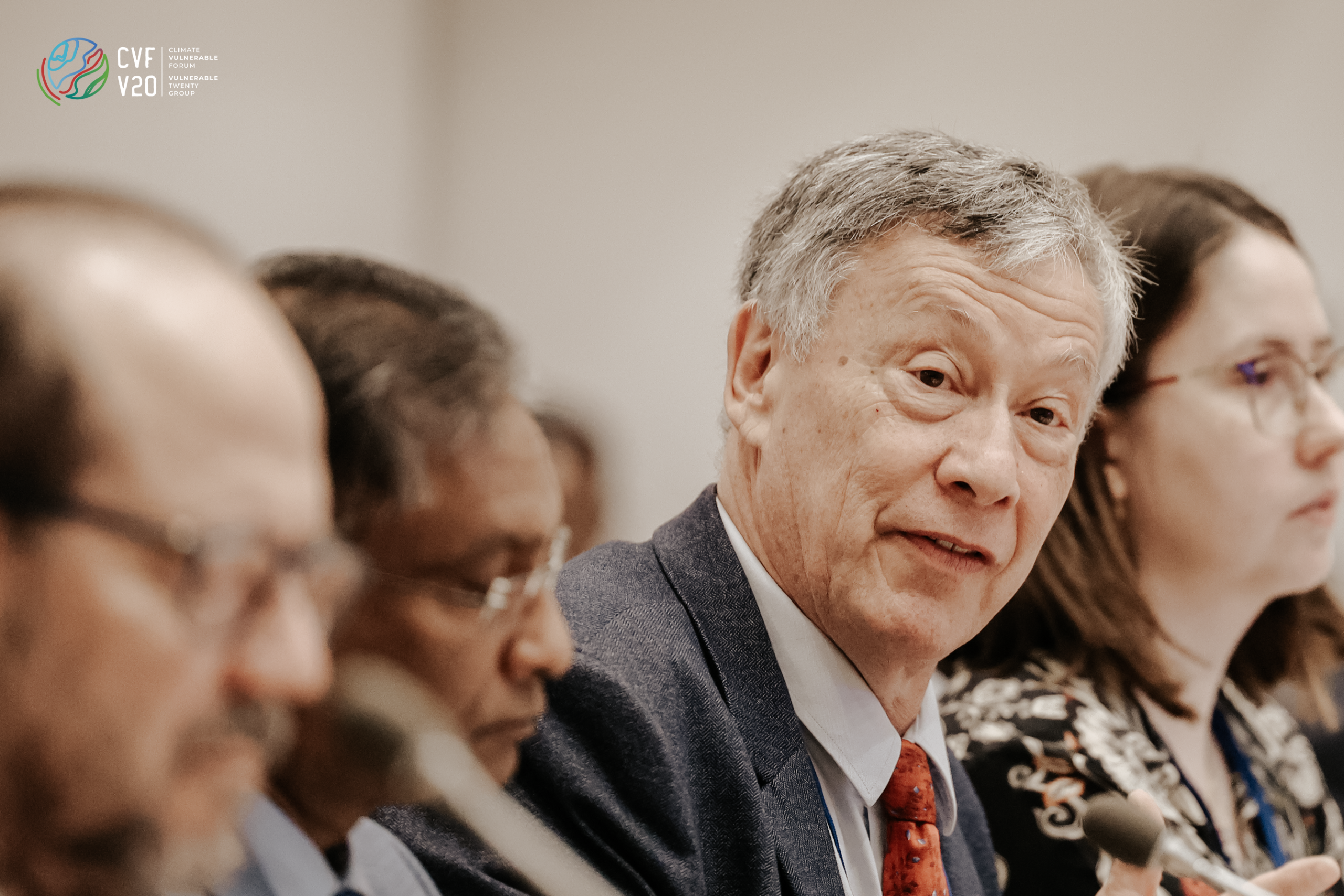
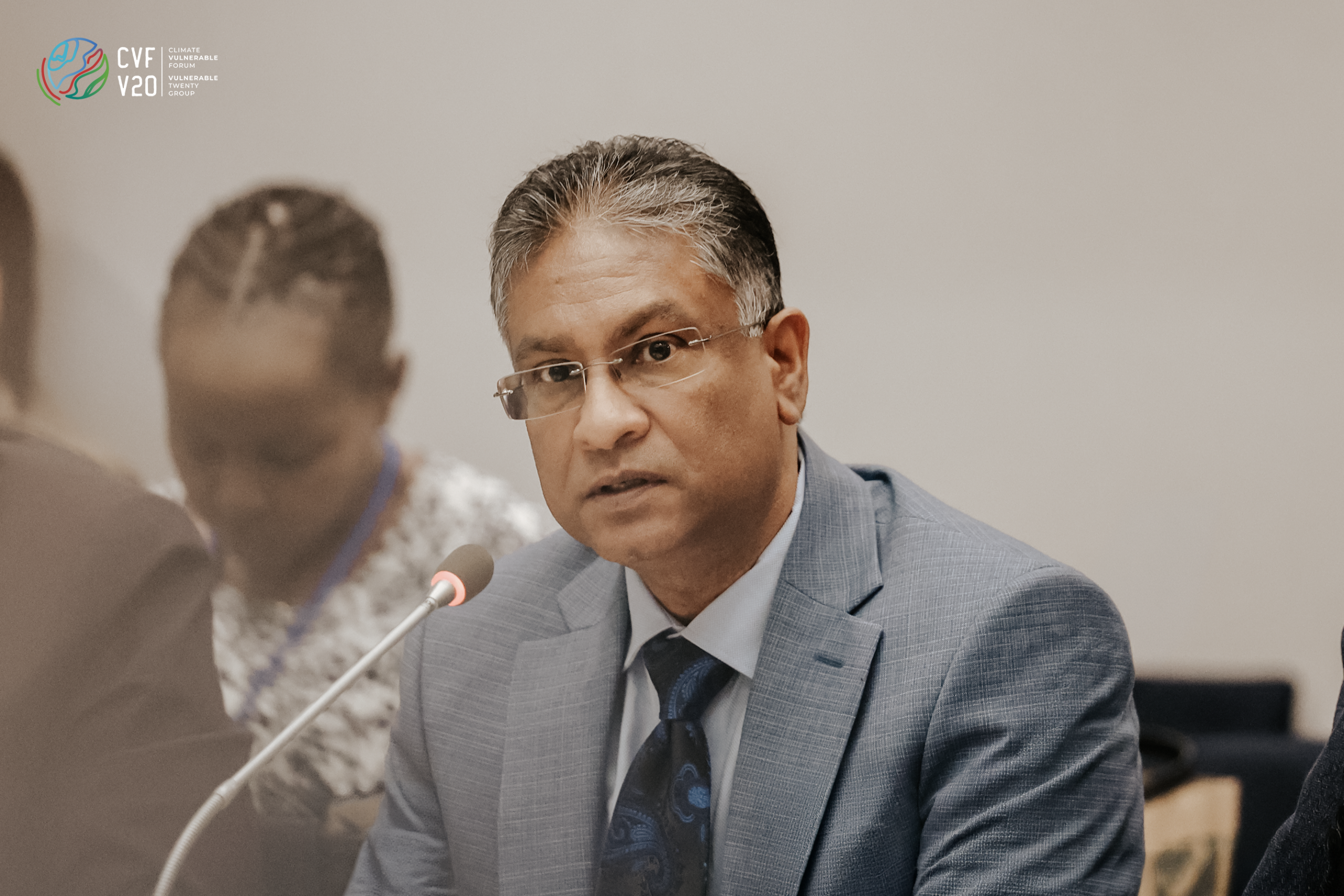
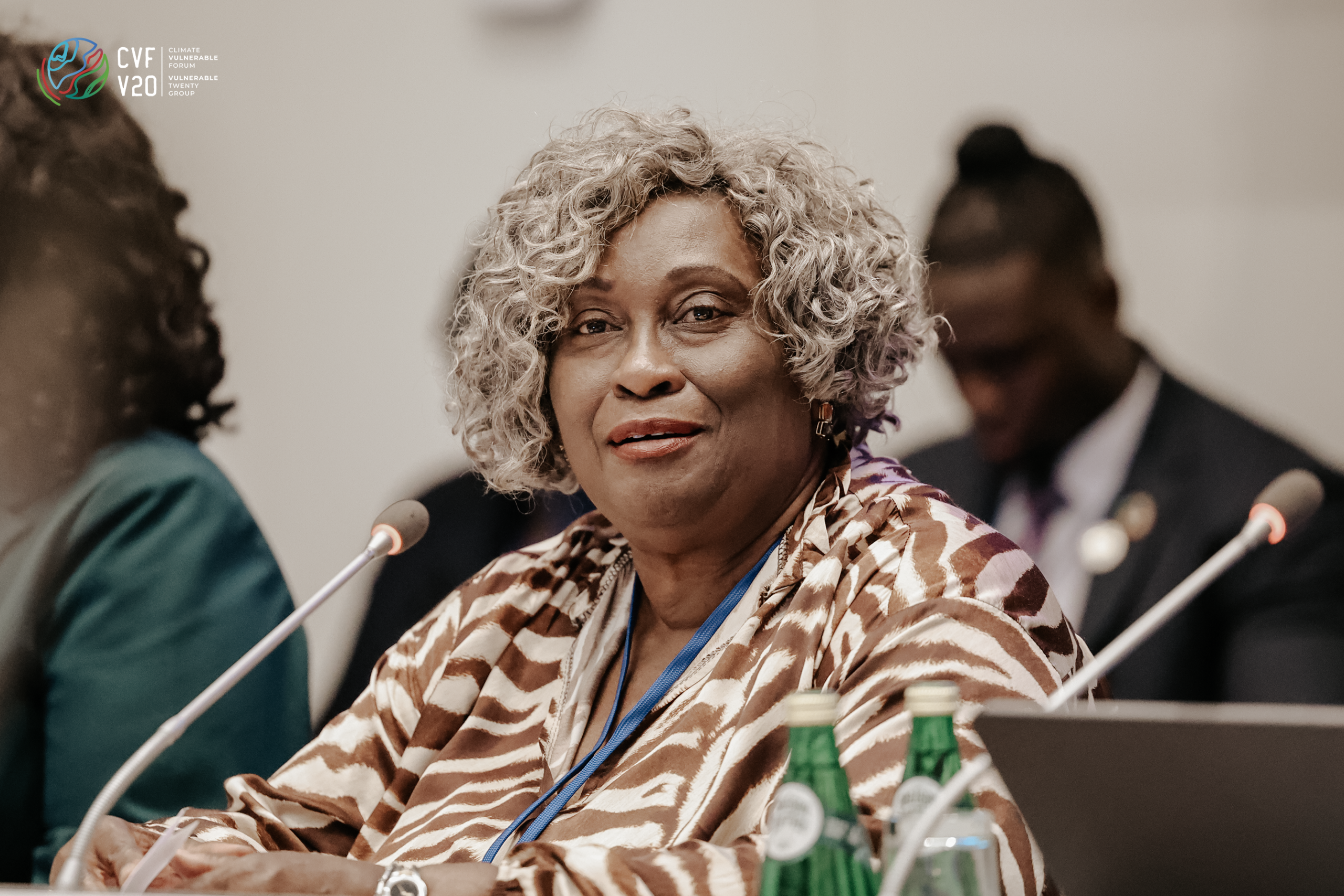
Chaired by Dr., The Most Honorable Kevin Greenidge, F.B., Governor of the Central Bank of Barbados and Chair of the V20 Central Bank Governors Working Group, today’s meeting advanced the operational pathway for the Fund. In his closing remarks, Governor Greenidge said:
“The V20 has repeatedly shown that it can do more than identify the gaps in the system. It can help build the solutions. The Lifeline Fund is now part of that work. What we do next will matter, not only for the resilience of our own economies, but for the future shape of the Global Financial Safety Net.”
The Lifeline Fund was first presented at the political level on 14 April at the 16th V20 Ministerial Dialogue, where H.E. Mia Amor Mottley, Prime Minister of Barbados and Chair of the CVF-V20, issued a call to member states:
“We have spent a lot of time asking for the international community to step up to the plate, because this is not a crisis that we created. Having said that, it is incumbent on us to be able to craft our own mechanisms to help each other, and this is what we intend to do with Lifeline.”
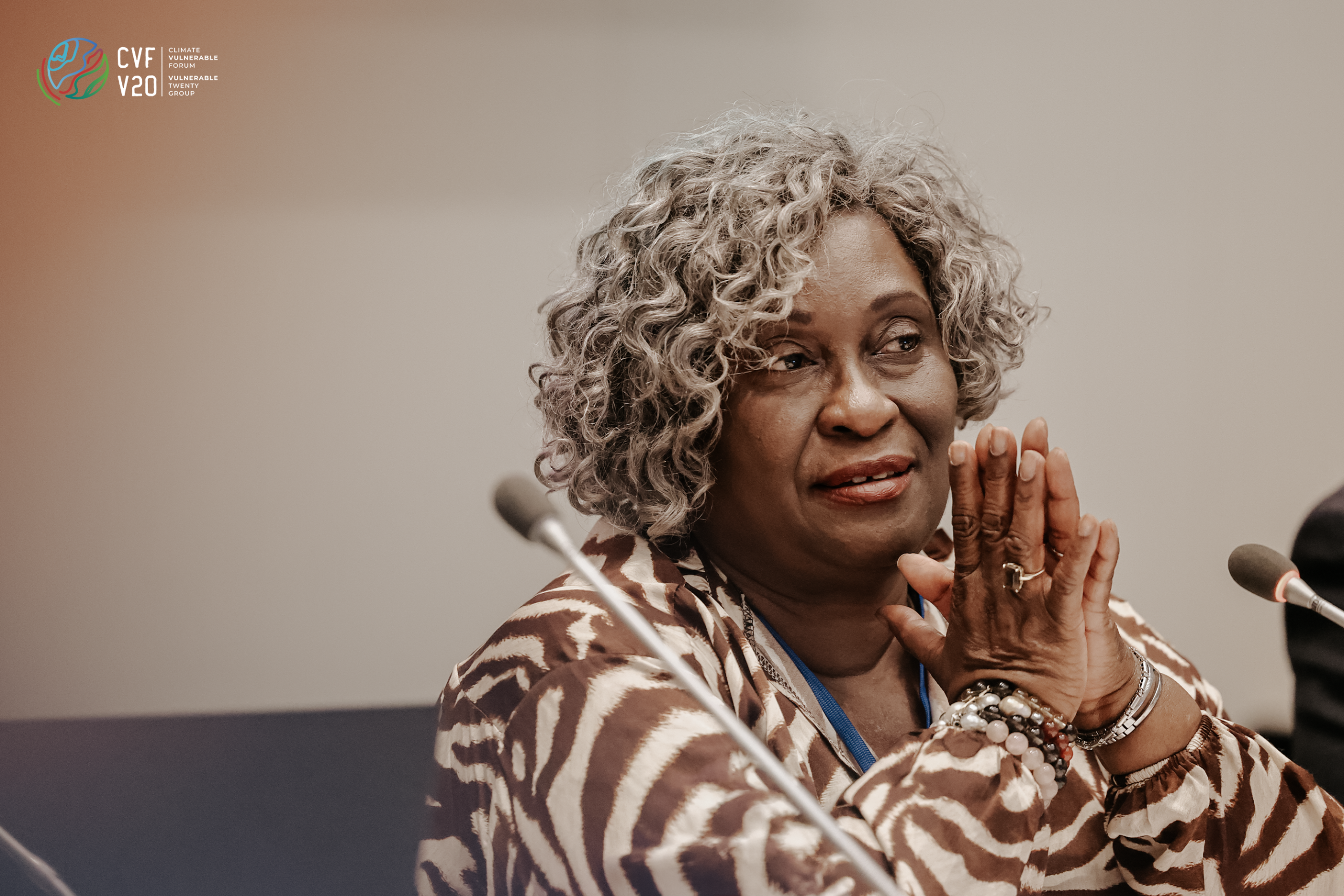
H.E. The Most Honorable Elizabeth Thompson, Sherpa to the CVF-V20 Presidency of Barbados, underscored the broader significance of the initiative, noting that collective action must now shape a more inclusive and responsive global financial architecture.
Following the launch, CVF-V20 members have been invited to signal membership interest, nominate technical focal points, and support capitalization pathways. The CVF-V20 Secretariat has been tasked with producing a technical brief covering pricing, access criteria, triggers, governance, and risk management ahead of a dedicated in-person technical session in Bridgetown, Barbados, on 9 to 10 July 2026.
High-level engagement with global partners is planned for the margins of the United Nations General Assembly in September 2026, where the Lifeline Fund will be presented with the full backing of CVF-V20 leaders.
***
The Lifeline Fund is a proposed multi-regional financial arrangement within the Global Financial Safety Net, designed to provide rapid and predictable balance-of-payments liquidity support to climate-vulnerable economies following climate shocks. It is expected to operate through two lending facilities: a Rapid Resilience Facility, with disbursement within 7 to 14 days, no conditionality, and a maturity of 1 to 3 years, and a Stabilisation Credit Facility, with a maturity of 3 to 5 years and light resilience-focused structural actions. The proposed governance structure includes a Board of Governors composed of V20 Central Bank Governors.
The CVF-V20 represents 74 member countries from small island developing states (SIDS), least developed countries (LDCs), low to middle-income countries (LMICs), landlocked developing countries (LLDCs), and fragile and conflict-affected states (FCS). Working together, the CVF-V20 aims to achieve climate justice through the realization of Climate Prosperity Plans, which contain ambitious economic and financial resilience strategies designed to attract investment and resources that advance the attainment of the Sustainable Development Goals (SDGs), 30×30 Global Biodiversity, and help keep the average global temperatures to the Paris Agreement’s 1.5°C safety threshold.
Africa: Benin, Burkina Faso, Cabo Verde, Chad, Comoros, Côte d’Ivoire, Democratic Republic of the Congo, Eswatini, Ethiopia, Gabon, The Gambia, Ghana (Troika), Guinea, Kenya, Liberia, Madagascar, Malawi, Morocco, Mozambique, Namibia, Niger, Rwanda, Senegal, Sierra Leone, Somalia, South Sudan, Sudan, Tanzania, Togo, Tunisia, Uganda
Asia: Afghanistan, Bangladesh (Troika), Bhutan, Cambodia, Jordan, Kyrgyzstan, Lebanon, Maldives, Mongolia, Nepal, Pakistan, Palestine, Philippines, Sri Lanka, Timor-Leste, Vietnam, Yemen
Caribbean: Barbados (Chair/Troika), Dominica, Dominican Republic, Grenada, Guyana, Haiti, Saint Lucia, Suriname, Trinidad and Tobago
Latin America: Colombia, Costa Rica, Guatemala, Honduras, Nicaragua, Paraguay
Pacific: Fiji, Kiribati, Marshall Islands, Nauru, Palau, Papua New Guinea, Samoa, Solomon Islands, Tonga, Tuvalu, Vanuat
For media enquiries, please contact [email protected].
For the latest updates, please follow us on: