CARBON FINANCE PROGRAM
Carbon markets are one of the CVF-V20’s identified “imperative levers,” with the potential to unlock an additional US$20 billion a year for member countries by 2030. Yet climate-vulnerable countries have been largely left out: the 45 least developed countries hosted just 1.5% of projects under the Kyoto Protocol’s Clean Development Mechanism.
The CVF-V20 Carbon Finance Program helps CVF-V20 members take part in carbon markets as credible, well-prepared participants. These include both the compliance markets under Article 6 of the Paris Agreement and the voluntary carbon market. The program aims to direct carbon finance toward members’ Climate Prosperity Plans (CPPs) and national priorities, and to make sure the benefits reach local communities and the last mile. It works with partners, including the Voluntary Carbon Markets Integrity Initiative (VCMI).
PROGRAM COMPONENTS
Carbon Finance Workshop Series
Build knowledge across CVF-V20 member countries to deliver on climate prosperity, nature and development priorities through international carbon markets.
Access Strategies Program
Accelerate country capacity to engage holistic with carbon market ecosystem with adequate technical support for CPP Implementation, aligned with the goals of the Paris Agreement.
Policy Tools and Finance Solutions
Develop one new policy tool or finance solution a year with member countries, based on their legislative frameworks, climate priorities, and implementation gaps.
Joint Buyer-Seller Commitments For Carbon Credit Procurement
Convene carbon market investment roundtable with CVF-V20 member countries, partners, and potential investors in the ecosystems.
DELIVERABLES
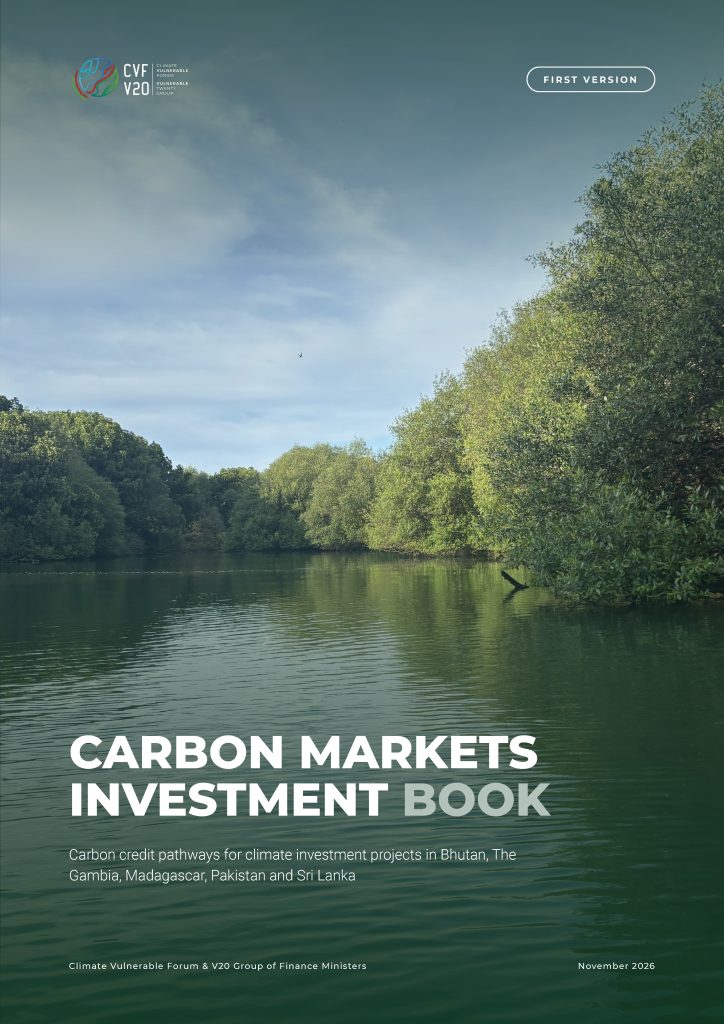
Carbon Markets Investment Book (First Version)
The first edition of the V20 Carbon Markets Investment Book was launched at COP31. It showcases 46 carbon-finance projects from Bhutan, Madagascar, Pakistan, Sri Lanka, and The Gambia. The 25 projects quantified so far could reduce or remove an estimated 6.7 million tonnes of CO₂ equivalent each year.
For each project, the Book sets out what the project does and how much it can reduce or remove emissions. It also identifies the crediting route and methodology that fit the project, and the next decision needed to move it forward. Each profile reflects the project’s current stage of preparation, so partners can see where their support will make the greatest difference.
The projects are led by both governments and the private sector. Whoever leads a project, decisions on authorisation, corresponding adjustments and the transfer of mitigation outcomes rest with national authorities. The CVF-V20 Secretariat stands ready to connect these projects with the buyers, investors, and technical partners who can take them to transaction.
Carbon Finance Workshop Series
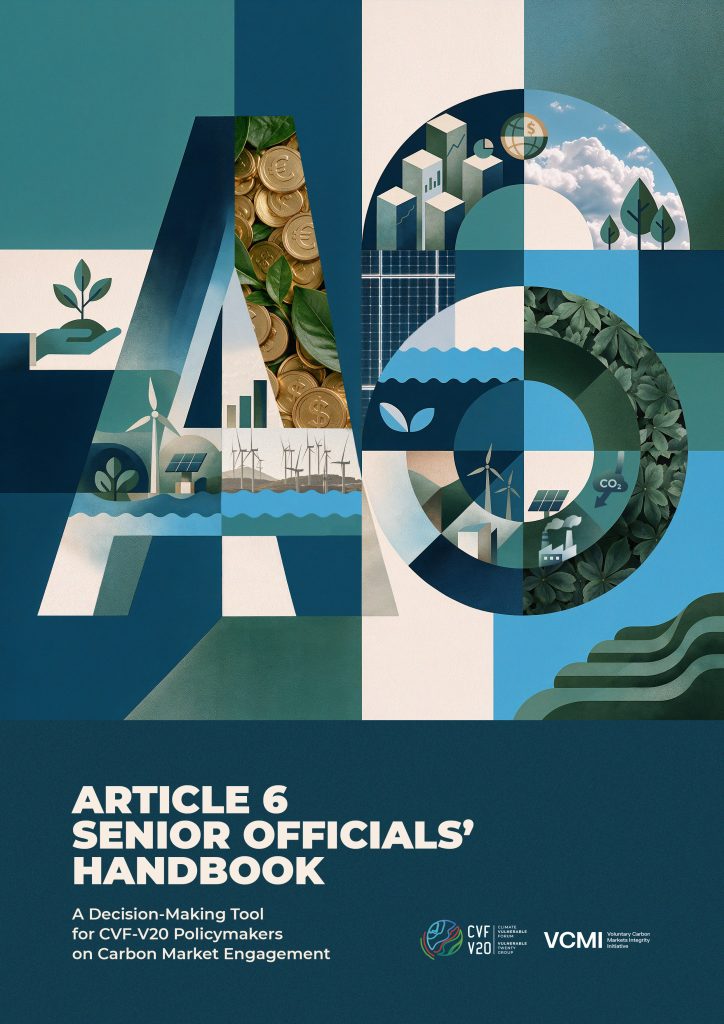
Under the Article 6 rules finalized at COP29, governments that choose to host carbon market activities decide whether to authorize transfers of mitigation outcomes, which activities go ahead, and how revenues support national priorities. This Handbook helps make those decisions.
Launched in October 2026 on the sidelines of the Annual Meetings of the World Bank and the International Monetary Fund, the handbook features eight modules that cover the core decisions host countries face: authorization, revenue optimization, benefit-sharing, environmental and social integrity, private sector engagement, and legislative oversight.
Each module benchmarks host and buyer-country approaches and common implementation bottlenecks. It can also serve as a readiness checklist, with country case studies from Ghana, the Philippines, and Bhutan.
Bhutan Carbon Market Information Platform
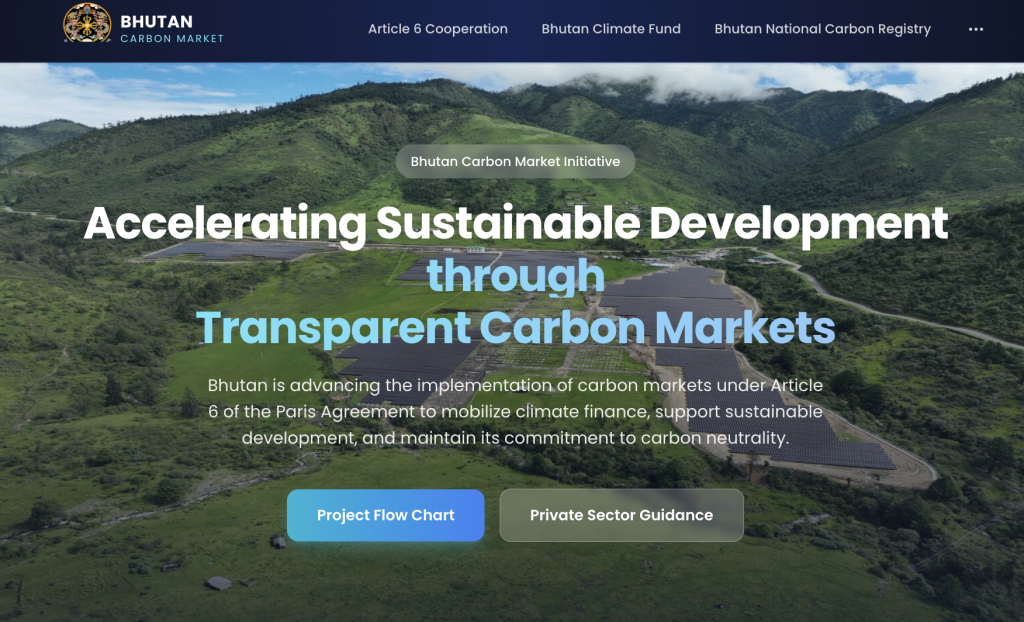
This platform is the single entry point for anyone seeking to develop, finance, or invest in carbon projects in Bhutan. Launched by the Ministry of Energy and Natural Resources on 9 March 2026, it consolidates policies, regulatory procedures, and project development resources to simplify project submission and improve transparency. The platform is a key output of the Pilot Access Strategies Program, through which the CVF-V20 Secretariat has supported Bhutan’s carbon market readiness since June 2025. With practical tools and a dedicated Private Sector Engagement Guide, the platform helps developers and investors navigate opportunities with at least US$100 million in estimated carbon revenue potential across 40 assessed mitigation activities.
Carbon Finance Workshop Series
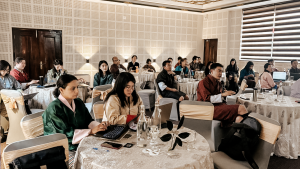
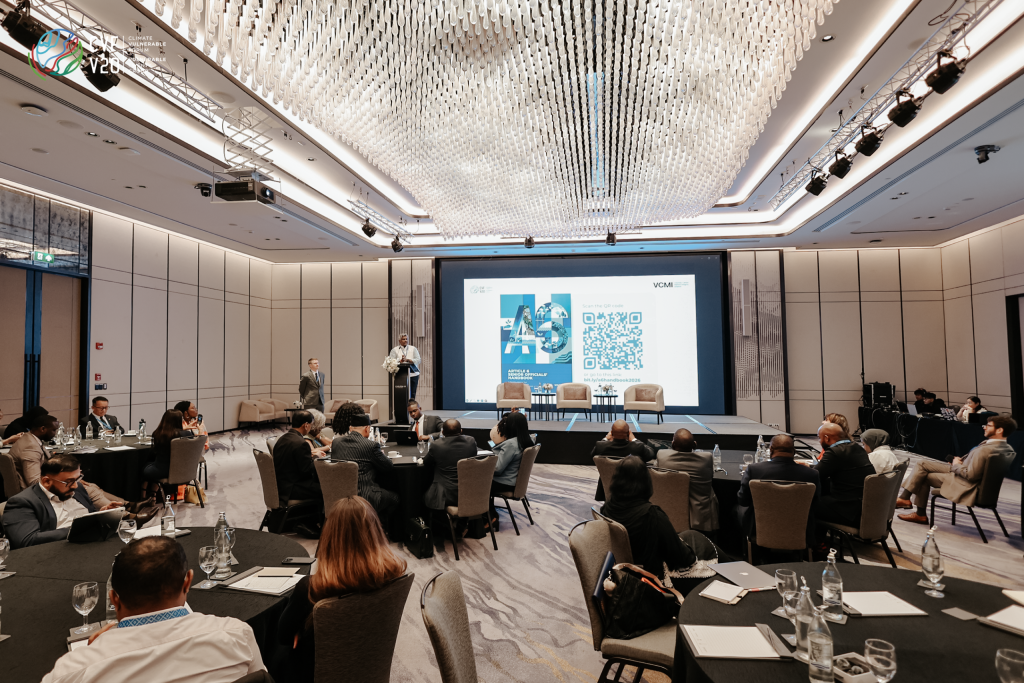
Our workshop series brings officials from CVF-V20 member countries together with experts, partners, and buyers to build practical knowledge of carbon markets and share country experience. These workshops take place on the margins of the Spring and Annual Meetings of the World Bank Group and the IMF, with online exchanges in between.
- 14 October 2026, Bangkok (Unlocking Carbon Finance: From Country Action to Global Markets)
- 13 August 2026, Virtual (Advancing Carbon Market Access: Emerging Mechanisms and Practical Pathways)
- 17 April 2026, Washington, D.C. (Leveraging Carbon Market Access to Unlock New Revenue)
- 22 April 2025, Washington, D.C. (Advancing Climate Prosperity: Leveraging Voluntary Carbon Markets and Article 6 Mechanisms)
- 23 October 2024 (Mobilizing Carbon Finance in Support of Climate Prosperity)
- 19 April 2024 (Leveraging High Integrity Voluntary Carbon Markets in Support of Climate Prosperity)
FURTHER ENGAGEMENT
Operationalizing a Sovereign Carbon Market In Liberia
In October 2026, Liberia’s Carbon Markets Authority (CMA) formally requested support under the Carbon Finance Program to set up a high-integrity sovereign carbon market. Building on the approach used with Bhutan, the CVF-V20 Secretariat has proposed a 12-month technical assistance program.
The program aims to enable the CMA to authorize, register, track, and transact ITMOs and voluntary carbon credits as under published procedures.
The support package covers:
Authorization Framework
Set out how Liberia decides which projects can sell credits abroad, under Article 6.2 (country-to-country deals) and Article 6.4 (the UN-run crediting mechanism)
Standard Operating Procedures
Clear, step-by-step procedures for every core market function, from project listing to credit issuance, transfer and retirement
Registry and Digital MRV
Advice on the most cost-effective way to buy, license, build or connect a secure national registry that links to international systems and prevents double counting
Fee Structure
A lawful, competitive cost-recovery model, benchmarked against peer countries, that sustains the CMA without deterring investment
Capacity Building
Role-based training for at least 40 officials in carbon valuation, contract negotiation, MRV and legal oversight, with advisers embedded in the CMA
Market Access
Role-based training for at least 40 officials in carbon valuation, contract negotiation, MRV and legal oversight, with advisers embedded in the CMA
Project Pipelines
Screening of projects against national priorities and integrity standards, and transaction-readiness support for three flagship projects, including forest REDD+ and mangrove blue carbon.
By the end of the 12 months, the goal is to have multiple flagship projects at the investment-ready stage. Guided by the principles of sovereignty, integrity, and community rights, the Secretariat provides analysis, drafting, and advisory support throughout the process, while ensuring that Liberia retains full ownership and authority over all decisions. Liberia’s sovereign decision-making remains paramount at every stage.
RELATED ARTICLES

African MPs Deliver Bold Call for Climate Finance and Green Development
Pakistan CPP Consultations Expand to Gilgit-Baltistan