Ten years after its first climate commitments under the Paris Agreement, Honduras is turning to the strength of its coastlines. In its third Nationally Determined Contribution (NDC), the country is prioritizing mangrove and seagrass conservation as a cornerstone of its climate action.
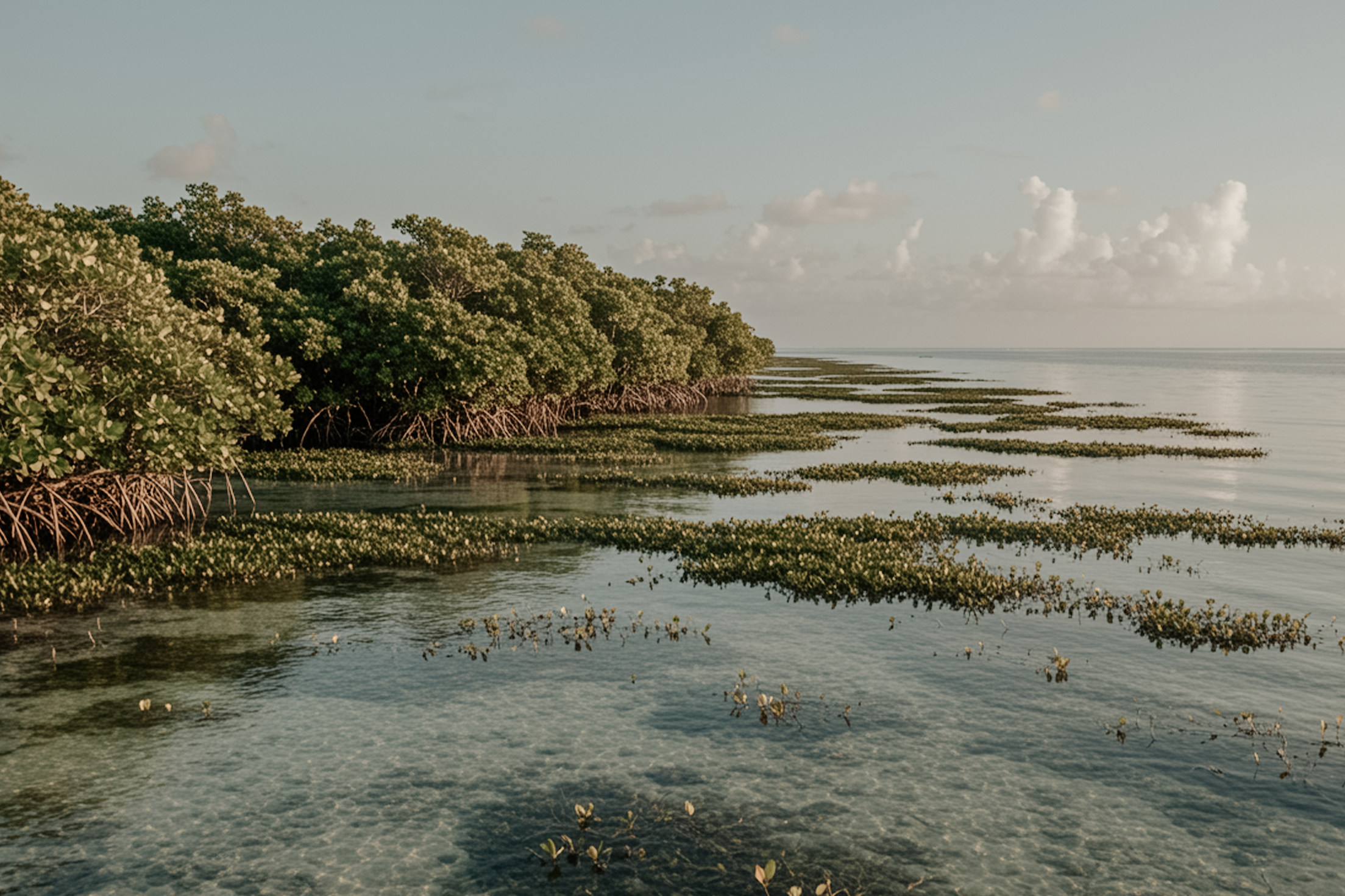
Honduras has more than 600 miles of shoreline stretching along the Caribbean north coast and the Pacific south coast, encompassing over a million hectares of coastal and island ecosystems. These landscapes not only support rich biodiversity but also underpin the national economy, sustaining key sectors such as aquaculture, tourism, and maritime transport while shaping the livelihoods of coastal communities.
Given the country’s reliance on these sectors, science-based coastal conservation has become increasingly critical. This approach aligns with the Barbados CVF-V20 Presidency’s campaign to advance science-driven, evidence-based solutions that safeguard communities and promote long-term sustainability.
The Intergovernmental Panel on Climate Change recognized mangroves and seagrasses, along with salt marshes, as the only marine ecosystems found to generate significant emission reduction figures. With extensive mangrove forests and seagrass meadows, Honduras holds substantial blue carbon resources, strengthening its capacity to sequester carbon at scale. At the same time, such ecosystems serve as natural buffers that protect coastlines from climate-related hazards such as storms and erosion. They also provide critical habitats for coastal fisheries, supporting biodiversity while sustaining the livelihoods of fishing communities.
Building on these advantages, the government has prioritized the sustainable and resilient management of marine and coastal ecosystems in its NDC 3.0, including a target to restore at least 10 percent of mangrove forests by 2035. Key initiatives focus on increasing national marine and coastal areas under official conservation schemes by five percent, establishing seagrass coverage baseline, and promoting ecological integrity in at least 65 percent of conservation areas. The country also commits to continue identifying vulnerable areas and risk zones within its coasts and wetlands.
To ensure these targets are translated into concrete actions, the government plans to reactivate the country’s National Biological Monitoring Board and National Wetlands Technical Committee. These bodies have an essential role in mobilizing various agencies and multiple stakeholders in fostering institutional support for country-wide coastal protection.
A decade on, Honduras demonstrates its unwavering commitment to the Paris Agreement by leveraging domestic resources and nature-based solutions to advance emissions reduction while strengthening resilience and supporting sustainable economic growth.