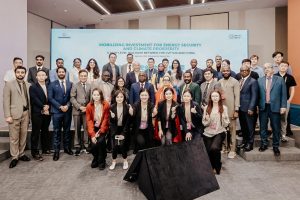
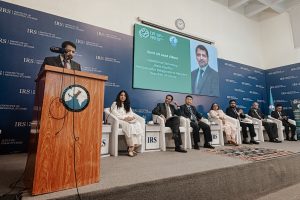
Carbon finance is emerging as a critical driver of economic growth and a key enabler of Ghana’s ambitious climate commitments. This was underscored at the Carbon Finance Workshop, co-hosted by the CVF-V20 Secretariat and the Voluntary Carbon Markets Integrity Initiative (VCMI), held in the margins of the 2026 Spring Meetings of the World Bank Group and the International Monetary Fund.
At the workshop, H.E. Issifu Seidu, Ghana’s Minister of State for Climate Change and Sustainability, outlined the country’s significant progress in scaling the high-integrity carbon market to support climate and development priorities.
Ghana has established a National Carbon Registry to collect, verify, and track emissions data and carbon market transactions. It has also created a Carbon Market Office to provide administrative and technical support for the implementation of both the international carbon market and non-market approaches.
In addition, Ghana has invested in a capacity-building roadmap to expand the pool of experts who can support the carbon market value chain. The training yielded 15 skilled carbon-market investment analysts, carbon-market lawyers, and corporate sustainability managers. A national carbon pricing strategy was also developed to explore innovative financing mechanisms and encourage industrial decarbonization.
With these efforts to establish a robust regulatory framework for carbon markets in Ghana, the country achieved key milestones. Ghana was able to authorize the transfer of one million carbon credits under Article 6 of the Paris Agreement. High-impact results of the national carbon market infrastructure include conserving over 50,000 hectares of forest through the REDD+ project, benefitting 100,000 people through climate-resilient agricultural practices, and mobilizing US$10 million in carbon revenue.
At the time being, Ghana has standing bilateral agreements with Switzerland, Singapore, and South Korea to explore cross-border carbon market development and advance carbon credit cooperation. Several projects are also lined up for the national carbon market pipeline. This includes the Ghana Forest Investment Program, expected to generate 10 million carbon credits; the Ghana REDD+ Program, targeting 5 million carbon credits; and the Solar Irrigation Project, aiming for 2 million carbon credits.
“The key takeaways for us are to ensure that we support project preparation, we have transparency and fairness, and a bottom-up, localized approach to project development,” H.E. Seidu emphasized during the workshop.
Scaling carbon markets through high-integrity, standardized projects could expand nature and climate investment pipelines, halve the cost of capital of implementing national climate plans, and generate a seven-fold impact for the host country of carbon projects. Witnessing these development-positive outcomes in Ghana, the Minister confidently urged fellow state members to unlock the potential of the carbon market and drive climate action. The CVF-V20 Secretariat and the VCMI stand ready to provide in-country capacity and expertise among its members, harnessing the growth of carbon markets to support national priorities and global climate goals.