Countries and Partners Share Perspectives on Delivery
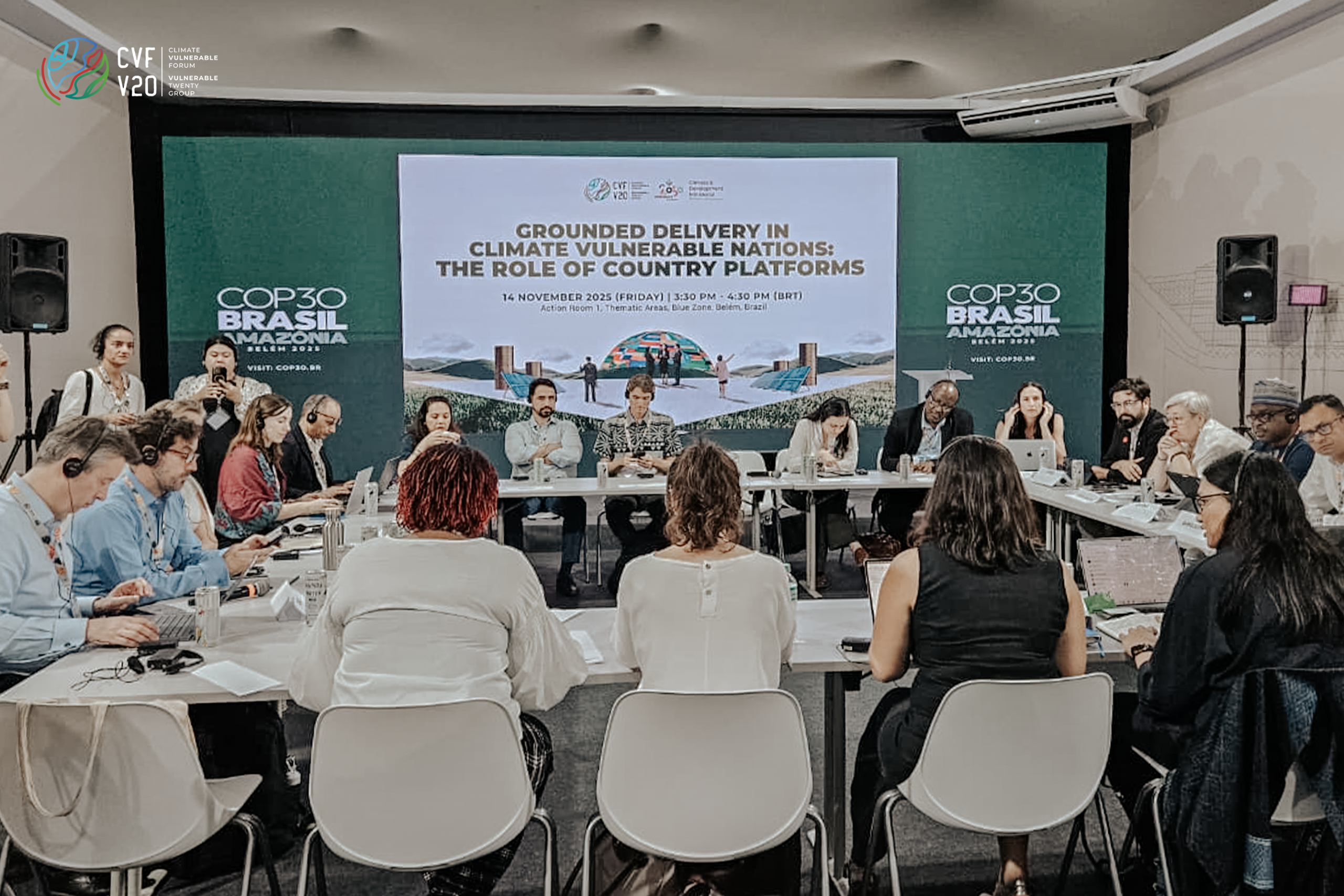
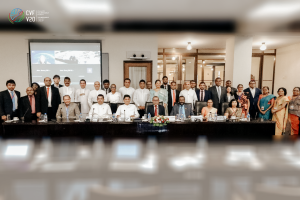
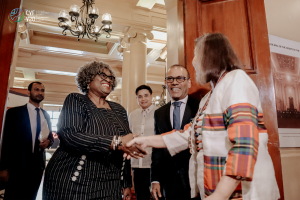
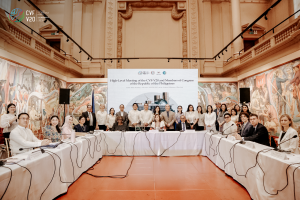
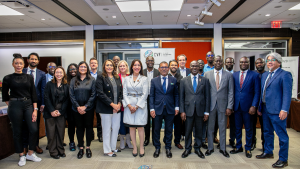
Belém, Brazil—At COP 30, senior officials from climate-vulnerable economies, developed countries, the COP30 Presidency, and key development partners¹ for a decisive shift toward country-led, mission-driven delivery anchored in strengthening national and local institutions and systems.
Meeting at the roundtable co-organized by the Climate Vulnerable Forum-V20 Finance Ministers (CVF-V20) Secretariat, the 2050 Pathways Platform, and the Climate and Development Ministerial Secretariat, participants agreed that the global climate agenda has reached a decisive stage where the focus must move to how to support implementation. Recognizing that coordination and implementation is not starting from zero and thus it is essential to build on what works and strengthen existing institutional arrangements, adapt quickly where approaches fall short, and scale proven solutions.
Implementation takes diverse forms at the national level
The session underscored that many developing countries have already established, or are building, a diverse set of coordination mechanisms. Countries and partners reflected the spirit of form following function, what it is called is less important than what it does.
These structures take many forms: from dedicated climate finance units in ministries, inter-ministerial platforms, national climate funds to climate laws that define goals and mandates, and financial institutions (such as national development banks) with clear missions. These varied approaches provide a strong foundation for channeling support for implementation.
Participants emphasized the importance of working within national and regional systems to mobilize financing for climate-resilient growth. Such efforts must be anchored in countries’ own priorities rather than external templates, recognising that no single model fits all. The diversity in pathways is a strength to be celebrated.
Rooted Delivery and Capacity Strengthening at the Core
To achieve meaningful impact, the discussion emphasized the need for technical and financial partners to be responsive to countries’ evolving needs. Rooted in mutual accountability and to align behind country-led strategies with predictable, programmatic approaches. Moreover, it emphasized that support must include systematic reinforcement of a country’s capacity, capabilities, and tools to deliver its climate and development targets.
This sits against the backdrop of widening structural pressures: climate exposure, retreating private capital, high debt servicing costs, and the shortage of concessional support underscores a structural imbalance in the global financial system. What’s required is fiscal headroom and the necessary toolkits.
Flexible finance, both in access and its conditions, was highlighted as critical not only for projects themselves but also for building and sustaining the systems that make delivery possible: developing strong pipelines, upgrading institutional and regulatory frameworks to catalyze new investment, and lowering transaction costs so investments reach the communities and sectors that need them most.
Partnerships and Reforming the Global Delivery Architecture
It was stressed that the delivery system must work through and not around the very countries it’s meant to serve. True progress depends on empowering nations to chart their own pathways and on trusting and investing in local and national institutions, systems, and expertise to drive delivery from the ground up.
There was a clear message that creating new or parallel structures must be avoided, and fragmentation reduced both at the national and international level. Initiatives that do not serve countries’ needs should be phased out.
Participants recognised that while important efforts are underway, much more remains to be done. Partners emphasized the need for systemic reform, making the international delivery system fit for purpose, urging greater coherence and collaboration among bilateral donors, UN agencies, international financial institutions, and climate funds. Ultimately simplifying and harmonizing access to finance, including processes to accelerate fund disbursement and enhance coherence across institutions while safeguarding accountability and quality.
Working Together for Greater Impact
Participants drew inspiration from the work of their peers and stressed the value of maintaining these exchanges going forward. They noted growing momentum for collaboration and for collective impact. Three (3) ongoing efforts were highlighted and will converge:
- The CVF-V20’s Practice and Innovation Exchange will capture lessons from implementation;
- The 2050 Pathways Platform’s Peer-to-Peer Learning Initiative will continue to strengthen exchange among countries. A new effort will document how Long-term Low Emissions Development Strategies (LT-LEDS) are being used in practice, capturing lessons, and identifying gaps for implementation; and
- The C&DM Secretariat is developing the forthcoming Country Platforms Action Toolkit, to be released in early 2026, to help LDCs and SIDS operationalize country-led, programmatic finance and strengthen delivery systems through adaptive, mission-driven approaches.
Together, these efforts reflect a move toward more coordinated, country-driven implementation.
Looking ahead, participants underscored their commitment to continued collaboration with the secretariats that support this broader ecosystem of delivery. The ongoing work of the CVF-V20, 2050 Pathways Platform, and C&DM Secretariat will remain essential in ensuring practical learning, peer exchange, and coherent support as countries move from planning to implementation.
Onward and upward–with renewed momentum as we reconvene in six months.
¹ Botswana, Brazil (COP30 Presidency and Ministry of Finance), Chile, Denmark, Ghana, The Gambia, Haiti, Ireland, Jamaica, Kyrgyzstan, Lebanon, Marshall Islands, Nepal, The Netherlands, Somalia, Sri Lanka, United Kingdom, Vanuatu, Azerbaijan (COP29 Presidency), Asian Development Bank (ADB), Children’s Investment Fund Foundation (CIFF), European Climate Foundation, Green Climate Fund (GCF), Iniciativa Climática de México (ICM), Inter-American Development Bank, NDC Partnership, Natural Resources Defense Council (NRDC)
***
About CVF-V20
The CVF-V20 represents 74 member-countries from small island developing states (SIDS), least developed countries (LDCs), low-to-middle income countries (LMICs), landlocked developing countries (LLDCs), and fragile and conflict-affected states (FCS). Working together, the CVF-V20 aims to achieve climate justice through the realization of Climate Prosperity Plans, which contain ambitious economic and financial resilience strategies designed to attract investment and resources that advance the attainment of the Sustainable Development Goals (SDGs), 30×30 Global Biodiversity, and help keep the average global temperatures to the Paris Agreement’s 1.5°C safety threshold.
Contact
For media enquiries, please contact [email protected].
For the latest updates, please follow us on:
- X – @TheCVF, @V20Group
- Facebook – Climate Vulnerable Forum
- Instagram – thecvf
- LinkedIn – climatevulnerableforum&v20
- Website – cvfv20.org
CVF-V20 Membership
Africa: Benin, Burkina Faso, Cabo Verde, Chad, Comoros, Côte d’Ivoire, Democratic Republic of the Congo, Eswatini, Ethiopia, Gabon, The Gambia, Ghana (Troika), Guinea, Kenya, Liberia, Madagascar, Malawi, Morocco, Mozambique, Namibia, Niger, Rwanda, Senegal, Sierra Leone, Somalia, South Sudan, Sudan, Tanzania, Togo, Tunisia, Uganda
Asia: Afghanistan, Bangladesh (Troika), Bhutan, Cambodia, Kyrgyzstan, Maldives, Mongolia, Nepal, Pakistan, Philippines, Sri Lanka, Timor-Leste, Vietnam
Caribbean: Barbados (Chair/Troika), Dominica, Dominican Republic, Grenada, Guyana, Haiti, Saint Lucia, Suriname, Trinidad and Tobago
Latin America: Colombia, Costa Rica, Guatemala, Honduras, Nicaragua, Paraguay
Middle East: Jordan, Lebanon, Palestine, Yemen
Pacific: Fiji, Kiribati, Marshall Islands, Nauru, Palau, Papua New Guinea, Samoa, Solomon Islands, Tonga, Tuvalu, Vanuatu
RELATED ARTICLES