Advancing Renewable Energy Leadership at the 16th IRENA Assembly
Abu Dhabi, UAE—The Climate Vulnerable Forum (CVF), the World Future Council (WFC), and the Global Renewables Congress (GRC) are proud to participate in and support the International Renewable Energy Agency (IRENA) at the 16th IRENA Assembly in Abu Dhabi, taking place from 10–12 January 2026.
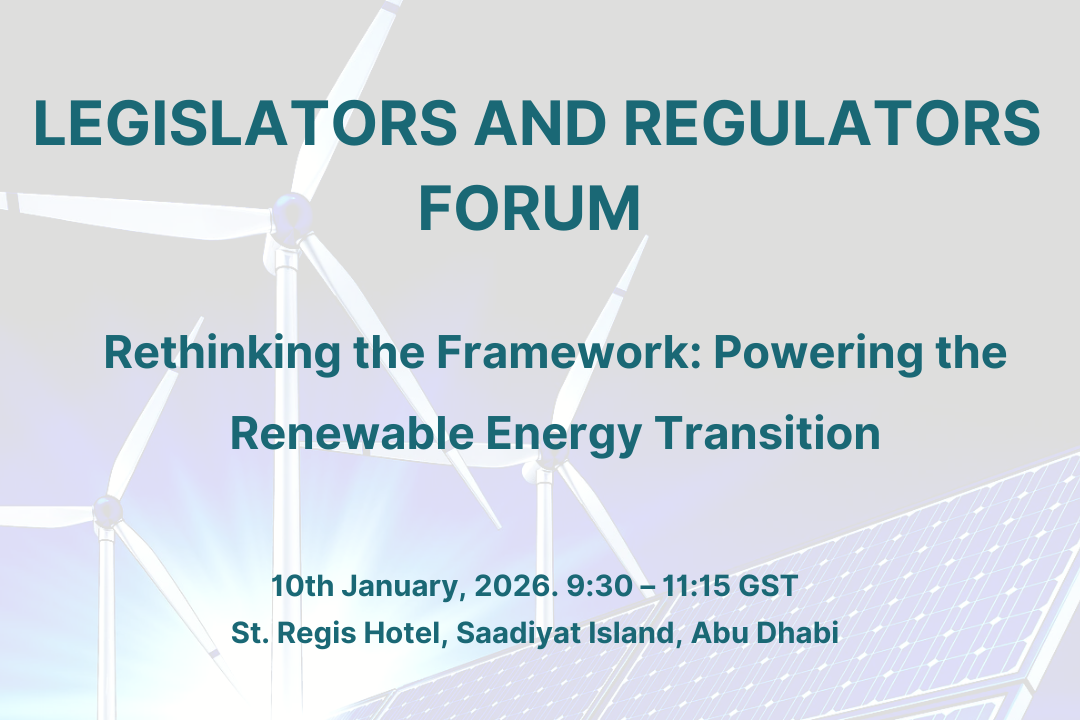
As countries move from climate commitments to concrete implementation, this year’s IRENA Legislators and Regulators Forum, held under the theme “Rethinking the Framework: Powering the Renewable Energy Transition,” will convene parliamentarians and energy regulators to examine how legislative and regulatory action can accelerate renewable energy deployment, unlock investment at scale, and ensure that the energy transition delivers inclusive and lasting socio-economic benefits.
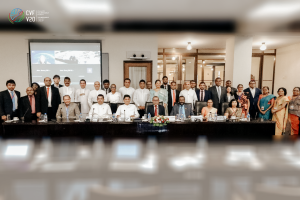
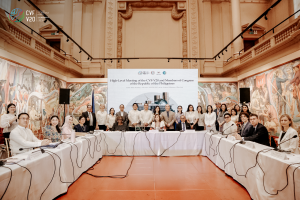
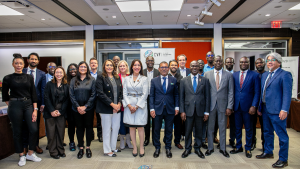
The GRC and CVF teams have facilitated the participation of Members of Parliament from 12 countries, including representatives from Ghana and Pakistan, who will engage in the Forum to advance enabling frameworks for renewable energy. These discussions come at a pivotal moment as the global community works to triple renewable energy capacity and double energy efficiency by 2030. While renewable technologies are increasingly cost-competitive, uneven investment flows, policy uncertainty, and high financing costs continue to slow progress in many markets.
The Forum will highlight how clear, predictable, and transparent governance frameworks are essential to de-risk investment, build market confidence, and mobilise both domestic and international capital.
Key priorities of the Forum include:
- Moving from control to enablement through regulatory innovation, power market and tariff reform, performance-based regulation, and balanced oversight that promotes competition and innovation while safeguarding consumer interests and access to affordable energy.
- Strengthening public sector leadership through renewable energy procurement and integration across government operations and infrastructure to stimulate demand and catalyse private sector action.
- Designing legislation and regulation to ensure a just and inclusive energy transition, supporting job creation, local value chains, skills development, and broader industrial growth.
In addition to the main Forum, CVF, WFC, and GRC are organising two dedicated side events during the Assembly:
- Legislators and Youth Dialogue – fostering intergenerational exchange on clean energy solutions.
- Climate Prosperity Plan Countries Legislators Knowledge-Sharing Breakfast – supporting peer learning and collaboration among policymakers from climate-vulnerable nations.
– Neshan Gunasekera, CEO, World Future Council
“The IRENA Legislators and Regulators Forum comes at a defining moment for climate-vulnerable economies. As countries move from ambition to implementation, the role of parliamentarians in shaping credible, investable, and socially just energy transitions has never been more critical. For CVF–V20 countries, this transition is not an abstract future goal; it is an immediate growth and development imperative tied to energy access, economic resilience, energy security, and the wellbeing of our people. Across the CVF–V20, countries are advancing Climate Prosperity Plans that place renewable energy at the centre of national development strategies. These plans demonstrate that climate action can drive growth, create jobs, enhance resilience, support adaptation, and reduce long-term economic risks. However, turning plans into reality requires more than executive commitment. It requires durable and strategic legislative frameworks that provide certainty to investors, protect consumers, and ensure that the benefits of the transition are shared fairly.”
– Sara Jane Ahmed, Managing Director, CVF-V20 Secretariat
The 2026 IRENA Legislators and Regulators Forum will take place on 10 January 2026, from 9:30 to 11:15 Gulf Standard Time, at the St. Regis Hotel, Saadiyat Island, Abu Dhabi.
Participants are also encouraged to engage in related events during the IRENA Assembly, including the 8th IRENA Public-Private Dialogue and Ministerial Roundtables, further enriching dialogue across public and private stakeholders on key enablers of the energy transition.
For more information contact: [email protected].
For Interview with WFC / GRC / CVF Sponsored MPs please contact: [email protected].
***
About CVF-V20
The CVF-V20 represents 74 member-countries from small island developing states (SIDS), least developed countries (LDCs), low-to-middle income countries (LMICs), landlocked developing countries (LLDCs), and fragile and conflict-affected states (FCS). Working together, the CVF-V20 aims to achieve climate justice through the realization of Climate Prosperity Plans, which contain ambitious economic and financial resilience strategies designed to attract investment and resources that advance the attainment of the Sustainable Development Goals (SDGs), 30×30 Global Biodiversity, and help keep the average global temperatures to the Paris Agreement’s 1.5°C safety threshold.
Contact
For media enquiries, please contact [email protected].
For the latest updates, please follow us on:
- X – @TheCVF, @V20Group
- Facebook – Climate Vulnerable Forum
- Instagram – thecvf
- LinkedIn – climatevulnerableforum&v20
- Website – cvfv20.org
CVF-V20 Membership
Africa: Benin, Burkina Faso, Cabo Verde, Chad, Comoros, Côte d’Ivoire, Democratic Republic of the Congo, Eswatini, Ethiopia, Gabon, The Gambia, Ghana (Troika), Guinea, Kenya, Liberia, Madagascar, Malawi, Morocco, Mozambique, Namibia, Niger, Rwanda, Senegal, Sierra Leone, Somalia, South Sudan, Sudan, Tanzania, Togo, Tunisia, Uganda
Asia: Afghanistan, Bangladesh (Troika), Bhutan, Cambodia, Kyrgyzstan, Maldives, Mongolia, Nepal, Pakistan, Philippines, Sri Lanka, Timor-Leste, Vietnam
Caribbean: Barbados (Chair/Troika), Dominica, Dominican Republic, Grenada, Guyana, Haiti, Saint Lucia, Suriname, Trinidad and Tobago
Latin America: Colombia, Costa Rica, Guatemala, Honduras, Nicaragua, Paraguay
Middle East: Jordan, Lebanon, Palestine, Yemen
Pacific: Fiji, Kiribati, Marshall Islands, Nauru, Palau, Papua New Guinea, Samoa, Solomon Islands, Tonga, Tuvalu, Vanuatu
RELATED ARTICLES