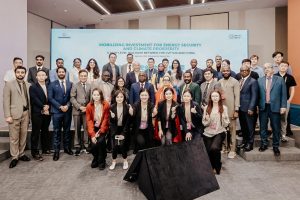


Islamabad, Pakistan—Senior government officials, multilateral development banks and finance institutions, and climate finance experts, convened at the Breathe Pakistan International Climate Change Conference 2026, issuing a call to urgently accelerate the delivery of Pakistan’s Climate Prosperity Plan (CPP) and warning that financing gaps and implementation delays risk undermining the country’s climate resilience goals.
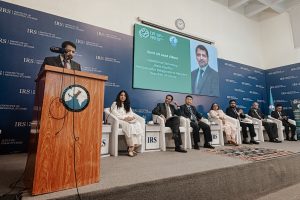
The high-level session titled “Mobilizing Climate Finance for Pakistan,” was held on May 6 and organized by Dawn Media in partnership with the Climate Vulnerable Forum and V20 Finance Ministers (CVF-V20) Secretariat and forms part of a broader national effort to translate climate ambition into concrete investment at scale.
Pakistan’s recently approved CPP, a multi-phase national investment roadmap that translates the country’s climate commitments into concrete, fundable projects, drew a clear consensus from speakers: the time for planning is over, and delivery must begin now.
Senator Muhammad Aurangzeb, Federal Minister of Finance, described the CPP as “a very good start in terms of looking at the pipeline and the projects which can help us in terms of adaptation,” but stressed that implementation is what matters. He urged the Ministries of Finance, Climate Change, and Planning to work coherently to integrate climate priorities into national budgeting. He warned that without embedding climate priorities into national budgets across the Ministries of Finance, Climate Change, and Planning, “it will remain a debating club—and as Pakistan, we cannot afford to be that.”
Mr. Hamza Haroon, Regional Director for West and South Asia of the CVF-V20 Secretariat, echoed the urgency: “We are experts at making plans. Our plans are beautiful, elegant, and carefully designed, but too many have ended up collecting dust. Pakistan’s CPP must not collect dust. It must collect checks.” The CPP Investor Book already lists bankable projects worth US$4.85 billion with an ambition to double that figure before COP31.
The panel discussion, moderated by Ms. Anam Rathor, Program Lead for West and South Asia of the CVF-V20 Secretariat, emphasized that the climate finance challenge is not primarily a shortage of capital but a failure to direct existing resources effectively.
Mr. Syed Adeel Abbas, Senior Climate Change Specialist and Regional Climate Lead of the World Bank Group, underscored that the real task is redirecting existing global investment flows toward resilient, low-carbon development, rather than waiting for new sources of climate funding.
Mr. Haroon identified four (4) structural barriers compounding the problem: inadequate scale, prohibitive costs, weak coordination, and constrained fiscal space. He characterized the current international financial architecture as “charging the most vulnerable a premium to carry a burden they did not create.”
Dr. Murtaza Syed, Acting Global Head for Ecosystem Development and Climate Economics of the Asian Infrastructure Investment Bank (AIIB), said that the World Bank estimates more than two-thirds of climate financing needs across emerging and developing economies must be generated domestically. “This is not a fight that external financing flows are going to resolve on their own,” he said, calling for stronger macroeconomic management and a lower country risk premium as prerequisites for attracting climate investment at scale.
Panelists were clear that the instruments needed to close the gap already exist, but what is missing is the architecture to deploy them. Mr. Anouj Mehta, Advisor at the Asian Development Bank (ADB), pointed to Thailand’s sovereign sustainability-linked bond, the first of its kind in Asia-Pacific, which raised nearly a billion dollars and was three times oversubscribed, as a model for Pakistan. “Capital markets work, and they work fast, if the instrument is well designed.”
Mr. Alain Beauvillard, Director for Strategy, Policy, and Innovation of the Green Climate Fund (GCF), highlighted Country Platforms as the missing link, coordinating governments, financiers, and the private sector around a single national pipeline.
Senator Musadik Masood Malik, Federal Minister for Climate Change and Environmental Coordination, cut through the finance debate with a challenge to the room: “Conversations do not save people. Something real has to happen.” He called for practical action on water stress, solid waste, and climate resilience. He also urged stakeholders to think beyond traditional loans and bonds, highlighting youth-led climate action as a cornerstone for supporting climate action in Pakistan.
The session concluded with a collective call to strengthen Pakistan’s climate finance architecture through coherent national investment plans such as Pakistan CPP.
***
The CVF-V20 represents 74 member countries from small island developing states (SIDS), least developed countries (LDCs), low to middle-income countries (LMICs), landlocked developing countries (LLDCs), and fragile and conflict-affected states (FCS). Working together, the CVF-V20 aims to achieve climate justice through the realization of Climate Prosperity Plans, which contain ambitious economic and financial resilience strategies designed to attract investment and resources that advance the attainment of the Sustainable Development Goals (SDGs), 30×30 Global Biodiversity, and help keep the average global temperatures to the Paris Agreement’s 1.5°C safety threshold.
Africa: Benin, Burkina Faso, Cabo Verde, Chad, Comoros, Côte d’Ivoire, Democratic Republic of the Congo, Eswatini, Ethiopia, Gabon, The Gambia, Ghana (Troika), Guinea, Kenya, Liberia, Madagascar, Malawi, Morocco, Mozambique, Namibia, Niger, Rwanda, Senegal, Sierra Leone, Somalia, South Sudan, Sudan, Tanzania, Togo, Tunisia, Uganda
Asia: Afghanistan, Bangladesh (Troika), Bhutan, Cambodia, Jordan, Kyrgyzstan, Lebanon, Maldives, Mongolia, Nepal, Pakistan, Palestine, Philippines, Sri Lanka, Timor-Leste, Vietnam, Yemen
Caribbean: Barbados (Chair/Troika), Dominica, Dominican Republic, Grenada, Guyana, Haiti, Saint Lucia, Suriname, Trinidad and Tobago
Latin America: Colombia, Costa Rica, Guatemala, Honduras, Nicaragua, Paraguay
Pacific: Fiji, Kiribati, Marshall Islands, Nauru, Palau, Papua New Guinea, Samoa, Solomon Islands, Tonga, Tuvalu, Vanuatu
For media enquiries, please contact [email protected].
For the latest updates, please follow us on: