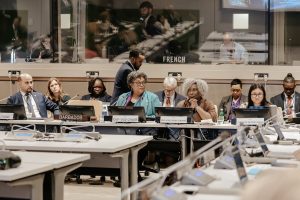
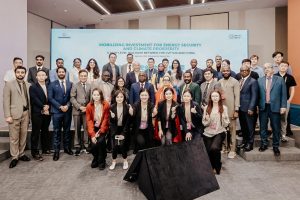
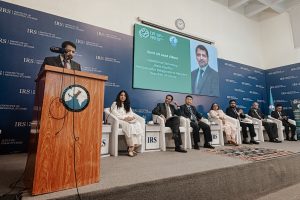
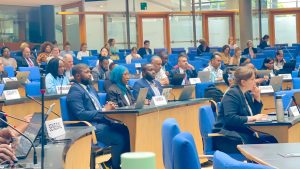
Ten municipalities from Lebanon, Palestine, and Jordan engaged with development banks and bilateral and multilateral donors at the Climate Finance Pathways Forum to mobilize resources for their subnational climate project proposals spanning water security and flood-risk reduction, nature-based solutions, climate-resilient infrastructure, urban cooling, solid waste management, and climate-smart agriculture.
The forum was the culmination of the six-month structured program led by the Global Covenant of Mayors for Climate and Energy–City Climate Finance Gap Fund Partnership (GCoM-Gap Fund Partnership), the United Nations Economic and Social Commission for Western Asia (ESCWA), and UN-Habitat. It was designed to empower Arab municipalities in transforming locally-identified climate priorities into finance-ready and nationally-aligned project concepts. This sought to contribute to building the regional pipeline of bankable climate change adaptation projects in Levant.
Initially, more than a hundred subnational governments expressed interest in joining the project, with only 13 municipalities advancing onto the next phase—10 of which were from CVF-V20 member states. Al-Naseem, Ghor Mazr’aa, Um-Basateen from Jordan; Aley, Leba’a, Majdal Anjar from Lebanon; and Ramallah–Al Bireh–Beitunia, Hebron, Illar and Attil, Abasan al-Kabira from Palestine were among the shortlisted.
Participating municipalities had rigorous training on concept inception, risk assessment, program management, pitching proposals, finance instrument formulation, and monitoring mechanisms. They also received capacity building on integrating gender inclusiveness and environmental safeguards within project proposals. More importantly, the training covered discussions on grants, concessional loans, blended finance, guarantees, green sukuk (Shariah-compliant bonds), municipal green bonds, and project preparation facilities. Altogether, the six-month workshop was dedicated to ensure feasibility, effectiveness, and bankability of outputs.
The 13 shortlisted proposals, including those from Lebanon, Palestine, and Jordan, represented a total amount of USD 44.5 million. Municipalities from the CVF-V20 member states championed projects on adaptation, desalination, clean energy infrastructure, and green pathways to address problems such as water scarcity and food insecurity. Although implemented locally, municipalities see these proposals as catalysts for accelerating progress toward the Sustainable Development Goals across the region.
These proposals gained interest among several financing institutions, indicating opportunities for structured funding partnerships. Empowering subnational governments supports the region in unlocking the necessary climate finance and investments required to address the risks of climate change.