Partners Rally in Banjul to Scale Climate Investments for The Gambia

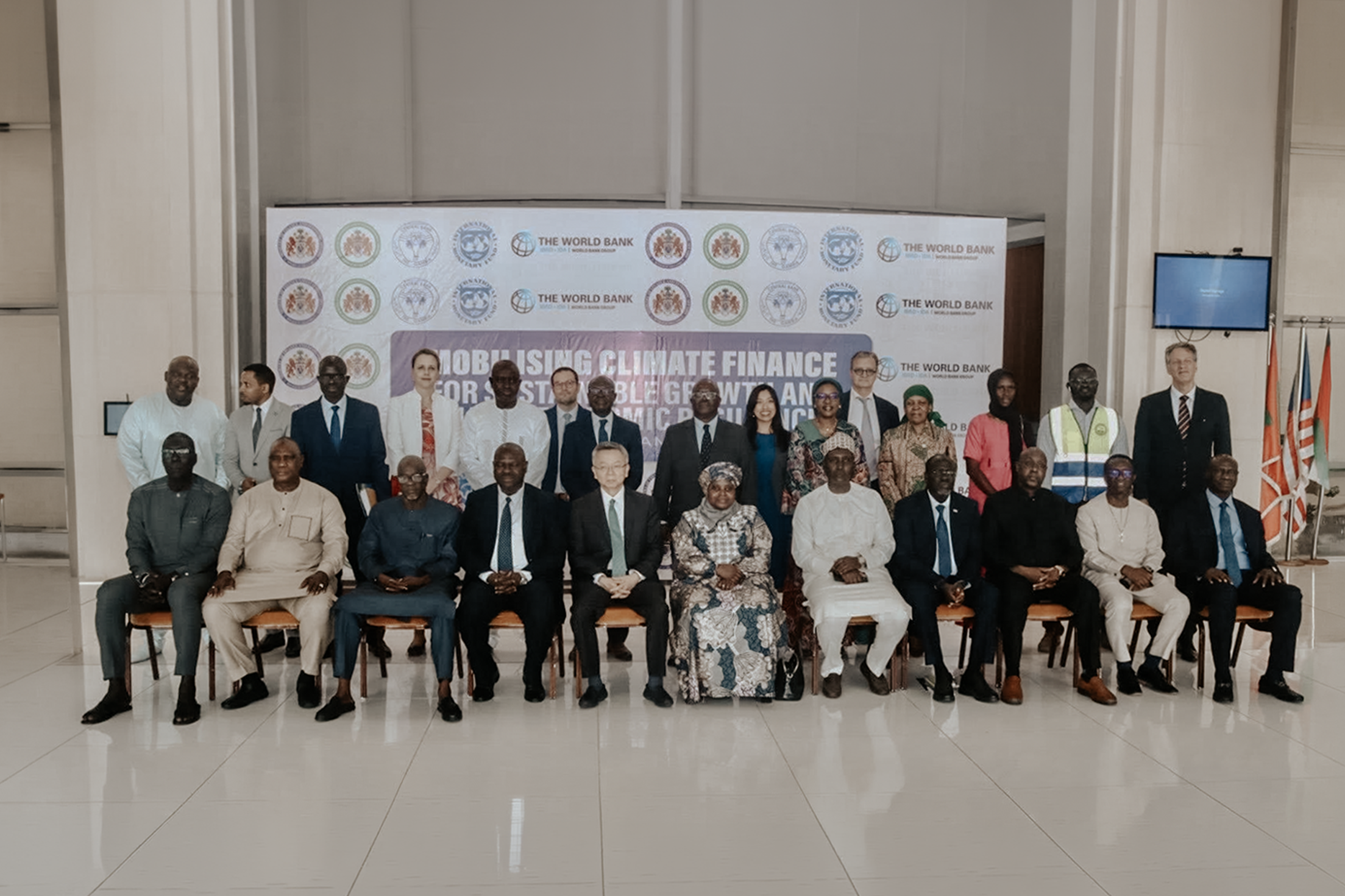
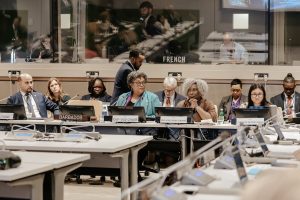
Participants gather at The Gambia’s first Climate Finance Roundtable, which brought together government officials, diplomats, international organizations, civil society, and private sector representatives, including the Deputy Managing Director of the International Monetary Fund. (Photo: The Gambia Ministry of Finance and Economic Affairs)

Banjul, The GambiaThe Government of The Gambia convened a high-level Climate Finance Roundtable in Banjul in collaboration with the International Monetary Fund (IMF) and the World Bank Group, bringing together senior government officials, development partners, and private sector leaders to shape a shared agenda for scaling climate-aligned investment and strengthening macroeconomic resilience.

 The roundtable took place at a critical juncture for The Gambia, as the country advances reforms under the IMF’s Resilience and Sustainability Facility (RSF) and an ongoing IMF-supported program aimed at safeguarding debt sustainability while creating fiscal space for climate investments. These reforms are strengthening climate-informed public financial management systems, climate data infrastructure, and the development of a national transition taxonomy.
In his remarks, the Minister of Finance and Economic Affairs, Hon Seedy Keita, underscored that climate change is already a macro-critical challenge for The Gambia, affecting agriculture, threatening coastal infrastructure, and placing increasing pressure on livelihoods through recurrent flooding, coastal erosion, and saltwater intrusion. At the same time, he emphasized a clear strategic shift, positioning climate action not only as a response to vulnerability but as a driver of economic transformation and long-term prosperity. 
 
Against this backdrop, the Ministry of Economy and Finance presented the Gambia Climate Prosperity Investment and Financing Strategy, supported by the CVF-V20. This comprehensive national framework consolidates the country’s sector plans and development strategies, NDCs, Long-Term Climate Strategy (2050), National Adaptation Plan, and other evolving development priorities into a single, coherent investment framework with clusters of keystone projects, reinforcing a shift toward programmatic, investment-ready pipelines. The strategy is explicitly designed to mobilize capital at scale by reducing fragmentation, deploying innovative financing structures that not only mitigate risk but also enable capital to flow at the scale and cost required for transformation.
 
The Minister highlighted that climate-aligned investments are central to strengthening macroeconomic stability while unlocking new engines of growth, highlighting investments in: 
  • renewable energy and green industrial zones to reduce fossil fuel import dependence, enhance  competitiveness, and ease foreign exchange pressures;  
  • climate-smart agriculture to boost productivity, food security, and export competitiveness;
  • nature-based solutions to protect coastlines while generating new value chains in ecotourism and environmental services; and climate-resilient cities, water security, and circular economy systems. 
 
Importantly, the strategy positions The Gambia within a broader regional investment landscape, highlighting opportunities for cross-border climate investments that leverage shared ecosystems, infrastructure, and trade corridors, particularly in alignment with the African Continental Free Trade Area (AfCFTA) and the Economic Community of West African States (ECOWAS) integration agenda.
 
Key discussions during the roundtable reinforced:
  • The urgency of moving from fragmented, project-based approaches to programmatic investment pipelines; 
  • The central role of blended finance and de-risking instruments, including guarantees, first-loss capital, and viability gap financing, crowding in private investment; 
  • The importance of project preparation facilities and country platforms in accelerating execution; and 
  • The growing role of disaster risk financing and insurance in safeguarding macroeconomic stability.
 
The CVF-V20 Secretariat reaffirmed its commitment to supporting the implementation of this strategy through a country platform led by the Ministry of Finance and Economic Affairs,  aimed at strengthening coordination, aligning partners, and delivering a unified pathway to climate-resilient growth.
 
Speaking at the roundtable, Yussuf Hussein, Regional Director for Africa of the CVF-V20 Secretariat, on the issue of risks, perceptions of risk, and cost of capital, highlighted that the core constraint is not risk itself, but mispriced and misunderstood risk. Drawing on evidence from the Global Emerging Markets Risk Database, which covers over three decades of MDB and DFI investments, he noted that default rates in emerging markets are significantly lower than widely perceived, with sovereign default rates below 1% and high recovery rates. This evidence reinforces the case for scaling private capital into climate-vulnerable economies.
 
The roundtable concluded with a commitment among partners to deepen collaboration, align financing instruments, and accelerate the implementation of high-impact, climate-resilient investments in The Gambia.


***

About CVF-V20

The CVF-V20 represents 74 member countries from small island developing states (SIDS), least developed countries (LDCs), low to middle-income countries (LMICs), landlocked developing countries (LLDCs), and fragile and conflict-affected states (FCS). Working together, the CVF-V20 aims to achieve climate justice through the realization of Climate Prosperity Plans, which contain ambitious economic and financial resilience strategies designed to attract investment and resources that advance the attainment of the Sustainable Development Goals (SDGs), 30×30 Global Biodiversity, and help keep the average global temperatures to the Paris Agreement’s 1.5°C safety threshold.

CVF-V20 Membership

Africa: Benin, Burkina Faso, Cabo Verde, Chad, Comoros, Côte d’Ivoire, Democratic Republic of the Congo, Eswatini, Ethiopia, Gabon, The Gambia, Ghana (Troika), Guinea, Kenya, Liberia, Madagascar, Malawi, Morocco, Mozambique, Namibia, Niger, Rwanda, Senegal, Sierra Leone, Somalia, South Sudan, Sudan, Tanzania, Togo, Tunisia, Uganda

Asia: Afghanistan, Bangladesh (Troika), Bhutan, Cambodia, Kyrgyzstan, Maldives, Mongolia, Nepal, Pakistan, Philippines, Sri Lanka, Timor-Leste, Vietnam

Caribbean: Barbados (Chair/Troika), Dominica, Dominican Republic, Grenada, Guyana, Haiti, Saint Lucia, Suriname, Trinidad and Tobago

Latin America: Colombia, Costa Rica, Guatemala, Honduras, Nicaragua, Paraguay

Middle East: Jordan, Lebanon, Palestine, Yemen

Pacific: Fiji, Kiribati, Marshall Islands, Nauru, Palau, Papua New Guinea, Samoa, Solomon Islands, Tonga, Tuvalu, Vanuatu

Contact

For media enquiries, please contact [email protected]

For the latest updates, please follow us on: