As a low-lying atoll nation in the Pacific, Kiribati stands on the front lines of the global climate crisis. Classified by the United Nations as both a Small Island Developing State and a Least Developed Country, the country faces mounting economic pressures that amplify the scale and urgency of climate risks. For Kiribati, climate change is not only an environmental threat but fundamentally a financial and development challenge.
Recognizing this reality, Kiribati has accelerated macroeconomic and institutional reforms to strengthen fiscal resilience, mobilize climate finance, and safeguard long-term economic stability. Central to these efforts is the country’s renewed focus on transforming climate ambition into investable action.
Efforts are now underway to update Kiribati’s Nationally Determined Contribution (NDC) Investment Plan, with the support of the Regional Pacific NDC Hub. First developed in 2021. the investment plan provides a structured roadmap for translating national climate targets into concrete investment opportunities.
The original strategy identifies 15 primary and nine secondary mitigation opportunities across priority sectors. Nine mitigation opportunities in the transport sector and six in energy efficiency have been assessed for their cost-effectiveness. According to the Regional Pacific NDC Hub, primary mitigation opportunities in transport have an estimated mitigation cost of approximately USD 1,400 per tonne of CO₂ equivalent, while energy efficiency measures could achieve mitigation at roughly USD 760 per tonne.
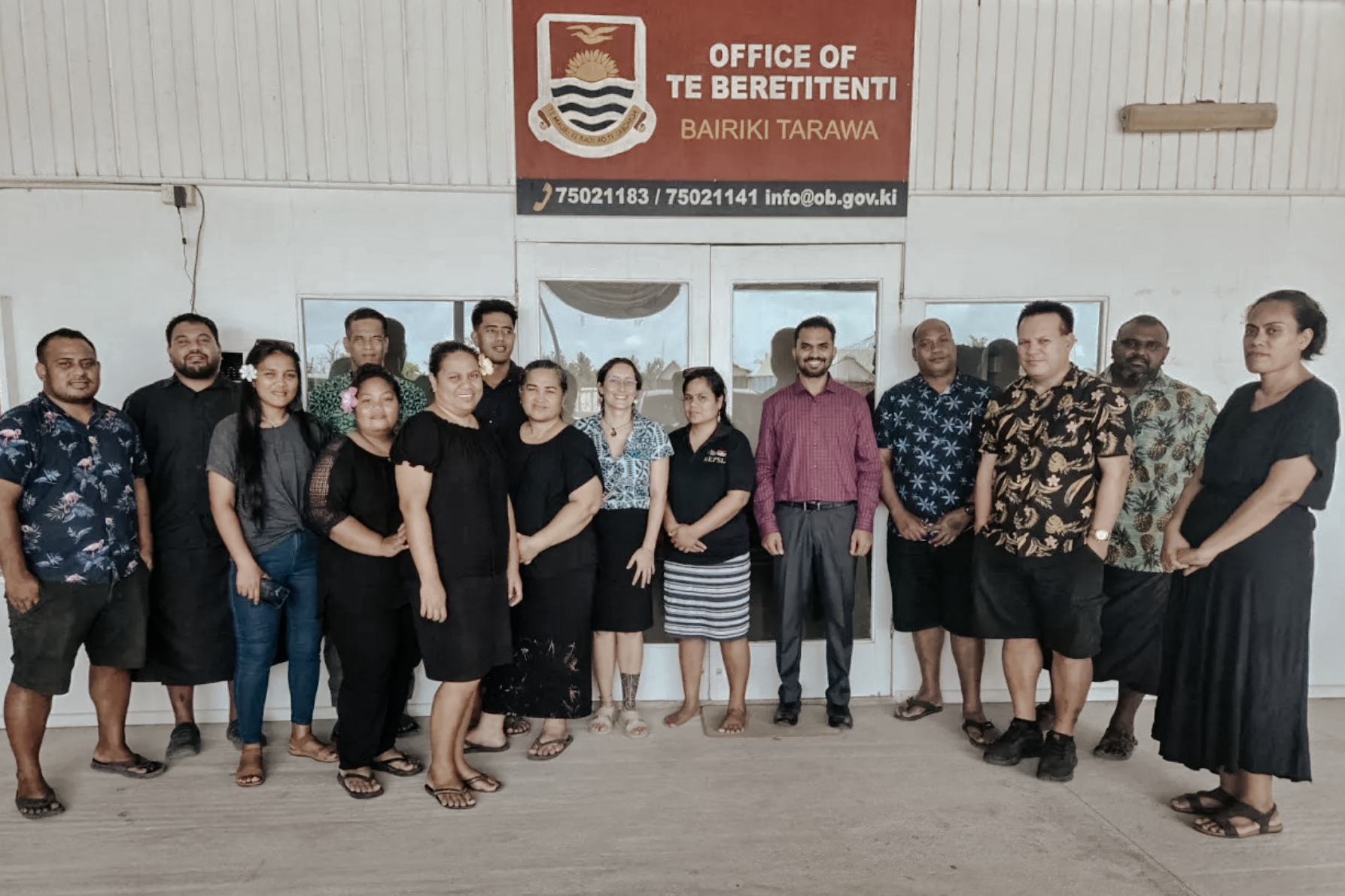
Key stakeholders from national ministries, state-owned enterprises, technical training institutions, and private sector representatives met from January 20 to 26 this year in South Tarawa to review these mitigation strategies and streamline priority pipeline projects capable of delivering optimal climate and development benefits. They examined different prioritization approaches and identified initiatives that require further development into detailed concept notes and investment-ready proposals. Conversations also explored which operational opportunities shall be strengthened and which implementation barriers shall be addressed.
The review ensured the Investment Plan aligns with its original objective: to identify market opportunities and mitigation strategies across sectors, and to define the system structures and financial instruments needed to attract potential investors and partners in support of the project pipeline.
The success of the investment plan will be instrumental in advancing the set targets in Kiribati’s NDC. For Kiribati, roadmaps such as the investment plan go beyond mere international compliance; they represent a national survival strategy, one that seeks to drive economic growth and advance sustainable development amid an escalating climate crisis.