The Gambia Validates Bold Climate Prosperity Investment and Financing Strategy to Unlock Green Growth and Resilience
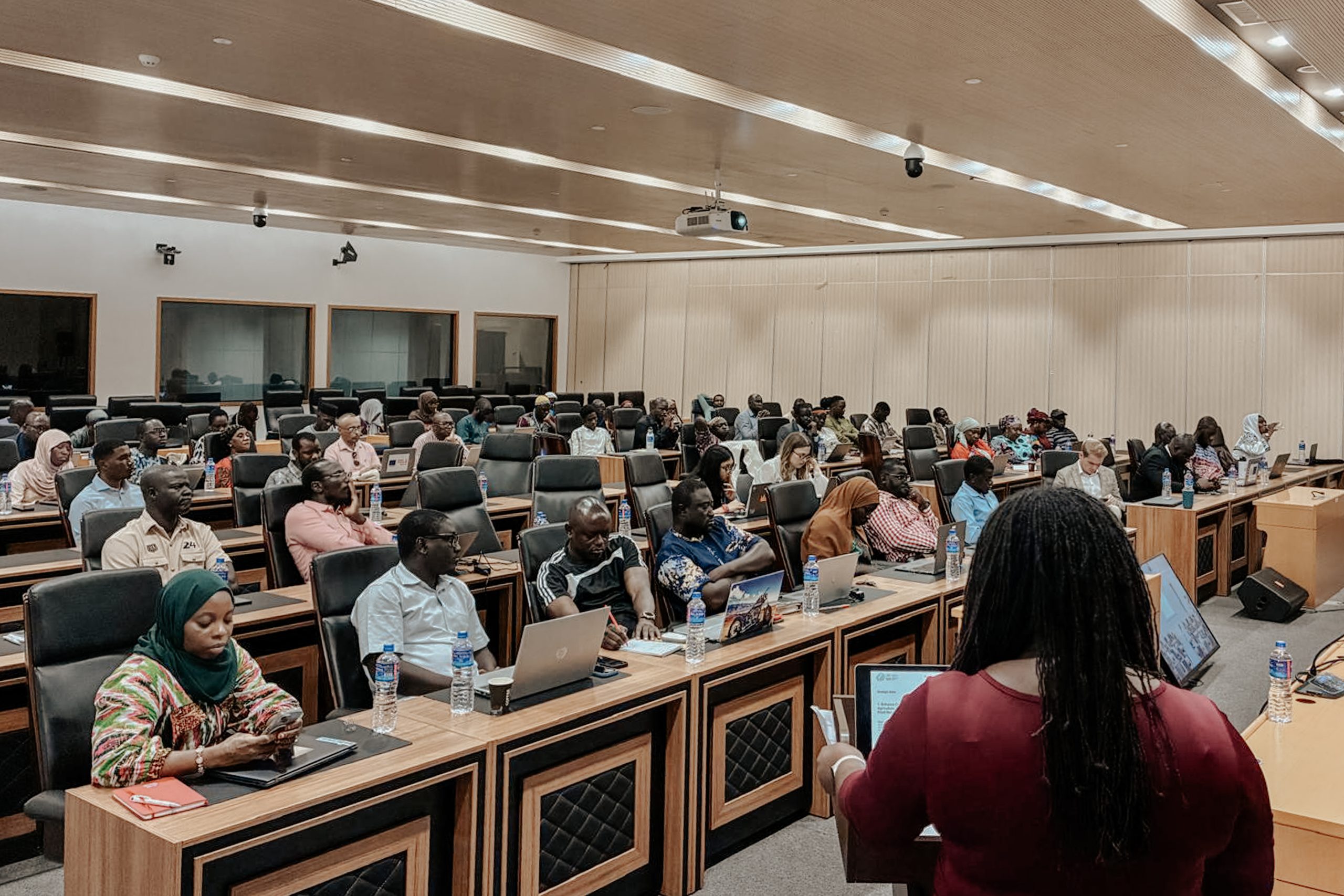
Banjul, The Gambia—The Ministry of Finance and Economic Affairs (MoFEA) and the Ministry of Environment, Climate Change and Natural Resources (MECCNAR), in collaboration with the CVF-V20 Secretariat, hosted a national validation workshop in October for The Gambia’s Climate Prosperity Investment and Financing Strategy in Banjul.
The workshop brought together government agencies, development partners, civil society, youth leaders, and the private sector to review and endorse a unified national strategy that will guide climate-resilient investments and sustainable economic transformation.
Opening the event, Mr. Baboucarr Jobe, Permanent Secretary of the Ministry of Finance and Economic Affairs, underscored that climate change is not a distant threat but an urgent economic and development challenge. Rising sea levels, erratic rainfall, floods, and droughts are already impacting livelihoods and straining national resources. He emphasized that the Strategy consolidates fragmented initiatives into a single national investment framework aligned with the country’s Nationally Determined Contributions (NDCs), Long-Term Climate Strategy, National Development Plan, and sectoral plans.
According to Mr. Jobe, “This Strategy speaks with one voice to our partners. It is nationally owned, anchored in our development priorities, and capable of unlocking financing at scale.” He called for all stakeholders to support the Country Platform mechanism that will coordinate implementation across government, development partners, and the private sector.
Delivering the keynote, Ms. Sara Jane Ahmed, Managing Director of the CVF-V20 Secretariat, highlighted the structural injustices of the international financial system that have left vulnerable countries paying the highest price for adaptation despite contributing the least to global emissions. She stressed that the Gambia’s Strategy demonstrates how climate action can drive resilience, competitiveness, and prosperity.
“Climate vulnerability is not destiny. The Climate Prosperity Strategies are designed to break this cycle and leverage our demographic dividends. The Gambia’s Strategy shows that climate action and economic growth can go hand in hand,” Ms. Ahmed noted.
She assured that the CVF-V20 Secretariat will continue to support The Gambia from strategy validation through to implementation, including pipeline development, mobilization of capital, and technical support on modeling for decision making and financial structuring.
Mr. Bubacarr Zaidi Jallow, Deputy Permanent Secretary of MECCNAR, emphasized the importance of embedding resilience across all sectors—agriculture, energy, industry, and urban development—while safeguarding natural ecosystems. He reaffirmed MECCNAR’s commitment to ensuring that environmental sustainability remains central to implementation.
Ms. Isatou F. Camara, Director of the Climate Finance Directorate at MoFEA, provided an overview of the rigorous and inclusive process that shaped the Strategy. She noted that it was built on background research, macroeconomic modeling, and extensive consultations with ministries, private sector actors, civil society, and youth groups. She highlighted that “the strength of the Gambia Climate Prosperity Investment and Financing Strategy lies in the ownership and shared responsibility across all actors.” “Our priority now is to shift from planning to delivery—mobilizing financing, partnerships, and innovations needed to transform climate risks into opportunities for every Gambian,” she added.
The validated Strategy sets out a clear pathway for The Gambia:
- Doubling GDP growth by 2050 compared to business-as-usual.
- Cutting poverty by more than half, lifting hundreds of thousands into prosperity.
- Creating over 25,000 new green jobs by mid-century.
- Achieving universal electricity access by 2026 and near-universal clean cooking by 2050.
- Unlocking innovative financing through blended capital, guarantees, and domestic market deepening.
With validation complete, The Gambia will now operationalize the Strategy through its Country Platform, a national coordination mechanism that brings together government, the private sector, civil society, development partners, and youth leaders to ensure delivery and accountability.
***
About CVF-V20
The CVF-V20 represents 74 member-countries from small island developing states (SIDS), least developed countries (LDCs), low-to-middle income countries (LMICs), landlocked developing countries (LLDCs), and fragile and conflict-affected states (FCS). Working together, the CVF-V20 aims to achieve climate justice through the realization of Climate Prosperity Plans, which contain ambitious economic and financial resilience strategies designed to attract investment and resources that advance the attainment of the Sustainable Development Goals (SDGs), 30×30 Global Biodiversity, and help keep the average global temperatures to the Paris Agreement’s 1.5°C safety threshold.
Contact
For media enquiries, please contact [email protected].
For the latest updates, please follow us on:
- X – @TheCVF, @V20Group
- Facebook – Climate Vulnerable Forum
- Instagram – thecvf
- LinkedIn – climatevulnerableforum&v20
- Website – cvfv20.org
CVF-V20 Membership
Africa: Benin, Burkina Faso, Cabo Verde, Chad, Comoros, Côte d’Ivoire, Democratic Republic of the Congo, Eswatini, Ethiopia, Gabon, The Gambia, Ghana (Troika), Guinea, Kenya, Liberia, Madagascar, Malawi, Morocco, Mozambique, Namibia, Niger, Rwanda, Senegal, Sierra Leone, Somalia, South Sudan, Sudan, Tanzania, Togo, Tunisia, Uganda
Asia: Afghanistan, Bangladesh (Troika), Bhutan, Cambodia, Kyrgyzstan, Maldives, Mongolia, Nepal, Pakistan, Philippines, Sri Lanka, Timor-Leste, Vietnam
Caribbean: Barbados (Chair/Troika), Dominica, Dominican Republic, Grenada, Guyana, Haiti, Saint Lucia, Suriname, Trinidad and Tobago
Latin America: Colombia, Costa Rica, Guatemala, Honduras, Nicaragua, Paraguay
Middle East: Jordan, Lebanon, Palestine, Yemen
Pacific: Fiji, Kiribati, Marshall Islands, Nauru, Palau, Papua New Guinea, Samoa, Solomon Islands, Tonga, Tuvalu, Vanuatu