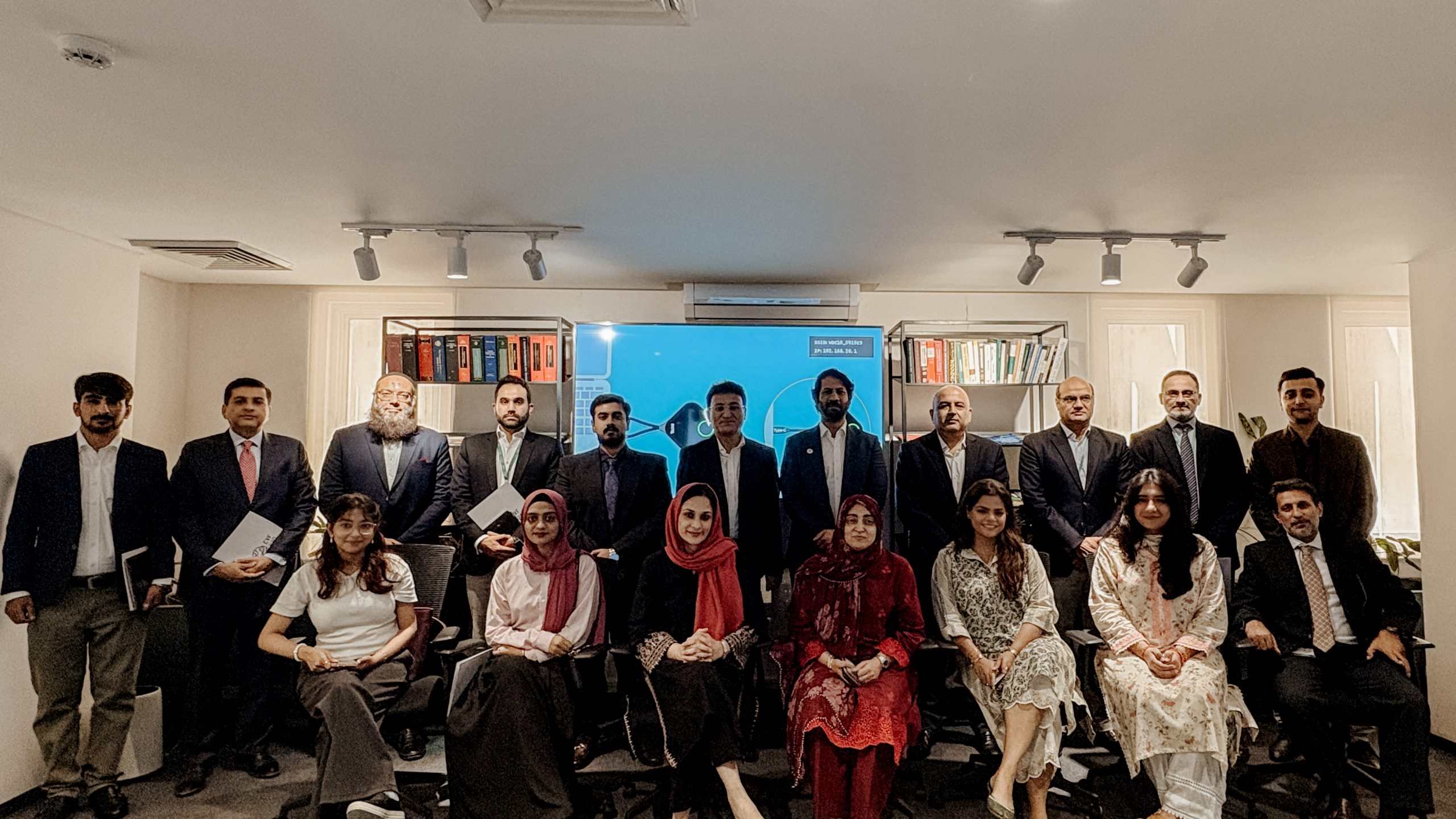
As part of the ongoing in-country consultations for the Pakistan Climate Prosperity Plan (CPP), the CVF-V20 visited the city of Karachi in Sindh on September 3 to 4 to engage with the province’s public–private ecosystem on climate investment and innovation.
The delegation including Regional Lead South Asia Hamza Ali Haroon, Pakistan CPP Lead Anam Rathor, Project Lead Muhammad Haseeb Khan, and South Asia Coordination Officer Zeshan Masood held a series of meetings with the Public-Private Partnership (PPP) Unit Sindh, Pakistan Business Council (PBC), Pakistan Agriculture Coalition (PAC), JS Bank, and Davaam, focusing on project integration, financing pathways, and green market opportunities.
The consultations underscored Sindh’s dynamic role in advancing climate-smart growth through private-sector participation. At the PPP Unit, discussions centered on large-scale infrastructure and clean-energy projects, including electric bus and charging networks, afforestation, wastewater treatment plants, circular railways, carbon credit programs, solid waste management, and green economic zones linked to foreign investment. The PPP Unit expressed a strong interest in aligning its project pipeline with the CPP to enhance bankability and investor outreach.
In meetings with the Pakistan Agriculture Coalition (PAC), the CVF-V20 explored opportunities in solar irrigation, electronic warehouse receipts, and climate-resilient rice and wheat value chains. PAC shared its existing partnerships with financial institutions and highlighted barriers, including machinery costs, heat stress, and limited insurance coverage. Discussions focused on integrating PAC’s initiatives into the CPP, improving access to concessional finance, and exploring climate insurance and re-insurance mechanisms.
With the Pakistan Business Council (PBC), the dialogue focused on accelerating bankable climate projects across sectors, including renewable energy, transport, agriculture, waste management, and export competitiveness in the context of the Carbon Border Adjustment Mechanism. Both sides emphasized collaboration among the government, the private sector, and development partners to advance sustainability bonds, risk-guarantee instruments, and blended finance access.
The meeting with JS Bank highlighted the growing interest of Pakistan’s financial institutions in climate-aligned lending. Discussions covered the bank’s GCF pipeline of renewable-energy and agri-financing projects, its participation in a USD 1.5 billion wind-energy venture, and ongoing work on a Green Bond with Bank Islami. Opportunities were identified for joint seminars and financing frameworks under the CPP to mobilize concessional and private capital.
The delegation also met with Davaam, a Karachi-based circular-economy start-up deploying automated refill machines for detergents, oils, and personal-care products to reduce plastic waste and emissions. CVF-V20 encouraged Davaam to include its national expansion plan within the CPP to attract climate investment and scale women-led micro-franchise models.
The Karachi consultations showcased Sindh’s vibrant climate investment landscape anchored in entrepreneurship, innovation, and financial sector engagement. They also reaffirmed the CPP’s role as a unifying national platform connecting public and private actors to design, finance, and scale climate-resilient development.