Vanuatu is among the nations most vulnerable to the climate crisis. These environmental shifts often worsen existing socioeconomic gaps, disproportionately pushing women toward poverty and marginalization. Despite these challenges, Ni-Vanuatu women have emerged as resilient leaders, transforming how their communities prepare for and recover from disasters.
The roots of this leadership began in 2015, following the devastation of Cyclone Pam. The Vanuatu Department of Women’s Affairs, supported by ActionAid, established “knowledge centers” to provide a safe space for ni-Vanuatu women and girls, including those with disabilities, to identify their protection needs and find short- and long-term solutions to ensure self-resilience. This initiative evolved into Women I TokTok Tugeta (WITTT), a locally-led network of over 9,000 women across five islands.
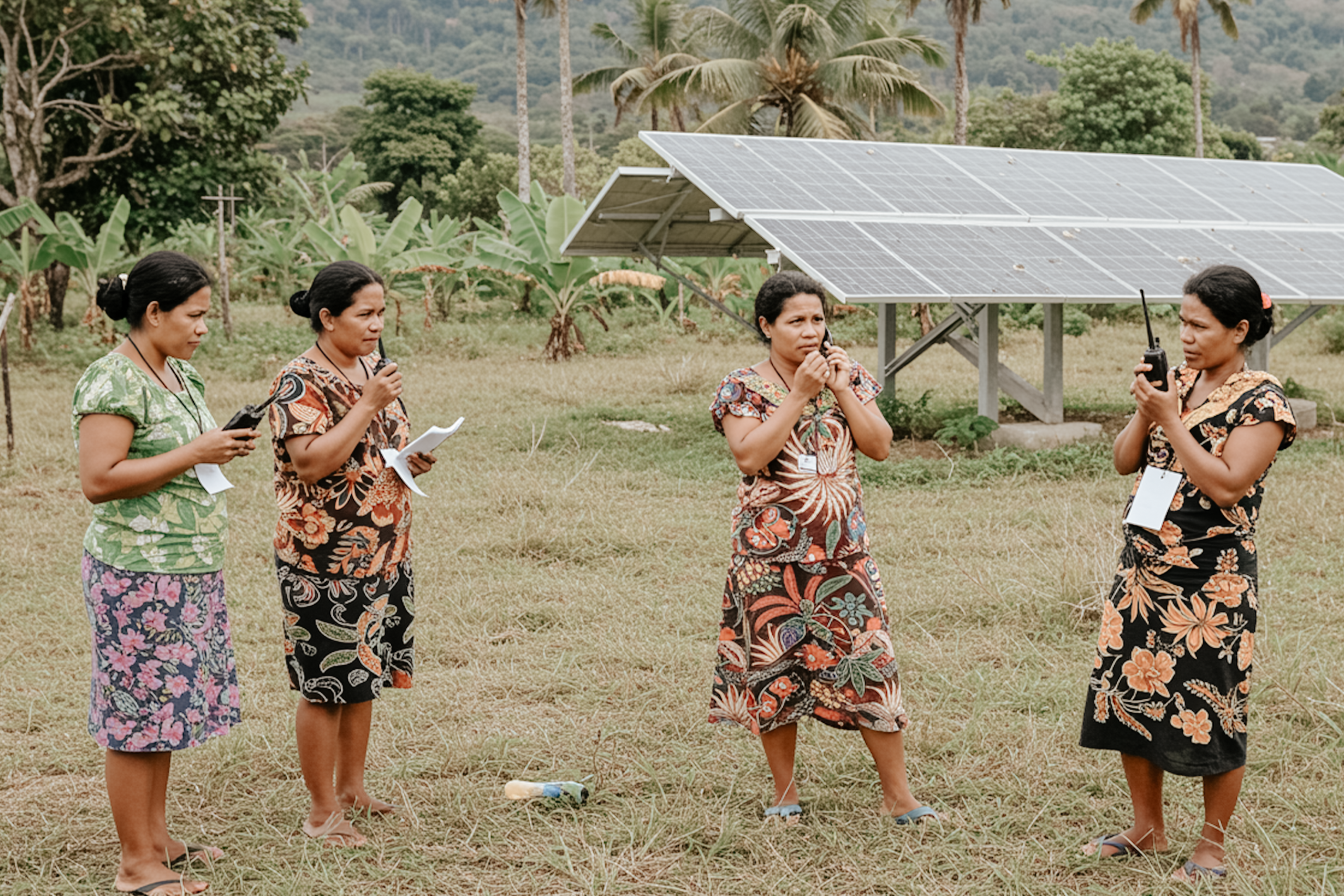
One of the most successful innovations of this movement is the Women Wetem Weta (Women Weather Watch) system. Recognizing that traditional disaster warnings often failed to reach the most isolated community members, WITTT members took charge of the communication chain. Using SMS, VHF radio, and phone trees, women provide local, real-time weather updates to their communities. They ensure that warnings reach the elderly, people with disabilities, and those in remote areas who are often overlooked by conventional systems. Beyond communication, the network has audited and improved evacuation centers to ensure they are safe, accessible, and gender-responsive.
Climate resilience is inseparable from economic security. The intensifying impacts of climate change have also prompted the network to expand into sustainable energy solutions.
In the community of Lawital, WITTT spearheaded a solar energy project that now powers 115 households and 10 public spaces. By training local women to install and maintain these solar systems, the project has provided clean energy to 800 people while creating new technical roles for women, effectively dismantling local gender stereotypes.
The strength of movements like WITTT lies in women’s lived experiences, woven into the broader fabric of social cohesion and resilience. Today, the network continues to break barriers, transforming societal stereotypes into opportunities—for themselves and their communities.