
At the 16th IRENA Assembly in Abu Dhabi, CVF-V20 parliamentarians highlighted the acceleration of renewable energy unconstrained through technology and aspiration, and the effectiveness of policy frameworks, institutional coordination, and political leadership.
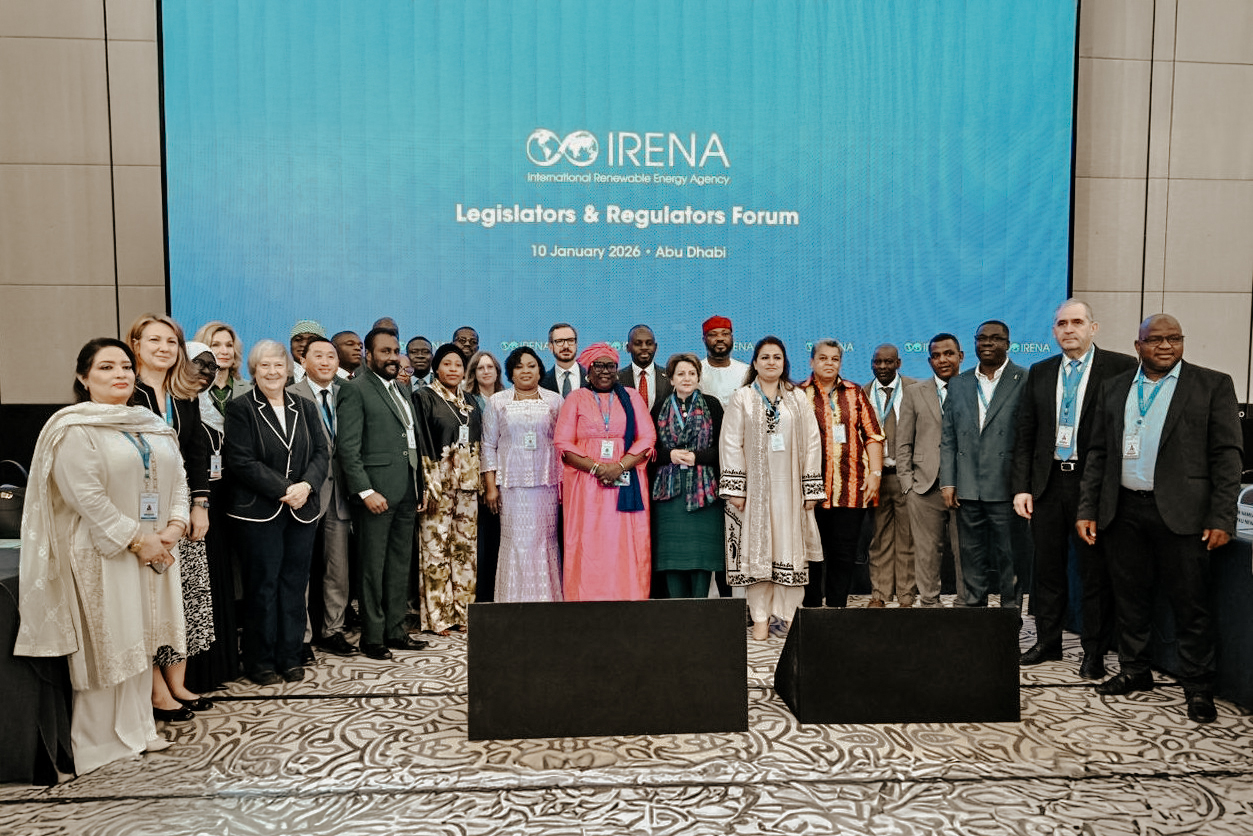
Legislators and energy regulators from CVF-V20 countries joined global counterparts at the IRENA Legislators and Regulators Forum, held during the 16th IRENA Assembly on January 10, to advance legislative and regulatory solutions designed to accelerate renewable energy deployment while delivering inclusive, resilient development.
Under the theme “Rethinking the Framework: Powering the Renewable Energy Transition,” the Forum convened parliamentarians and regulators at a pivotal moment as countries move from ambition to implementation amid tightening fiscal space, rising energy import costs, and growing pressure to align energy security with development priorities. Against this backdrop, parliamentarians underscored the key insight: implementation failures are increasingly legislative and regulatory, rather than technological.
Participants from CVF–V20 countries highlighted that while renewable energy technologies are increasingly cost-competitive, progress remains uneven due to policy uncertainty, fragmented regulatory frameworks, and high financing costs—particularly in climate-vulnerable and emerging economies. Across discussions, speakers consistently stressed that clear, predictable, and transparent governance frameworks are essential to de-risk investment, mobilise capital, and build long-term market confidence.
LONG-TERM POLICY ALIGNMENT AS AN INVESTMENT SIGNAL: NAMIBIA
Hon. Phillipus Katamelo, Deputy Speaker of Parliament of Namibia, emphasized that Namibia’s momentum in renewable energy and green hydrogen is the result of deliberate policy alignment rather than isolated decisions.
“Namibia’s momentum in green hydrogen did not arise from a single policy decision, but from a sequence of deliberate reforms that created clarity, credibility, and confidence for investors,” Katamelo said.
He highlighted the importance of anchoring energy reform within long-term national planning: “The government signaled early that green hydrogen is a national economic pillar, embedded within Vision 2030, the Sixth National Development Plan, and Namibia’s updated climate commitments. This alignment across planning, energy, and industrial policy reduced policy uncertainty and gave long-term confidence to the market.”
LEGISLATIVE LEADERSHIP AND SOCIAL INCLUSION IN SENEGAL
Senegal’s National Assembly is a trusted actor ensuring policy transparency and continuity, and it is this stability that creates the right conditions for investment and conversation, Hon. Adji Diarra Mergane, Member of Parliament, said.
“Parliament considers the energy transition not only as a technical transformation but as a means of social justice and territorial cohesion,” Hon. Oumar Sy, Member of Senegal’s Parliament, added. “Thanks to legal reform and parliamentary leadership, every kilowatt of renewable energy deployed contributes to social cohesion, shared prosperity and a just transition for our communities,” he said.
ENERGY TRANSITION AS ECONOMIC RESILIENCE IMPERATIVE IN PAKISTAN AND SRI LANKA
From Pakistan, Hon. Zeb Jaffar, Member of Parliament, highlighted the energy transition as inseparable from economic resilience and development priorities in climate-vulnerable economies.
“Pakistan’s energy transition is not about emissions but also about resilience. Repeated climate shocks and recent energy crises exposed the risks of heavy reliance on imported coal and gas, leaving households, industry, and public finances vulnerable to global price shocks,” she noted.
She also stressed the importance of integrated delivery mechanisms. “Climate Prosperity Plans (CPPs) position renewable energy as a driver of growth, but they require dedicated delivery mechanisms, legislative backing, and coordination to move from ambition to outcomes.”
From Sri Lanka, Hon. Hector Appuhamy, Member of Parliament, described how Parliament is advancing renewable energy amid economic pressures, ensuring that energy transition supports resilience and benefits citizens.
“Sri Lanka’s Parliament shapes a predictable, investor-friendly framework, streamlines approval processes, improves transparency in power procurement, and modernizes electricity laws,” he said. “Policies are assessed for social and economic inclusion—creating jobs, supporting regional development, and protecting vulnerable consumers. Parliament is ensuring that renewables are not just a climate agenda, but a pillar of economic resilience,” he added.
ESWATINI’S AND ETHIOPIA’S PATHS TO ENERGY SELF-SUFFICIENCY AND INDUSTRIAL DEVELOPMENT THROUGH RENEWABLES
Hon. Sifiso Shabalala, Member of Parliament and Chairperson of the Climate Change Portfolio Committee, outlined Eswatini’s ambitious objective to reduce electricity imports by scaling up domestic renewable energy. He emphasized Parliament’s oversight role in establishing robust regulatory frameworks, including the national grid code and Independent Power Producer policies, which are critical to attracting private investment and advancing energy self-sufficiency.
Hon. Dr. Abreham Berta Aneseyee, Member of Parliament, highlighted Ethiopia’s experience with hydropower -turning energy potential into economic opportunity. ”The government is promoting renewable energy through incentives, including reduced taxes on electric vehicles and restrictions on fossil fuels. Our national strategies—Homegrown Economic Reform, the 10-Year Development Plan, and the Climate Resilient Green Economy strategy—are aligned to integrate renewable energy into the economy,” he said.
PILLARS FOR A SUCCESSFUL TRANSITION
Delivering the official report back to the Assembly, Hon. Romina Khurshid Alam, Member of Parliament of Pakistan, summarised the key legislative priorities emerging from the dialogue. These included the need for policy certainty and regulatory clarity; active parliaments as market shapers and custodians of the public interest; CPPs that frame renewable energy as an economic and social development strategy; stronger provisions for inclusive growth and local value creation; and sustained public leadership and international cooperation.
She concluded that these priorities reflect a shared recognition among legislators that accelerating renewable energy deployment now depends less on ambition and more on coherent governance, durable political commitment, and sustained parliamentary engagement to translate climate goals into credible investment outcomes.
***