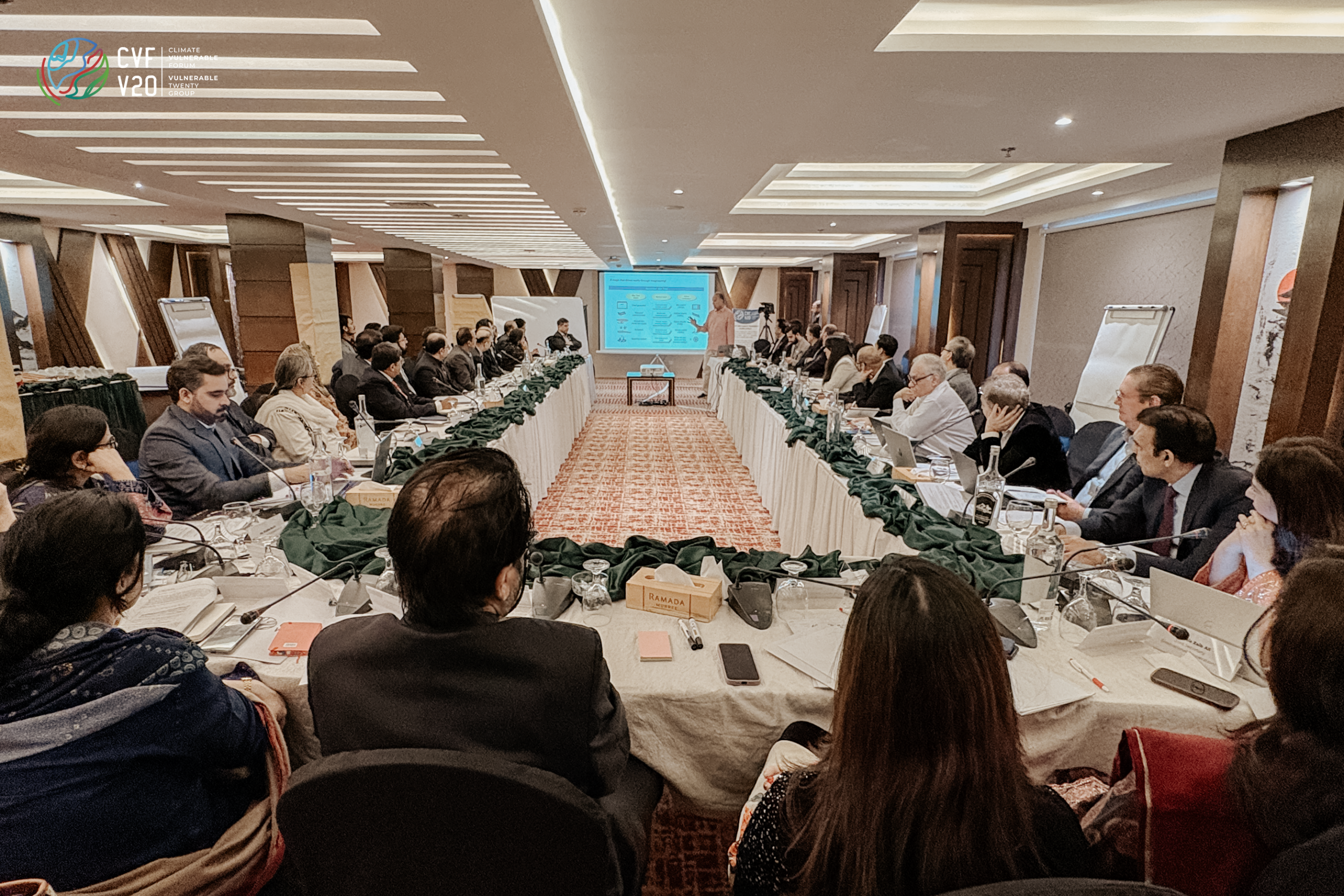
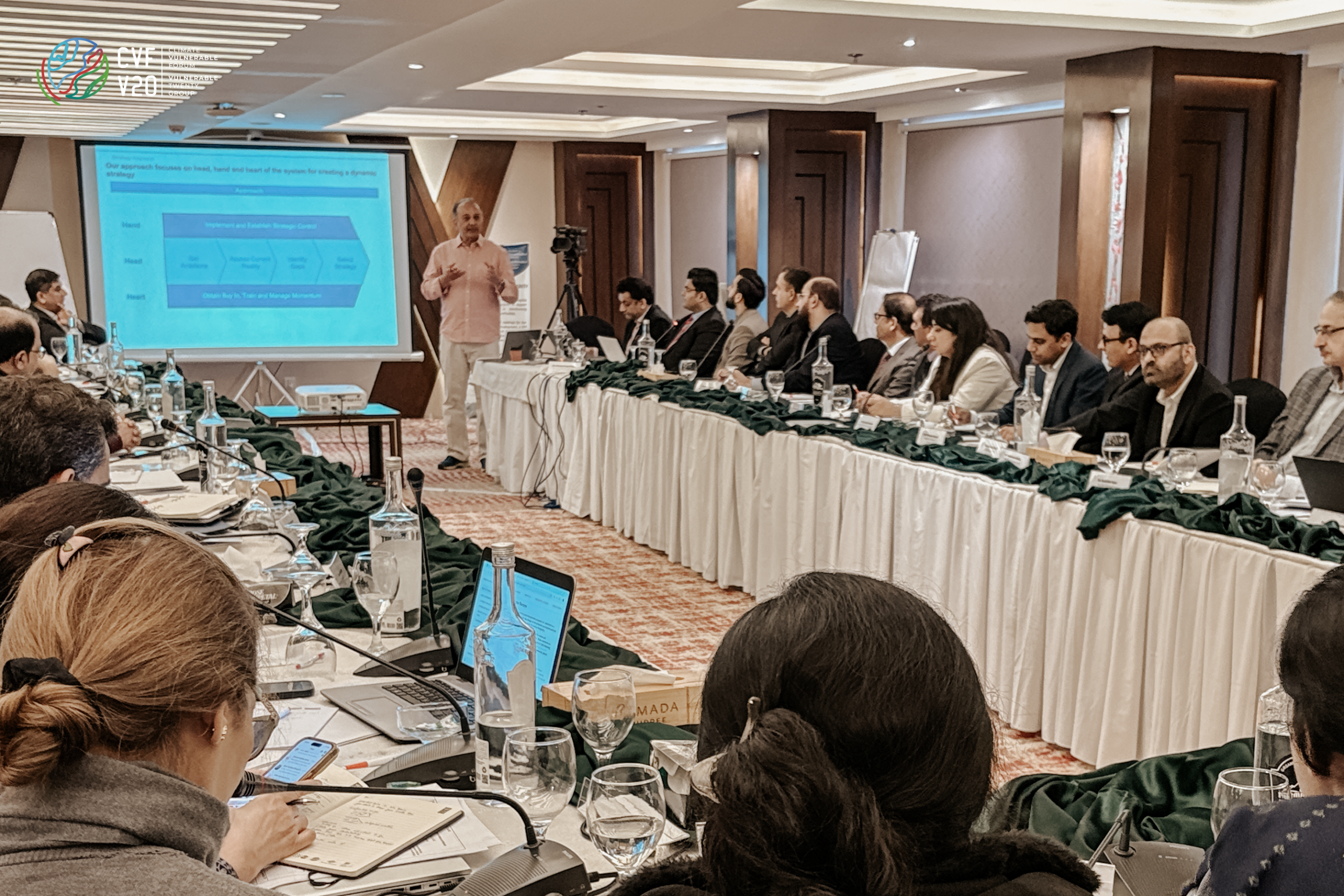
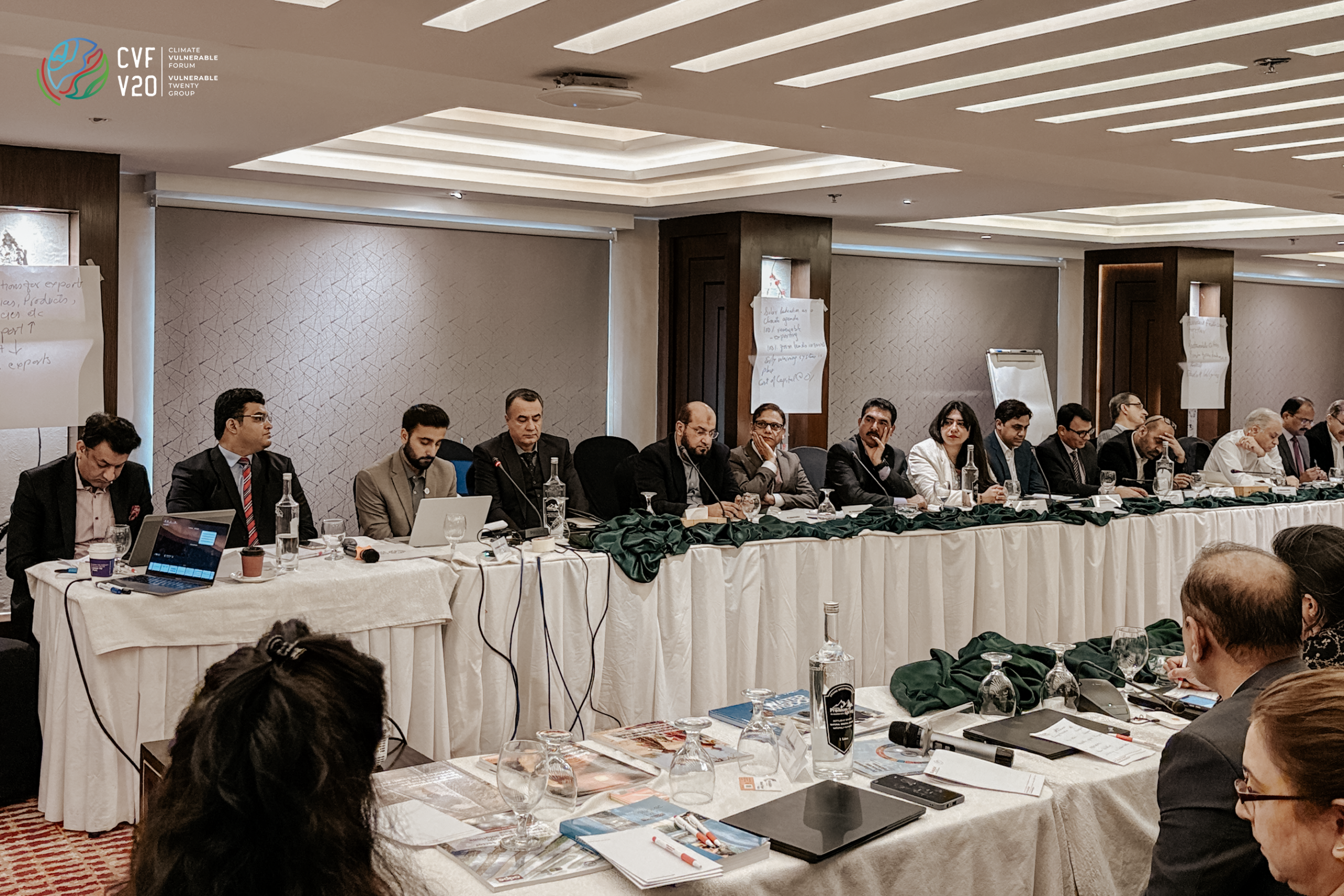
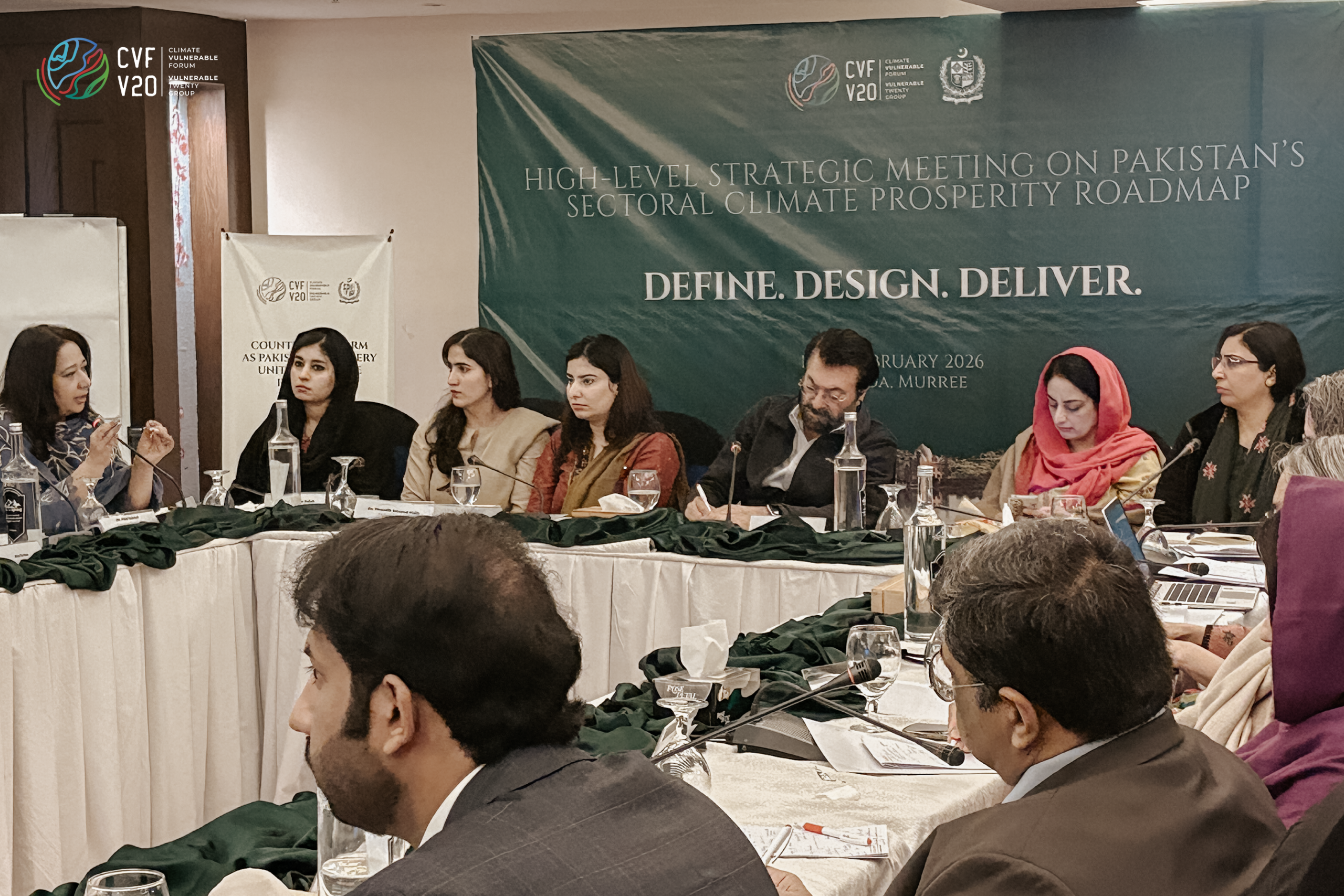
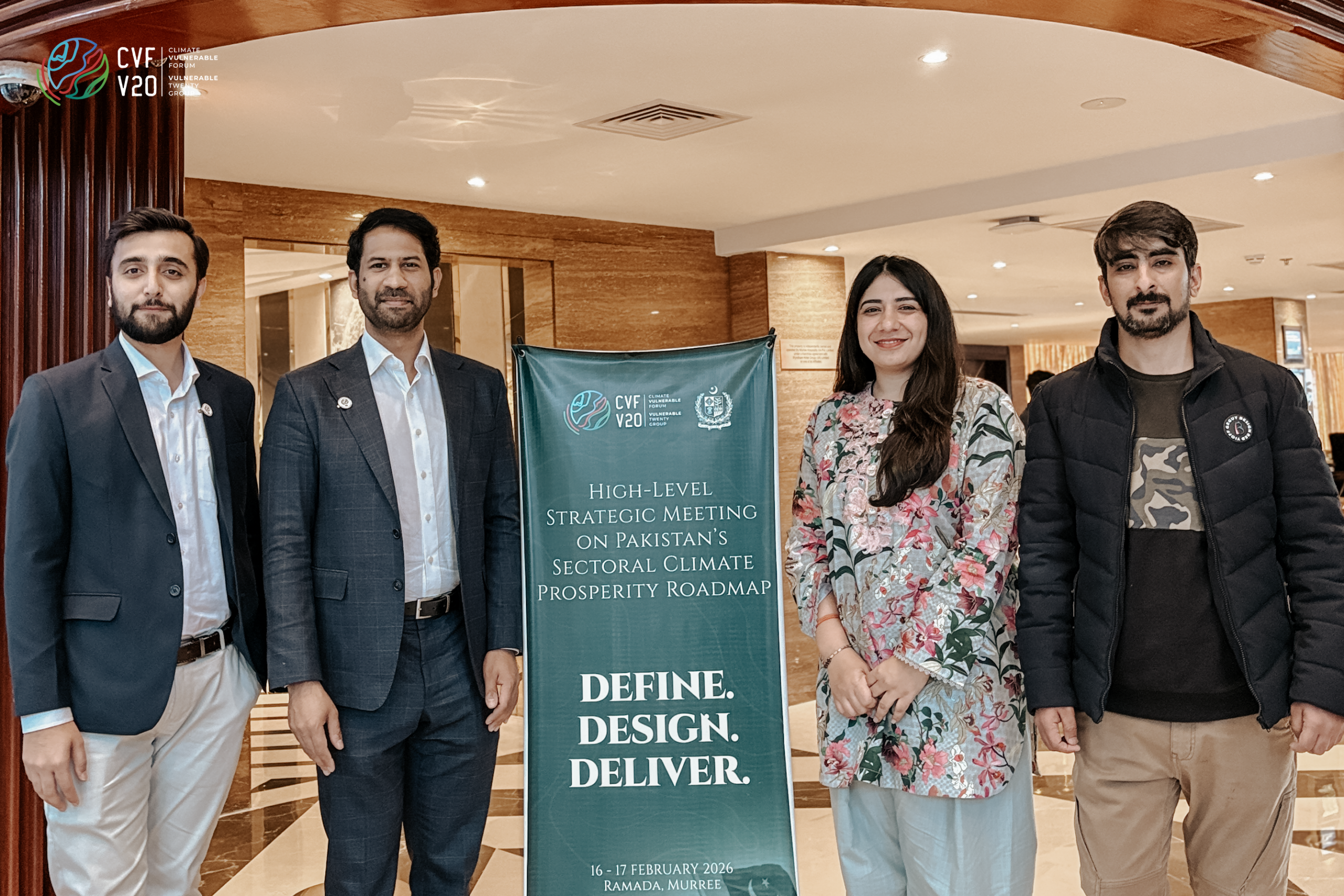
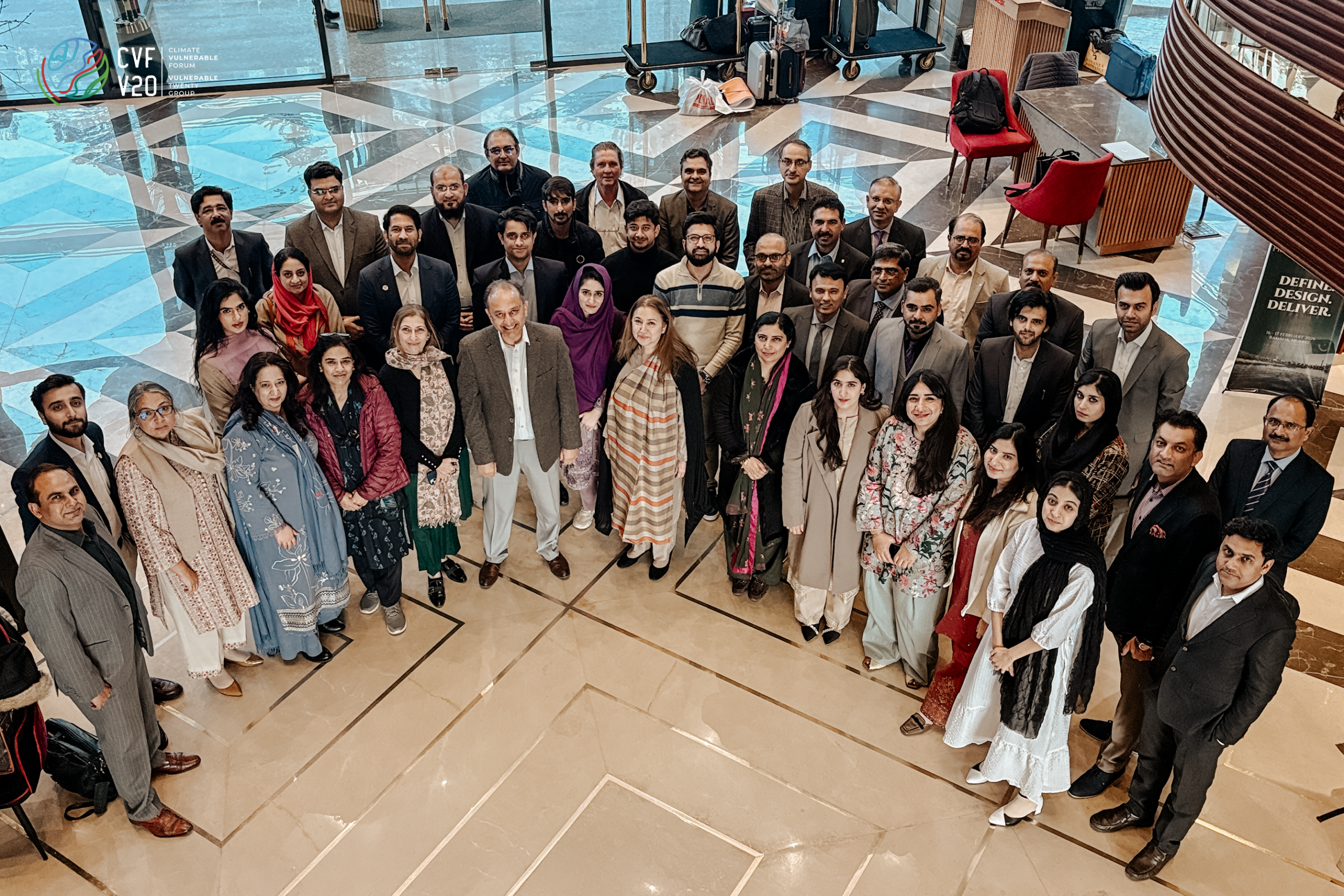
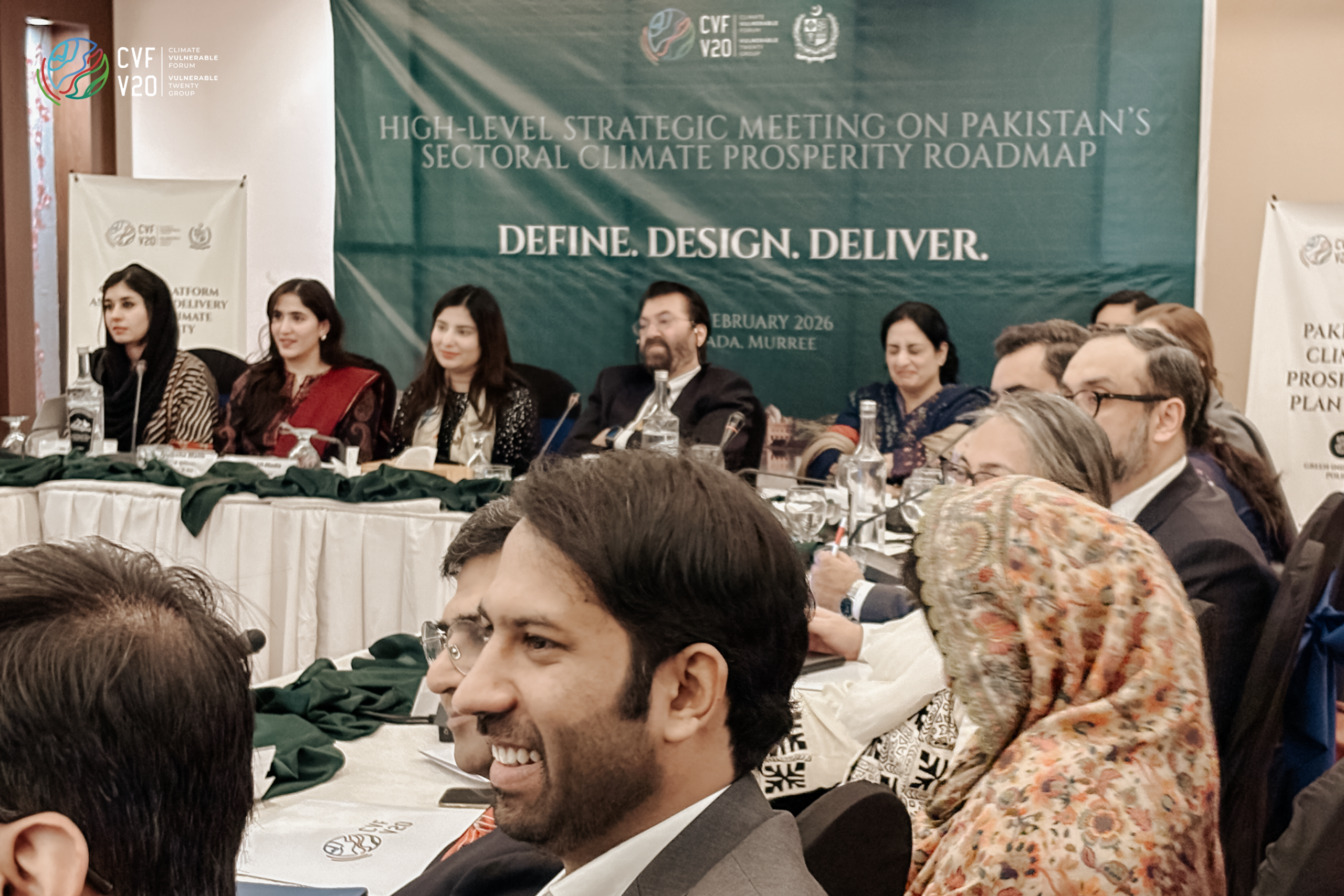
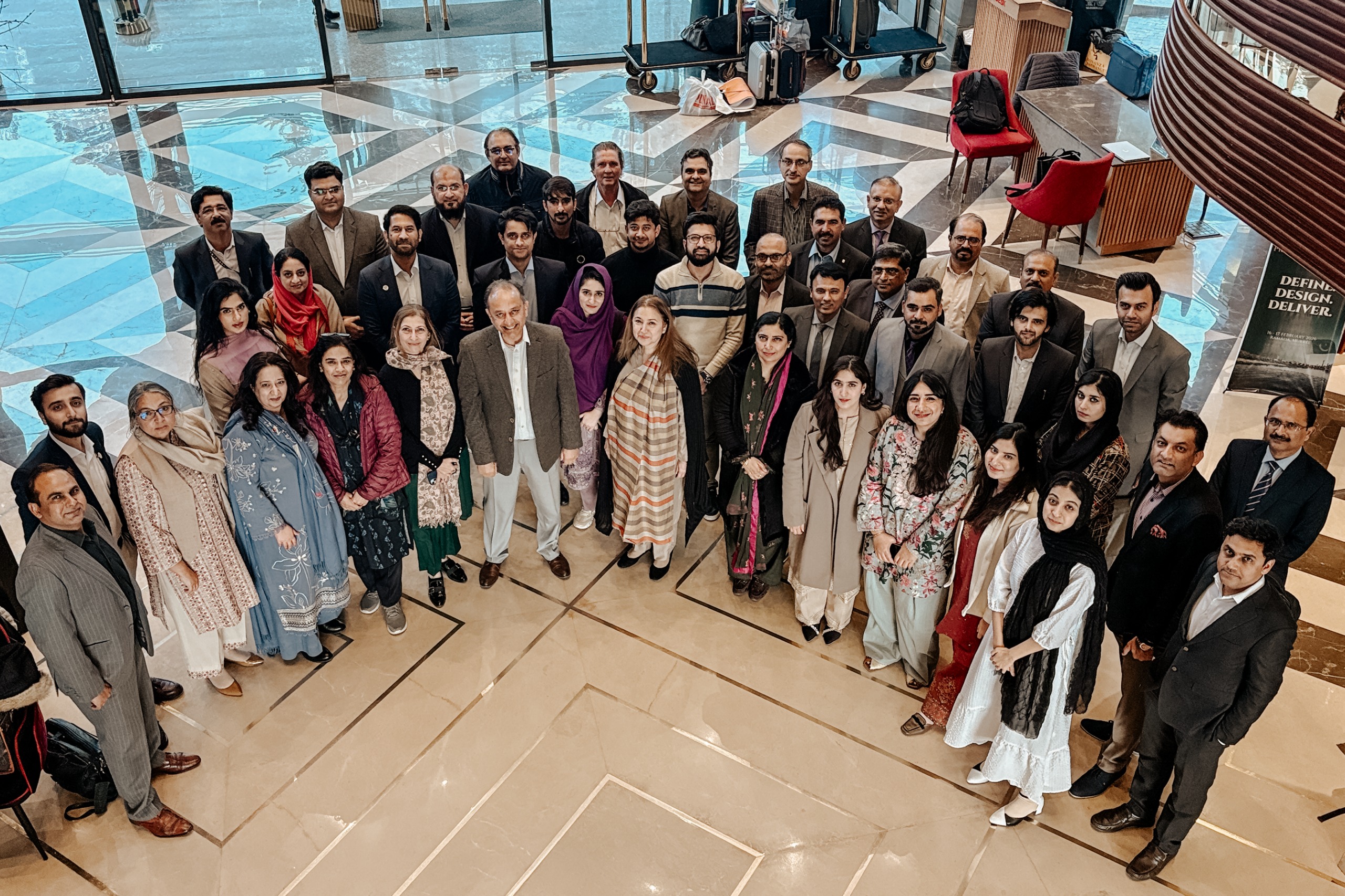
Murree, Pakistan | 17 February 2026—Senior government officials, including H.E Dr. Musadik Malik and Ms. Aisha Humera Ch., Minister and Secretary for the Ministry of Climate Change and Environmental Coordination, respectively, development partners, and technical experts gathered in Murree, Pakistan this week for a two-day high-level strategy meeting to advance Pakistan’s Climate Prosperity Agenda, setting the foundation for a more coordinated and implementation-focused national climate pathway.
The meeting, held on February 16 and 17 and convened by the Ministry of Climate Change and Environmental Coordination in partnership with the Climate Vulnerable Forum and V20 Finance Ministers (CVF-V20) Secretariat, brought together 55 key participants across ministries and provinces. It forms part of the broader effort of the CVF-V20 Secretariat to support the ongoing development and subsequent implementation of the Pakistan’s Climate Prosperity Plan (CPP).
CPPs are country-driven, national investment and financing strategies that build on and help dramatically realize sector plans, development plans, Nationally Determined Contributions, and National Adaptation Plans. CPPs redefine climate action as a catalyst for economic growth and inclusive development through the deployment of renewable energy technologies, risk management tools, and nature-based solutions that strengthen national economies and adapt effectively to climate impacts. CPPs are guided by development needs at the local level and are informed by science, local knowledge, and cultural values to ensure relevance and ownership at the community level.
The objective of the meeting was to build alignment around a programmatic and unified national direction that is ambitious in aspiration and has clarity towards implementation. Structured around a “Define, Design, Deliver” framework, the meeting focused on strategizing Pakistan’s long-term climate vision, identifying priority sectors, highlighting key performance indicators and laying the groundwork for quantifiable goals and implementation.
On the first day, discussions centered on defining the current landscape and building aspirations for where Pakistan aims to be by 2031. Participants deliberated on a shared national vision of transforming the country into a green and climate-proof economy.
The shared aspirations were grounded in priority areas across three (3) central pillars: adaptation, mitigation, and ecosystems. Sector experts and government representatives then collaborated to frame mission statements and strategic directions within each pillar, ensuring alignment with Pakistan’s development needs and fiscal constraints. The sessions concluded with the identification of outcome-focused goals across key pillars.
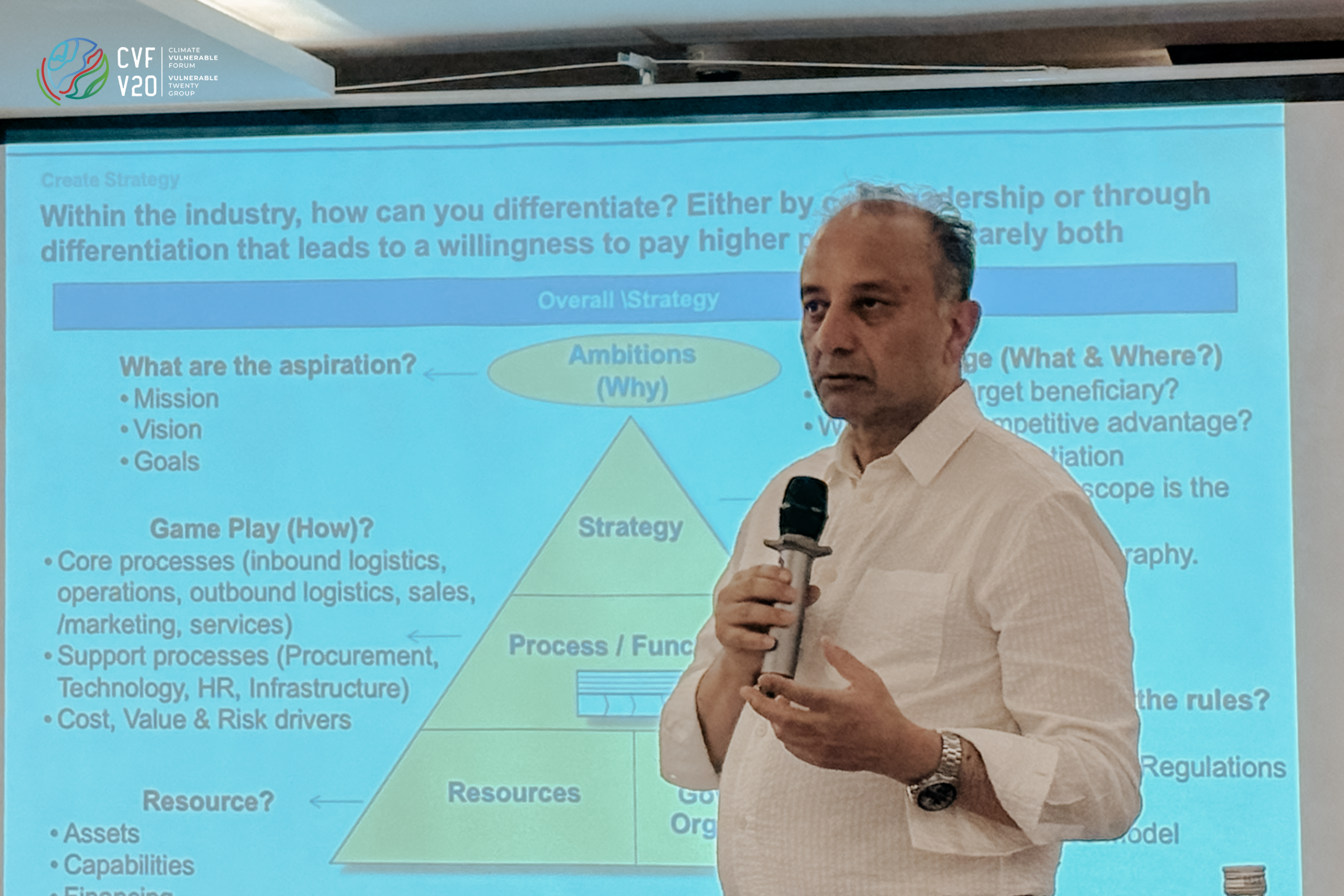
The second day shifted from strategy to operational planning. Proceedings began with a stocktake of climate finance in Pakistan, providing participants with an overview of current funding flows, gaps, and opportunities. This exercise helped ground subsequent discussions and provided context for refining national priorities. Hamza Haroon, CVF-V20 Secretariat’s Regional Director for West and South Asia, pointed to the growing importance of having a unified strategy on climate by adopting a Country Platform approach to better align public and private capital and support long-term climate investments.
Working groups then revisited and sharpened the previously defined goals. Participants developed measurable Key Performance Indicators (KPIs) for each goal and identified realistic yet ambitious targets to be achieved by 2031.
While detailed planning and execution remain ongoing, the meeting helped advance clarity on sectoral missions, operational goals, and performance benchmarks. Officials said the outcomes of the workshop will inform ongoing efforts to align policy, finance, and institutional capacity as Pakistan moves forward with its climate prosperity agenda.