Belém, Brazil—Country Platforms are emerging as a practical mechanism to turn Climate Prosperity Plans (CPPs) into real, investable, and coordinated action.
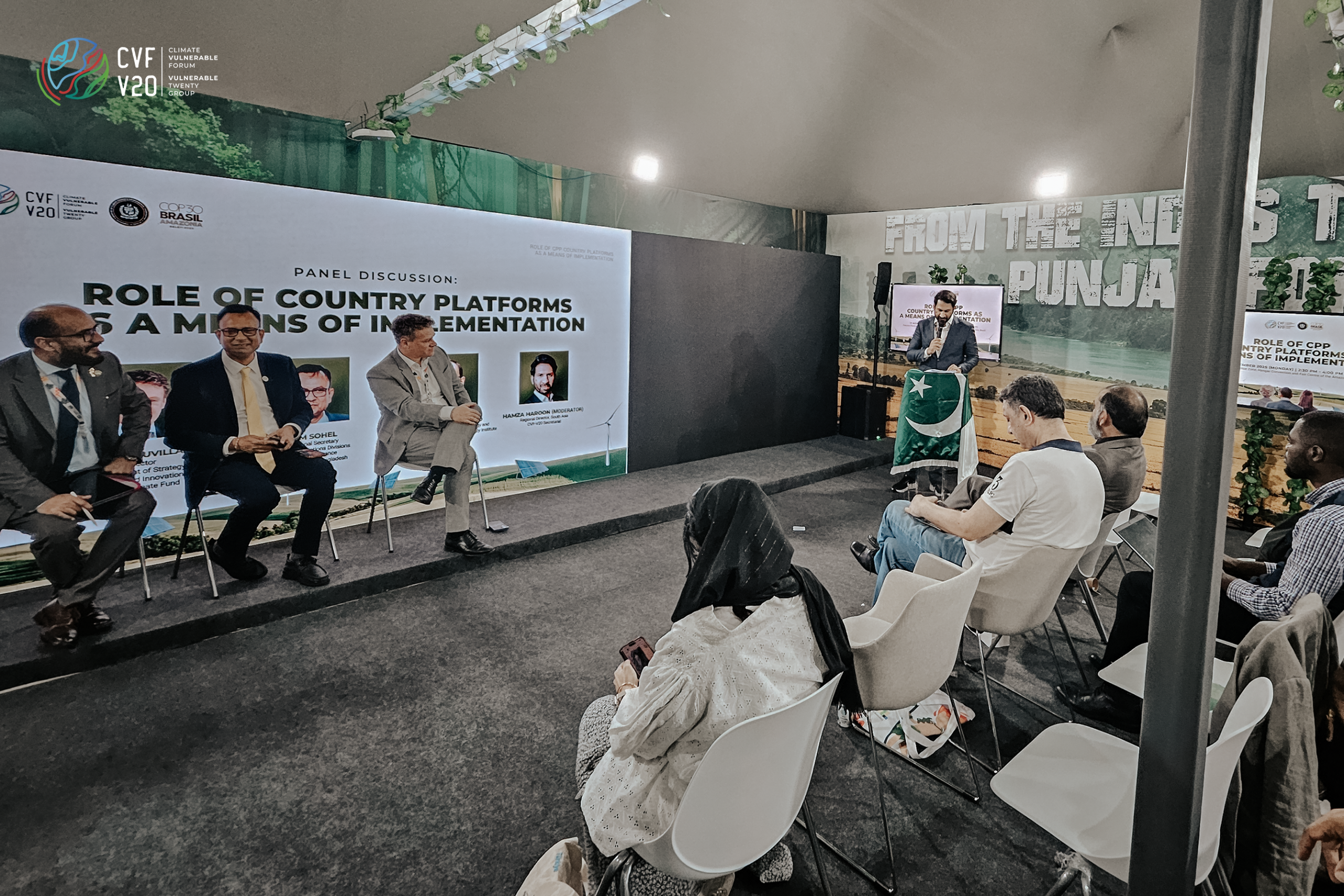
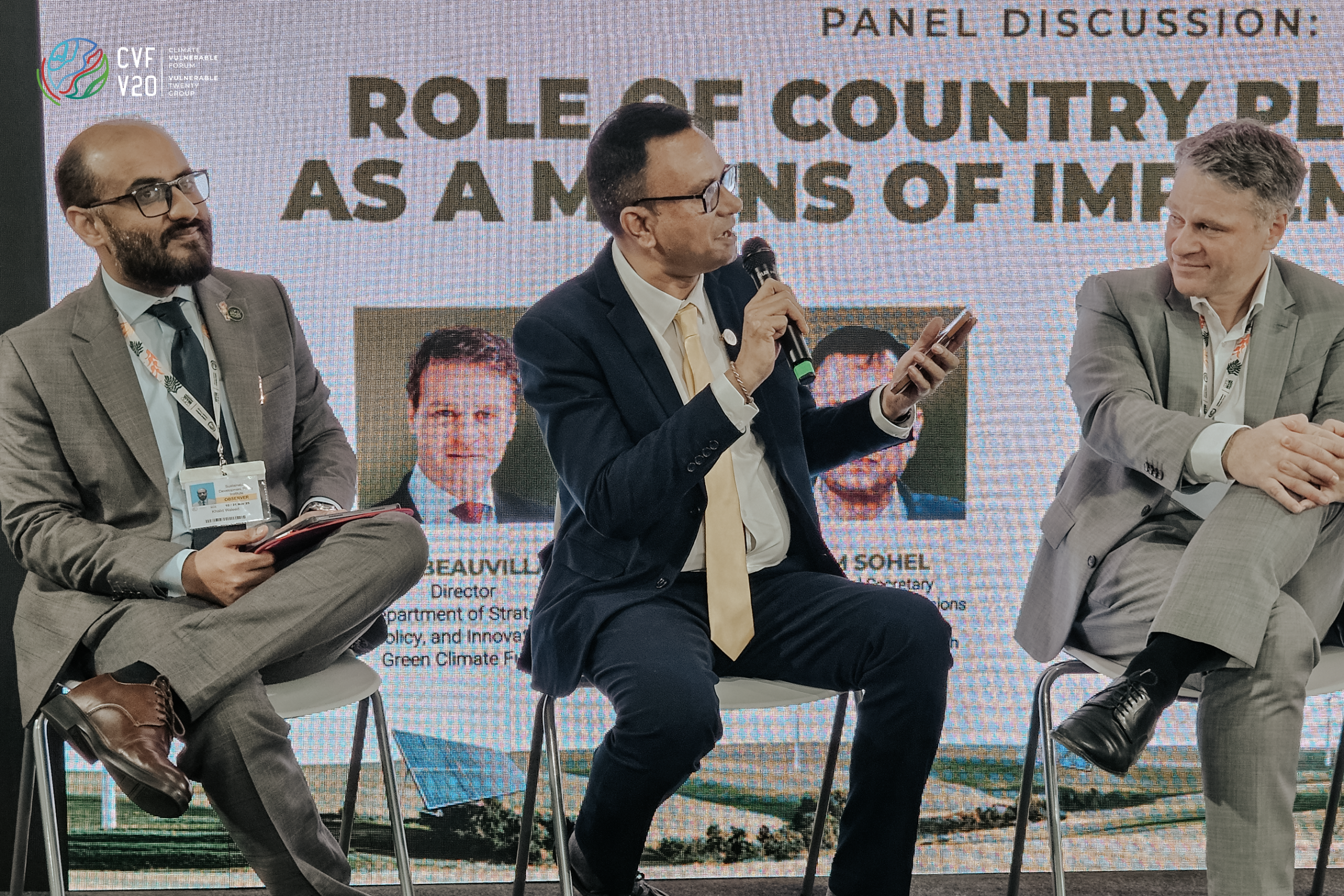
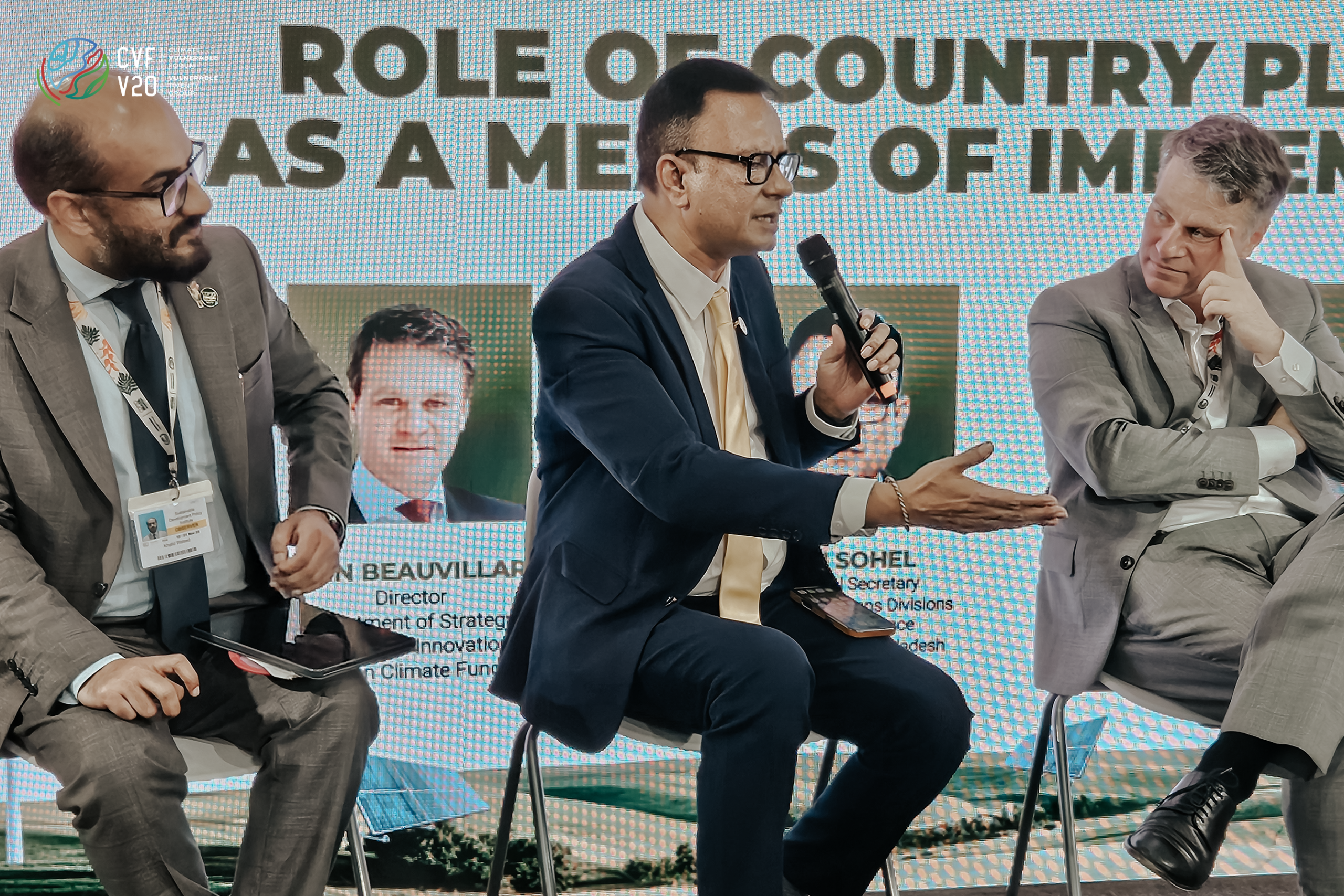
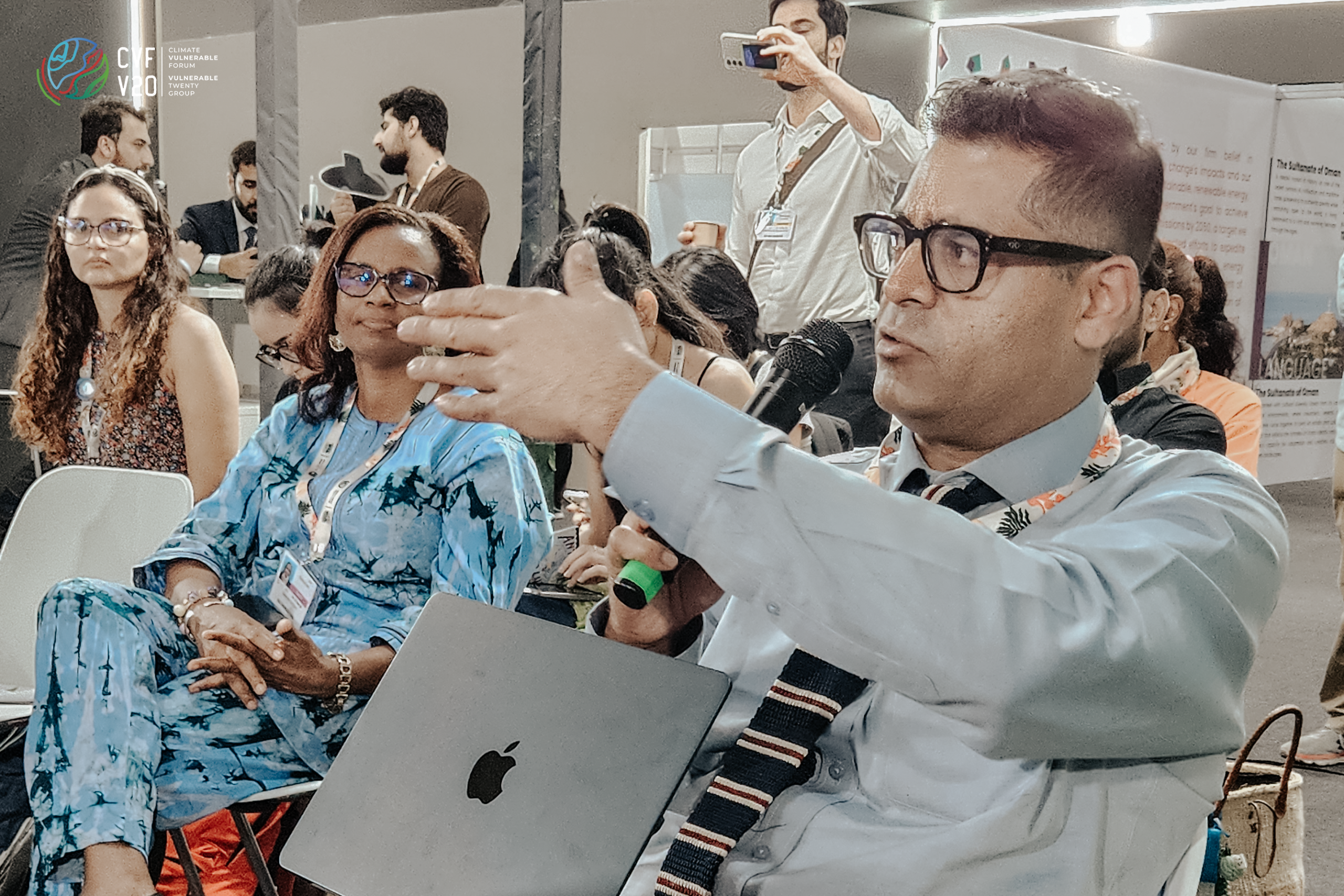
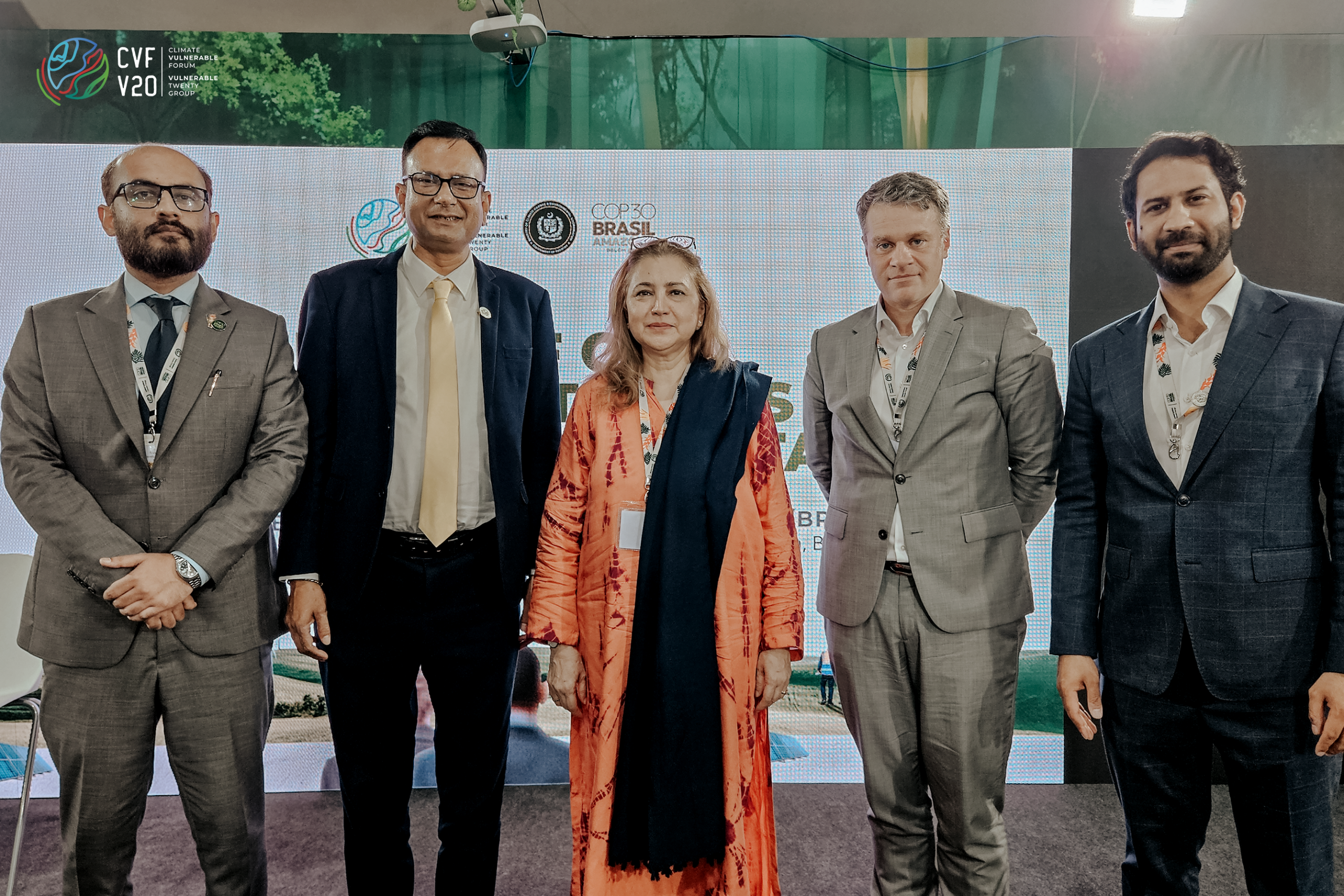
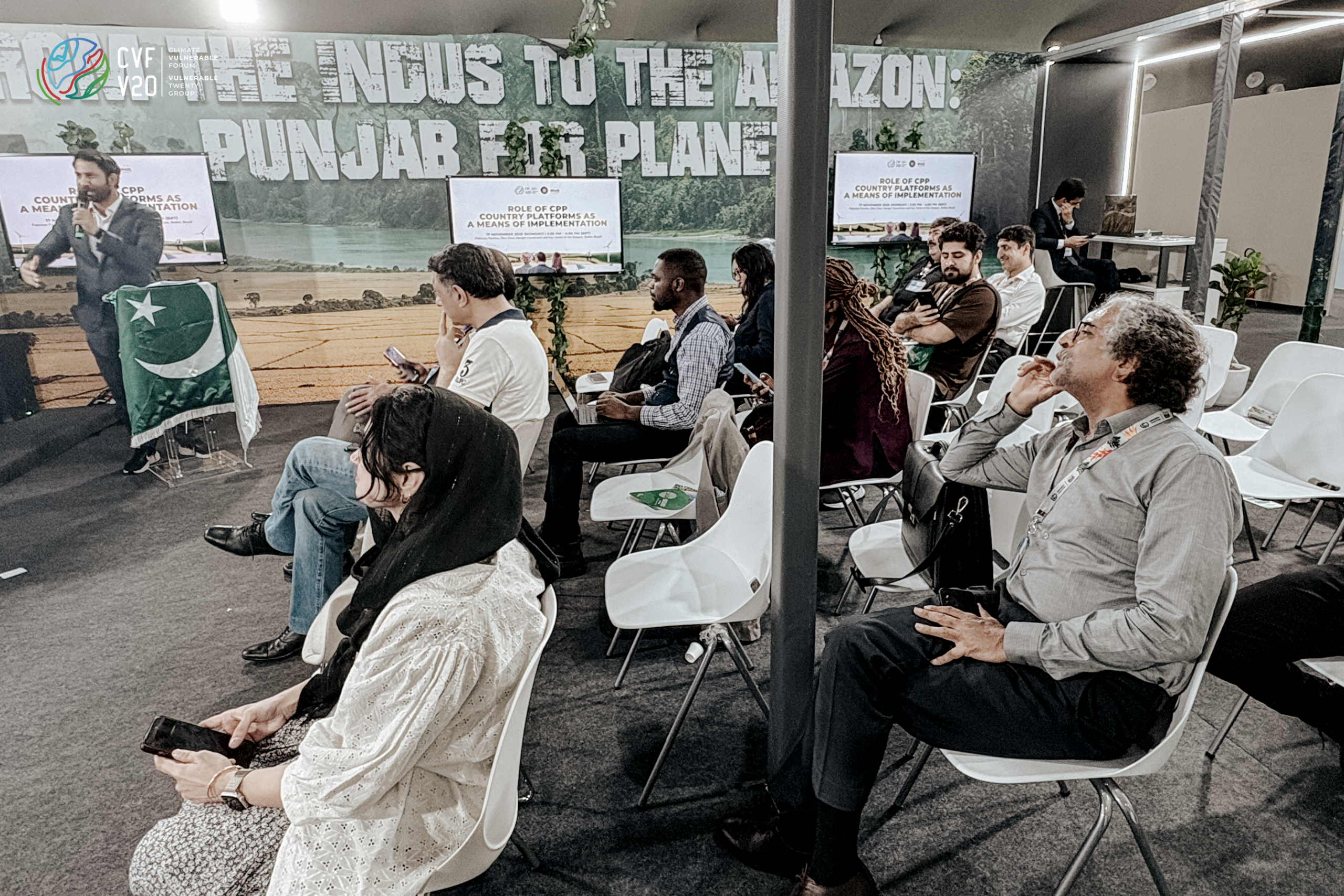
This was emphasized during the high-level discussion titled “Role of CPP Country Platforms as Means of Implementation” convened on the sidelines of COP30 by the Government of Pakistan, in partnership with the Climate Vulnerable Forum and the V20 Finance Ministers (CVF-V20).
A key theme that emerged was that the climate challenge for vulnerable countries lies not in ambition, but in execution. Many climate-vulnerable countries have solid plans, but implementation often falls apart. The discussion also positioned Country Platforms to represent an evolution in climate finance architecture.
When it comes to delivery units, country platforms, and this emerging hub for direct access and flexible support going to regional, national and local institutions, the direction of travel is unmistakable: countries must be firmly in the lead, with greater direct access to finance.
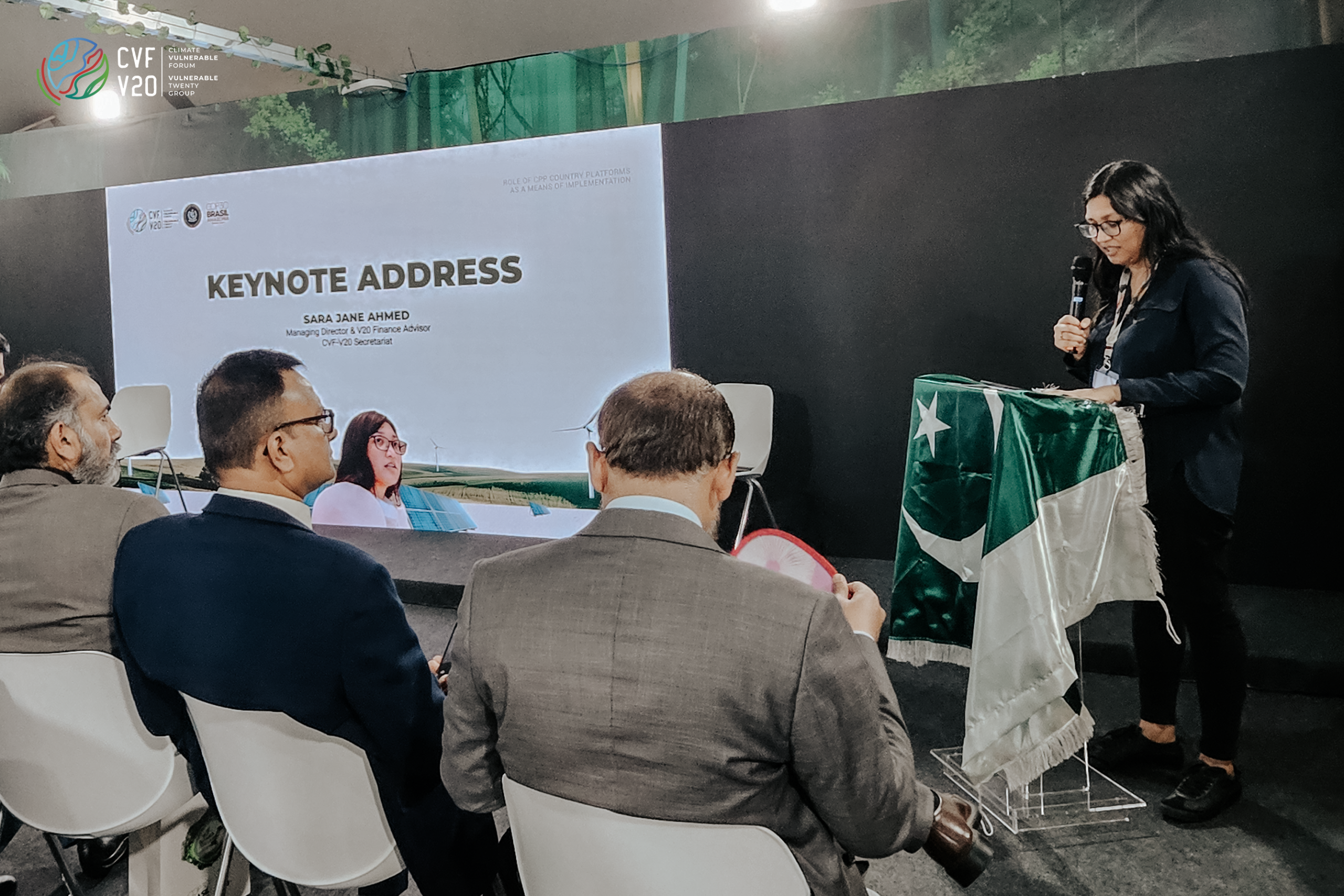
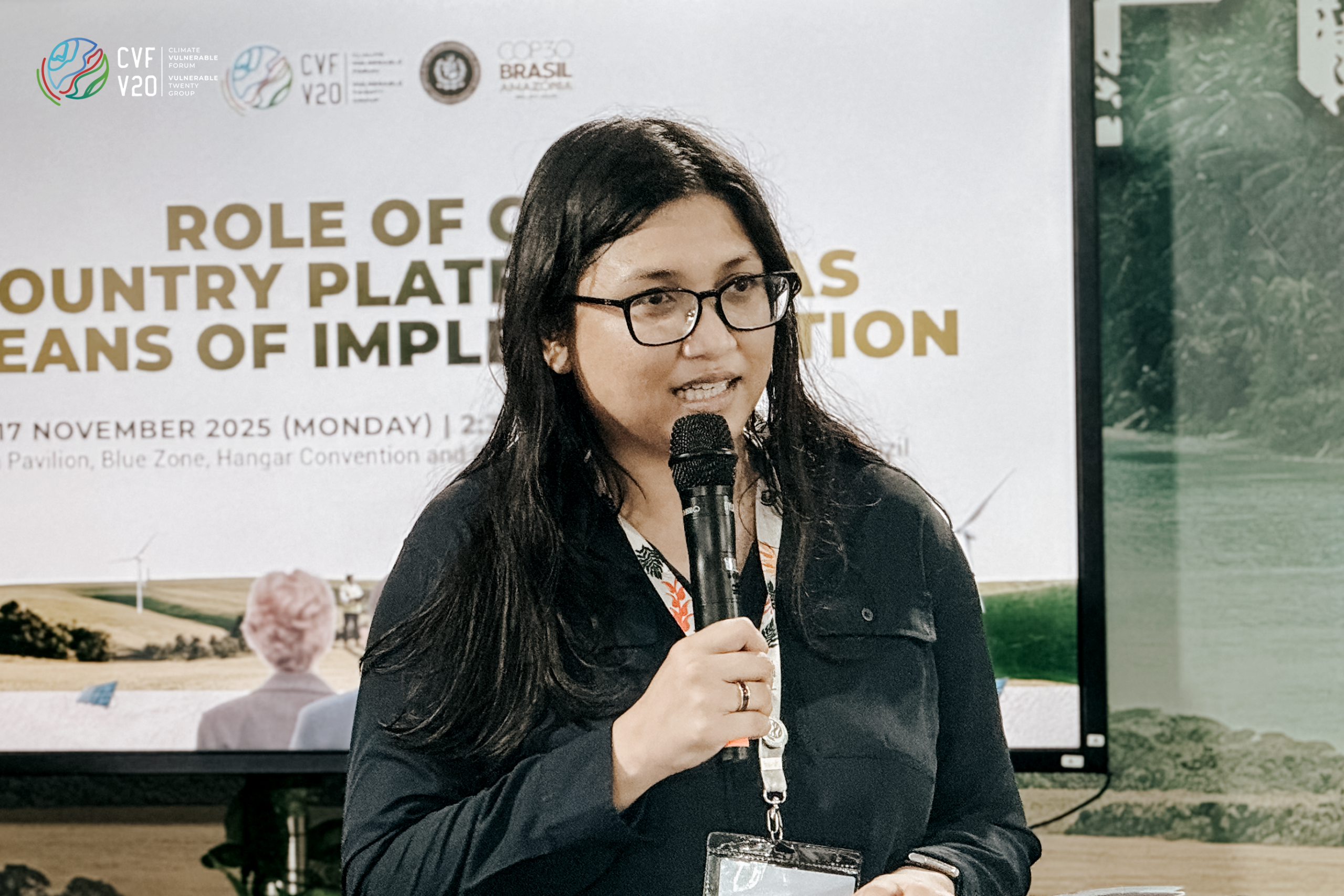
According to Ms. Sara Jane Ahmed, Managing Director of the CVF-V20 Secretariat, said these platforms must uphold country ownership, not as a procedural preference, but rather the foundation on which effective climate action stands. There is no substitute for national and local capacity. Delivery happens through national systems, not parallel architectures. When countries lead, investments align with real needs, market-shaping policies take root, and long-term resilience is built into institutions rather than outsourced to external intermediaries.
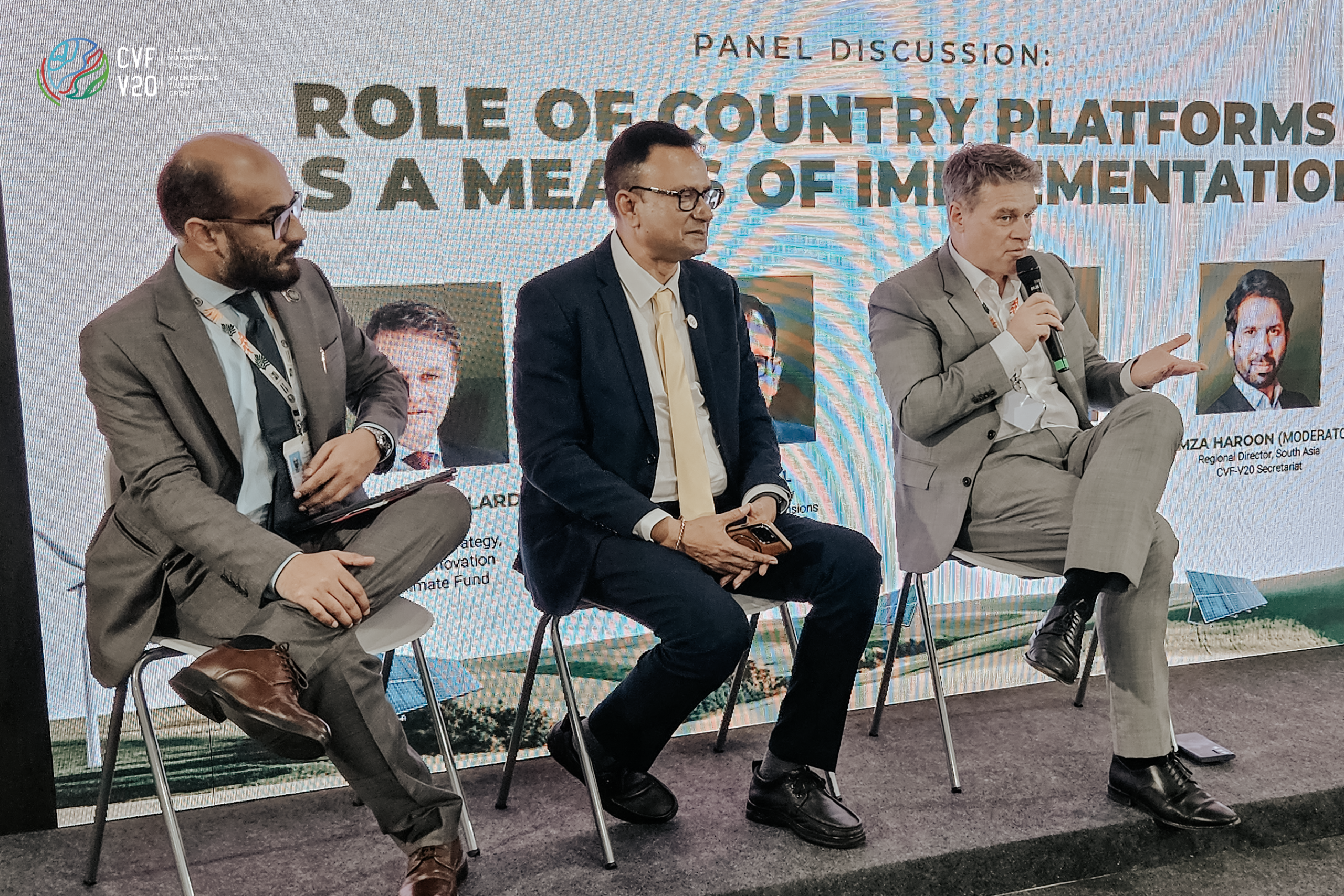
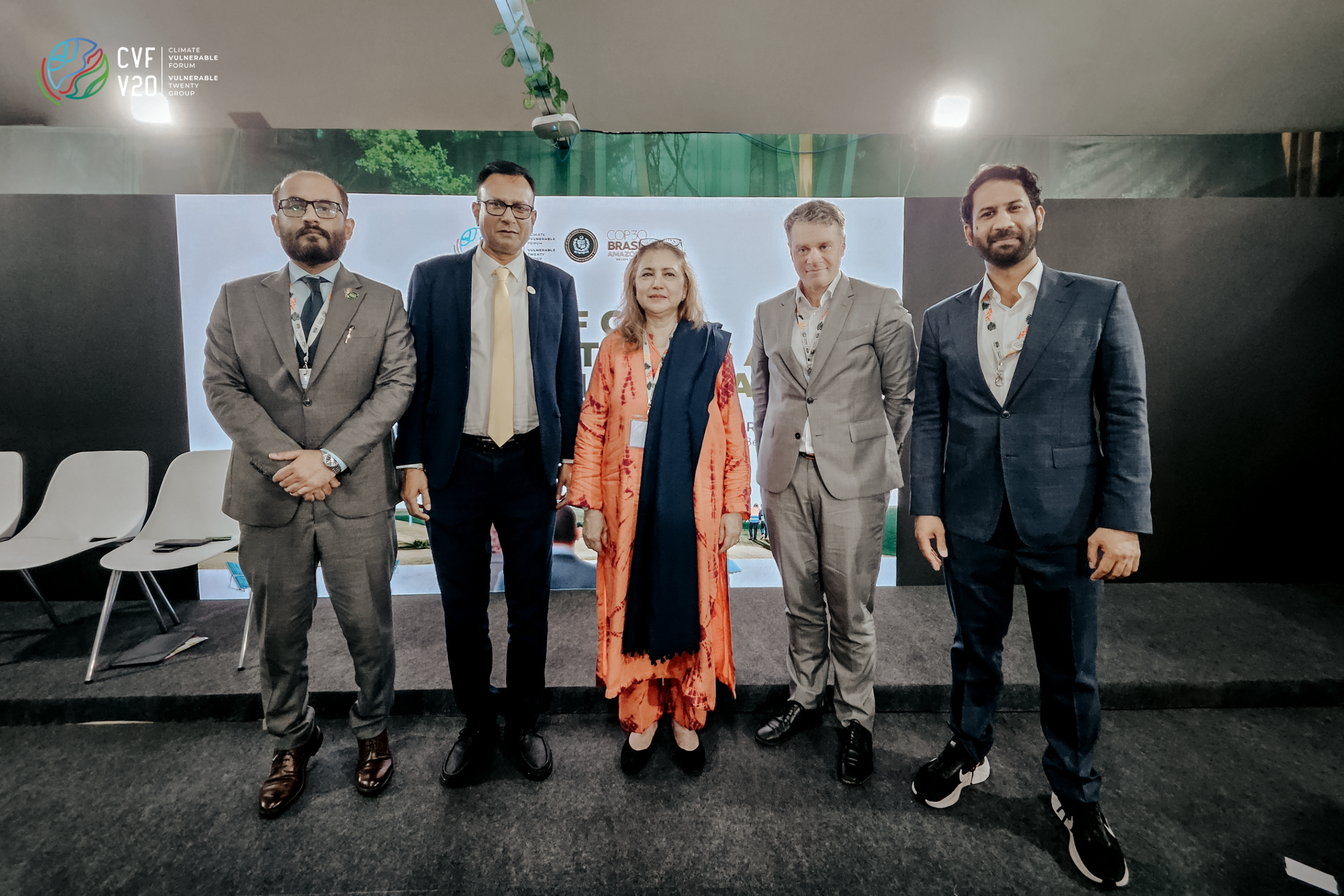
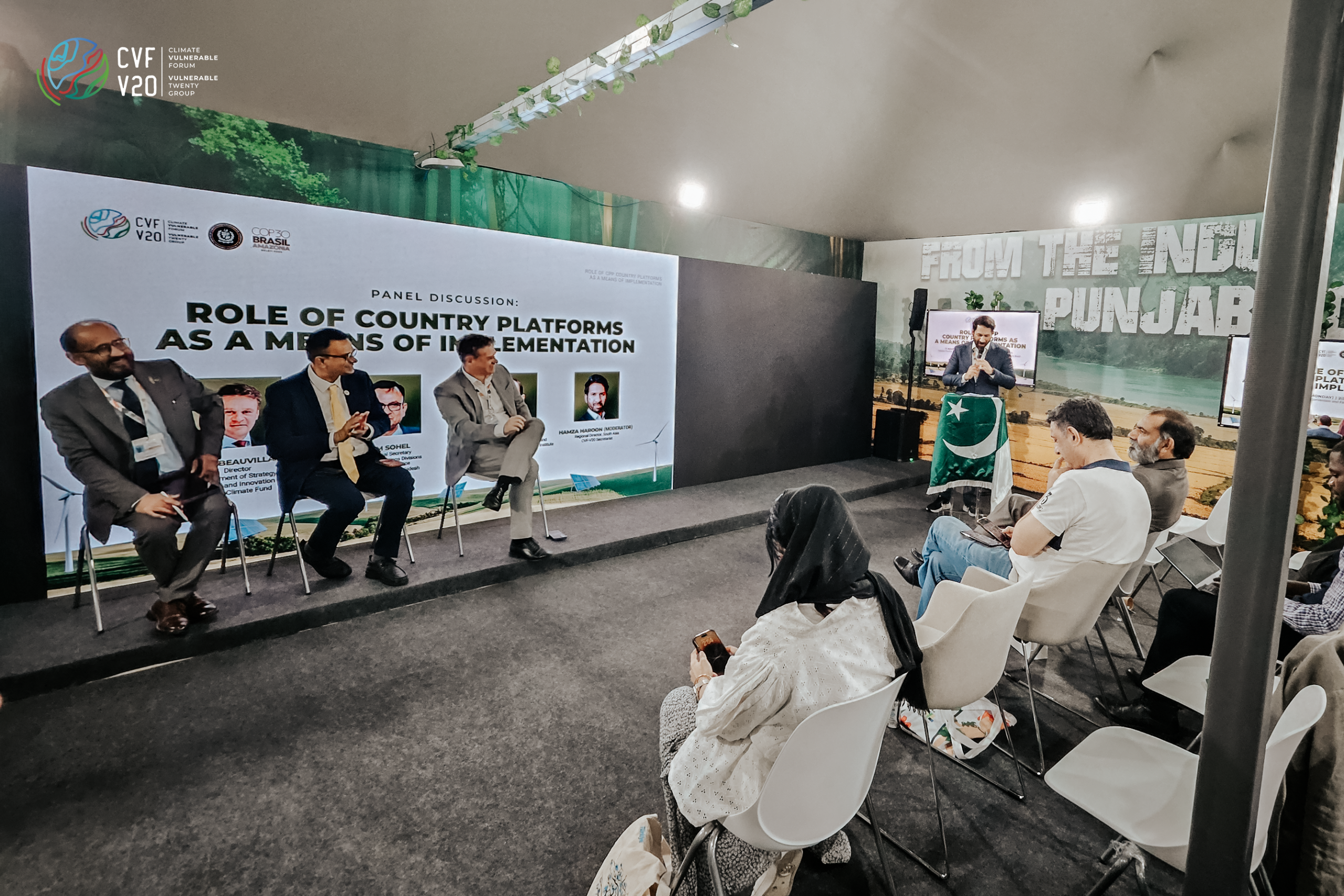
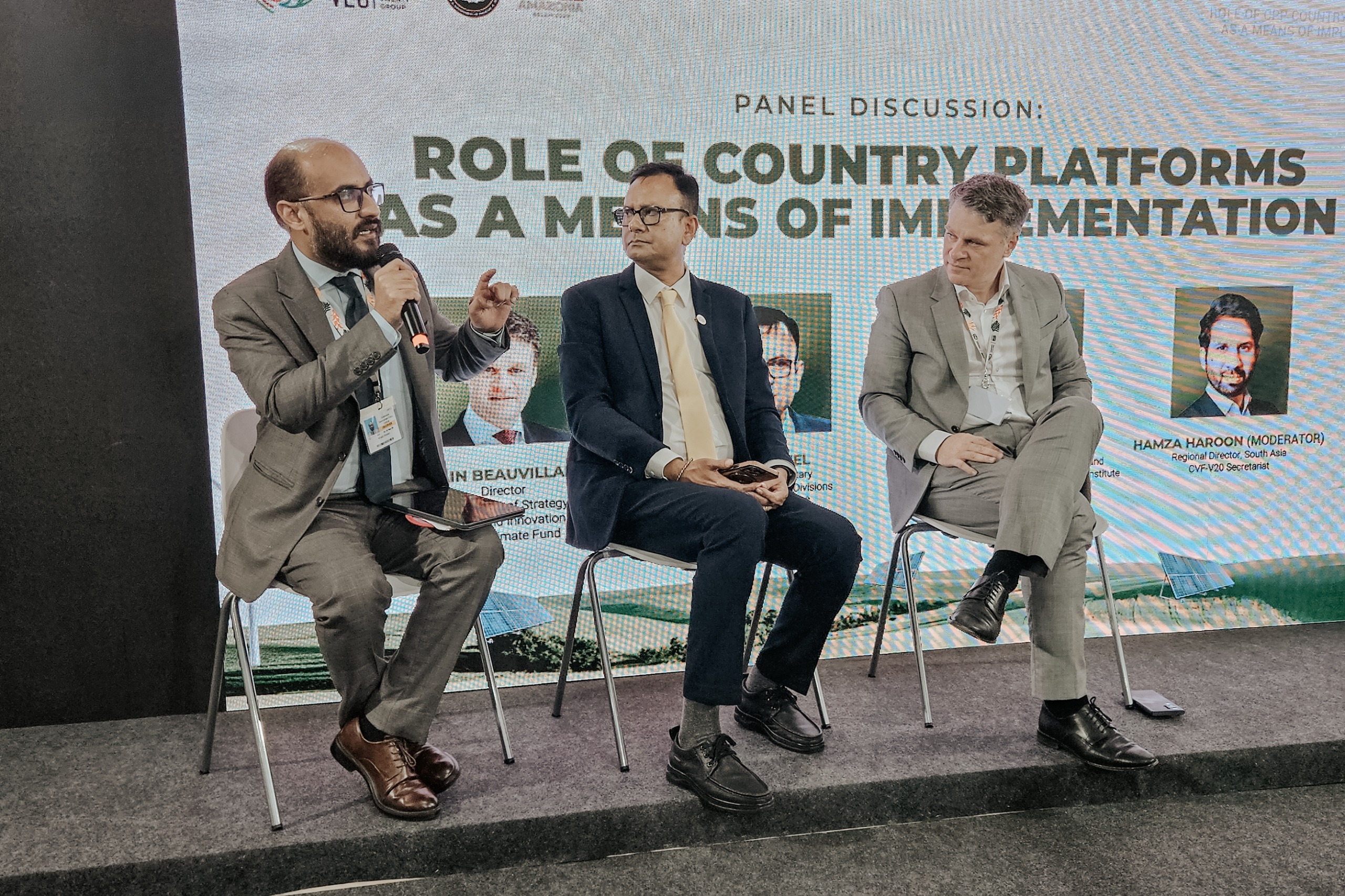
The event featured a panel discussion, moderated by Mr. Hamza Haroon, CVF-V20 Secretariat’s Regional Director for South Asia, featuring Mr. AKM Sohel, Additional Secretary at the Economic Relations Divisions of the Ministry of Finance from the Government of Bangladesh; Mr. Alain Beauvillard, Director of the Department of Strategy, Policy, and Innovation of the Green Climate Fund (GCF); and Dr. Khalid Waleed, Research Fellow and Head of Energy and Climate of the Sustainable Development Policy Institute (SDPI).
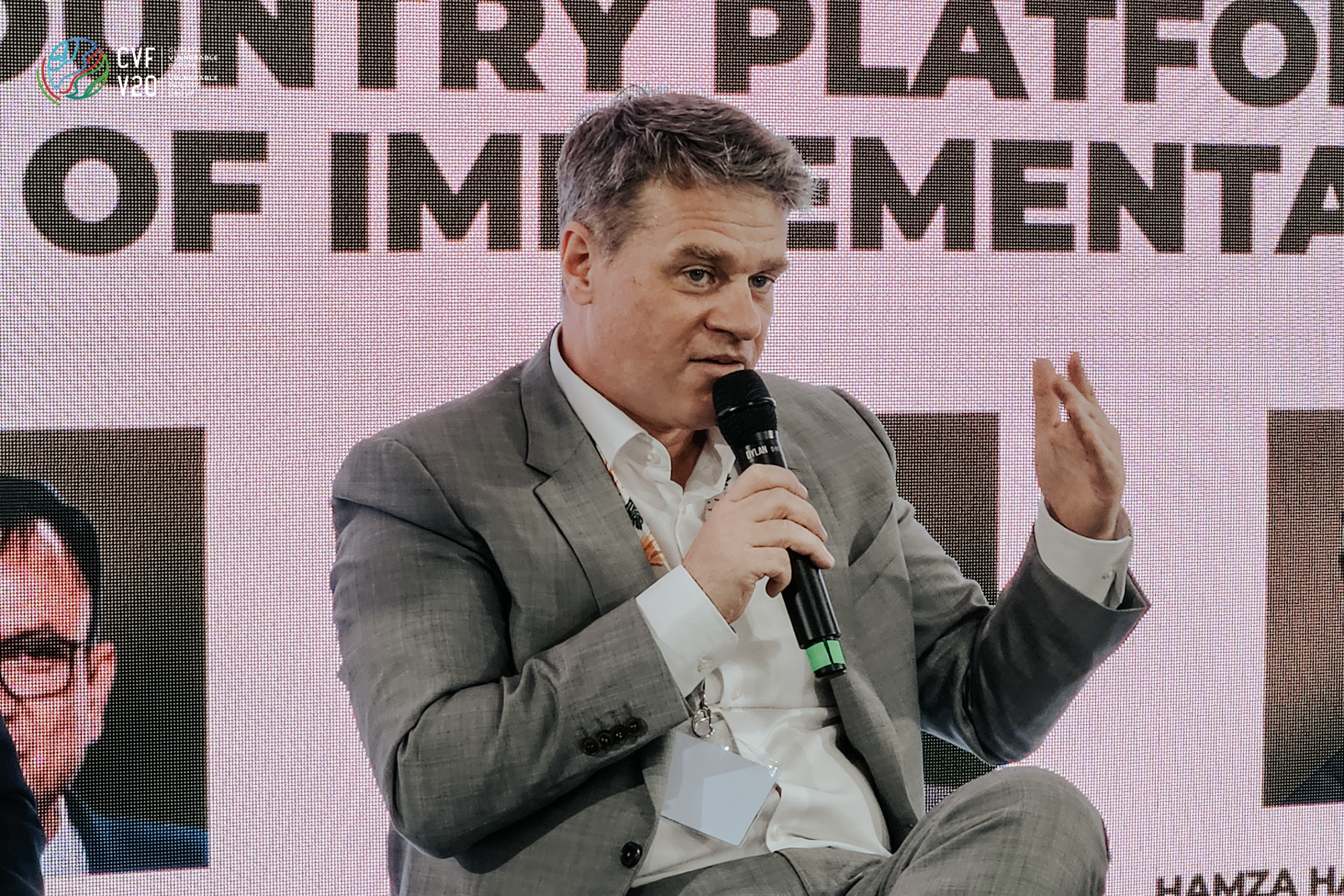
Mr. Alain Beauvillard stressed that the new paradigm of climate finance focuses on “country ownership,” meaning countries are in the driving seat, with full political commitment and responsibility for managing and delivering climate action. “We’re committed to help you to design the tools that you need. We know that each country has different needs. It’s not one size fits all,” he said. “We have many countries that are facing [not only] climate issues, but also debt issues. We have to deliver and to design tools that are covering both, like debt swaps,” he added.
Mr. Sohel underscored the importance of a whole-of-government and whole-of-society approach in implementing Bangladesh CPP, led through its International Climate Finance Cell (ICFC). He noted that the ICFC serves as a pivotal incubator and coordinating mechanism within the Ministry of Finance, connecting government agencies, the private sector, and development partners. It drives collaboration, pilots innovative approaches, mobilizes resources, and ensures that investments align with both national priorities and global climate goals.
Dr. Waleed emphasized the urgent need for integrated, coherent planning in Pakistan, moving away from previous siloed approaches that led to crises such as load shedding and unaffordable electricity prices. He called for collaboration between the Ministry of Finance, the Ministry of Climate Change, and the Ministry of Energy, and stressed the importance of empowering provincial and local governments, ensuring their voices influence national policy for lasting, meaningful implementation down to the grassroots level.
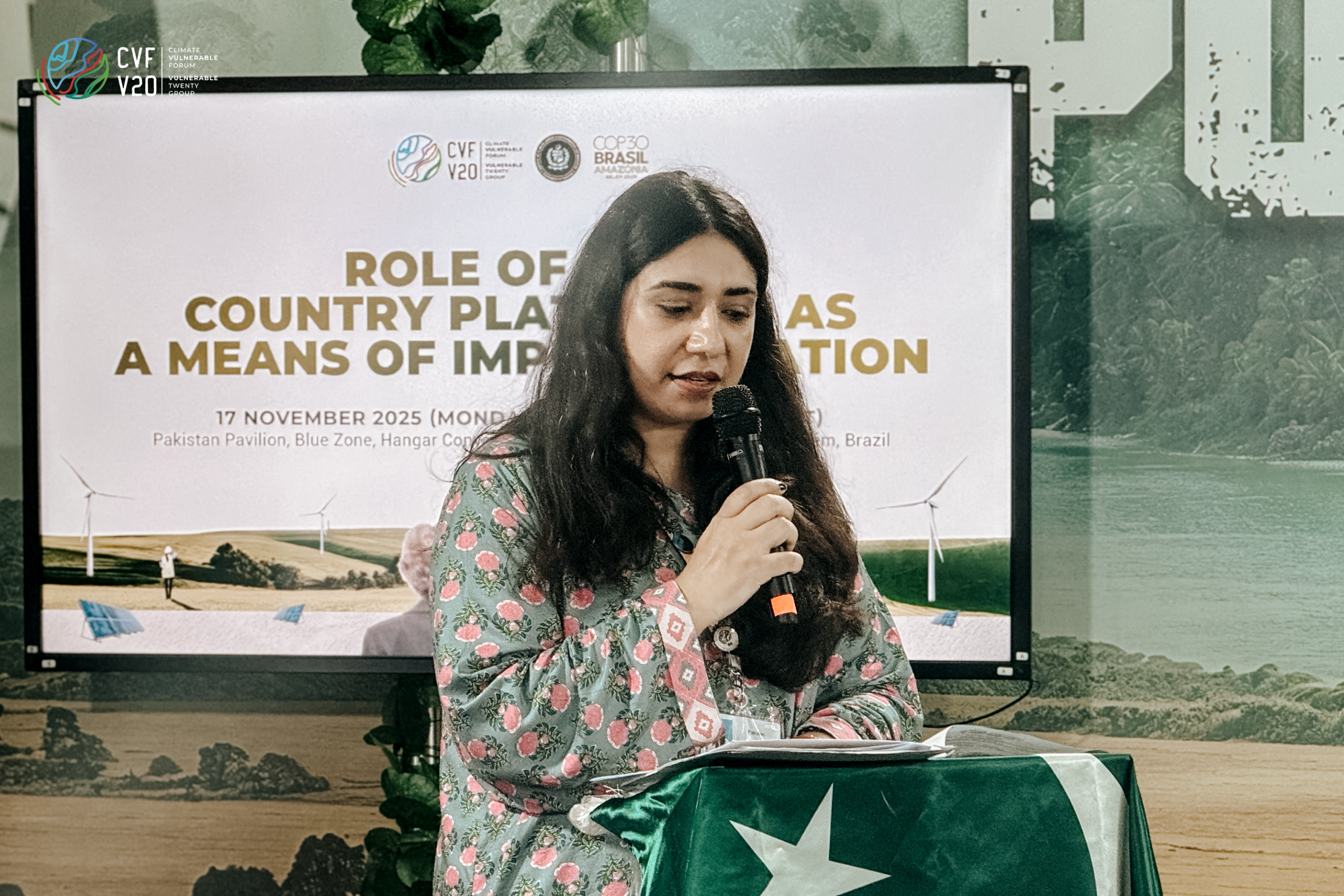
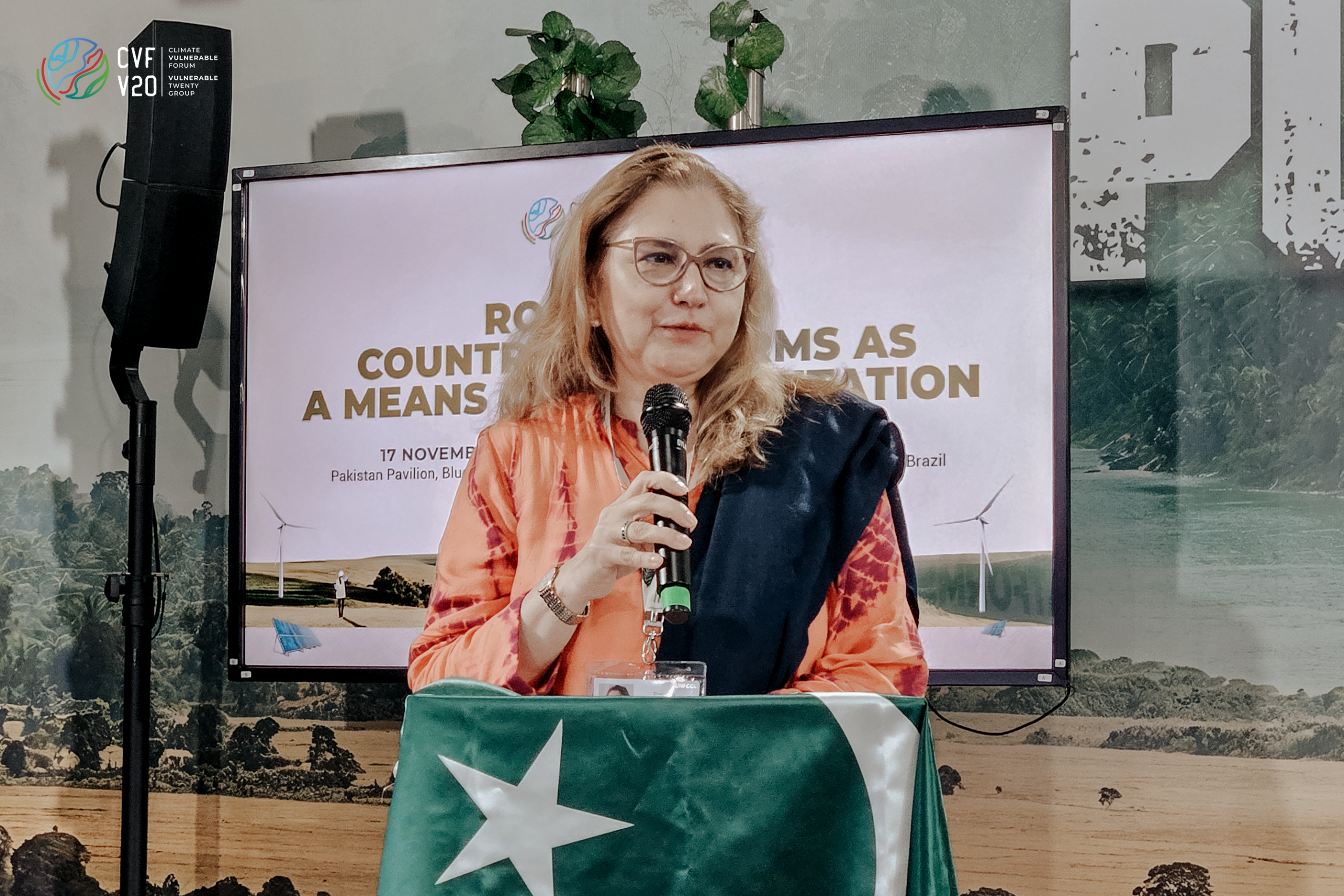
Closing the event, Ms. Aisha Humera Chaudhry, Secretary of the Ministry of Climate Change and Environmental Coordination of the Islamic Republic of Pakistan, recognized Country Platform as a pivotal step toward unlocking timely and effective climate finance. She underscored the need for faster, more responsive systems and highlighted that Pakistan now brings a pipeline of investment-ready projects through its CPP. She also reaffirmed Pakistan’s commitment to global cooperation, including through new cross-regional initiatives on glacier resilience, to advance a safer and more climate-resilient future. “We are fully committed to work with the global community for making this planet safer and greater,” she said.