Climate-Vulnerable Nations Showcase Pathways to Prosperity
Pakistan hosts COP30 session on Climate Prosperity Plans

Belém, Brazil—At the 30th Conference of the Parties (COP30) to the UN Framework Convention on Climate Change (UNFCCC), leaders from the Climate Vulnerable Forum and V20 Group of Finance Ministers (CVF-V20) showcased how Climate Prosperity Plans (CPPs) are transforming climate risk into opportunity—mobilizing investments, technology, and partnerships to drive inclusive, resilient economic growth.
The high-level session titled “Showcasing Climate Prosperity Plans: Rooted Delivery for Climate-Vulnerable Nations” was hosted by the Government of Pakistan in partnership with the CVF-V20 Secretariat at the Pakistan Pavilion during COP30. It brought together ministers, senior officials, and global partners to discuss how nations facing severe climate risks are moving beyond survival toward building economies that thrive under changing climate conditions.
Ms. Khalida Bashir, Joint Secretary of the Ministry of Climate Change and Environmental Coordination, opened the event by recalling how Pakistan endured the catastrophic floods of 2022 and 2025, suffering losses worth billions. She said the pain has become a turning point. Countries like Pakistan are not waiting for others to act. They are showing that leadership in climate action can come from those most affected. She notes that achieving climate-resilient prosperity across CVF-V20 nations presents a US$ 490 billion-per-year investment opportunity by 2030.
Representing the Barbados Presidency of the CVF-V20, H.E. Tonika Sealy-Thompson, Ambassador of Barbados to the Federative Republic of Brazil, reflected that “the world has never been changed by spectators and naysayers. It has been changed by men and women of action, those who choose to dismantle indifference because they could see far ahead and hope, knowing, as the great Pakistani poet, Faiz Ahmed Faiz once wrote, “The faint glow of the prison [of inaction is eventually] extinguished / [and] The night must be bright with a million stars outside / And the silent links of the fetters have caught a glint / The bright sun of dawn must shine upon the land.”
This session showcased the CPP as an innovative, nationally-owned green industrialization, and investment strategy driving climate-resilient growth.
- Haiti: Mr. Jean Michek Silin, Director General of the Ministry of Economy and Finance, and Mr. Joseph Emmanuel Philippe, General Director of the Environment Ministry, detailed Haiti’s CPP amid fragility, focusing on measures to strengthen fiscal and institutional preparedness for implementation.
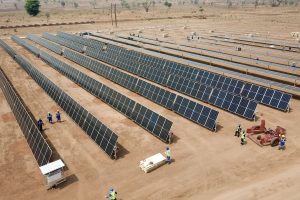
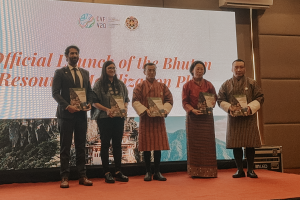
- Bhutan: Mr. Sonam Tashi, Director at the Department of Environment and Climate Change Ministry of Energy and Natural Resources, presented Bhutan’s Resource Mobilization Plan, which aims to maximize clean energy potential, including a tenfold increase in hydropower and 500 MW of solar by 2035, positioning Bhutan as a 100% renewable energy exporter. The plan is projected to generate sustained GDP growth and create thousands of new green jobs annually by 2030.
- Bangladesh: Dr. Shah Abdul Saadi, Economic Relations Division (ERD), Ministry of Finance, emphasized that Bangladesh’s Climate Prosperity Plan is rooted in reducing reliance on grants and shifting toward investment-driven, market-based climate finance. He highlighted the country’s emerging focus on energy and transport transitions, climate-smart agriculture, fisheries and livestock, and health. He outlined the establishment of the Bangladesh Climate Development Partnership as a country platform to bring together government, private sector, civil society, academia, and development partners to co-design bankable, climate-smart projects.
- The Gambia: Ms. Isatou Camara, Director of Climate Finance, introduced The Gambia’s Climate Prosperity Investment and Financing Strategy, designed to spur green industrialization, new equity sources, and disaster risk financing to protect people and reduce risks for private investments. Flagship projects include climate-smart agriculture and a pilot green industrial zone. The strategy aims to generate new jobs, especially for the youth, and reduce poverty.
- Sri Lanka: Mr. Leel Randeni, Director for Climate Change of the Ministry of Environment, presented Sri Lanka’s Climate Prosperity Plan, focused on climate-risk protection, resilient clean energy, climate-smart agriculture, and ecosystem restoration. The plan leverages leadership in the private sector including Dilmah Ceylon Tea Company, the creation of a National Development Bank, Climate-Resilient Investment Fund, and resilience bonds—and aims to recover growth, cut poverty, create over 100,000 green jobs, and mobilize USD 26 billion cumulatively by 2030.
Real transformation demands courage at home and solidarity abroad. Turning climate risk into shared prosperity isn’t optional, it’s economic sense and moral duty.
***
About CVF-V20
The CVF-V20 represents 74 member-countries from small island developing states (SIDS), least developed countries (LDCs), low-to-middle income countries (LMICs), landlocked developing countries (LLDCs), and fragile and conflict-affected states (FCS). Working together, the CVF-V20 aims to achieve climate justice through the realization of Climate Prosperity Plans, which contain ambitious economic and financial resilience strategies designed to attract investment and resources that advance the attainment of the Sustainable Development Goals (SDGs), 30×30 Global Biodiversity, and help keep the average global temperatures to the Paris Agreement’s 1.5°C safety threshold.
Contact
For media enquiries, please contact [email protected].
For the latest updates, please follow us on:
- X – @TheCVF, @V20Group
- Facebook – Climate Vulnerable Forum
- Instagram – thecvf
- LinkedIn – climatevulnerableforum&v20
- Website – cvfv20.org
CVF-V20 Membership
Africa: Benin, Burkina Faso, Cabo Verde, Chad, Comoros, Côte d’Ivoire, Democratic Republic of the Congo, Eswatini, Ethiopia, Gabon, The Gambia, Ghana (Troika), Guinea, Kenya, Liberia, Madagascar, Malawi, Morocco, Mozambique, Namibia, Niger, Rwanda, Senegal, Sierra Leone, Somalia, South Sudan, Sudan, Tanzania, Togo, Tunisia, Uganda
Asia: Afghanistan, Bangladesh (Troika), Bhutan, Cambodia, Kyrgyzstan, Maldives, Mongolia, Nepal, Pakistan, Philippines, Sri Lanka, Timor-Leste, Vietnam
Caribbean: Barbados (Chair/Troika), Dominica, Dominican Republic, Grenada, Guyana, Haiti, Saint Lucia, Suriname, Trinidad and Tobago
Latin America: Colombia, Costa Rica, Guatemala, Honduras, Nicaragua, Paraguay
Middle East: Jordan, Lebanon, Palestine, Yemen
Pacific: Fiji, Kiribati, Marshall Islands, Nauru, Palau, Papua New Guinea, Samoa, Solomon Islands, Tonga, Tuvalu, Vanuatu