Almost 100% renewable energy powers Costa Rica’s energy mix, with electricity harnessed from hydroelectric, geothermal, solar, and wind energy. Successful with its green transition that peaked a decade ago, the country now gears toward carbon neutrality by 2050.
Costa Rica has proven that legislation translates environmental commitments and climate ambitions into actionable development. Institutionalization is the cornerstone of implementing and sustaining development projects. In the early 2000s, the government of Costa Rica prioritized national policies and frameworks to provide fiscal and non-fiscal incentives for renewable energy investments and projects.
Costa Rica’s commitment to becoming a net-zero emissions economy by 2050 is underpinned by two central policy frameworks: the National Decarbonization Plan (2018–2050) and the National Energy Plan (2015–2030).
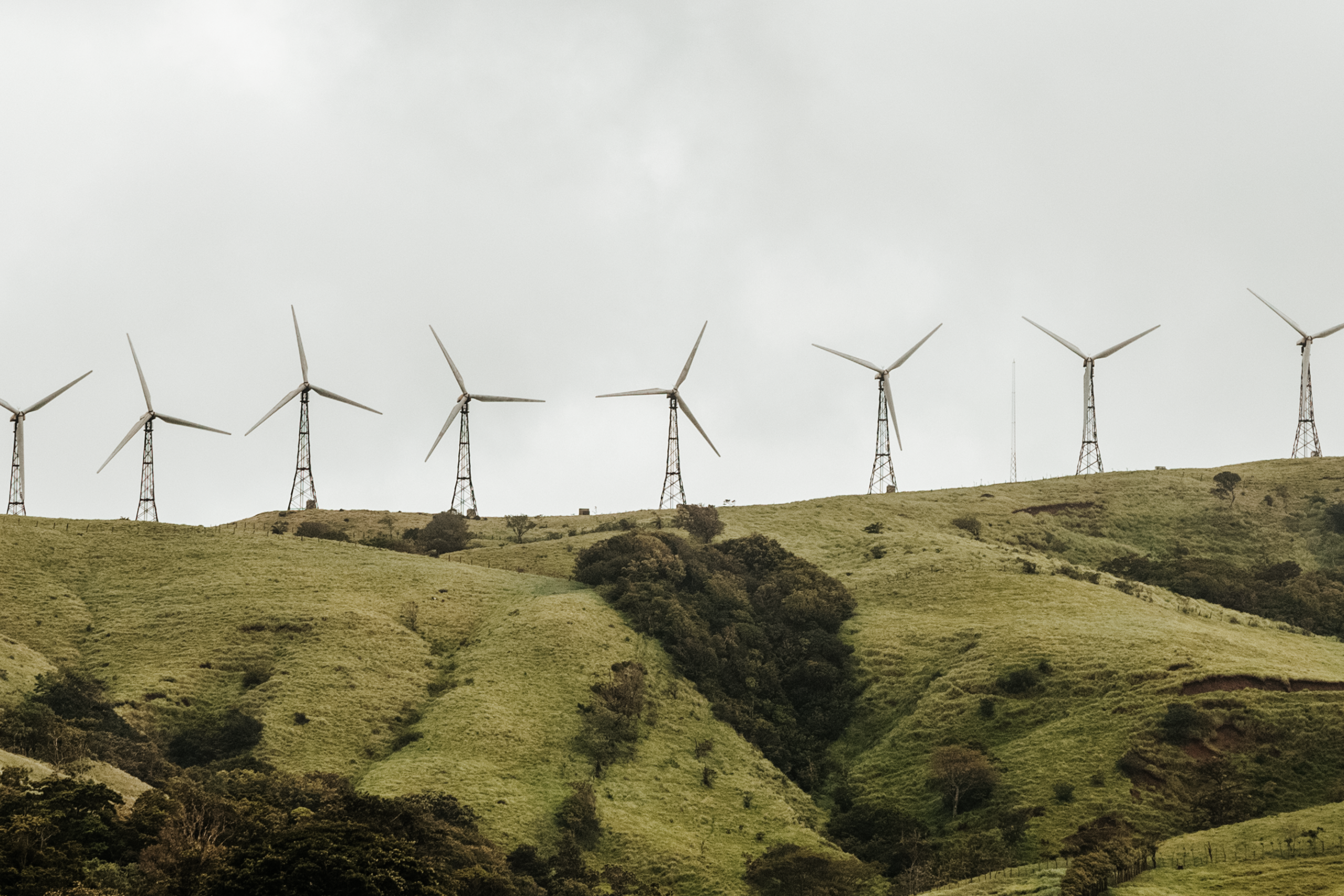
The country has been capitalizing on its geographic landscape and domestic resources to develop its energy potential. Costa Rica’s steep mountain slopes and frequent rainfall create favorable conditions for harnessing hydroelectric power, which currently accounts for approximately 70% of the country’s electricity production. With its volcanic belt traversing the Pacific Ring of Fire, geothermal energy is an investment, specifically contributing 15% to the power mix. Moreover, wind energy has the potential to be a significant source in Costa Rica’s rich coastal areas. Solar energy has also begun to enter the market and the grid within the country.
This diversification characterizes a flexible, variable power grid for the people of Costa Rica, unbounded by the limitations of fossil fuels, unreliable generation, and volatile prices. The average residential electricity price amounts to USD 0.183 per kWh, with the business electricity price at USD 0.247 per kWh. Affordability and accessibility of power are among the long-term byproducts of a renewable energy-powered economy, which the country and its constituency are incentivized with this transition.
Costa Rica frequently reaches 99% renewable energy generation, a significant step toward reducing its energy sector carbon footprint. Much more, helping the global climate community accelerate mitigation efforts.
As the country solidifies its roadmap toward a renewable energy transition, Costa Rica progressively reduces its dependence on fossil fuels in its domestic operations. Its Legislative Assembly sits to discuss the repurposing of its fossil fuel industry—including the re-skilling of the employees of fossil fuel companies—promising green jobs for its people.
Apart from greening its energy sector, the country intends to integrate renewable energy and decarbonization across key sectors, including transportation, agriculture, rural and urban governance, and tourism.
This renewable energy transition exemplified impressive results for Costa Rica and demonstrates a strategic model for other CVF-V20 member states. The country once held the Presidency of the organization, indicative of a wide array of initiatives and priorities in its climate journey.