
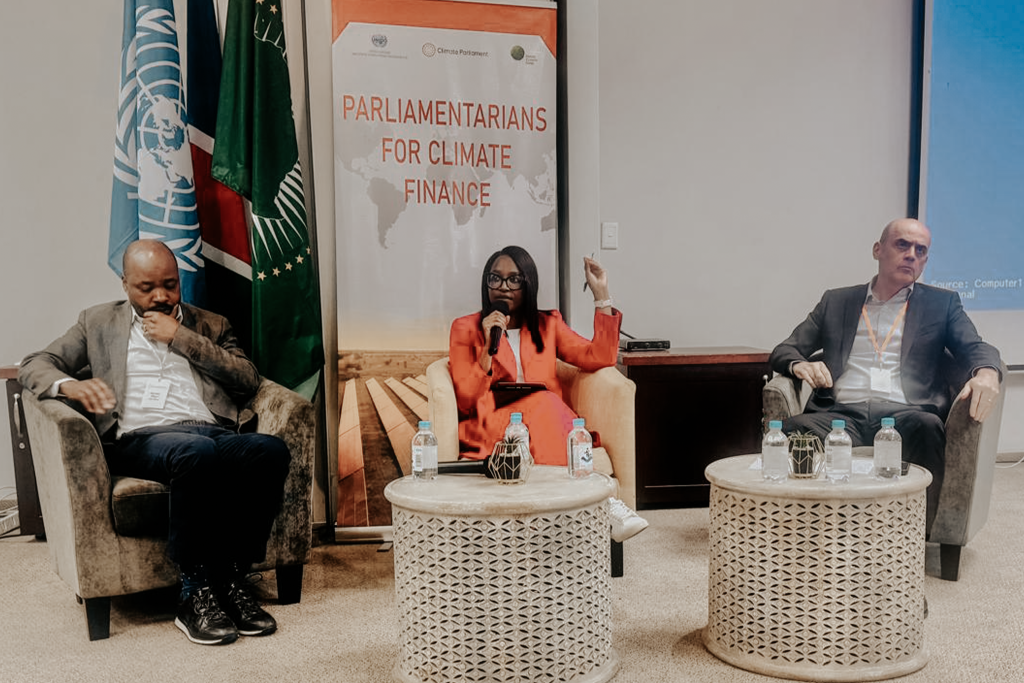
July 18, 2025—At the recent Namibia Parliamentary Green Investment Dialogue, the Climate Vulnerable Forum and V20 Finance Ministers (CVF-V20) put forward a powerful message: developing nations need not choose between economic growth and climate action.
The idea that countries must slow their development to address the climate crisis is a flawed and unjust premise. This narrative wrongly assumes that economic prosperity and climate action are mutually exclusive. It is inequitable to expect developing nations, which have contributed minimally to historical emissions, to sacrifice their right to a better quality of life and robust economies.
The CVF-V20 has firmly rejected this false dichotomy. Instead, we have pioneered Climate Prosperity Plans (CPPs) backed by an innovative framework that proves development and climate action are not only compatible, but mutually reinforcing.
Rethinking the “degrowth” narrative through CPPs
CPPs are long-term, country-led national investment strategies that build upon existing national plans, such as NDCs and Adaptation Plans. They emphasize investment-readiness, leveraging innovative financing mechanisms, such as debt-for-nature swaps and risk-sharing tools, to turn climate ambition into strategic investments.
Each CPP is grounded in rigorous macroeconomic modeling that integrates climate risks, development pathways, and economic projections to design viable, investable projects. This approach recognises that climate action, when embedded in national development priorities, can be a driver of prosperity rather than a barrier.
In practice, CPPs are already showing results. Bangladesh’s Mujib Climate Prosperity Plan has secured USD 250 million from the World Bank, USD 1.4 billion through the IMF’s Resilience and Sustainability Facility, and aims to attract $5 billion in private investment. Sri Lanka has mobilized USD 120 million to transform agricultural practices and received USD 1.3 billion in commitments for offshore wind infrastructure. Ghana has embedded CPP implementation into national budget planning and established a dedicated team to build a pipeline of bankable projects.
GEZs as engines of climate prosperity
Developing countries can raise living standards and build strong economies without compromising their climate goals. Green Economic Zones (GEZs) are a powerful example.
GEZs provide a practical and strategic vehicle for realising the vision of CPPs. These designated areas are tailored to attract green investments, promote sustainable industries, and serve as hubs for climate-smart technologies. These zones allow us to advance directly into cleaner, more competitive industries.
The real strength of GEZs lies in the way they attract investments. By offering incentives and simplifying regulations, developing countries can draw both domestic and international finance, which is crucial for meeting the resource mobilization targets outlined in the CPPs.
GEZs aren’t just about economic growth. They can be thoughtfully designed to include climate-resilient infrastructure, disaster risk reduction measures, and low-carbon technologies. This means they play a direct role in supporting national adaptation strategies.
Why Parliaments matter
Building GEZs while implementing CPPs, however, is not a simple administrative exercise. It requires institutional strength, clear policies, and committed leadership. For that, parliaments play an essential role.
As lawmakers, budget allocators, oversight bodies, and representatives of the people, parliaments are at the center of successful climate prosperity strategies. They ensure that policies are backed by legal authority, resources are allocated effectively, and outcomes align with national development goals.
Parliaments also serve as accountability mechanisms. They are uniquely positioned to monitor the rollout of CPPs and GEZs, ensure transparency in climate finance, and verify that the benefits reach the most vulnerable communities. They can shape public discourse, advocate for investment in high-growth green sectors such as renewable energy, and integrate local voices into national plans.
To embed climate action into governance, parliaments can take concrete steps. By lowering regulatory risks and streamlining approval processes, such laws can help accelerate project timelines and encourage greater private-sector participation in renewables. The dialogue emphasized that while public finance remains important, the scale-up of renewable energy in Africa will increasingly depend on mobilizing private investment—and parliaments are key to de-risking these capital flows. Through stable policies, fiscal incentives, and oversight, parliaments can create the legal and political environment necessary to sustain investor confidence, ensure projects are scalable, and build public support for the green transition. Delegates noted that direct engagement between MPs and international investors during the event opened the door to exploring innovative de-risking instruments, underlining the value of ongoing dialogue between legislators and the investment community. This is how parliaments can anchor these strategies and ensure they are not just proposals but foundational parts of a nation’s future.
Leaving parliaments on the sidelines is not just a missed opportunity, it’s a risk. Without parliamentary involvement, we run the risk of technocratic policies that lack legitimacy, community resistance, or policies that benefit the few at the expense of the many.
If parliaments embrace their full role, as lawmakers, budget shapers, watchdogs, and representatives, they can help make the energy transition not only green but also fair, inclusive, and grounded in the realities of our people.
***