
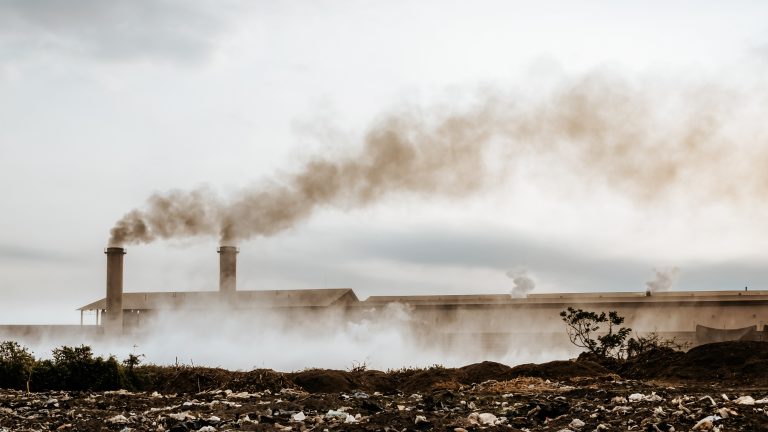
June 30, 2025—The recently published World Bank report, “Towards Clean Air in Nepal,” identifies air pollution as Nepal’s leading health risk, responsible for around 26,000 premature deaths annually, reducing life expectancy by approximately 3.4 years, and costing over 6% of GDP.
Highlighting the urgency of tackling this issue, Hon. Ain Bahadur Shahi Thakuri, Minister for Forests and Environment, emphasized, “Clean air and economic growth are not in conflict. In fact, the cost of inaction on pollution far exceeds the price of taking bold measures today.”
The minister reaffirmed the government’s commitment to improving air quality through initiatives such as stricter industrial emission standards and the promotion of electric transportation.
Understanding Nepal’s air pollution crisis
PM2.5, particulate matter measuring 2.5 micrometers or less, is the primary cause of Nepal’s widespread air pollution impacts. Small enough to bypass the body’s natural filters and penetrate deep into the respiratory system, these particles contribute to severe respiratory and cardiovascular diseases.
The World Bank has characterized Nepal’s air pollution as a complex, multisectoral, and multiregional issue, underscoring its pervasive influence on both environmental integrity and public health. It significantly erodes the country’s human capital by impairing the productivity and labor capacity of its population due to health-related issues. According to the report, air pollution is responsible for 75% of chronic obstructive pulmonary disease cases, 46% of strokes, 44% of ischemic heart disease, 41% of lower respiratory infections, 38% of lung cancer, 30% of neonatal issues like low birth weight and preterm birth, and 20% of diabetes in Nepal—making air pollution the leading risk factor for death and disability in the country, surpassing malnutrition and tobacco-use.
The World Bank report also outlines specific areas where action is urgently needed to improve Nepal’s air quality. Reducing vehicle emissions is a top priority, with recommendations to electrify fleets of buses, trucks, and two-wheelers. Alongside this, improving vehicle inspection systems and controlling road dust are vital to cutting pollution from transport.
Industrial emissions, particularly from brick kilns and cement factories, require attention through the adoption of cleaner technologies and fuels. In households, promoting a switch to cleaner cookstoves—especially electric ones—can significantly reduce both indoor and outdoor pollution.
Preventing forest fires is another key measure, with efforts needed to raise awareness and strengthen response systems to minimize fire risks. Lastly, tackling transboundary pollution through enhanced cooperation with neighboring countries is essential, especially in regions like the Indo-Gangetic Plain and Himalayan Foothills, where air pollution crosses borders.
Ongoing efforts from the Government of Nepal
Prior to the release of the report, the Government of Nepal unveiled its Sixteenth Plan (Fiscal Year 2024/2025 – 2028/2029), which lays out a comprehensive strategy to strengthen air quality regulations.
The plan emphasizes effective monitoring and regulation by establishing clear emission standards and assessing environmental impacts across all sectors. It also addresses industrial pollution management by focusing on controlling waste and emissions from industries, businesses, and health institutions, while encouraging the adoption of cleaner production technologies. Additionally, the plan targets indoor air pollution by promoting the transition from traditional cooking fuels to cleaner energy sources, aiming to improve public health outcomes.
A multifaceted issue like air pollution requires multi-sectoral intervention and tailored investments that could incur a wide range of co-benefits beyond just health impacts. The World Bank has revealed that reducing air pollution in Nepal can decelerate anthropogenic glacier melting in the mountains of the Hindu Kush Himalaya, preserving freshwater stored in glaciers that is crucial to water and energy security. Combating air pollution has also been identified as a significant source of green jobs, creating a ripple of employment opportunities across various sectors.
Addressing air pollution does more than empower the lives of Nepalis; it also boosts domestic economic growth for a sustainable, resilient, and prosperous Nepal.
***