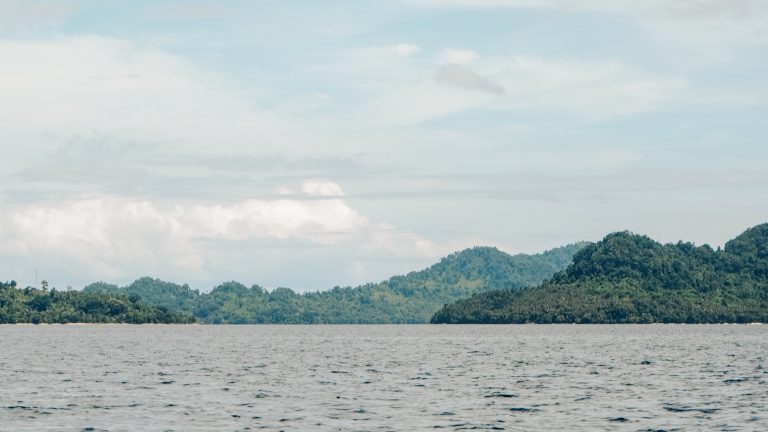
At the U.N. Ocean Conference in France last June 2025, Solomon Islands and Vanuatu unveiled this vision to safeguard over six million square kilometers of ocean and island territory across Melanesia. With anticipated participation from Papua New Guinea and New Caledonia, this initiative aims to become the first indigenous-led and multiregional ocean reserve in the world.
The Honourable Trevor Mahaga, Solomon Islands’ Minister for Environment, Climate Change, Disaster Management, and Meteorology, and The Honourable Ralph Regenvanu, Vanuatu’s Minister for Climate Change Adaptation, Energy, Environment, Meteorology, Geo-Hazards, and Disaster Management, were the visionary leaders behind this Melanesian Ocean Reserve blueprint.
The Melanesian region faces mounting threats from climate change and human activity. Coral bleaching, ocean acidification, and rising sea levels are some of the most severe challenges. The Intergovernmental Panel on Climate Change projects that sea levels in this region could rise more rapidly than the global average, potentially reaching half to one meter by 2100.
Ocean acidification is also expected to become rampant around the world’s equatorial region, including the Pacific area, resulting in major disruptions in reef formation and shell formation. Corals, sea urchins, clams, and zooplankton are among the first to be affected by intense ocean acidification, posing a serious threat to the marine food web and aquatic respiration processes. If global warming surpasses 1.5 degrees Celsius, up to 90% of coral reefs across much of the Pacific Island region could degrade, triggering cascading impacts on marine species and coastal communities alike.
On top of climate change, local threats such as coastal development, illegal and unregulated fishing, and marine-based pollution continue to erode the region’s fragile ecosystems. Faced with these existential threats, Melanesian communities are rising to protect their ancestral waters through the establishment of the Melanesian Ocean Reserve.
Leveraging indigenous knowledge in marine sustainability
Indigenous leadership, rooted in respect, survival, and shared stewardship, offers a powerful way to protect the Melanesian Ocean’s rich cultural and ecological heritage.
The Melanesian Ocean Reserve will draw on this wisdom to strengthen marine governance across Solomon Islands, Vanuatu, Papua New Guinea, and New Caledonia’s waters. Its vision rests on four pillars: education, regenerative economies, sustainable, renewable-powered infrastructure, and the revival of ancestral traditions.
The envisioned indigenous-led and multiregional ocean reserve is a beacon of hope for sustainability and prosperity, while demonstrating to the world what empowering and cooperative ocean stewardship can look like.